
Luke 24:3 is about the women going to the tomb of Jesus and finding the stone rolled away, symbolizing the victory of Jesus over death and the fulfillment of his promise of resurrection.
3 but when they went in they did not find the body of the Lord Jesus.
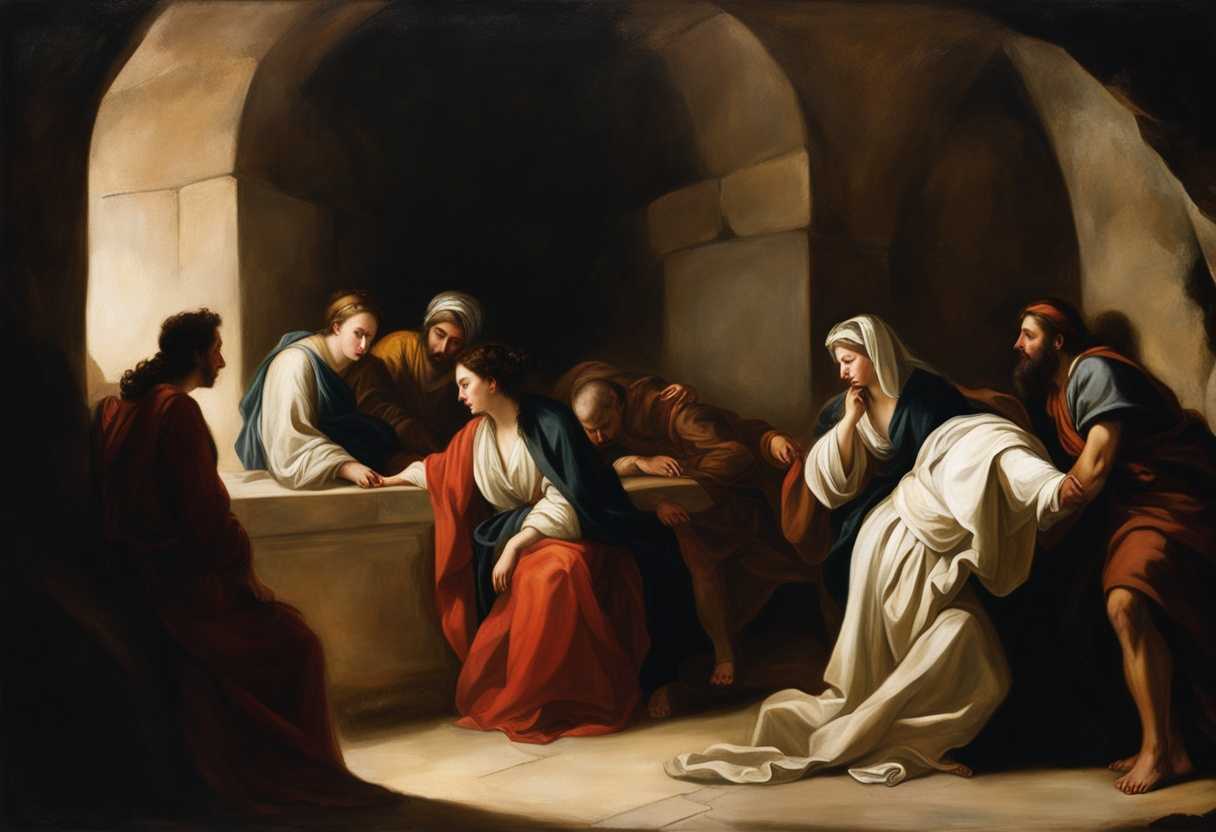
Setting the Scene for Luke 24:3
In Luke chapter 24, we find a group of women who have come to the tomb of Jesus early in the morning. The women, Mary Magdalene, Joanna, Mary the mother of James, and other women, had prepared spices to anoint Jesus’ body. As they approached the tomb, they were discussing among themselves who would roll away the stone for them, as it was large and heavy.
The scene is set at the break of dawn, with the first light of day casting a soft glow on the garden tomb. The air is cool and still, with a sense of anticipation hanging in the atmosphere. The women, their faces etched with grief and confusion, make their way to the tomb, their footsteps muffled by the dew-covered grass. As they draw near, they are startled to find the stone already rolled away, revealing an empty tomb. Their hearts pound with a mixture of fear and wonder as they peer inside, only to find that the body of Jesus is missing.
In this moment, the women are caught between disbelief and hope, unsure of what to make of this miraculous turn of events. Their faith is tested as they grapple with the mystery unfolding before them, setting the stage for the incredible revelation that is about to change the course of history.
What is Luke 24:3 about?
This powerful verse from the Gospel of Luke captures the essence of the Christian faith – the resurrection of Jesus Christ. When the women arrived at the tomb, they were met with the shocking news that Jesus was not there because he had risen from the dead. This event is the cornerstone of Christian belief, symbolizing victory over death and offering hope for eternal life.
Imagine the awe and wonder the women must have felt upon hearing these words. How incredible to witness such a miraculous event – the empty tomb signifying that Jesus had conquered death. This verse serves as a reminder of the central message of Easter: the triumph of life over death, light over darkness, and hope over despair. It invites us to reflect on the transformative power of Christ’s resurrection in our own lives and to embrace the promise of new beginnings and eternal life through our faith. Let us ponder the profound significance of Jesus’ resurrection as we meditate on these words. How does this event inspire us to live with faith, hope, and courage in the face of life’s challenges? We should rejoice in the victory of our Savior and be grateful for the promise of salvation and new life that his resurrection brings. May we find comfort and strength in this verse, knowing that Jesus has risen, and His love and grace are always present in our lives.
Understanding what Luke 24:3 really means
In the Gospel of Luke, we encounter a profound moment in the resurrection narrative where the women who followed Jesus come to His tomb and find it empty. This event marks a significant turning point in Christianity, symbolizing Jesus’ triumph over death and the realization of His promise of resurrection. The empty tomb stands as a beacon of hope, reminding us that even in the face of death, there is the promise of new life and eternal victory.
As we explore related passages such as Matthew 28:5-6, we witness the angel proclaiming, “He is not here; for He has risen, just as He said.” This declaration reinforces the truth of the empty tomb and the fulfillment of Jesus’ prophecy, solidifying the foundation of faith in His resurrection. Similarly, in John 20:1-2, we see Mary Magdalene’s astonishment as she discovers the stone rolled away, underscoring the initial shock and confusion experienced by the disciples in the wake of the resurrection.
The relevance of the empty tomb extends beyond ancient history, resonating with us today in a world marked by uncertainty and despair. It serves as a beacon of hope, reminding us that amidst our struggles and challenges, there is the promise of new beginnings and the assurance of eternal life. The resurrection challenges us to live with the confidence that death is not the final chapter, but rather a gateway to a greater purpose and a hope that transcends our present circumstances.
Consider a poignant anecdote of someone who has faced profound loss and despair, akin to being entombed in darkness. Yet, through unexpected acts of kindness and support from a community, they experience a resurrection of sorts in their life—a parallel to the hope and renewal symbolized by the empty tomb. This narrative mirrors the transformative power of the resurrection, offering a glimpse of the profound impact it can have on individuals and communities alike.
Delving into the phrase “They did not find the body of the Lord Jesus,” we are confronted with the miraculous nature of the resurrection. The absence of Jesus’ body is not a mere absence but a divine affirmation of His victory over death. This challenges us to seek Jesus not among the dead but among the living, fostering a faith that looks forward to life and renewal. Referring to Jesus as “The Lord Jesus” underscores His divine authority and the fulfillment of His promises, reminding us that He is not a distant figure of the past but the living Lord who reigns over life and death.
In contemplating Luke 24:3 and its profound implications, we are invited to embrace the transformative power of the resurrection and the hope it brings to our lives today. Just as the empty tomb heralded a new dawn of hope and victory, may we too find solace and inspiration in the promise of new beginnings and eternal life that the resurrection offers.
How can we find hope in times of despair?
We can find hope in times of despair by remembering the promises and teachings that provide comfort and guidance. Seeking solace in our faith and the wisdom it offers can help us navigate through challenging times. We can find the strength to persevere by focusing on the message of hope, redemption, and the belief that there is a greater purpose beyond our current struggles.
Reflecting on the deeper meanings behind the scriptures can also bring hope during moments of despair. The teachings can remind us that challenges are temporary and that there is always a possibility for renewal, growth, and a brighter tomorrow. Keeping faith in these truths can uplift our spirits and grant us the resilience needed to overcome adversity.
Application
Just as the women fervently sought Jesus at the tomb, let’s pursue a closer bond with Him in our daily lives. Let’s seek His guidance and follow His teachings with unwavering dedication, like a compass leading us through life’s journey. Are we ready to embrace His love and wisdom wholeheartedly, shaping our paths with purpose and faith?

Reverend Michael Johnson is an experienced Church Minister with a profound expertise in spirituality and guidance. With a serene presence and a compassionate heart, he has faithfully served his congregation for over 20 years, leading them on a spiritual journey towards inner peace and enlightenment. Reverend Johnson’s extensive knowledge of religious philosophies and profound understanding of human nature have made him a trusted confidant and mentor to many, as he seamlessly weaves his profound wisdom into life teachings. Reverend Johnson’s calming demeanor and empathetic nature continue to uplift and heal souls, nurturing a sense of unity and tranquility within his community.