
Luke 8:4-8 is about Jesus sharing the Parable of the Sower to illustrate the importance of being receptive to God’s word and the different ways in which people respond to it.
4 And when a great crowd was gathering and people from town after town came to him, he said in a parable:
5 “A sower went out to sow his seed. And as he sowed, some fell along the path and was trampled underfoot, and the birds of the air devoured it.”
6 And some fell on the rock, and as it grew up, it withered away, because it had no moisture.
7 And some fell among thorns, and the thorns grew up with it and choked it.
8 And some fell into good soil and grew and yielded a hundredfold.” As he said these things, he called out, “He who has ears to hear, let him hear.”
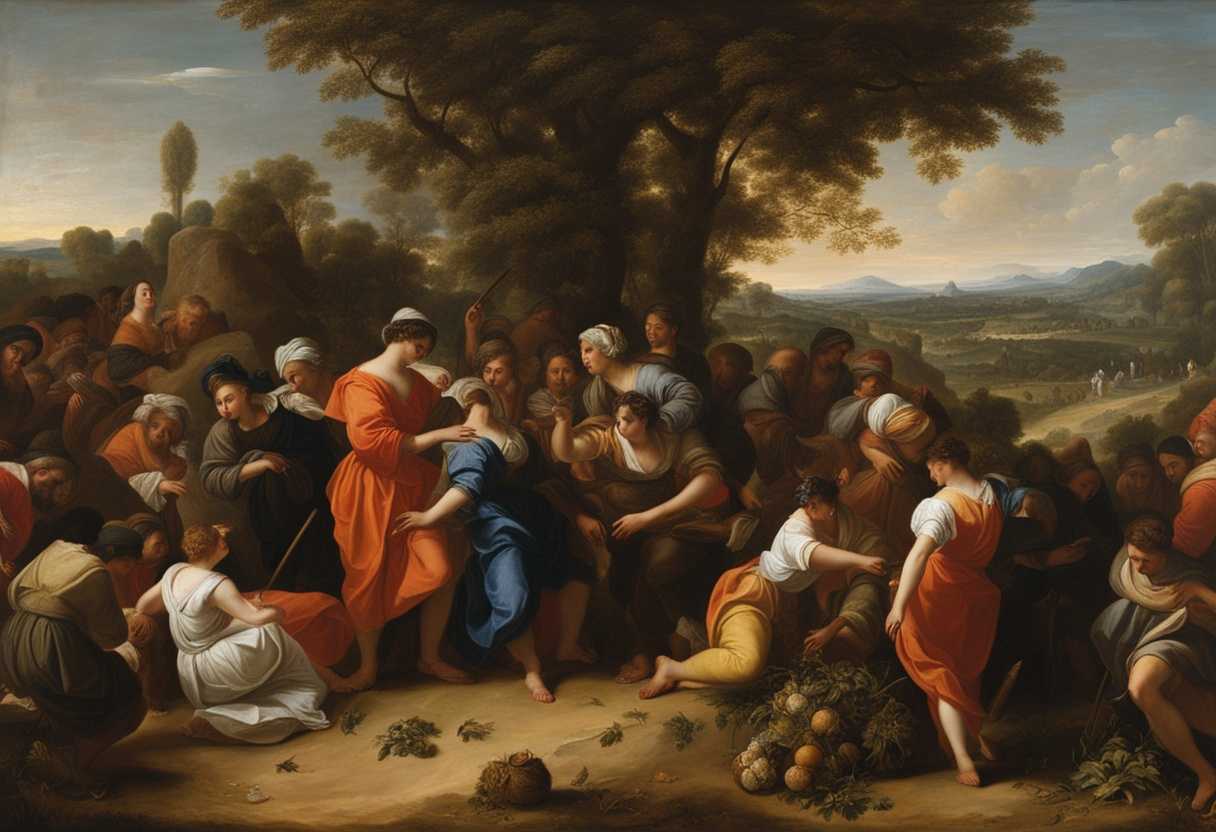
Setting the Scene for Luke 8:4-8
In Luke chapter 8, Jesus is teaching a large crowd by the shore of the Sea of Galilee. The scene is set on a sunny day, with the gentle waves of the sea lapping against the shore. The crowd is a mix of people from all walks of life – fishermen, farmers, merchants, and families – who have gathered to hear Jesus speak.
As Jesus begins to teach, he uses a parable about a sower scattering seeds on different types of soil to illustrate the different responses people have to the word of God. The crowd listens intently, some sitting on the grass, others standing in groups, all eager to hear the wisdom that Jesus imparts.
Among the crowd are Jesus’ disciples, who have been traveling with him and witnessing his miracles and teachings. They are learning from him, asking questions, and trying to understand the deeper meanings behind his words. The atmosphere is one of anticipation and curiosity, as everyone present hangs on Jesus’ every word, eager to learn and grow in their faith.
What is Luke 8:4-8 about?
Jesus uses the metaphor of different types of soil to represent the various responses people have to God’s word in the parable of the sower. Just like seeds falling on different types of soil, the word of God falls on different kinds of hearts. And just as the seeds have varied outcomes based on the type of soil they land on, the impact of God’s word in our lives is dependent on the condition of our hearts. Some hearts are hardened like a path, where the word cannot take root. Some are shallow like rocky ground, where the word sprouts quickly but withers away. Some are overcrowded like thorny soil, where the cares of the world choke out the word. But some hearts are like good soil, where the word is received, takes root, and produces abundant fruit. We reflect on this parable and invite ourselves to examine the state of our own hearts. Are we open and receptive to God’s word, allowing it to take root and grow within us? Or are there barriers in our hearts that prevent the word from flourishing? Are we nurturing our hearts like good soil, removing the rocks and thorns that hinder growth, and cultivating an environment where God’s word can bear fruit in our lives? The parable of the sower challenges us to consider how we are receiving God’s word and encourages us to strive for a heart that is fertile ground for the seeds of faith, hope, and love to grow and flourish.
Understanding what Luke 8:4-8 really means
The Parable of the Sower, as recounted in Luke 8:4-8, is a powerful illustration used by Jesus to convey the different responses people have to the Word of God. In this parable, a sower goes out to sow seeds, symbolizing the spreading of God’s message by various individuals, including preachers, teachers, and believers sharing their faith. The seeds fall on different types of soil, representing the diverse reactions people have to hearing the Word.
Some seeds fall along the path, where they are trampled and devoured by birds, signifying those who hear the Word but do not grasp its meaning, allowing the devil to snatch it away. Others fall on rocky ground, quickly sprouting but withering due to lack of roots when faced with trials. This group represents individuals who receive the Word joyfully but falter in times of difficulty. Additionally, some seeds land among thorns, growing but being choked by worldly concerns like wealth, pleasures, and worries, reflecting those who are distracted from fully embracing the Word.
On the other hand, seeds that fall on good soil grow abundantly, yielding a rich harvest. These symbolize those who not only hear the Word but also understand it, allowing it to take root in their hearts and produce fruit through perseverance. Jesus’ explanation of this parable in related passages like Matthew 13:18-23 and Mark 4:13-20 emphasizes the importance of differentiating the types of soil as representations of varied responses to the Gospel message.
The relevance of the Parable of the Sower extends to contemporary times, where distractions and challenges can hinder one’s spiritual growth. Just like the young professional who initially struggles with balancing faith and worldly pursuits, many today face similar dilemmas. However, by recognizing the need to prioritize spiritual nourishment and actively engaging with the Word, individuals can transform their lives and relationships, bearing fruit in their spiritual journey.
In conclusion, this parable prompts us to reflect on the condition of our hearts and our openness to God’s Word. Are we allowing it to deeply root within us, or are we letting external influences impede our spiritual progress? By striving to emulate the “good soil,” we can cultivate a receptive heart that allows the Word to flourish, leading to a life filled with spiritual abundance and fulfillment.
How can we ensure our hearts are fertile soil?
To ensure our hearts are fertile soil, we must be attentive to the word of God and allow it to take root deeply within us. Our hearts need to be open and receptive to God’s word, just as the seed in the parable needs good soil to grow and produce fruit. This requires actively seeking to understand and apply the teachings of the Bible in our lives, allowing them to shape our thoughts, feelings, and actions.
We must also guard our hearts against distractions and temptations that can hinder our spiritual growth. We can cultivate a fertile environment for God’s word to flourish within us by staying rooted in prayer, worship, and fellowship with other believers. This requires a conscious effort to prioritize our relationship with God above all other concerns and to constantly nurture our faith through regular engagement with Scripture and spiritual practices. Our commitment to living out God’s will in our lives ultimately reflects the condition of our hearts. We can allow His word to transform us from within and bear the fruit of righteousness and love by surrendering our desires, fears, and doubts to Him. May we continually strive to be good stewards of the fertile soil of our hearts, so that we may be fruitful in spreading God’s kingdom and glorifying Him in all that we do.
Application
Are you sowing the seeds of faith in your heart, just like the diligent sower in Luke 8:4-8 scattered seeds on different grounds? Take a moment to ponder the type of soil you are cultivating within yourself to receive God’s teachings. Will you embrace prayer, study, and obedience to nurture fertile ground that can bear abundant fruit for His kingdom? Today, reflect on your spiritual soil – is it ready to receive the Word of God and let it flourish within you? Let the seeds of faith take root deep within – are you prepared to let them transform your life?

Reverend Michael Johnson is an experienced Church Minister with a profound expertise in spirituality and guidance. With a serene presence and a compassionate heart, he has faithfully served his congregation for over 20 years, leading them on a spiritual journey towards inner peace and enlightenment. Reverend Johnson’s extensive knowledge of religious philosophies and profound understanding of human nature have made him a trusted confidant and mentor to many, as he seamlessly weaves his profound wisdom into life teachings. Reverend Johnson’s calming demeanor and empathetic nature continue to uplift and heal souls, nurturing a sense of unity and tranquility within his community.