
Luke 9:18-27 is about Jesus asking his disciples about his identity as the Messiah, teaching them about the costs of discipleship, and stressing the importance of taking up one’s cross daily to follow him.
18 Now it happened that as he was praying alone, the disciples were with him. And he asked them, “Who do the crowds say that I am?”
19 They answered, “John the Baptist. But others say, Elijah, and others, that one of the prophets of old has risen.”
20 Then he said to them, “But who do you say that I am?” And Peter answered, “The Christ of God.”
21 And he strictly charged and commanded them to tell this to no one,
22 saying, “The Son of Man must suffer many things and be rejected by the elders and chief priests and scribes, and be killed, and on the third day be raised.”
23 And he said to all, “If anyone would come after me, let him deny himself and take up his cross daily and follow me.
24 For whoever would save his life will lose it, but whoever loses his life for my sake will save it.
25 For what does it profit a man if he gains the whole world and loses or forfeits himself?
26 For whoever is ashamed of me and of my words, of him will the Son of Man be ashamed when he comes in his glory and the glory of the Father and of the holy angels.
27 But I tell you truly, there are some standing here who will not taste death until they see the kingdom of God.”
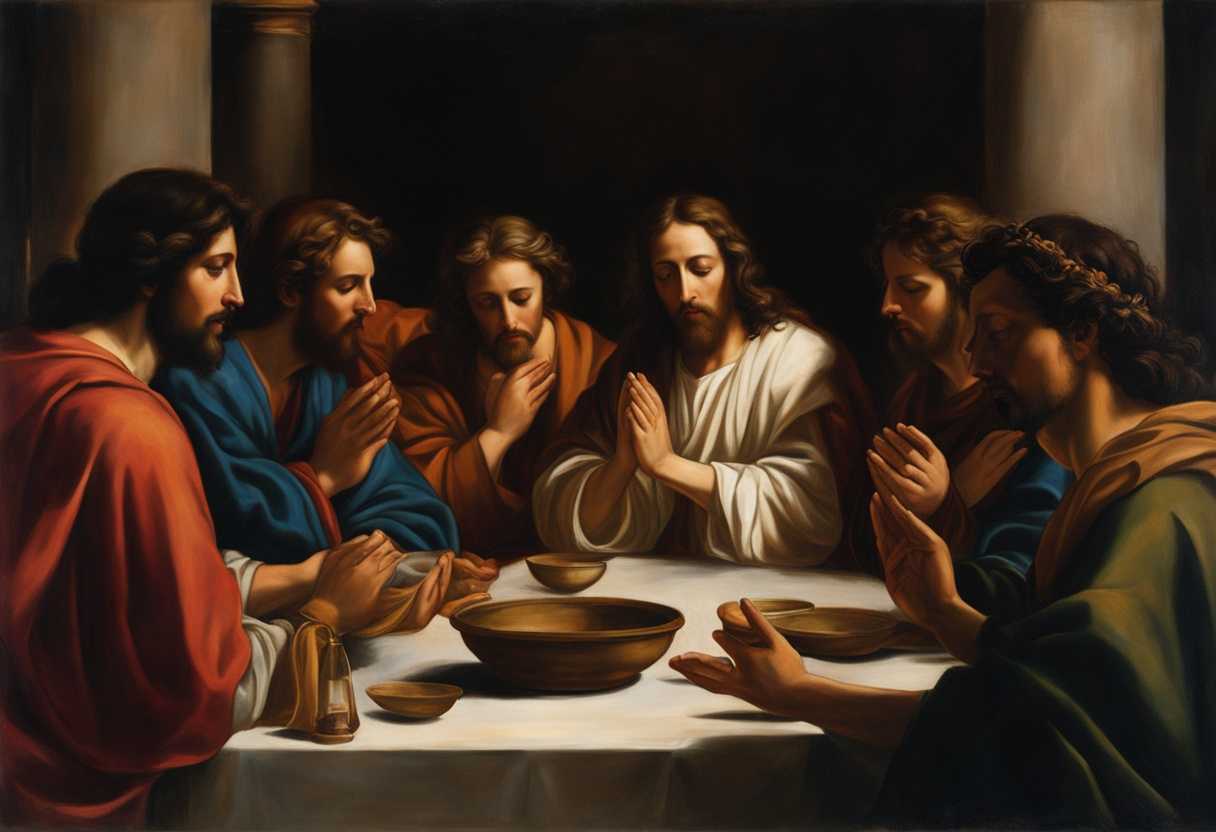
Setting the Scene for Luke 9:18-27
In Luke chapter 9, we find Jesus and his disciples in a secluded area near the town of Caesarea Philippi. The disciples have been traveling with Jesus, witnessing his miracles and teachings, and they are beginning to understand that he is the long-awaited Messiah. As they sit together, Jesus asks them a crucial question: “Who do the crowds say that I am?” The disciples respond with various answers, reflecting the confusion and speculation surrounding Jesus’ identity.
Amidst the backdrop of lush greenery and the sound of a nearby stream, Jesus then turns the question directly to his disciples, asking, “But who do you say that I am?” It is a pivotal moment as Peter, filled with divine revelation, declares, “You are the Christ of God.” Jesus affirms Peter’s confession and goes on to explain the cost of discipleship, emphasizing the need to take up one’s cross daily and follow him. The scene is charged with anticipation and the weight of the disciples’ decision to fully commit to following Jesus, even in the face of potential persecution and hardship.
What is Luke 9:18-27 about?
We witness a pivotal moment in the life of Jesus and his disciples in this verse. Peter’s declaration of Jesus as the Messiah speaks to the growing realization among the disciples of Jesus’ true identity and mission. It symbolizes faith, devotion, and recognition of Jesus as the chosen one of God. This declaration sets the stage for Jesus to reveal an important aspect of his mission – his impending death and resurrection. It shows the courage and faith required of those who follow Jesus, even in the face of challenges and doubts.
Jesus’ call for self-denial challenges his disciples, and us, to examine our priorities and values. It highlights the need to put aside our individual desires and ego in order to fully commit ourselves to God’s will. It encourages us to let go of worldly attachments and ambitions, and instead, focus on serving others and living a life that is aligned with the teachings of Jesus. This verse prompts us to reflect on what it means to truly follow Jesus – to take up our cross, deny ourselves, and walk in faith, even when the path ahead may be difficult or uncertain. Let us consider the significance of Peter’s declaration and Jesus’ call for self-denial in our own lives as we ponder on this verse. How can we emulate Peter’s unwavering faith and recognition of Jesus as the Messiah in our daily interactions? How can we practice self-denial and prioritize God’s will above our own desires and ambitions? We should contemplate these questions and strive to embody the teachings of Jesus in our thoughts, words, and actions, trusting in his guidance and strength to lead us on the path of righteousness.
Understanding what Luke 9:18-27 really means
In the Gospel of Luke, we find a poignant moment where Jesus engages His disciples in a profound conversation about His identity and the demands of discipleship. He begins by asking them, “Who do the crowds say I am?” This question prompts introspection, urging each disciple to ponder their personal relationship with Jesus. It’s a question that resonates through the ages, challenging believers to articulate their own understanding of Christ. Peter’s response, “The Christ of God,” encapsulates a pivotal moment of recognition, acknowledging Jesus as the long-awaited Messiah, the anointed one sent by God.
Jesus then foretells His impending suffering, death, and resurrection, underscoring the sacrificial nature of His mission. This prediction lays the foundation for His call to discipleship, where He instructs them to “take up their cross daily and follow me.” This powerful imagery emphasizes the ongoing commitment and willingness to endure hardships for the sake of following Jesus. It’s a call to radical discipleship, requiring a daily surrender of self-interest and a readiness to embrace the challenges that come with following Christ.
Parallel passages in Matthew and Mark echo this theme of identity and sacrifice, reinforcing the importance of understanding who Jesus is and the cost of discipleship. Paul’s words in Philippians further illuminate the concept of sharing in Christ’s sufferings, emphasizing the transformative power of knowing Him deeply. These passages collectively invite believers to a deeper reflection on their faith and the implications of following Jesus wholeheartedly.
In today’s context, where comfort and self-preservation often take precedence, the message of taking up one’s cross daily resonates profoundly. It challenges us to reevaluate our priorities and embrace a counter-cultural lifestyle of self-denial and service. Consider a young professional who chooses a less glamorous, lower-paying job aligned with their faith over societal expectations of wealth and status. Their decision exemplifies the principle of daily sacrifice and commitment, illustrating the transformative impact of living out one’s faith authentically.
Ultimately, this passage beckons us to examine our understanding of Jesus and the depth of our commitment to Him. It calls us to a life of continual sacrifice and devotion, reminding us that true discipleship involves not only recognizing Jesus as the Christ but also embodying His teachings in our daily interactions. As we navigate the complexities of modern life, may we heed the call to take up our cross daily, following in the footsteps of our sacrificial Savior with unwavering faith and dedication.
What does it mean to take up our cross daily?
Taking up our cross daily means willingly surrendering our own desires, plans, and comforts to follow Jesus wholeheartedly. We are called to embrace self-denial and sacrifice in obedience to God, just as Jesus bore His cross to fulfill the will of the Father. This involves putting to death our selfish ambitions, sinful tendencies, and worldly attachments on a daily basis. It requires a commitment to prioritize God’s will above our own and to live in accordance with His teachings, even when it may be difficult or unpopular. We acknowledge that by taking up our cross daily, we involve a personal cost and a willingness to endure hardships for the sake of the gospel. It signifies a readiness to face opposition, persecution, and challenges that may come our way as we seek to walk in obedience to Christ. This act of self-sacrifice reflects our commitment to live a life of faith, perseverance, and unwavering devotion to Jesus, regardless of the circumstances we may encounter. Taking up our cross daily is a tangible expression of our love for Christ and our desire to follow Him wholeheartedly, no matter the cost.
Application
Dear friend, in the journey of life, we are reminded to embrace the path of dedication and sacrifice. Like how we devote ourselves to our work and family, let us also commit to our faith with the same fervor and loyalty. By truly embracing the teachings of Jesus and living our lives in His light, we can find true fulfillment and purpose. Will you choose to answer this divine calling wholeheartedly and shape your life in His image?

Reverend Michael Johnson is an experienced Church Minister with a profound expertise in spirituality and guidance. With a serene presence and a compassionate heart, he has faithfully served his congregation for over 20 years, leading them on a spiritual journey towards inner peace and enlightenment. Reverend Johnson’s extensive knowledge of religious philosophies and profound understanding of human nature have made him a trusted confidant and mentor to many, as he seamlessly weaves his profound wisdom into life teachings. Reverend Johnson’s calming demeanor and empathetic nature continue to uplift and heal souls, nurturing a sense of unity and tranquility within his community.