
Luke 9:23-27 is about the call to discipleship, emphasizing the need for individuals to deny themselves, take up their cross daily, and follow Jesus, recognizing the eternal value of prioritizing their faith over worldly desires.
23 And he said to all, “If anyone would come after me, let him deny himself and take up his cross daily and follow me.
24 For whoever would save his life will lose it, but whoever loses his life for my sake will save it.
25 For what does it profit a man if he gains the whole world and loses or forfeits himself?
26 For whoever is ashamed of me and of my words, of him will the Son of Man be ashamed when he comes in his glory and the glory of the Father and of the holy angels.
27 But I tell you truly, there are some standing here who will not taste death until they see the kingdom of God.”
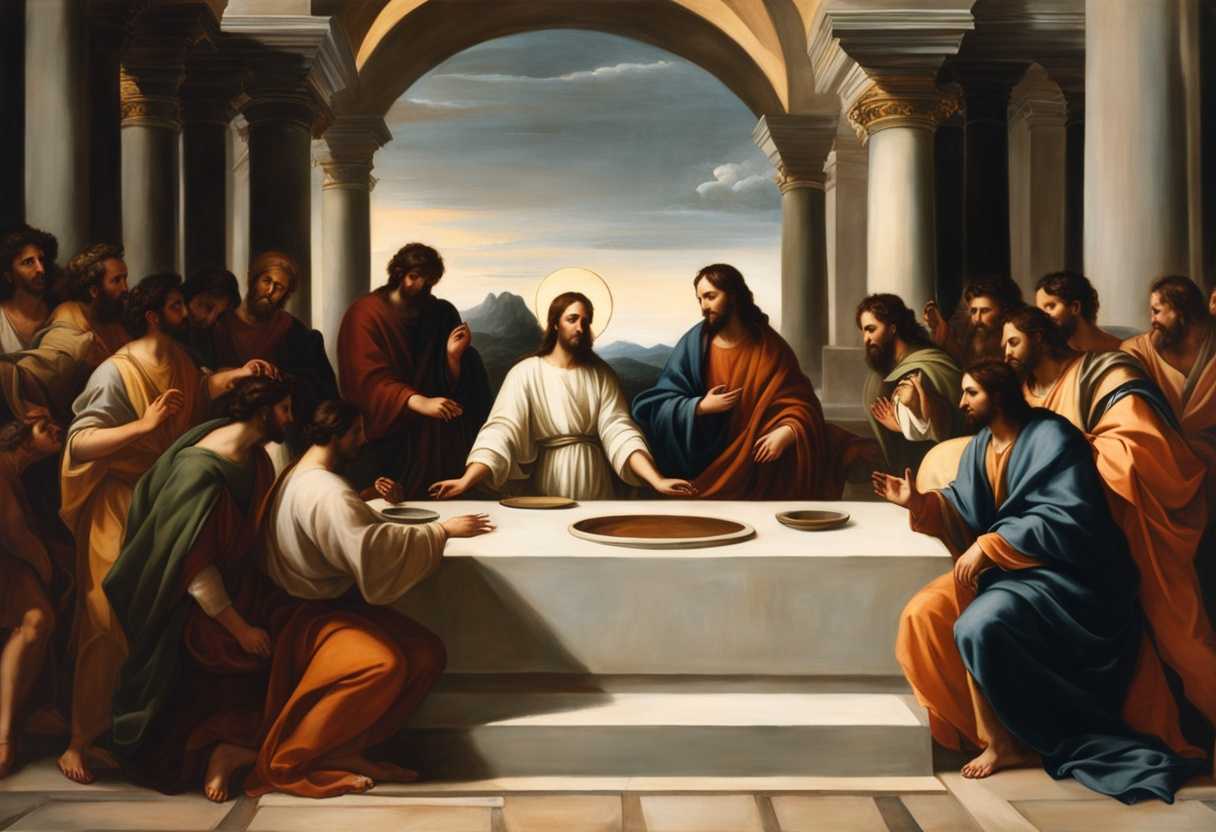
Setting the Scene for Luke 9:23-27
In Luke chapter 9, we find Jesus with his disciples in a quiet and secluded area on the outskirts of a bustling town. The disciples, including Peter, James, and John, had been following Jesus closely, witnessing his miracles and teachings. As they gathered around him, Jesus began to speak about the cost of discipleship and the importance of taking up one’s cross daily to follow him.
The scene is set against a backdrop of rolling hills and a serene lake, with the disciples sitting attentively at Jesus’ feet, hanging on his every word. The warm sun casts a golden glow over the group, creating a sense of peace and tranquility. Jesus, with his gentle yet commanding presence, imparts wisdom and guidance to his followers, preparing them for the challenges that lie ahead in their journey of faith.
As the disciples listen intently, Jesus’s words resonate deeply within their hearts, challenging them to fully commit to following him, even in the face of adversity. The atmosphere is charged with a sense of anticipation and reverence, as the disciples grapple with the profound truths being shared with them. In this sacred moment, Jesus’s words echo through the hills, leaving a lasting impact on those who have chosen to walk in his footsteps.
What is Luke 9:23-27 about?
This verse speaks to the profound commitment and sacrifice required of those who choose to follow Jesus. To deny oneself means putting aside our own desires, ambitions, and comforts in order to prioritize the will of God. It involves surrendering our self-centered tendencies and submitting to the authority and guidance of Jesus in every aspect of our lives. Taking up the cross symbolizes embracing the hardships, challenges, and even persecution that may come with following Christ. It is a call to endure suffering and adversity with courage and faith, just as Jesus did on the cross. Jesus emphasizes the ongoing and constant nature of discipleship by calling believers to take up their cross daily. It is not a one-time event but a daily decision to live in alignment with His teachings and example. Following Jesus requires a radical reorientation of our priorities, values, and actions. It calls us to live a life of sacrificial love, service, and obedience to God. We are ultimately called to wholeheartedly devote ourselves to God’s kingdom and to walk in the footsteps of Jesus, no matter the cost.
Understanding what Luke 9:23-27 really means
In Luke 9:23-27, Jesus addresses His disciples and a crowd, delving into the profound truths of discipleship. The passage encapsulates key themes of self-denial, taking up one’s cross, following Jesus, the value of the soul, and the imminent arrival of God’s kingdom. Jesus begins by stating, “If anyone would come after me, let him deny himself and take up his cross daily and follow me.” Here, the call to self-denial urges individuals to set aside personal desires and ambitions in favor of humility and service. Taking up the cross symbolizes a readiness to endure suffering and persecution for Christ, emphasizing unwavering faith and dedication on a daily basis.
Furthermore, Jesus presents a striking paradox, stating, “For whoever would save his life will lose it, but whoever loses his life for my sake will save it.” This paradox underscores the truth that true life is discovered in surrendering one’s life to Jesus, challenging the worldly pursuit of self-preservation and success. The passage continues with a poignant question, “For what does it profit a man if he gains the whole world and loses or forfeits himself?” This rhetorical question highlights the incomparable worth of the soul over material possessions and achievements, warning of the eternal consequences of prioritizing worldly gains over spiritual well-being.
Moreover, Jesus emphasizes the importance of openly confessing faith in Him, cautioning against shame and denial. He forewarns that those ashamed of Him will face His denial when He returns in glory with the Father and the holy angels. Lastly, Jesus assures His listeners of the imminent manifestation of God’s kingdom, stating that some present will witness its arrival before tasting death. This assurance points to significant events like the transfiguration, resurrection, or the outpouring of the Holy Spirit at Pentecost.
The relevance of this passage to contemporary believers is profound. In a world consumed by self-gratification and material pursuits, it challenges individuals to prioritize their spiritual journey and commitment to Christ. It encourages daily faithfulness, urging believers to live out their faith consistently and intentionally. By fostering an eternal perspective, the passage redirects focus towards eternal values rather than fleeting worldly gains, prompting a mindset that seeks God’s kingdom above all else.
In illustrating the concepts within this passage, personal anecdotes or historical examples can vividly depict the transformative power of self-denial and wholehearted commitment to Christ. Stories of individuals who sacrificed worldly success for the sake of serving God or historical figures like Dietrich Bonhoeffer, who stood firm in faith amidst adversity, exemplify the essence of taking up one’s cross and following Jesus.
Reflecting on the profound phrases within this passage, such as “deny himself,” “take up his cross daily,” “follow me,” and “gain the whole world and loses or forfeits himself,” prompts introspection and challenges believers to embody the sacrificial nature of discipleship. These phrases encapsulate the essence of selflessness, perseverance, obedience, and the eternal significance of prioritizing one’s relationship with Christ above all else.
How can we deny ourselves and follow Jesus daily?
To deny ourselves and follow Jesus daily means to put aside our own desires, ambitions, and priorities in order to seek God’s will above all else. It involves surrendering our own will to His, which requires humility, obedience, and faith. This kind of self-denial allows us to align our lives with God’s purposes and to walk in His ways, even when it goes against our own desires or logic.
Following Jesus daily also entails seeking His guidance and direction in every aspect of our lives. It means making a conscious effort to live according to His teachings, relying on His strength and wisdom to navigate the challenges and decisions we face each day. We can experience the abundant life He promises to those who truly follow Him by putting our trust in Him and following His example of love, service, and sacrifice. Denying ourselves and following Jesus daily is ultimately a continual process of dying to self and allowing Christ to live through us. It requires a heart that is willing to let go of personal comfort and control, and to fully trust in God’s plan for our lives. We will not only find true fulfillment and purpose, but also grow in our relationship with Him and become more like Him in all we do as we daily take up our cross and follow Him.
Application
Are you ready to embrace the call to take up your cross daily and follow Jesus? It’s time to place your faith at the forefront of your life, ahead of all the modern world’s distractions and obstacles. Let’s make a conscious effort to align our actions with our beliefs, putting His kingdom above all else in every aspect of our lives. Today, let’s recommit ourselves to walking the path of faith with unwavering dedication and passion. Will you actively choose to follow Him wholeheartedly, even in the face of challenges?

Reverend Michael Johnson is an experienced Church Minister with a profound expertise in spirituality and guidance. With a serene presence and a compassionate heart, he has faithfully served his congregation for over 20 years, leading them on a spiritual journey towards inner peace and enlightenment. Reverend Johnson’s extensive knowledge of religious philosophies and profound understanding of human nature have made him a trusted confidant and mentor to many, as he seamlessly weaves his profound wisdom into life teachings. Reverend Johnson’s calming demeanor and empathetic nature continue to uplift and heal souls, nurturing a sense of unity and tranquility within his community.