
Luke 9:23-36 is about Jesus teaching his disciples the cost of following him, the importance of taking up one’s cross, and revealing his divine glory in the Transfiguration.
23 And he said to all, “If anyone would come after me, let him deny himself and take up his cross daily and follow me.
24 For whoever would save his life will lose it, but whoever loses his life for my sake will save it.
25 For what does it profit a man if he gains the whole world and loses or forfeits himself?
26 For whoever is ashamed of me and of my words, of him will the Son of Man be ashamed when he comes in his glory and the glory of the Father and of the holy angels.
27 But I tell you truly, there are some standing here who will not taste death until they see the kingdom of God.”
28 Now about eight days after these sayings he took with him Peter and John and James and went up on the mountain to pray.
29 And as he was praying, the appearance of his face was altered, and his clothing became dazzling white.
30 And behold, two men were talking with him, Moses and Elijah,
31 who appeared in glory and spoke of his departure, which he was about to accomplish at Jerusalem.
32 Now Peter and those who were with him were heavy with sleep, but when they became fully awake they saw his glory and the two men who stood with him.
33 And as the men were parting from him, Peter said to Jesus, “Master, it is good that we are here. Let us make three tents, one for you and one for Moses and one for Elijah”—not knowing what he said.
34 As he was saying these things, a cloud came and overshadowed them, and they were afraid as they entered the cloud.
35 And a voice came out of the cloud, saying, “This is my Son, my Chosen One; listen to him!”
36 And when the voice had spoken, Jesus was found alone. And they kept silent and told no one in those days anything of what they had seen.
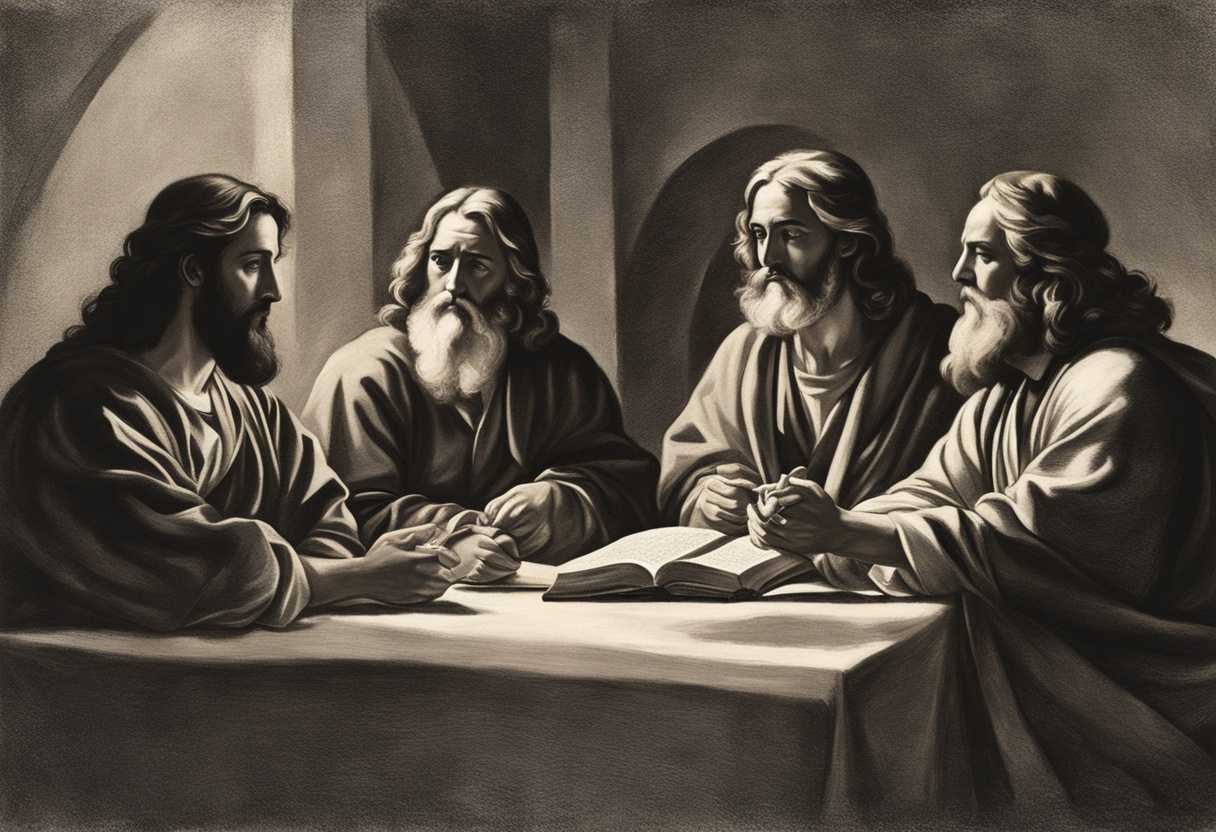
Setting the Scene for Luke 9:23-36
In Luke chapter 9, we find Jesus taking Peter, James, and John up a high mountain to pray. The scene is serene and peaceful, with the disciples surrounded by the beauty of nature as they ascend the mountain. The air is crisp and clean, and the sun is beginning to set, casting a warm glow over the landscape.
As they reach the mountaintop, the disciples are enveloped in a sense of awe and wonder. Suddenly, Jesus is transfigured before them, his face shining like the sun, and his clothes becoming dazzling white. Moses and Elijah appear and begin talking with Jesus, discussing his upcoming departure, which he is about to bring to fulfillment in Jerusalem.
Peter, James, and John are overwhelmed by the experience, not fully understanding the significance of what they are witnessing. They are in the presence of the divine, witnessing a moment of profound importance in Jesus’ ministry. This transfiguration serves as a confirmation of Jesus’ identity as the Son of God, preparing the disciples for the trials and challenges that lie ahead.
What is Luke 9:23-36 about?
This verse captures the essence of true discipleship in Christianity. Jesus instructs His followers to deny themselves – to let go of their own desires, ambitions, and comforts in order to fully submit to God’s will. Taking up their cross symbolizes the willingness to endure any suffering or sacrifice that comes with following Christ. And finally, the call to follow Him is a reminder that being a disciple means walking in His footsteps, emulating His teachings and example in every aspect of life.
The Transfiguration, where Jesus reveals His divine glory to Peter, James, and John, serves as a powerful affirmation of His identity as the Son of God. It is a moment of revelation and affirmation of Jesus’ divinity, underscoring the importance of following Him wholeheartedly. This verse reminds us that true discipleship requires us to let go of our own selfish desires and ambitions, to embrace the path of sacrifice and suffering, and to follow Jesus faithfully, even in the face of adversity and challenges. We must ultimately surrender ourselves completely to God’s will and walk in the footsteps of Christ with unwavering faith and devotion.
Understanding what Luke 9:23-36 really means
Introduction
In Luke 9:23-36, we delve into the profound teachings of Jesus on discipleship and witness the awe-inspiring event of the Transfiguration. These passages hold immense significance in revealing the cost of following Jesus and unveiling His divine nature, inviting us to contemplate the depth of commitment required in our faith journey.
Verse Breakdown and Commentary
In Luke 9:23-24, Jesus declares, “If anyone would come after me, let him deny himself and take up his cross daily and follow me.” Here, we are urged to prioritize self-sacrifice, symbolized by denying oneself and embracing the daily challenges that come with following Christ. This call to active discipleship resonates with the essence of putting God’s will above personal desires, as seen in related passages like Matthew 16:24-26 and Mark 8:34-38.
Moving on to Luke 9:25-27, Jesus questions, “For what does it profit a man if he gains the whole world and loses or forfeits himself?” This poignant inquiry challenges us to reflect on the eternal consequences of worldly pursuits versus spiritual well-being, emphasizing the importance of storing treasures in heaven, as discussed in Matthew 6:19-21.
The narrative then unfolds in Luke 9:28-36 with the Transfiguration, where Jesus’ appearance is transfigured, revealing His divine glory. The presence of Moses and Elijah symbolizes the fulfillment of the Law and the Prophets in Jesus, culminating in God’s proclamation, “This is my Son, my Chosen One; listen to him!” This divine affirmation solidifies Jesus’ authority and divine sonship, echoed in parallel accounts like Matthew 17:1-8 and Mark 9:2-8.
Relevance to People Today
These teachings resonate deeply in today’s context, challenging us to embrace self-denial and sacrifice amidst a culture that often prioritizes self-gratification. They prompt us to shift our focus from fleeting worldly gains to eternal spiritual growth, offering a renewed perspective on the true value of our pursuits. The Transfiguration serves as a powerful reminder of Jesus’ divine nature, reinforcing the truth of His teachings and the significance of our faith.
Anecdote
Consider the story of a missionary who forsakes comfort and security to spread the Gospel in remote regions, embodying the essence of self-denial and taking up the cross daily. Through their unwavering commitment and sacrificial love, they inspire others to deepen their faith and exemplify the transformative power of living out Jesus’ teachings in a tangible way.
Meaningful Phrases and Detailed Explanation
“Deny himself” calls for a radical shift in priorities, urging us to set aside personal ambitions in favor of God’s will, manifesting in acts of humility, service, and obedience. “Take up his cross daily” underscores the need for steadfast perseverance and unwavering faithfulness in the face of trials, symbolizing a continuous commitment to follow Christ. “Listen to him!” emphasizes the paramount importance of heeding Jesus’ teachings and recognizing His supreme authority in our lives.
Conclusion
In conclusion, Luke 9:23-36 illuminates the essence of discipleship, the eternal perspective on worldly pursuits, and the affirmation of Jesus’ divine nature. As we ponder these profound truths, let us reflect on our own journey of faith and consider how we can wholeheartedly embrace the call to self-denial, prioritize eternal values, and heed the voice of our Lord in every aspect of our lives.
How can we deny ourselves and follow Jesus daily?
To deny ourselves and follow Jesus daily means to prioritize His will and ways above our own desires and ambitions. It involves surrendering our own selfish desires, comforts, and preferences, and choosing to follow Jesus wholeheartedly. This includes being willing to let go of our own plans and submit to God’s plan for our lives, even when it may be uncomfortable or challenging. We are called to die to our own selfish desires, pride, and sinfulness as we deny ourselves and take up our cross daily. This process involves seeking to live in obedience to God’s Word, allowing His truth to shape our thoughts, actions, and attitudes. It means putting aside our own will and submitting to God’s will, trusting Him to lead and guide us in the paths of righteousness.
Following Jesus daily requires a continuous and intentional commitment to keep Him at the center of our lives. It involves seeking His guidance through prayer, studying His Word, and walking in obedience to His commands. We acknowledge His lordship over our lives and allow Him to transform us into His likeness by denying ourselves and choosing to follow Jesus daily.
Application
Embrace the call to take up your cross daily, not just in faith but in action. Will you release your grip on personal desires and walk the path of selflessness? Will you sacrifice comfort for the greater good? Allow your faith to guide you in every aspect of your life. Will you rise to the challenge and truly follow in the footsteps of Christ?

Reverend Michael Johnson is an experienced Church Minister with a profound expertise in spirituality and guidance. With a serene presence and a compassionate heart, he has faithfully served his congregation for over 20 years, leading them on a spiritual journey towards inner peace and enlightenment. Reverend Johnson’s extensive knowledge of religious philosophies and profound understanding of human nature have made him a trusted confidant and mentor to many, as he seamlessly weaves his profound wisdom into life teachings. Reverend Johnson’s calming demeanor and empathetic nature continue to uplift and heal souls, nurturing a sense of unity and tranquility within his community.