
24 For whoever would save his life will lose it, but whoever loses his life for my sake will save it.
25 For what does it profit a man if he gains the whole world and loses or forfeits himself?
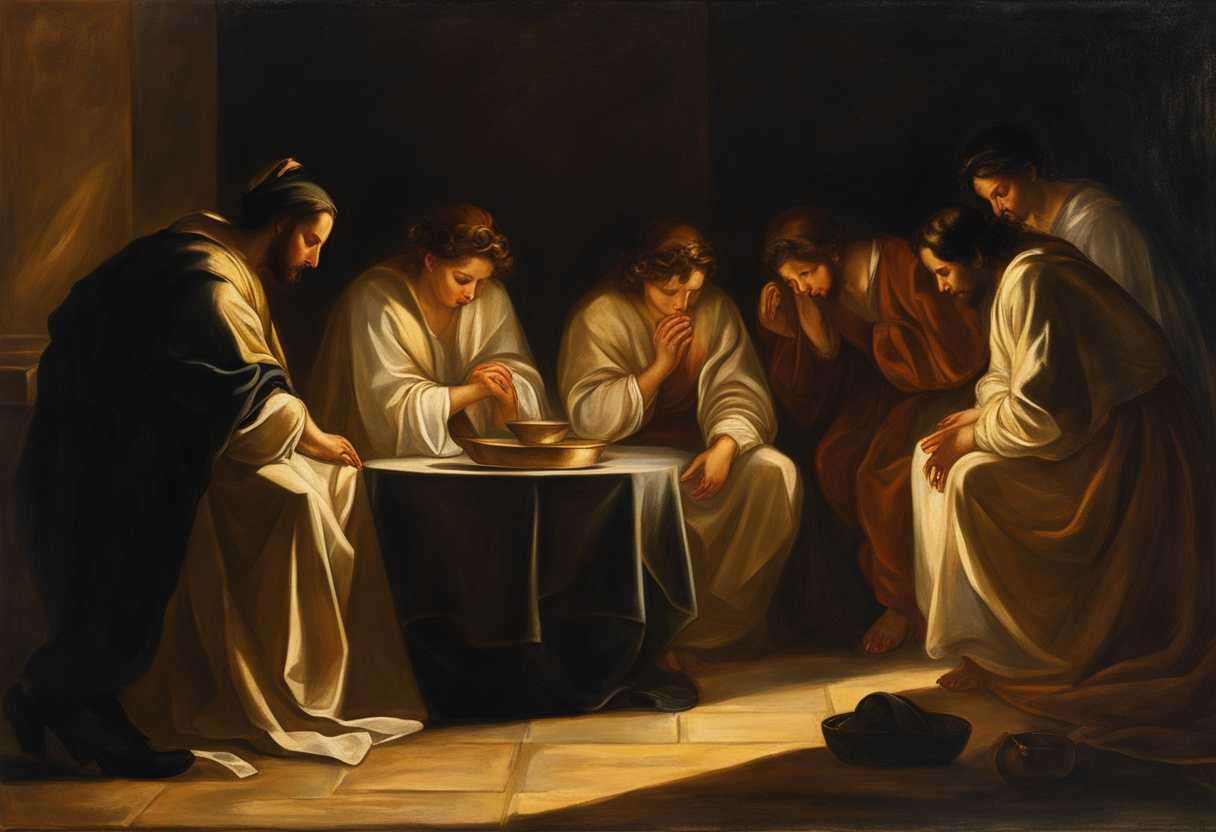
Setting the Scene for Luke 9:24-25
In Luke chapter 9, we find Jesus speaking to a large crowd of people who have gathered to hear His teachings. Among the crowd are His disciples, who have been traveling with Him and witnessing His miracles. The scene is set in a grassy field near the Sea of Galilee, with the sun beginning to set in the distance, casting a warm golden light over the group.
As Jesus addresses the crowd, He speaks about the importance of denying oneself and taking up one’s cross daily to follow Him. His words are met with a mixture of awe and confusion from the crowd, as they struggle to understand the depth of His message. The disciples, who have been with Jesus for some time now, listen intently, trying to grasp the significance of His words and how it applies to their own lives.
In the midst of this serene setting, Jesus’s words carry a weight of truth and challenge that causes those present to reflect on their own commitment to Him. The disciples, in particular, are faced with the reality of the sacrifices they must make to truly follow Jesus, knowing that the path ahead will not be easy but filled with trials and tests of faith.
What is Luke 9:24-25 about?
Jesus challenges us to consider the true meaning of sacrifice and selflessness in this verse from the Gospel of Luke. He is calling us to reflect on what we are willing to give up for the greater good and for our faith. Jesus is emphasizing the profound transformation that occurs when we let go of our selfish desires and prioritize serving others and living according to our beliefs by suggesting that those who are willing to lose their lives for His sake will actually save it.
Jesus’s words invite us to contemplate the paradoxical nature of losing oneself to find true fulfillment and purpose. They beckon us to ponder the significance of making sacrifices in our lives – whether they are big or small – for the sake of our faith and for the well-being of others. Jesus is reminding us that true happiness and salvation come from selfless acts of love, compassion, and service to others by encouraging us to let go of our ego and individual desires.
So, when reflect on this verse, consider what it means to you personally. Are you willing to set aside your own needs and desires for the sake of others and your faith? How can you practice selflessness in your daily life, even if it means making sacrifices or stepping out of your comfort zone? Jesus’s words challenge us to examine the depth of our commitment to our beliefs and to living a life of love and service.
Understanding what Luke 9:24-25 really means
We encounter an essential Christian paradox that challenges us to reconsider the values with which we align our lives in examining the potent message of Luke 9:24-25. The central theme here is the notion of gaining and losing life, both in a literal and a figuratively spiritual sense. This passage calls for a profound introspection: what does it truly mean to “save” one’s life, and what are we willing to forfeit in the process?
The first profound phrase to unpack is, “For whoever wants to save their life will lose it, but whoever loses their life for me will save it.” This paradoxical statement invites us to question the nature of true gain and loss. Here, ‘life’ signifies more than mere breathing existence; it embodies the soul’s spiritual vitality and eternal destiny. The call to lose one’s life for Christ emphasizes a surrender of selfish pursuits to gain something far more valuable: eternal life with God. This contrast sharply with contemporary society’s emphasis on self-preservation and material gain. How often do we prioritize our comforts and ambitions over our spiritual growth and altruistic deeds? The subsequent inquiry in the scripture asks, “What good is it for someone to gain the whole world, and yet lose or forfeit their very self?”” further deepens the discussion. This is a rhetorical question, leading us to reflect on the ultimate futility of worldly accomplishments when weighed against spiritual bankruptcy. The notion of forfeiting one’s ‘very self’ suggests a loss of moral and spiritual integrity, a theme echoed in Matthew 16:26, pointing to a universal, timeless truth about the dangers of materialism. This passage speaks volumes about the choices we make in a world increasingly driven by consumerism and instant gratification in today’s context. An anecdote from my community comes to mind: a successful businessman, who, after years of relentless pursuit of wealth and status, experienced a profound emptitude that led him to reevaluate his life’s direction. His journey mirrors the scripture’s teaching, as he found deeper fulfillment and peace in dedicating more of his time and resources to service and faith-based activities, thereby ‘losing’ his old life of self-centered achievement.
To integrate this message into our lives, we should examine areas where we might be ‘saving’ our lives at the expense of our spiritual health. Are there ambitions we pursue that conflict with our moral values? Are our daily choices reflecting a dedication to Christ, or are they tethered to worldly approval?
This passage is not just a call to action but a call to transformation. It beckons us to live counter-culturally, to reassess our definitions of success and fulfillment. It encourages us to find life by giving it away in love and service, promising that in what appears to be loss is, in fact, the greatest gain. Let us then reflect on how we can ‘lose’ our life for the sake of Christ today and how this very ‘loss’ might become our truest and most lasting victory.
What does it profit to gain the whole world?
The verse implies that gaining the whole world is not worth losing your soul. It emphasizes that no amount of worldly success or possessions can compare to the value of one’s soul. The focus is on the eternal consequences and the true priorities in life, rather than temporary wealth or power. The verse questions the ultimate worth of all worldly achievements if they come at the expense of one’s soul. It prompts individuals to consider what truly matters in the grand scheme of things and to prioritize their spiritual well-being over material gains. It serves as a reminder that true fulfillment and meaning come from a deeper, spiritual connection rather than external success or possessions.
Application
Imagine you’re at a crossroads in your busy workday, right between the tug of relentless deadlines and the pull of home responsibilities. Here, Luke 9:24-25 offers a transformative opportunity, a blueprint for prioritizing our spiritual journey over the fleeting temptations of worldly gains. It’s like choosing to invest in a project with eternal dividends—the growth and nourishment of your soul. Will you choose the path of temporary satisfaction or opt for the road that builds lasting fulfillment through selflessness and faith? What will be your legacy—quick profits or a life rich with spiritual depth? Will you embrace the daily challenge to follow in His footsteps, sacrificing momentary ease for profound eternal rewards? Isn’t that the ultimate investment worth making?

Reverend Michael Johnson is an experienced Church Minister with a profound expertise in spirituality and guidance. With a serene presence and a compassionate heart, he has faithfully served his congregation for over 20 years, leading them on a spiritual journey towards inner peace and enlightenment. Reverend Johnson’s extensive knowledge of religious philosophies and profound understanding of human nature have made him a trusted confidant and mentor to many, as he seamlessly weaves his profound wisdom into life teachings. Reverend Johnson’s calming demeanor and empathetic nature continue to uplift and heal souls, nurturing a sense of unity and tranquility within his community.