
Luke 9:33 is about Peter suggesting to build shelters for Jesus, Moses, and Elijah during the transfiguration, highlighting the human tendency to seek comfort and structure in divine encounters.
33 And as the men were parting from him, Peter said to Jesus, “Master, it is good that we are here. Let us make three tents, one for you and one for Moses and one for Elijah”—not knowing what he said.
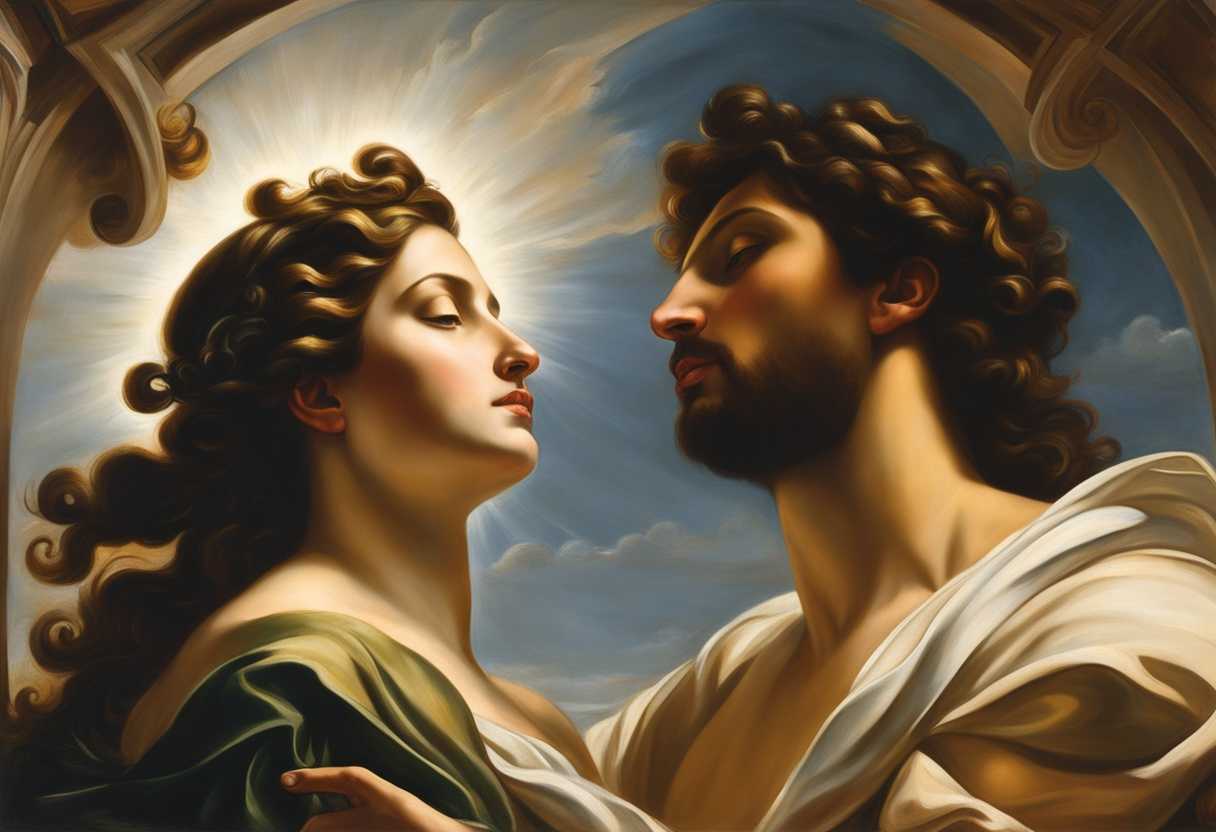
Setting the Scene for Luke 9:33
In Luke chapter 9, we find the account of the Transfiguration of Jesus on a high mountain. The scene is set with Jesus taking Peter, James, and John up the mountain with Him. As they reached the summit, the disciples witnessed a miraculous event where Jesus’ appearance changed, and His face shone like the sun, and His clothes became dazzling white.
In this awe-inspiring moment, Moses and Elijah appeared and were talking with Jesus. Peter, not fully understanding the significance of the moment, suggested building shelters for Jesus, Moses, and Elijah. However, a cloud overshadowed them, and a voice from the cloud declared, “This is my Son, my Chosen One; listen to him!” The disciples were filled with fear and wonder at this divine manifestation.
The surroundings were majestic, with the mountain providing a secluded and sacred space for this extraordinary encounter. The disciples were chosen by Jesus to witness this event, giving them a glimpse of His divine nature and reinforcing His identity as the Son of God. This pivotal moment strengthened the disciples’ faith and prepared them for the challenges ahead as they continued their journey with Jesus.
What is Luke 9:33 about?
Peter’s suggestion to build shelters for Moses, Elijah, and Jesus during the Transfiguration holds a deeper meaning in this verse. The Transfiguration is a significant event in the New Testament where Jesus is transfigured and appears with Moses and Elijah, symbolizing the continuity between the Law, the Prophets, and the fulfillment of God’s plan through Jesus. Peter’s idea to build shelters for them reflects his human desire to hold onto this extraordinary moment, to make it last and tangible.
Have you ever experienced something so profound or spiritual that you wanted to prolong the moment, to capture its essence and make it more concrete in your memory? Peter’s reaction is relatable to our instinct to grasp onto extraordinary experiences. However, the Transfiguration is a fleeting moment that serves as a revelation of Jesus’ divine nature and the fulfillment of God’s plan. It is a reminder that some experiences are meant to be cherished in memory rather than captured in physical form. Peter’s suggestion highlights the tension between the human desire for permanence and the transient nature of divine revelations.
Understanding what Luke 9:33 really means
In Luke 9:33, we find ourselves amidst the awe-inspiring Transfiguration narrative, a pivotal moment where Jesus is transfigured on a mountain before Peter, James, and John. The presence of Moses and Elijah symbolizes the Law and the Prophets, adding depth to the divine encounter. As Peter is overwhelmed by the experience, he suggests building shelters for Jesus, Moses, and Elijah, perhaps seeking to capture and contain the profound moment.
This verse resonates with the broader Transfiguration accounts in Matthew and Mark, offering additional insights into the disciples’ reactions and the divine affirmation of Jesus as God’s Son. The parallel with Moses’ radiant face after encountering God in Exodus underscores the divine nature of the Transfiguration. Peter later reflects on this event in 2 Peter, emphasizing its significance and his firsthand witness to the glory of Jesus.
The Transfiguration narrative speaks to us today by highlighting the overwhelming and transformative nature of divine encounters. Peter’s impulse to build shelters mirrors our inclination to control or formalize spiritual experiences, rather than simply being present and receptive to God’s presence. Through this event, we are reminded of the unique glory and divinity of Jesus, calling us to honor Him in our faith and lives.
Consider a scenario where you attend a life-changing conference and meet influential leaders who deeply inspire you. In your excitement, you may want to capture the moment through photos or videos. Similarly, Peter’s desire to build shelters reflects our tendency to want to memorialize and contain spiritual experiences. However, the most profound moments are often meant to be lived and felt, not confined or controlled.
The phrase “As the men were leaving Jesus” in Luke 9:33 signifies the transient nature of divine encounters, urging us to be fully present in those fleeting moments. Peter’s acknowledgment of the goodness of being in Jesus’ presence underscores the awe and reverence he felt. His suggestion to build shelters symbolizes our inclination to institutionalize or formalize spiritual experiences, rather than allowing them to internally transform us.
Reflecting on Luke 9:33 and its surrounding context deepens our understanding of divine encounters and our responses to them. It prompts us to embrace the transformative power of such moments and to acknowledge the unparalleled glory of Jesus in our lives. Let us learn from Peter’s initial reaction and strive to be fully present in the presence of God, allowing His divine encounters to shape and mold us from within.
How can we fully embrace God’s presence in awe?
One way we can fully embrace God’s presence in awe is by allowing ourselves to be truly present in the moment, like the disciples on the mountain with Jesus in the verse. We can set aside distractions, worries, and preoccupations, and focus our attention completely on God. We open ourselves up to experiencing God’s presence in a profound and awe-inspiring way by being present in the moment.
Additionally, we can approach God with a sense of wonder and reverence, recognizing His greatness and holiness. We too can approach God with a humble and reverent heart, just as the disciples were overcome by awe at the transfiguration of Jesus. This attitude of awe and reverence can help us to fully embrace God’s presence and power in our lives.
Finally, we can cultivate a spirit of gratitude and thanksgiving in response to God’s presence. We can deepen our awe and appreciation for God’s presence in our lives by acknowledging the blessings and miracles He has bestowed upon us. Gratitude helps us to remain connected to God and to continue to be amazed by His love and grace.
Application
Embrace the power of Luke 9:33, let it ignite the fire within you to connect with the divine in your daily life. Find inspiration in seeking God’s presence through prayer and reflection, just like a sturdy tree reaching for the sky. Are you willing to ascend the mountain of spirituality and invite His wondrous light to transform your soul into something beautiful and pure?

Reverend Michael Johnson is an experienced Church Minister with a profound expertise in spirituality and guidance. With a serene presence and a compassionate heart, he has faithfully served his congregation for over 20 years, leading them on a spiritual journey towards inner peace and enlightenment. Reverend Johnson’s extensive knowledge of religious philosophies and profound understanding of human nature have made him a trusted confidant and mentor to many, as he seamlessly weaves his profound wisdom into life teachings. Reverend Johnson’s calming demeanor and empathetic nature continue to uplift and heal souls, nurturing a sense of unity and tranquility within his community.