
Mark 10:35-40 is about the disciples James and John seeking positions of power and honor in Jesus’ kingdom, prompting Jesus to teach them about true greatness being found in service and sacrifice for others.
35 And James and John, the sons of Zebedee, came up to him and said to him, “Teacher, we want you to do for us whatever we ask of you.”
36 And he said to them, “What do you want me to do for you?”
37 And they said to him, “Grant us to sit, one at your right hand and one at your left, in your glory.”
38 But Jesus said to them, “You do not know what you are asking. Are you able to drink the cup that I drink, or to be baptized with the baptism with which I am baptized?”
39 And they said to him, “We are able.” And Jesus said to them, “The cup that I drink you will drink, and with the baptism with which I am baptized, you will be baptized,
40 but to sit at my right hand or at my left is not mine to grant, but it is for those for whom it has been prepared.”
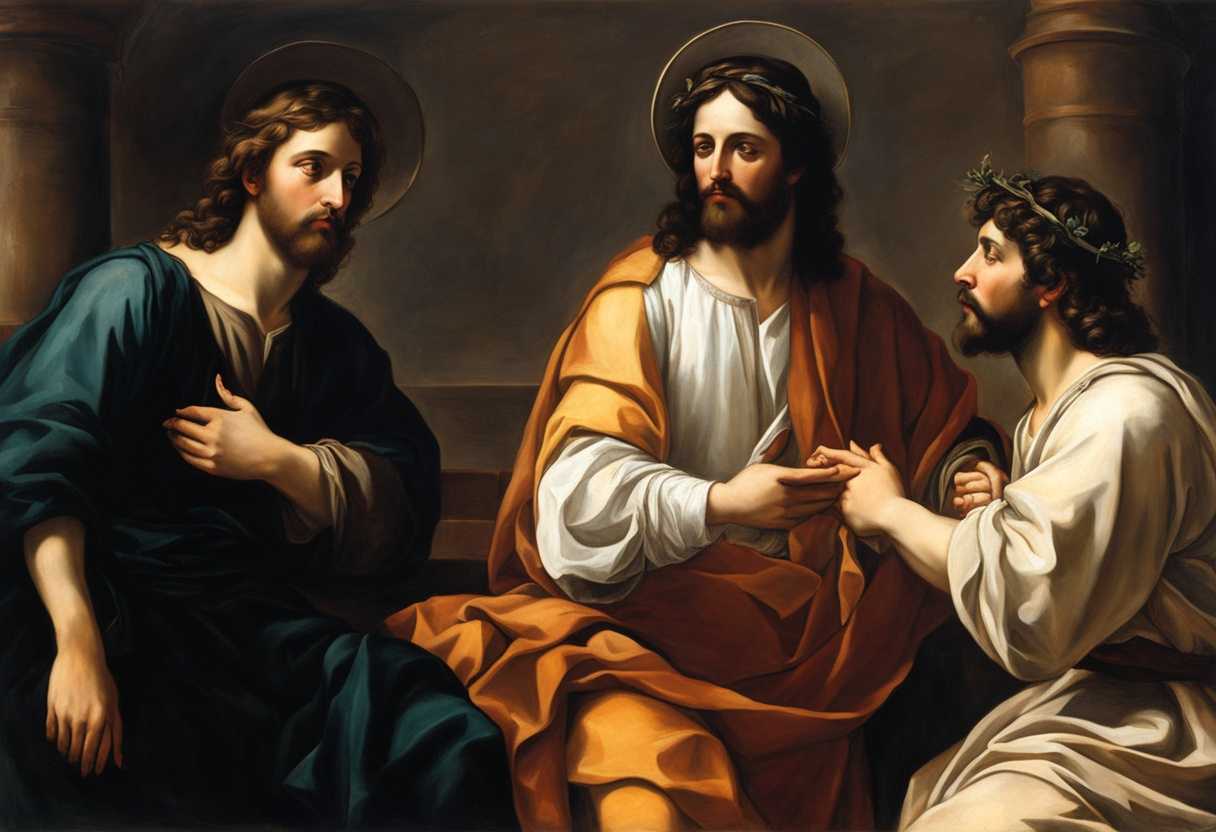
Setting the Scene for Mark 10:35-40
In Mark chapter 10, we find Jesus and his disciples on the road to Jerusalem. The disciples, including James and John, the sons of Zebedee, are walking alongside Jesus as they make their way to the city. The dusty road is lined with small shrubs and rocks, and the sun beats down on the group as they travel.
As they walk, James and John approach Jesus with a request. They ask to be seated at his right and left hand in his glory. This request causes a bit of tension among the disciples, as they all desire positions of honor in the kingdom. Jesus uses this moment to teach them about true greatness and servanthood, explaining that those who want to be great must be servants to all.
The scene is filled with a mix of ambition, confusion, and a desire for greatness among the disciples. Jesus, in his wisdom, uses this moment to impart an important lesson about humility and service, setting the tone for the teachings to come.
What is Mark 10:35-40 about?
Jesus in this verse highlights the essence of servant leadership, a core principle in Christianity, emphasizing serving others before oneself. Here, Jesus explains that to be a true disciple and leader, one must be willing to put others’ needs before their own, just as He put Himself last by giving His life for the salvation of all. A true leader can inspire, guide, and uplift those around them by demonstrating humility, selflessness, and a willingness to serve others.
Reflect on this verse and ask yourself: How can I embody servant leadership in my daily life? How can I prioritize serving others and putting their needs before my own? We can cultivate a culture of respect, compassion, and unity, not just in our communities but also in our personal relationships and interactions, by following Jesus’ example of sacrificial love and humility. True leadership lies in serving others selflessly and with a compassionate heart as you navigate your journey of discipleship.
Understanding what Mark 10:35-40 really means
In Mark 10:35-40, we encounter a poignant interaction between Jesus and the disciples James and John, who approach Him with a bold request for positions of honor in His kingdom. This passage sheds light on the prevalent human desire for recognition and status, a theme that resonates across time and cultures. The cultural backdrop of the disciples’ request is crucial to grasp, as in their society, positions of honor were closely tied to power and prestige, much like in our contemporary world.
The key phrases used by James and John, “Grant us to sit, one at your right hand and one at your left, in your glory,” reveal a fundamental misunderstanding of Jesus’ mission and the nature of His kingdom. Their request reflects a mindset focused on earthly power and glory, rather than the sacrificial and humble nature of Jesus’ teachings. Jesus’ response, “You do not know what you are asking,” serves as a gentle rebuke, highlighting their lack of comprehension regarding the true cost of discipleship and the selfless nature of His kingdom.
Furthermore, Jesus poses a poignant question to James and John, asking if they are willing to drink the cup He drinks and be baptized with His baptism, alluding to His impending suffering and death. This inquiry challenges them to consider the depth of commitment and sacrifice required to follow Him faithfully. It prompts us to reflect on our own willingness to endure hardships and make sacrifices in our journey of faith.
Drawing parallels from related Bible passages such as Matthew 20:20-23 and Luke 22:24-27, we glean further insights into Jesus’ teachings on true greatness and servanthood. These passages emphasize the importance of humility and service over the pursuit of positions of power and status. Similarly, Paul’s words in Philippians 2:5-8 underscore Jesus’ humility and obedience, serving as a model for believers to emulate in their lives.
In our contemporary context, where the allure of recognition and status often drives our ambitions, this passage challenges us to reassess our priorities and motivations. It beckons us to embrace a life of service and humility, mirroring Jesus’ example of selflessness and sacrificial love. Just as James and John sought positions of honor but were called to a path of humility and service, we are encouraged to align our ambitions with the values of Jesus’ kingdom.
Consider a scenario where a young professional relentlessly pursues a promotion, believing it will bring fulfillment and respect, only to discover that the newfound status comes with overwhelming responsibilities and fleeting accolades. This narrative mirrors the disciples’ misguided request and Jesus’ corrective response, highlighting the importance of understanding the true cost and nature of our aspirations.
As we reflect on this passage, let us introspect on our own ambitions and desires. Are they in harmony with the principles of Jesus’ kingdom, which exalt humility and service over self-aggrandizement? Let us seek opportunities to serve others in our daily lives, embodying the spirit of Jesus’ sacrificial love. May we pray for discernment and wisdom to discern God’s will for our lives, prioritizing His kingdom values over the transient allure of worldly recognition and status.
How can we cultivate a spirit of humility?
To cultivate a spirit of humility as indicated in the verse, we can practice putting others before ourselves. This involves actively seeking to serve and uplift those around us without expecting recognition or praise in return. We can develop a humble mindset that values the worth and dignity of all individuals by focusing on the needs and well-being of others instead of always seeking our own interests.
Additionally, fostering a spirit of humility involves being willing to learn from others and be open to different perspectives. This means acknowledging that we do not have all the answers and that there is always room for growth and improvement. We can cultivate humility and a greater sense of empathy towards those around us by approaching situations with a teachable attitude and a readiness to listen and consider the viewpoints of others.
Lastly, practicing gratitude is essential in nurturing humility. Taking time to appreciate the blessings and opportunities in our lives can help us stay grounded and prevent feelings of entitlement or superiority from taking root. We can cultivate a humble heart that values the interconnectedness and shared humanity we all possess by expressing gratitude for the kindness and support we receive from others.
Application
Reflect on James and John’s bold request to sit by Jesus’ side, and ask yourself if you too desire power and recognition. Are you willing to humble yourself and serve others as Jesus did? Let this passage inspire you to embrace humility and selflessness, living according to Christ’s teachings. Will you rise to the challenge and show love and compassion in your service to others?

Reverend Michael Johnson is an experienced Church Minister with a profound expertise in spirituality and guidance. With a serene presence and a compassionate heart, he has faithfully served his congregation for over 20 years, leading them on a spiritual journey towards inner peace and enlightenment. Reverend Johnson’s extensive knowledge of religious philosophies and profound understanding of human nature have made him a trusted confidant and mentor to many, as he seamlessly weaves his profound wisdom into life teachings. Reverend Johnson’s calming demeanor and empathetic nature continue to uplift and heal souls, nurturing a sense of unity and tranquility within his community.