
Mark 11:1-18 is about Jesus entering Jerusalem triumphantly, cleansing the temple, and teaching about the importance of true faith and sincerity in worship.
1 Now when they drew near to Jerusalem, to Bethphage and Bethany, at the Mount of Olives, Jesus sent two of his disciples
2 and said to them, “Go into the village in front of you, and immediately as you enter it you will find a colt tied, on which no one has ever sat. Untie it and bring it.
3 And if anyone says to you, ‘Why are you doing this?’ say, ‘The Lord has need of it and will send it back here immediately.’
4 And they went away and found a colt tied at a door outside in the street, and they untied it.
5 And some of those standing there said to them, “What are you doing, untying the colt?”
6 And they said to them what Jesus had said, and they let them go.
7 And they brought the colt to Jesus and threw their cloaks on it, and he sat on it.
8 And many spread their cloaks on the road, and others spread leafy branches that they had cut from the fields.
9 And those who went before and those who followed were shouting, “Hosanna! Blessed is he who comes in the name of the Lord!
10 Blessed is the coming kingdom of our father David! Hosanna in the highest!
11 And he entered Jerusalem and went into the temple. And when he had looked around at everything, as it was already late, he went out to Bethany with the twelve.
12 On the following day, when they came from Bethany, he was hungry.
13 And seeing in the distance a fig tree in leaf, he went to see if he could find anything on it. When he came to it, he found nothing but leaves, for it was not the season for figs.
14 And he said to it, “May no one ever eat fruit from you again.” And his disciples heard it.
15 And they came to Jerusalem. And he entered the temple and began to drive out those who sold and those who bought in the temple, and he overturned the tables of the money-changers and the seats of those who sold pigeons.
16 and would not allow anyone to carry anything through the temple.
17 And he was teaching them and saying to them, “Is it not written, ‘My house shall be called a house of prayer for all the nations’? But you have made it a den of robbers.”
18 And the chief priests and the scribes heard it and were seeking a way to destroy him, for they feared him, because all the crowd was astonished at his teaching.
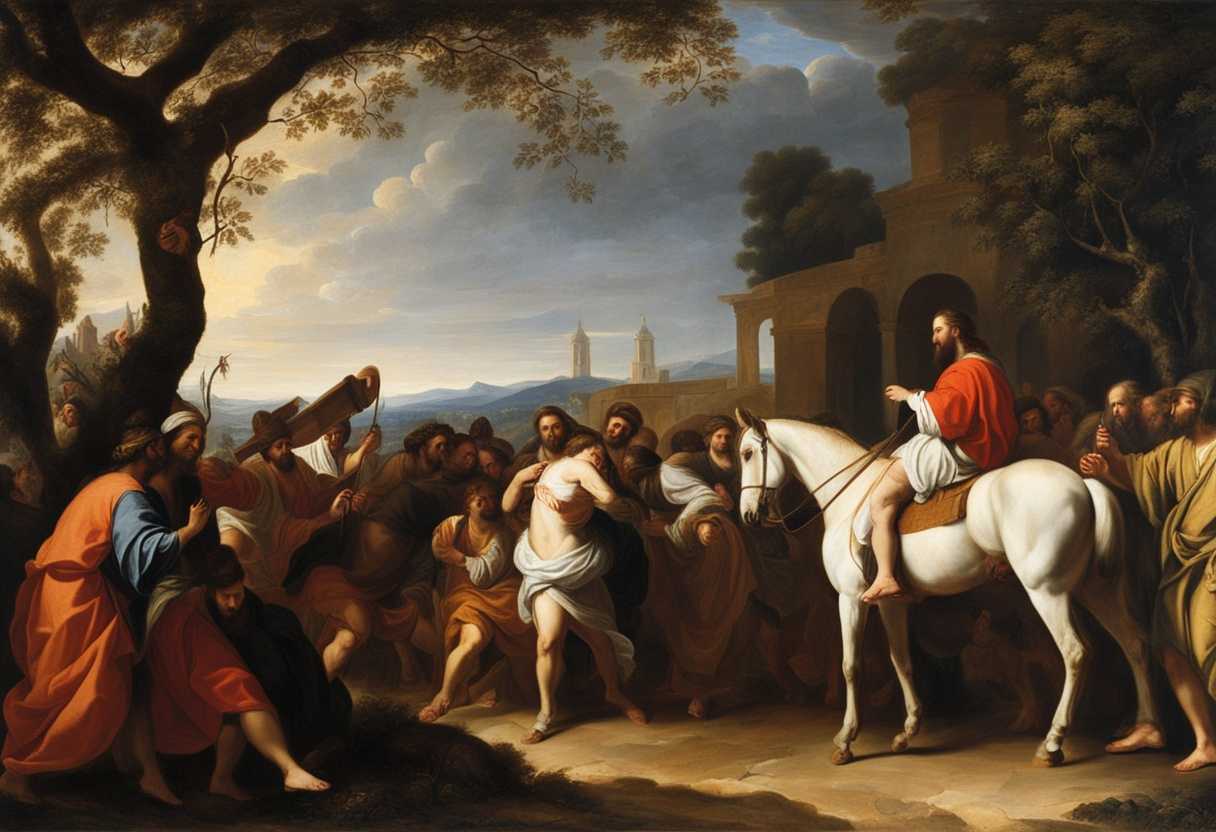
Setting the Scene for Mark 11:1-18
In Mark chapter 11, Jesus and his disciples are approaching Jerusalem during the time of the Passover festival. As they near the city, Jesus instructs two of his disciples to go ahead and find a colt tied up in a village. He tells them that if anyone questions them, they are to say that the Lord needs it and will return it shortly. The disciples find the colt just as Jesus had said, and they bring it to him.
As they enter Jerusalem, a large crowd gathers, spreading their cloaks and palm branches on the road, shouting, “Hosanna! Blessed is he who comes in the name of the Lord!” The people are excited, believing that Jesus is the long-awaited Messiah who will deliver them from oppression. However, Jesus does not come as a conquering king on a warhorse but humbly riding on a colt, fulfilling the prophecy of Zechariah.
Upon entering the temple, Jesus is displeased to find it filled with merchants and money changers, turning the house of prayer into a marketplace. He overturns the tables and drives out those who were buying and selling, declaring, “My house will be called a house of prayer for all nations, but you have made it a den of robbers.” This scene sets the stage for the events that will unfold in the following days leading up to Jesus’ crucifixion.
What is Mark 11:1-18 about?
This verse captures a pivotal moment in the life of Jesus as he enters Jerusalem amidst great fanfare and adulation. This triumphal entry signifies the beginning of the end of his earthly ministry and the fulfillment of prophecies about the Messiah. The act of cleansing the temple and cursing the fig tree are symbolic gestures that carry deep meaning. Jesus is denouncing corruption and restoring the sanctity of the temple as a place of worship by driving out the money changers. The cursing of the fig tree serves as a powerful metaphor for the consequences of spiritual barrenness and hypocrisy. We reflect on this verse, inviting us to consider the importance of authenticity and integrity in our own lives. Are we bearing fruit in our faith and actions, or are we merely going through the motions? Are there areas in our lives that need cleansing and renewal, just as the temple did? Jesus’ actions remind us of the need to continually examine our hearts and ensure that our words and deeds align with our beliefs. We too are called to stand up for justice, truth, and love in our world, just as Jesus challenged the status quo and upheld righteousness.
Understanding what Mark 11:1-18 really means
The passage in Mark 11:1-18 captures significant events in Jesus’ final week on earth, known as Passion Week. It begins with Jesus’ triumphant entry into Jerusalem, where the crowd hailed Him with “Hosanna! Blessed is he who comes in the name of the Lord!” This declaration acknowledges Jesus as the Messiah, fulfilling prophecies like Psalm 118:25-26. The scene sets the stage for the pivotal moments that follow, including the cursing of the fig tree and the cleansing of the temple.
In the encounter with the fig tree, Jesus finds it barren despite its outward appearance of leaves, symbolizing the spiritual emptiness of Israel. This serves as a caution against hypocrisy and emphasizes the importance of bearing genuine spiritual fruit. Similarly, the cleansing of the temple underscores the need for authentic worship and denounces corruption, echoing the prophetic words of Isaiah and Jeremiah regarding the temple’s intended purpose.
The themes of authentic faith, worship, and justice resonate strongly in this passage, challenging us to evaluate our own lives. Just as the fig tree had leaves but no fruit, we are prompted to examine whether our faith is superficial or if it yields meaningful spiritual outcomes. Jesus’ actions in the temple remind us that worship should be heartfelt and that we must actively oppose injustice, aligning our actions with true devotion and righteousness.
The relevance of this passage extends to contemporary believers, urging us to embody authentic faith, uphold the sanctity of worship, and acknowledge Jesus as the promised Messiah. It prompts introspection and calls for a transformation in how we approach our relationship with God and our interactions with others. The narrative serves as a poignant reminder of the enduring lessons Jesus imparted through His words and deeds.
Consider a church bustling with activities but lacking in genuine worship and service, akin to the fig tree with leaves but no fruit. Reflect on whether our lives and communities mirror this facade or if they bear the fruits of faith, love, and righteousness. Let Jesus’ actions in Mark 11:1-18 inspire us to cultivate authentic faith, pursue true worship, and honor Christ as our Savior and King. May we heed the call to align our lives with His teachings and example, bearing fruit that glorifies God and blesses those around us.
How do my actions reflect true devotion to God?
One way to reflect true devotion to God is to approach Him with humility and reverence, acknowledging His authority and power. This can be demonstrated through acts of praise and worship, as well as through seeking His guidance and wisdom in all aspects of life. We show our deep devotion to God by recognizing His sovereignty and seeking to align our actions with His will.
Another way to demonstrate true devotion to God is by living a life of integrity and righteousness. This involves being honest and just in our dealings with others, showing compassion and kindness, and standing up for what is right. We show our heartfelt commitment to God and our desire to please Him in all that we do by following His commandments and striving to live according to His principles.
Additionally, true devotion to God can be reflected in our willingness to serve others selflessly and sacrificially. When we show love and compassion to those in need, we are demonstrating our love for God, who calls us to love our neighbors as ourselves. Putting the needs of others before our own desires and comforts is a powerful way to show our devotion to God and to live out the values He holds dear.
Application
As we dive into Mark 11:1-18, let’s examine the depth of our worship and the purity of our intentions when we stand before the Divine. Are we showing up with real reverence and love, or are we just ticking boxes? Let these words spark a fire within you to approach God genuinely and openly, craving His closeness with your whole being. How will you answer this invitation to worship with authenticity and purity?

Reverend Michael Johnson is an experienced Church Minister with a profound expertise in spirituality and guidance. With a serene presence and a compassionate heart, he has faithfully served his congregation for over 20 years, leading them on a spiritual journey towards inner peace and enlightenment. Reverend Johnson’s extensive knowledge of religious philosophies and profound understanding of human nature have made him a trusted confidant and mentor to many, as he seamlessly weaves his profound wisdom into life teachings. Reverend Johnson’s calming demeanor and empathetic nature continue to uplift and heal souls, nurturing a sense of unity and tranquility within his community.