
Mark 11:12-14 is about Jesus cursing a fig tree as a symbolic act of judgment against Israel’s spiritual barrenness and lack of genuine faith.
12 On the following day, when they came from Bethany, he was hungry.
13 And seeing in the distance a fig tree in leaf, he went to see if he could find anything on it. When he came to it, he found nothing but leaves, for it was not the season for figs.
14 And he said to it, “May no one ever eat fruit from you again.” And his disciples heard it.
Setting the Scene for Mark 11:12-14
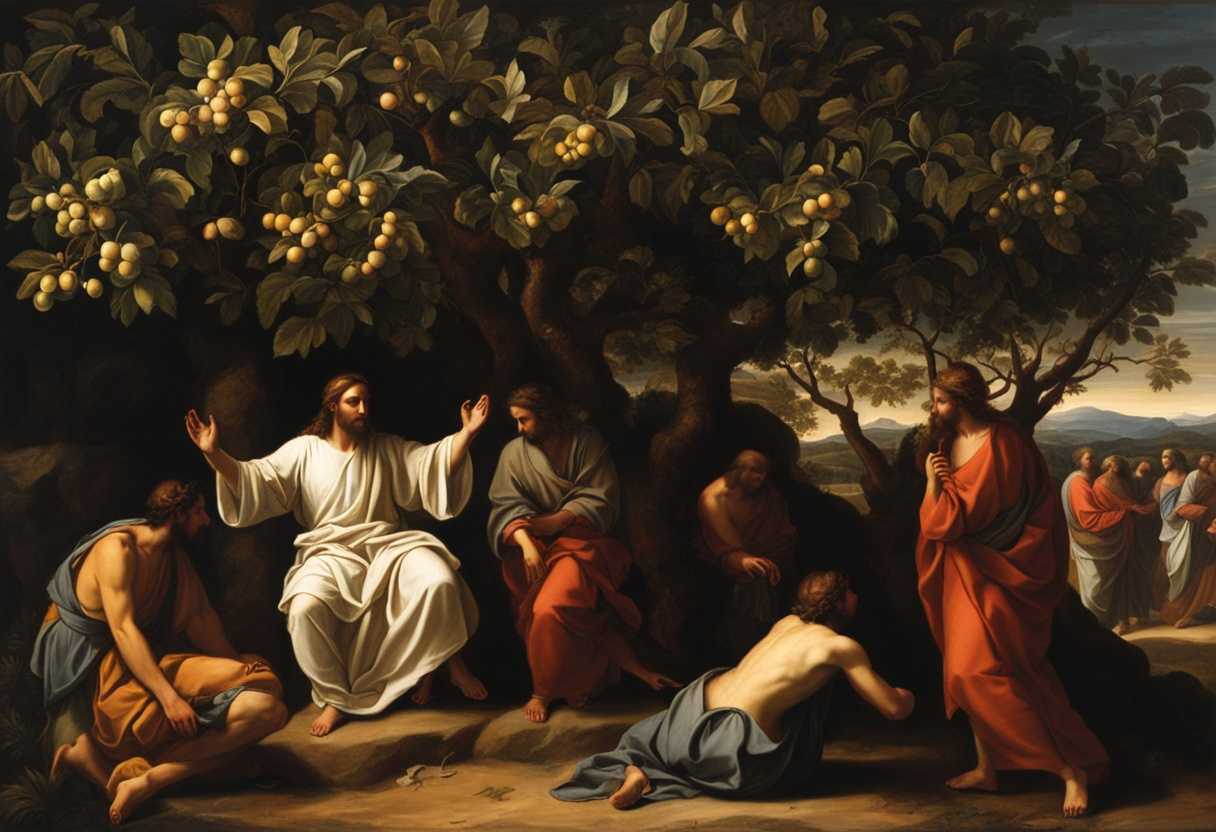
In Mark chapter 11, we find Jesus and his disciples on their way to Jerusalem. As they approach the city, Jesus feels hungry and spots a fig tree in the distance. He decides to go over to it to see if it has any fruit. The tree, however, is barren, having leaves but no figs. This disappoints Jesus, and he curses the tree, saying, “May no one ever eat fruit from you again.”
The scene is set on a dusty road leading to Jerusalem, with the city bustling in the background as people prepare for the upcoming Passover festival. Jesus is accompanied by his disciples, who are walking alongside him, listening to his teachings and witnessing his miracles. The sun is shining brightly overhead, casting a warm glow on the landscape.
As they approach the fig tree, Jesus stops in his tracks, his disciples gathering around him, curious about his actions. With a mix of hunger and disappointment, Jesus uses this moment to teach a lesson about faith and the importance of bearing fruit in one’s life. The atmosphere is tense as Jesus’ words hang in the air, the disciples pondering the significance of this seemingly simple encounter with a fig tree.
What is Mark 11:12-14 about?
Jesus’s cursing of the fig tree in this verse holds a deep symbolic meaning. The fig tree, being a common symbol in the Bible, represents the nation of Israel. Jesus metaphorically expresses his displeasure with Israel for their lack of spiritual productivity and faithfulness to God by cursing the fig tree for not bearing fruit. This act serves as a powerful visual lesson, illustrating the consequences of spiritual barrenness and unfaithfulness. Delving into the verse prompts us to ponder on the state of our own spiritual lives. Are we bearing fruits of righteousness, love, and faith in our relationship with God and others? Just like the fig tree, are we fulfilling our purpose in glorifying God through our actions and words? Jesus’ actions towards the fig tree serve as a wake-up call for us to reflect on our own spiritual journey and make sure that we are not just going through the motions, but truly living a fruitful and faithful life. Let us constantly evaluate our spiritual walk, bear fruits of the Spirit, and remain faithful to God amidst the challenges and distractions of the world, taking this verse as a reminder. Let us strive to be like the healthy tree that bears good fruit, fulfilling our purpose and bringing glory to God in all that we do, just as Jesus called out the fig tree for its lack of fruit.
Understanding what Mark 11:12-14 really means
In Mark 11:12-14, we encounter a seemingly straightforward event where Jesus, in search of food, approaches a fig tree only to find it barren. This incident, occurring in the final week of His life, holds deeper significance than a simple act of hunger-driven disappointment. It serves as a poignant illustration of Jesus’ authority and the impending judgment that looms over all creation.
This passage, when viewed alongside related scriptures like Matthew 21:18-22 and John 15:1-8, underscores the themes of faith, fruitfulness, and accountability. Just as Jesus expected the fig tree to bear fruit, He expects His followers to exhibit spiritual productivity through acts of love, kindness, and obedience. The fig tree’s outward appearance of lush leaves but lack of fruit serves as a cautionary tale against mere pretense in faith, emphasizing the need for authenticity in our relationship with God.
The cursing of the fig tree symbolizes the consequences of spiritual barrenness and the sobering reality of judgment. It prompts us to reflect on our own lives—are we bearing fruit in line with God’s expectations, or are we merely putting on a show of righteousness without genuine substance? The analogy of a student who talks about studying but fails to prepare adequately for exams resonates here, highlighting the importance of aligning our actions with our professed beliefs.
The phrase “He found nothing but leaves” encapsulates the core message of this passage, drawing attention to the disparity between appearance and reality. Just as the fig tree appeared promising from a distance but failed to deliver, so too can our lives deceive if they lack true spiritual depth and fruitfulness. Jesus’ words, “May no one ever eat fruit from you again,” echo with a weighty warning, emphasizing God’s desire for authentic faith and meaningful fruit in our lives.
The disciples’ witness to this event underscores its significance as a teaching moment for all believers. Jesus’ actions were not merely a display of power but a poignant lesson on the importance of genuine faith and the consequences of spiritual emptiness. As we ponder this passage, let us examine our hearts and actions, striving for authenticity in our faith and a life that bears the fruit of God’s love and righteousness.
How do my actions align with my beliefs?
Your actions align with your beliefs in the way that you are attentive to the fruits of your labor and the intentions behind your actions. You may likewise expect certain outcomes or behaviors in line with your beliefs, and when those expectations are not met, you may take the initiative to address the situation and make necessary changes. This mindset reflects a proactive approach to ensuring that your actions are consistent with your principles. You demonstrate a commitment to integrity and authenticity by being mindful of discrepancies between your beliefs and your actions. You may feel compelled to address any inconsistencies within yourself, just as Jesus took action when he found the fig tree lacking fruit, whether it be through self-reflection, self-correction, or seeking guidance from others. This willingness to address and rectify any misalignment between your beliefs and actions shows a dedication to living out your values in a genuine and purposeful manner. When you actively seek to cultivate a life that reflects what you hold to be true and meaningful, your actions ultimately align with your beliefs. You show a desire to live out your faith authentically and responsibly by being conscious of the relationship between your beliefs and your actions. This awareness allows you to make intentional choices that are in harmony with your values, leading to a deeper sense of fulfillment and purpose in your journey of faith.
Application
Imagine your life as a bustling workplace or a thriving family. Just as every task and every relationship demand real effort and genuine care, so does your faith. The story of Jesus cursing the fig tree in Mark 11:12-14 is a powerful reminder—faith must bear fruit. Are you ready to roll up your sleeves and cultivate a faith that truly makes a difference in your life and the lives of those around you?

Reverend Michael Johnson is an experienced Church Minister with a profound expertise in spirituality and guidance. With a serene presence and a compassionate heart, he has faithfully served his congregation for over 20 years, leading them on a spiritual journey towards inner peace and enlightenment. Reverend Johnson’s extensive knowledge of religious philosophies and profound understanding of human nature have made him a trusted confidant and mentor to many, as he seamlessly weaves his profound wisdom into life teachings. Reverend Johnson’s calming demeanor and empathetic nature continue to uplift and heal souls, nurturing a sense of unity and tranquility within his community.