
Mark 11:12-26 is about the importance of genuine faith and forgiveness in prayer, emphasizing the need for sincere belief in the power of prayer and the necessity to release resentment and forgive others in order to receive God’s grace.
12 On the following day, when they came from Bethany, he was hungry.
13 And seeing in the distance a fig tree in leaf, he went to see if he could find anything on it. When he came to it, he found nothing but leaves, for it was not the season for figs.
14 And he said to it, “May no one ever eat fruit from you again.” And his disciples heard it.
15 And they came to Jerusalem. And he entered the temple and began to drive out those who sold and those who bought in the temple, and he overturned the tables of the money-changers and the seats of those who sold pigeons.
16 and would not allow anyone to carry anything through the temple.
17 And he was teaching them and saying to them, “Is it not written, ‘My house shall be called a house of prayer for all the nations’? But you have made it a den of robbers.”
18 And the chief priests and the scribes heard it and were seeking a way to destroy him, for they feared him, because all the crowd was astonished at his teaching.
19 And when evening came they went out of the city.
20 As they passed by in the morning, they saw the fig tree withered away to its roots.
21 And Peter remembered and said to him, “Rabbi, look! The fig tree that you cursed has withered.”
22 And Jesus answered them, “Have faith in God.
23 Truly, I say to you, whoever says to this mountain, ‘Be taken up and thrown into the sea,’ and does not doubt in his heart, but believes that what he says will come to pass, it will be done for him.
24 Therefore I tell you, whatever you ask in prayer, believe that you have received it, and it will be yours.
25 And whenever you stand praying, forgive, if you have anything against anyone, so that your Father also who is in heaven may forgive you your trespasses.”
26 But if you do not forgive, neither will your Father who is in heaven forgive your trespasses.”
Setting the Scene for Mark 11:12-26
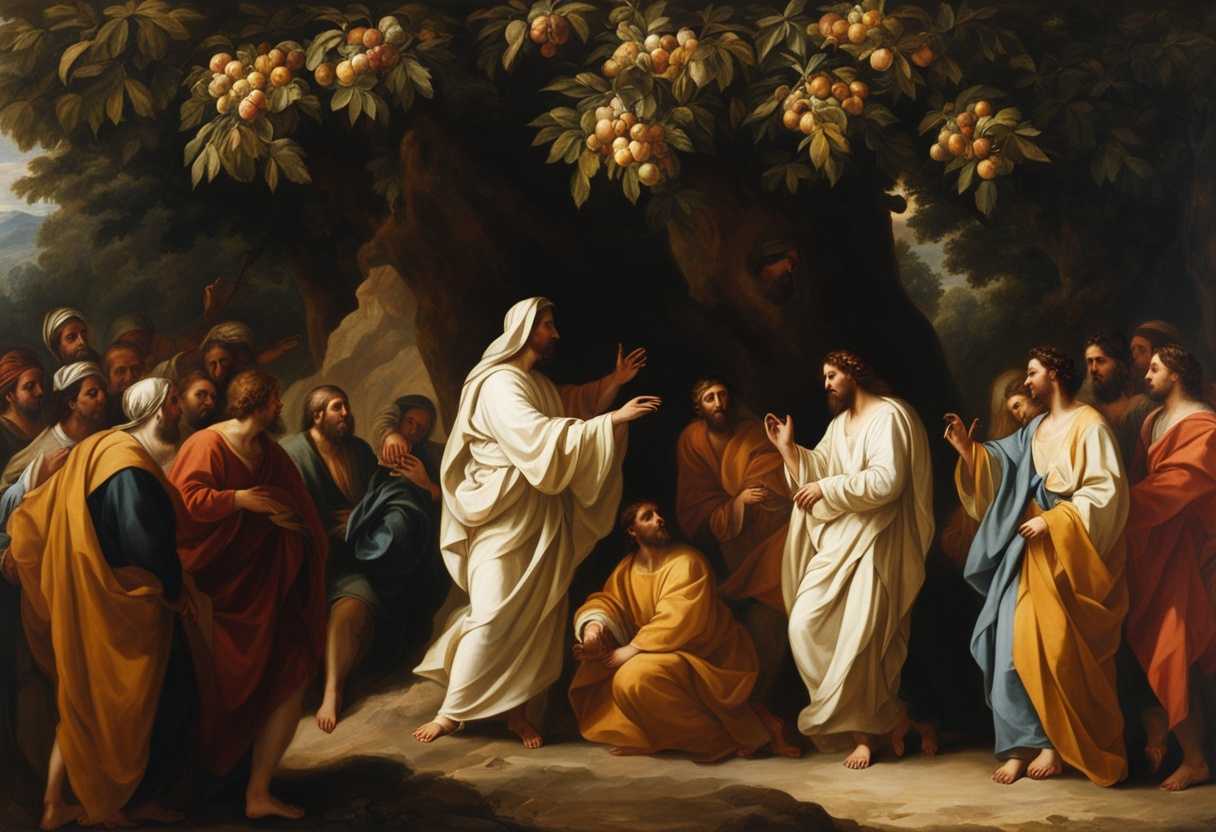
In Mark chapter 11, we find Jesus and his disciples on their way to Jerusalem. As they approach the city, Jesus feels hungry and spots a fig tree in the distance. He walks over to it, hoping to find some fruit to eat. However, upon reaching the tree, he discovers that it is barren, having no figs on it. This prompts Jesus to curse the fig tree, saying, “May no one ever eat fruit from you again.”
The scene is set on a dusty road leading to Jerusalem, with the sun beating down on the group as they make their way towards the city. Jesus is accompanied by his disciples, who are witnessing this interaction with the fig tree. The disciples are likely curious about Jesus’ actions and teachings, as they continue to learn from him during their journey. The barren fig tree serves as a powerful metaphor for Jesus’ teachings on faith and the importance of bearing fruit in one’s life. This moment becomes a lesson for his disciples and a demonstration of Jesus’ authority over nature.
What is Mark 11:12-26 about?
Jesus’ actions towards the fig tree in this particular verse symbolize a deeper message about the importance of bearing fruit in our lives. Jesus expects us to live out our faith in tangible ways, just as a healthy tree should produce fruit. Jesus is teaching us about the need for action and results that reflect our beliefs and values by cursing the fig tree that didn’t bear fruit. Jesus’ teachings on faith and forgiveness serve as a reminder of the core principles of Christianity. He emphasizes the power of faith to move mountains and the importance of forgiving others as we seek forgiveness from God. These lessons encourage us to deepen our relationship with God through sincere faith and to embody His grace by extending forgiveness to others.
Reflecting on this verse and its teachings challenges us to examine our own lives and consider how we are bearing fruit in our faith. Are we living in a way that aligns with our beliefs, or are we at risk of being like the barren fig tree? Let’s take this opportunity to strengthen our faith, cultivate good fruits through our actions, and embrace forgiveness as a cornerstone of our Christian journey.
Understanding what Mark 11:12-26 really means
The passage in Mark 11:12-26 presents a series of events that hold profound significance for believers. Jesus’ actions, from cursing the fig tree to cleansing the temple, are not merely historical anecdotes but carry timeless lessons for us today. Understanding the context of these events is crucial to unlocking their deeper meanings within the cultural and historical backdrop of Jesus’ time.
One key theme that emerges is the concept of spiritual productivity. When Jesus curses the fig tree for its lack of fruit, it serves as a stark reminder of the judgment on unfruitful lives. Just as the fig tree was expected to bear fruit, Christians are called to produce spiritual fruit through their actions and character. This challenges us to reflect on whether our lives are bearing the fruit of faith and obedience.
In cleansing the temple and declaring it a house of prayer for all nations, Jesus emphasizes the importance of authentic worship. He condemns commercialism and distractions in sacred spaces, urging believers to ensure that their places of worship and personal devotion are focused on genuine connection with God. This prompts us to examine our own worship practices and ensure they are free from worldly influences.
The teaching on faith in Mark 11 underscores the power of trusting in God. Jesus’ words about moving mountains with faith as small as a mustard seed remind us that no challenge is too great for God to overcome. In a world filled with uncertainties and obstacles, the call to have faith in God’s ability to intervene in our lives is a reassuring and empowering message.
Forgiveness is another central theme in this passage. Jesus links forgiveness with prayer, highlighting the interconnectedness of faith and relationships. The command to forgive others as we pray serves as a reminder of the importance of maintaining healthy relationships and letting go of past hurts. Holding onto grudges can hinder our spiritual growth and disrupt our connection with God.
By reflecting on these themes and applying them to our lives, we can deepen our faith and live in a way that honors God. Just as the gardener replaced the unfruitful fig tree with a productive one, we are called to bear spiritual fruit in our lives. Like Jesus cleansing the temple, we must ensure our worship spaces and personal devotions are focused on authentic connection with God. The reminder to have faith in God’s power and the call to forgive others are timeless lessons that can guide us in navigating life’s challenges and maintaining healthy relationships. Let us heed these teachings and strive to live lives that reflect our faith and glorify God.
How can we cultivate genuine faith and forgiveness?
To cultivate genuine faith and forgiveness, we can learn from the lesson embedded in the passage of Mark 11:12-26. This passage teaches us about the power of belief in God’s work and the importance of forgiving others. Faith involves trusting in God’s timing and plan, even when things may not make sense to us at the moment. Cultivating a deep trust in God’s intentions and guidance can help our faith grow stronger and more genuine.
Furthermore, forgiveness is emphasized in this passage as Jesus teaches about the necessity of forgiving others in order to receive forgiveness from God. True forgiveness involves letting go of grudges and resentment, and choosing to show love and compassion instead. Practicing forgiveness towards others opens us up to experience the grace and mercy of God in our own lives. Through these teachings, we can deepen our faith and embody a spirit of forgiveness that reflects God’s unconditional love for all.
Application
Reflect on how faith and forgiveness can transform your daily life. Just as the fig tree needed to bear fruit to thrive, we must align our actions with our beliefs. Let’s embrace forgiveness and prayer to overcome obstacles in our lives. Are you prepared to cultivate a heart full of forgiveness and faith now?

Reverend Michael Johnson is an experienced Church Minister with a profound expertise in spirituality and guidance. With a serene presence and a compassionate heart, he has faithfully served his congregation for over 20 years, leading them on a spiritual journey towards inner peace and enlightenment. Reverend Johnson’s extensive knowledge of religious philosophies and profound understanding of human nature have made him a trusted confidant and mentor to many, as he seamlessly weaves his profound wisdom into life teachings. Reverend Johnson’s calming demeanor and empathetic nature continue to uplift and heal souls, nurturing a sense of unity and tranquility within his community.