
Mark 11:13-14 is about Jesus cursing a fig tree as a symbolic act demonstrating the judgment that will come upon those who do not bear fruit for the kingdom of God.
13 And seeing in the distance a fig tree in leaf, he went to see if he could find anything on it. When he came to it, he found nothing but leaves, for it was not the season for figs.
14 And he said to it, “May no one ever eat fruit from you again.” And his disciples heard it.
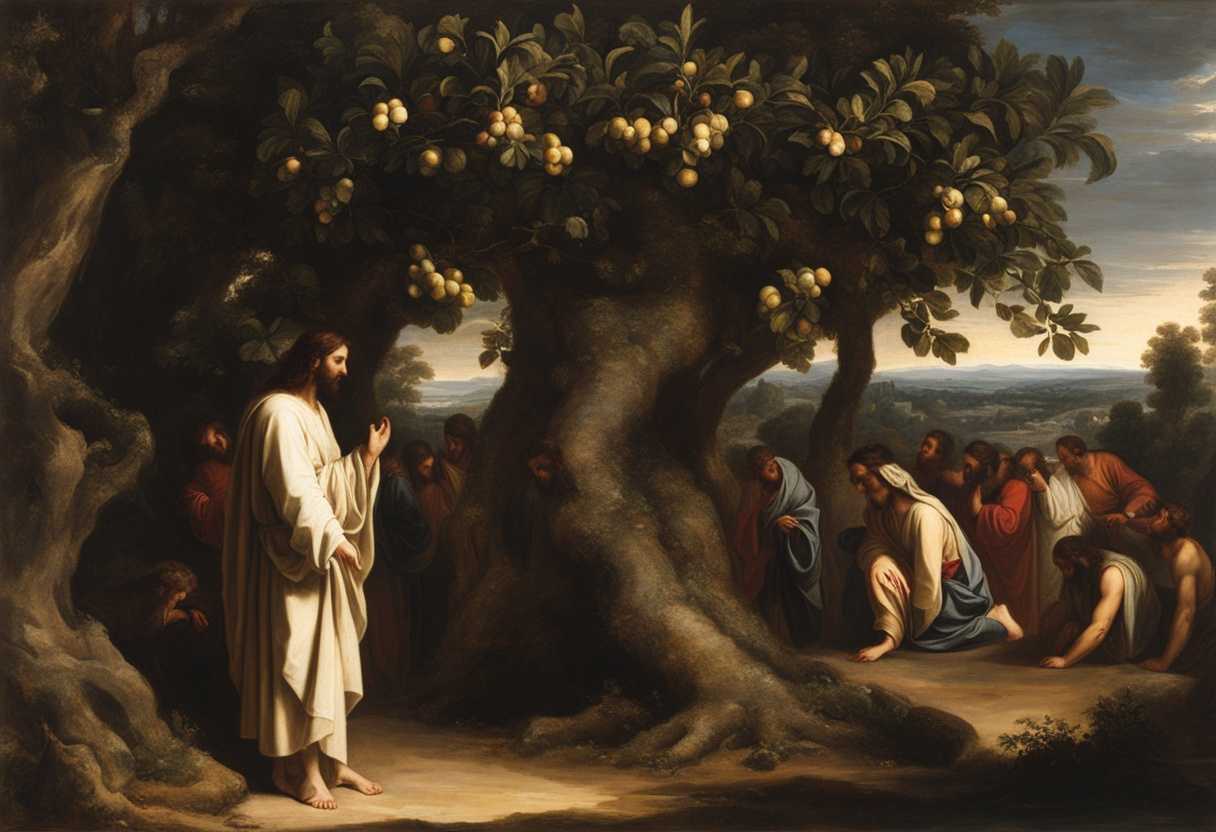
Setting the Scene for Mark 11:13-14
In Mark chapter 11, we find Jesus and his disciples on their way to Jerusalem. As they approach the city, Jesus spots a fig tree in the distance. The tree is full of leaves, giving the impression that it would bear fruit. However, upon closer inspection, Jesus discovers that the tree is barren. This discrepancy between the tree’s appearance and its actual fruitlessness serves as a powerful metaphor for the spiritual condition of the religious leaders in Jerusalem at that time.
The scene is set on a dusty road leading to Jerusalem, with the city bustling in the background as people prepare for the upcoming Passover festival. Jesus, accompanied by his disciples, stops by the fig tree to examine it. The disciples, curious about Jesus’ actions, gather around him as he uses this moment to teach them a lesson about faith and spiritual fruitfulness. The sun beats down on the group, casting long shadows on the ground as Jesus imparts his wisdom in this simple yet profound encounter with the fig tree.
What is Mark 11:13-14 about?
This verse, found in the book of Matthew (21:18-22), is a symbolic and powerful teaching from Jesus. Jesus often used everyday objects and events to convey deeper spiritual truths as we reflect on this passage. The fig tree serves as a metaphor for those who outwardly appear to be fruitful or religious but lack true substance or faith. Jesus highlights the importance of genuine faith and spiritual growth by cursing the fig tree for not bearing fruit out of season. He challenges us to go beyond surface-level appearances and rituals, encouraging us to cultivate a vibrant and authentic relationship with God that bears fruit in all seasons of our lives. This passage prompts us to reflect on our own faith journey and to consider whether we are truly rooted in Christ and producing the fruits of love, kindness, and compassion year-round. We are invited to ask ourselves as we meditate on this verse: Are we like the fig tree, only appearing fruitful when it is convenient or expected? How can we deepen our faith and bear fruit consistently, regardless of external circumstances or seasons in our lives? Let us ponder these questions and strive to cultivate a faith that draws strength and nourishment from our connection to the Source of all life, being genuine, resilient, and continuously fruitful.
Understanding what Mark 11:13-14 really means
Jesus, on His journey from Bethany to Jerusalem, encounters a fig tree in leaf, expecting to find fruit to satisfy His hunger. However, upon closer inspection, He discovers that the tree bears no fruit, as it is not the season for figs. In response to this lack of fruit, Jesus curses the fig tree, declaring it will never bear fruit again. This seemingly harsh action by Jesus raises questions about the significance of bearing fruit in our lives as followers of Christ.
In Matthew 21:18-22, a parallel account of this event emphasizes the power of faith and prayer. Jesus’ actions towards the fig tree serve as a visual lesson for His disciples and us today. Just as the fig tree was expected to bear fruit, God expects His followers to live fruitful lives, demonstrating love, kindness, and faith regardless of the circumstances. The fig tree not being in season challenges us to be ready to serve and bear fruit at all times, illustrating the importance of consistency and readiness in our spiritual walk.
The cursing of the fig tree underscores the vital connection between faith and action. It serves as a poignant reminder that genuine faith is not merely a belief but is manifested through tangible deeds. In John 15:1-8, Jesus uses the metaphor of the vine and branches to emphasize the necessity of bearing fruit as a sign of true discipleship. Our faith should not be stagnant but should produce visible results in our lives, impacting those around us positively.
Consider a community garden where each member tends to a plot. If one neglects their plot, allowing it to be overrun with weeds and produce no vegetables, the entire community suffers. This scenario mirrors how our lack of spiritual fruit can affect the broader body of believers. The phrase “He found nothing but leaves” warns against the danger of outward appearances without genuine substance. It cautions us against having a superficial faith that lacks the transformative power to bear fruit in our lives.
The curse pronounced on the fig tree, “May no one ever eat fruit from you again,” symbolizes the consequences of unfruitfulness. It serves as a stark reminder that our lives should bear lasting, positive impacts that benefit others. The statement “It was not the season for figs” highlights the importance of being prepared and fruitful in all seasons of life, not just when it is convenient or expected. By reflecting on this passage, we are prompted to evaluate our own lives for spiritual fruit and ensure that our faith is active and visible in our daily actions.
What in our lives appears fruitful but lacks substance?
Things that appear fruitful and promising on the surface in our lives may lack substantial value or lasting impact. Just like the fig tree that Jesus cursed for bearing no fruit despite its outward appearance of abundance, there are aspects of our lives that may seem productive or successful at first glance but fail to produce meaningful results or genuine growth.
These could be situations where we invest time and effort into pursuits that ultimately do not bring about positive outcomes or lasting benefits. It serves as a reminder to seek substance and depth in all aspects of our lives, rather than being swayed by mere appearances or temporary gains. We can ensure that our efforts are meaningful and bear enduring fruit by focusing on cultivating true growth and value.
Application
Let’s take a moment to consider the powerful lesson from Mark 11:13-14. Just like the fig tree that withered without bearing fruit, our lives too must be filled with purpose and impact. As believers, it is our responsibility to spread love and grace through our words and deeds, reflecting the light of God in a world that often feels dark. Let’s commit to actively growing spiritually and living out God’s values in our everyday lives. How will you ensure that your life is a fruitful testament to God’s love and mercy?

Reverend Michael Johnson is an experienced Church Minister with a profound expertise in spirituality and guidance. With a serene presence and a compassionate heart, he has faithfully served his congregation for over 20 years, leading them on a spiritual journey towards inner peace and enlightenment. Reverend Johnson’s extensive knowledge of religious philosophies and profound understanding of human nature have made him a trusted confidant and mentor to many, as he seamlessly weaves his profound wisdom into life teachings. Reverend Johnson’s calming demeanor and empathetic nature continue to uplift and heal souls, nurturing a sense of unity and tranquility within his community.