
Mark 11:15-19 is about Jesus cleansing the temple in Jerusalem, illustrating his authority and justice, as well as highlighting the importance of genuine worship and the rejection of corruption in religious practices.
15 And they came to Jerusalem. And he entered the temple and began to drive out those who sold and those who bought in the temple, and he overturned the tables of the money-changers and the seats of those who sold pigeons.
16 and would not allow anyone to carry anything through the temple.
17 And he was teaching them and saying to them, “Is it not written, ‘My house shall be called a house of prayer for all the nations’? But you have made it a den of robbers.”
18 And the chief priests and the scribes heard it and were seeking a way to destroy him, for they feared him, because all the crowd was astonished at his teaching.
19 And when evening came they went out of the city.
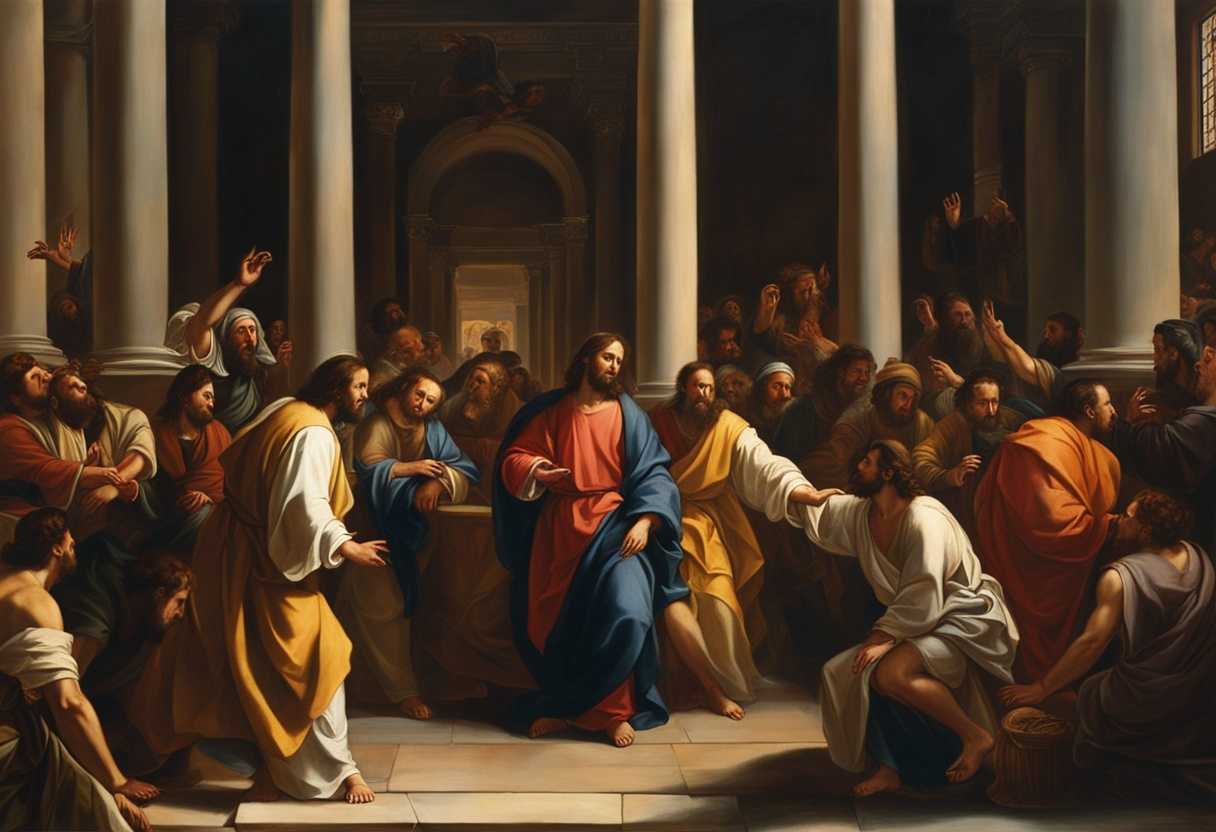
Setting the Scene for Mark 11:15-19
In Mark chapter 11, we find Jesus entering Jerusalem during the week leading up to his crucifixion. The scene is set in the temple courtyard, a bustling and crowded area filled with merchants selling animals for sacrifices and exchanging money. Jesus, accompanied by his disciples, approaches the temple and is immediately struck by the sight of people turning a place of worship into a marketplace.
As Jesus enters the temple, he witnesses the chaos and greed that has taken over the sacred space. The noise of animals, the clinking of coins, and the haggling of prices fill the air. Jesus is filled with righteous anger at the desecration of his Father’s house and begins to overturn the tables of the money changers and drive out those who were buying and selling.
The religious leaders present in the temple are shocked and outraged by Jesus’ actions, questioning his authority and demanding an explanation for his disruptive behavior. The scene is tense as Jesus stands firm in his conviction that the temple should be a house of prayer for all nations, not a den of thieves.
What is Mark 11:15-19 about?
Jesus takes a stand against the corruption and exploitation taking place in the temple in this powerful verse. Jesus is sending a strong message by overturning the tables of the money changers and merchants that the house of God should be a place of worship and reverence, not a marketplace for financial gain. Through this act, Jesus is disrupting the status quo and reminding us of the true purpose of a sacred space.
Imagine the scene: tables crashing, coins rolling on the ground, and the surprised faces of those who were profiting from the temple’s activities. Jesus’s actions challenge us to reflect on our own lives and the places where we may have allowed greed and materialism to overshadow our values and beliefs. It’s a call to each of us to examine our own hearts and ensure that our actions and intentions align with the principles of love, compassion, and justice that Jesus embodied. We ask ourselves: How do we honor the sacred spaces in our lives as we contemplate this verse? Are we being true to our values and beliefs, or have we allowed worldly concerns to cloud our spiritual journey? Jesus’s cleansing of the temple serves as a powerful reminder for each of us to live with integrity, purpose, and a deep connection to the divine.
Understanding what Mark 11:15-19 really means
Jesus’ actions in the temple, as depicted in Mark 11:15-19, offer a powerful lesson on the sanctity of sacred spaces and the importance of upholding their intended purpose. Upon entering the temple in Jerusalem, Jesus is confronted with a scene of commercialization and exploitation, with the sacred space being used as a marketplace. In a bold move, he drives out the buyers and sellers, overturns the tables of the money changers, and condemns the corruption that has infiltrated the house of prayer.
The key phrases used by Jesus in this passage carry profound meanings that resonate with us today. When he refers to the temple as a “house of prayer for all nations,” he underscores the inclusive nature of worship and the universal access to God’s presence. Conversely, labeling it a “den of robbers” highlights the severe condemnation of the exploitation and dishonest practices that were taking place within its walls. These phrases serve as a stark reminder of the need for purity and sincerity in our worship and interactions within sacred spaces.
Drawing parallels to contemporary times, the cleansing of the temple challenges us to reflect on the integrity of our places of worship and communal gathering. It prompts us to evaluate whether we are prioritizing spiritual values over material gain and ensuring that these spaces remain true to their intended purpose. Just as Jesus sought to restore the sanctity of the temple, we are called to uphold the reverence and respect due to places dedicated to spiritual growth and connection with the divine.
An illustrative anecdote can help us grasp the gravity of the situation Jesus encountered. Imagine a community center initially established to serve the needs of the underprivileged, offering essential services free of charge. However, over time, it devolves into a profit-driven enterprise, leaving those in need marginalized and exploited. This scenario mirrors the desecration of the temple and underscores the vital importance of preserving the authenticity and mission of sacred and communal spaces.
On a personal level, this passage urges us to introspect and assess our own attitudes towards sacred spaces and communal gatherings. Are we actively contributing to their sanctity and inclusivity, or are we inadvertently perpetuating practices that detract from their spiritual essence? Furthermore, it compels us to stand against corruption and exploitation in all facets of life, advocating for justice and integrity in our interactions and endeavors.
By contemplating the significance of Jesus’ actions in the temple and internalizing the lessons embedded in this narrative, we can strive to emulate his commitment to upholding the sanctity of sacred spaces and promoting spiritual values in our lives and communities. Let us heed the call to preserve the purity of our places of worship, ensuring they remain beacons of light and sources of solace for all who seek spiritual nourishment and connection.
What does my worship reveal about my heart?
Your worship reveals the condition of your heart before God. Just like how Jesus saw the people’s actions in the temple and discerned their true intentions, God sees beyond outward appearances and looks at the sincerity of your heart. If your worship is centered on fulfilling religious duties or gaining praise from others, it may indicate a heart that is more concerned with appearances than with true devotion to God. However, if your worship is characterized by genuine love, humility, and reverence for God, it reflects a heart that seeks to honor and please Him above all else. True worship ultimately involves offering your whole self to God in spirit and truth, with a heart that is fully devoted to Him. It is not merely about going through the motions or following rituals, but about having a deep, intimate relationship with the Lord. When your worship is rooted in love, gratitude, and faith, it becomes a sweet fragrance that pleases God and draws you closer to Him. So, examine your heart and motives as you worship, for it is a reflection of your true spiritual state before God.
Application
Imagine your life as a busy marketplace, filled with work demands and family responsibilities. Jesus cleared the temple to show the importance of sincere worship. Now, it’s up to you to clear your own space, free from distractions, to worship genuinely. Examine your heart and strip away everything that clouds your devotion. Will you make the choice to realign your life and worship with true authenticity?

Reverend Michael Johnson is an experienced Church Minister with a profound expertise in spirituality and guidance. With a serene presence and a compassionate heart, he has faithfully served his congregation for over 20 years, leading them on a spiritual journey towards inner peace and enlightenment. Reverend Johnson’s extensive knowledge of religious philosophies and profound understanding of human nature have made him a trusted confidant and mentor to many, as he seamlessly weaves his profound wisdom into life teachings. Reverend Johnson’s calming demeanor and empathetic nature continue to uplift and heal souls, nurturing a sense of unity and tranquility within his community.