
Mark 12:34 is about recognizing the importance of loving God with all one’s heart, soul, mind, and strength, and loving one’s neighbor as oneself, as the essence of fulfilling the greatest commandments and understanding the true meaning of worship.
34 And when Jesus saw that he answered wisely, he said to him, “You are not far from the kingdom of God.” And after that no one dared to ask him any more questions.
Setting the Scene for Mark 12:34
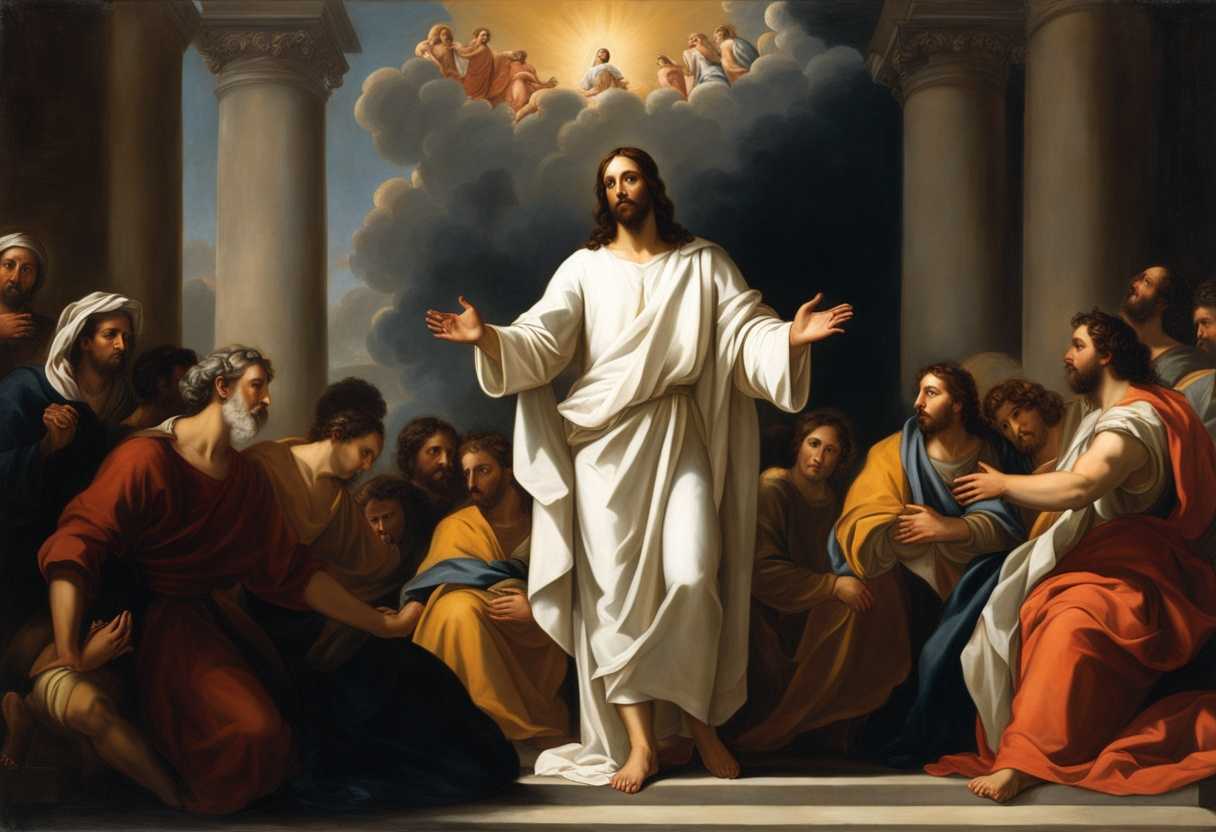
In Mark chapter 12, we find Jesus engaged in a series of debates with various groups challenging his authority and teachings. The scene in question takes place in the temple courts in Jerusalem, where Jesus has been teaching and answering questions from the Pharisees, Sadducees, scribes, and other religious leaders. The atmosphere is tense as these groups try to trap Jesus with their questions.
In this particular moment, a scribe approaches Jesus with a genuine question, seeking wisdom rather than trying to test him. The scribe asks Jesus which commandment is the most important of all. Jesus responds with the famous answer, quoting from the Old Testament, “Love the Lord your God with all your heart and with all your soul and with all your mind and with all your strength. The second is this: ‘Love your neighbor as yourself.’ There is no commandment greater than these.” The scribe is impressed by Jesus’ answer and acknowledges the truth in his words, leading to a moment of mutual respect and understanding amidst the contentious atmosphere of the temple.
Surrounded by a crowd of onlookers, including disciples, religious leaders, and curious bystanders, Jesus’ teachings continue to challenge and inspire those present. The temple, with its grand architecture and bustling activity, serves as the backdrop for these profound exchanges that reveal the depth of Jesus’ wisdom and the transformative power of his message.
What is Mark 12:34 about?
Jesus acknowledges and praises a scribe in this verse for having a deep understanding of the core teachings of Christianity. This verse highlights the importance of genuine faith and compassion towards both God and our fellow human beings. It shows that true wisdom and righteousness are not just about following rules or rituals, but about cultivating a heart filled with love and empathy.
Have you ever reflected on the significance of these two commandments in your own life? How do you show your love for God and others in your daily interactions and choices? Jesus’s commendation of the scribe serves as a reminder for all of us to prioritize love, kindness, and compassion in our relationships and actions. It challenges us to examine whether our beliefs and behaviors truly reflect the essence of these greatest commandments. Let us strive to embody the love that Jesus teaches.
Understanding what Mark 12:34 really means
In the Gospel of Mark, we encounter a pivotal moment where Jesus engages in a profound dialogue with a scribe regarding the greatest commandment. This interaction serves as a cornerstone for understanding the essence of faith and the core principles that underpin it. Jesus, in response to the scribe’s inquiry, encapsulates the entire Law by emphasizing the paramount importance of loving God with all one’s being and loving one’s neighbor as oneself. This succinct yet profound statement encapsulates the essence of a life lived in accordance with God’s will.
The broader context of this verse reveals a fundamental truth about the nature of faith and righteousness. Jesus, by highlighting the primacy of love in fulfilling the Law, redirects our focus from mere adherence to rules to a deeper, more transformative way of living. Love becomes the lens through which all our actions, thoughts, and relationships are to be filtered. It is a call to radical, selfless love that transcends boundaries and transforms lives.
Drawing parallels with related passages in Scripture, such as Deuteronomy 6:5 and Leviticus 19:18, reinforces the timeless nature of this commandment. The call to love God wholeheartedly and to love others as ourselves is not confined to a specific time or culture but resonates across generations and contexts. Paul’s affirmation in Romans 13:10 further solidifies the centrality of love as the fulfillment of the Law, emphasizing that all other commandments find their ultimate expression in love.
In our contemporary world, marked by division and discord, the message of Mark 12:34 remains as relevant as ever. It challenges us to examine our attitudes and actions towards both God and our fellow human beings. Are we truly living out the command to love with sincerity and depth, or are we merely going through the motions of religious observance? This verse serves as a mirror, reflecting back to us the state of our hearts and the authenticity of our faith.
Consider a scenario where a diverse group of individuals gathers to address communal issues. Amidst differing opinions and backgrounds, one voice rises, advocating for genuine care and collaboration as the solution. This echoes the profound simplicity of Jesus’ words, illustrating how love and understanding have the power to bridge divides and foster unity. It is a reminder that at the core of all our endeavors should lie a foundation of love and compassion.
As we ponder the implications of Mark 12:34 in our lives, the phrase “You are not far from the kingdom of God” resonates with both reassurance and challenge. It acknowledges the scribe’s grasp of the greatest commandments while also urging him towards deeper commitment and action. Similarly, it beckons us to move beyond mere intellectual assent to a place of active, transformative love that brings us closer to the heart of God’s kingdom.
In practical terms, this verse prompts us to evaluate our daily interactions through the lens of love. How do we demonstrate love for God and others in our words, deeds, and attitudes? It calls us to embody love tangibly through acts of kindness, forgiveness, and support for those in need. Ultimately, Mark 12:34 serves as a poignant reminder that true faith is not merely about belief but about the lived experience of love in action.
How can I love God and love others more?
To love God and love others more, one can start by continually seeking a deeper understanding of who God is and what He desires for us. This involves spending time in prayer, reading and studying the Bible, and seeking to have a closer relationship with Him. We can develop a heart that is aligned with God’s will and filled with His love by prioritizing Him in our lives, which then overflows to those around us.
Additionally, showing love to others can be demonstrated through acts of kindness, compassion, and forgiveness. Treating others with respect, empathy, and grace mirrors the love that God has shown us. It involves putting the needs and well-being of others before our own, just as Jesus exemplified through His sacrificial love. Putting these principles into practice daily can help cultivate a heart that loves God and loves others more deeply and genuinely.
Application
Mark 12:34 hits home: loving God and others is your top priority, just like balancing work and family. In your daily hustle, show compassion, kindness, and understanding to everyone you meet. Seek out chances to put love into action, making your community a better place. Will you step up and spread love and kindness today?

Reverend Michael Johnson is an experienced Church Minister with a profound expertise in spirituality and guidance. With a serene presence and a compassionate heart, he has faithfully served his congregation for over 20 years, leading them on a spiritual journey towards inner peace and enlightenment. Reverend Johnson’s extensive knowledge of religious philosophies and profound understanding of human nature have made him a trusted confidant and mentor to many, as he seamlessly weaves his profound wisdom into life teachings. Reverend Johnson’s calming demeanor and empathetic nature continue to uplift and heal souls, nurturing a sense of unity and tranquility within his community.