
Mark 14:10 is about Judas Iscariot betraying Jesus to the religious leaders for a sum of money, illustrating the theme of greed and the tragic consequences of forsaking one’s values for material gain.
10 Then Judas Iscariot, who was one of the twelve, went to the chief priests in order to betray him to them.
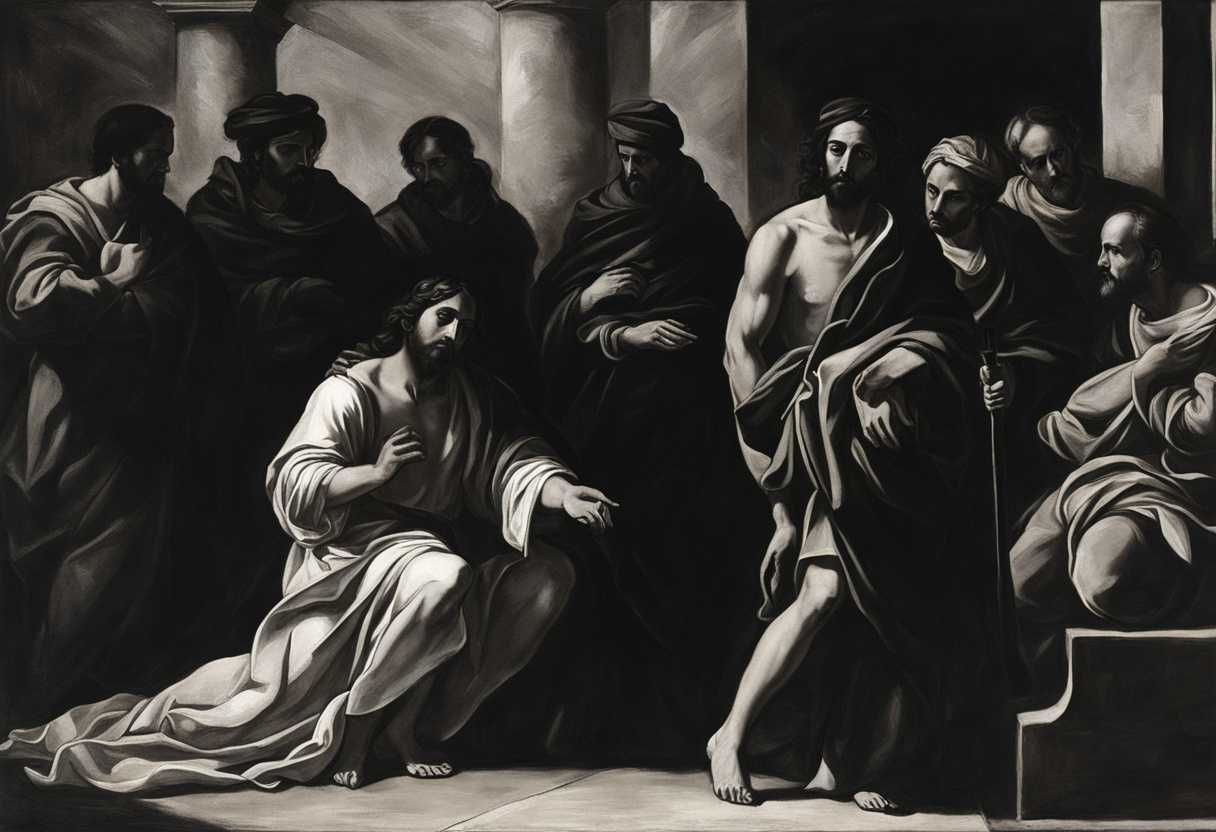
Setting the Scene for Mark 14:10
In Mark chapter 14, we find Jesus in the home of Simon the leper in Bethany, a village located on the eastern slope of the Mount of Olives, just outside Jerusalem. Simon the leper is hosting a dinner in honor of Jesus, and those present include Jesus himself, Simon, the disciples, and other guests. The atmosphere is warm and inviting, with the aroma of food filling the air and the sound of lively conversation echoing through the room.
As they recline at the table, enjoying the meal and each other’s company, a woman enters the room with an alabaster jar of expensive perfume. This woman, later identified as Mary, the sister of Martha and Lazarus, approaches Jesus and pours the perfume over his head. The disciples are taken aback by this extravagant gesture, questioning the woman’s actions and the wastefulness of using such costly perfume. However, Jesus defends her, commending her for her act of devotion and explaining that she has anointed him for his burial.
The scene is a poignant moment of intimacy and sacrifice, as Mary expresses her love and reverence for Jesus in a profound and symbolic way. The contrast between her act of devotion and the disciples’ misunderstanding highlights the depth of Mary’s faith and her understanding of Jesus’ impending sacrifice.
What is Mark 14:10 about?
Imagine the depth of betrayal here – someone close to you, someone you trust, offering to hand you over to those who wish to harm you. Judas, one of Jesus’ disciples, agrees to betray Him for a mere thirty pieces of silver. It’s a sobering reminder of how easily some may forsake their beliefs or values for material gain. Judas’ decision carries a heavy weight: he betrays his leader and teacher, and ultimately plays a part in the events leading to Jesus’ crucifixion. The price of thirty pieces of silver may seem insignificant, but its consequences are monumental. This verse serves as a cautionary tale about the pitfalls of greed, disloyalty, and the potential outcomes of making unethical choices for personal gain. It ultimately prompts us to reflect on our own values and the choices we make in our own lives.
Understanding what Mark 14:10 really means
In the narrative leading to the betrayal of Jesus by Judas Iscariot, the tension is palpable as Jesus finds Himself in Jerusalem, surrounded by those plotting against Him. The mention of Judas Iscariot as “one of the Twelve” in Mark 14:10 underscores the gravity of the impending betrayal. Judas was not just any follower but a close disciple of Jesus, making his betrayal all the more poignant.
The deliberate nature of Judas’ actions is highlighted as he “went to the chief priests” with the intent to betray Jesus. This premeditated act of treachery reveals the depths of Judas’ betrayal, as he chooses to hand over his teacher and friend to those seeking to harm Him. The betrayal of trust by someone so intimately connected to Jesus serves as a stark reminder of the capacity for betrayal even among those closest to us.
The parallel passages in Matthew 26:14-16 and John 13:21-30 provide additional context to Judas’ actions, shedding light on the details of his agreement with the chief priests and the moment of revelation during the Last Supper. The prophetic reference in Psalm 41:9 further deepens the significance of betrayal by a close friend, foreshadowing Judas’ actions and underscoring the timeless nature of such betrayals.
In a contemporary context, the themes of trust, betrayal, and moral choices resonate deeply. The pain of betrayal by someone close is a universal human experience, prompting reflection on the importance of integrity in our actions. Despite the betrayal Jesus faced, His story ultimately embodies forgiveness and redemption, offering hope to those who have experienced betrayal or have wronged others.
Consider a scenario where a trusted business partner divulges confidential information for personal gain, akin to Judas’ betrayal of Jesus. The sense of betrayal and hurt in such situations can be profound, mirroring the emotions Jesus must have felt. Yet, the story of Jesus and Judas encourages us to seek forgiveness and healing, even in the face of deep betrayal.
In conclusion, Mark 14:10 serves as a poignant reminder of the complexities of human relationships, highlighting both the potential for betrayal and the power of forgiveness. It prompts introspection on our own choices and relationships, urging us to prioritize loyalty, integrity, and reconciliation in our interactions with others. The narrative of Judas’ betrayal and Jesus’ response calls us to emulate Christ’s example of forgiveness and grace, even in the face of profound betrayal.
Am I clinging to worldly treasures at the cost of my spiritual integrity?
The verse highlights the theme of prioritizing worldly wealth over spiritual values. It serves as a reminder that holding on too tightly to material possessions can lead one away from their spiritual path and values. Focusing solely on accumulating worldly treasures might compromise one’s integrity and spiritual growth.
It warns against the tendency to become attached to material things to the point where they overshadow the importance of spiritual well-being. The verse encourages reflection on one’s priorities, urging individuals to consider the impact of their choices on their spiritual integrity. It ultimately emphasizes the value of spiritual treasures over worldly wealth.
Application
Reflect on your actions. Are you staying true to your commitments and relationships, or are you veering off course? Take a moment to look within and realign your intentions with your values. Let’s strive to live with integrity and loyalty, just as we are called to do. Will you make the choice to uphold these principles today?

Reverend Michael Johnson is an experienced Church Minister with a profound expertise in spirituality and guidance. With a serene presence and a compassionate heart, he has faithfully served his congregation for over 20 years, leading them on a spiritual journey towards inner peace and enlightenment. Reverend Johnson’s extensive knowledge of religious philosophies and profound understanding of human nature have made him a trusted confidant and mentor to many, as he seamlessly weaves his profound wisdom into life teachings. Reverend Johnson’s calming demeanor and empathetic nature continue to uplift and heal souls, nurturing a sense of unity and tranquility within his community.