
1 It was now two days before the Passover and the Feast of Unleavened Bread. And the chief priests and the scribes were seeking how to arrest him by stealth and kill him,
2 “Not during the feast, lest there be an uproar from the people.”
3 And while he was at Bethany in the house of Simon the leper, as he was reclining at table, a woman came with an alabaster flask of ointment of pure nard, very costly, and she broke the flask and poured it over his head.
4 There were some who said to themselves indignantly, “Why was the ointment wasted like that?
5 For this ointment could have been sold for more than three hundred denarii and given to the poor.” And they scolded her.
6 But Jesus said, “Leave her alone. Why do you trouble her? She has done a beautiful thing to me.
7 For you always have the poor with you, and whenever you want, you can do good for them. But you will not always have me.
8 She has done what she could; she has anointed my body beforehand for burial.
9 And truly, I say to you, wherever the gospel is proclaimed in the whole world, what she has done will be told in memory of her.”
10 Then Judas Iscariot, who was one of the twelve, went to the chief priests in order to betray him to them.
11 Then Judas Iscariot, who was one of the twelve, went to the chief priests in order to betray him to them.
12 And on the first day of Unleavened Bread, when they sacrificed the Passover lamb, his disciples said to him, “Where will you have us go and prepare for you to eat the Passover?”
13 And he sent two of his disciples and said to them, “Go into the city, and a man carrying a jar of water will meet you. Follow him,
14 And wherever he enters, say to the master of the house, ‘The Teacher says, Where is my guest room, where I may eat the Passover with my disciples?’
15 And he will show you a large upper room furnished and ready; there prepare for us.”
16 And the disciples set out and went to the city and found it just as he had told them, and they prepared the Passover.
17 And when it was evening, he came with the twelve.
18 And as they were reclining at table and eating, Jesus said, “Truly, I say to you, one of you will betray me, one who is eating with me.”
19 They began to be sorrowful and to say to him one after another, “Is it I?”
20 He said to them, “It is one of the twelve, one who is dipping bread into the dish with me.
21 For the Son of Man goes as it is written of him, but woe to that man by whom the Son of Man is betrayed! It would have been better for that man if he had not been born.
22 And as they were eating, he took bread, and after blessing it broke it and gave it to them, and said, “Take; this is my body.”
23 And he took a cup, and when he had given thanks he gave it to them, and they all drank of it.
24 And he said to them, “This is my blood of the covenant, which is poured out for many.
25 Truly, I say to you, I will not drink again of the fruit of the vine until that day when I drink it new in the kingdom of God.
26 And when they had sung a hymn, they went out to the Mount of Olives.
27 And Jesus said to them, “You will all fall away, for it is written, ‘I will strike the shepherd, and the sheep will be scattered.’
28 But after I am raised up, I will go before you to Galilee.
29 Peter said to him, “Even though they all fall away, I will not.”
30 And Jesus said to him, “Truly, I tell you, this very night, before the rooster crows twice, you will deny me three times.”
31 But he said emphatically, “If I must die with you, I will not deny you.” And they all said the same.
32 And they went to a place called Gethsemane. And he said to his disciples, “Sit here while I pray.”
33 And he took with him Peter and James and John, and began to be greatly distressed and troubled.
34 And he said to them, “My soul is very sorrowful, even to death. Remain here and watch.”
35 And going a little farther, he fell on the ground and prayed that, if it were possible, the hour might pass from him.
36 And he said, “Abba, Father, all things are possible for you. Remove this cup from me. Yet not what I will, but what you will.”
37 And he came and found them sleeping, and he said to Peter, “Simon, are you asleep? Could you not watch one hour?
38 Watch and pray that you may not enter into temptation. The spirit indeed is willing, but the flesh is weak.
39 And again he went away and prayed, saying the same words.
40 And again he came and found them sleeping, for their eyes were very heavy, and they did not know what to answer him.
41 And he came the third time and said to them, “Are you still sleeping and taking your rest? It is enough; the hour has come. The Son of Man is betrayed into the hands of sinners.
42 Rise, let us be going; see, my betrayer is at hand.
43 And immediately, while he was still speaking, Judas came, one of the twelve, and with him a crowd with swords and clubs, from the chief priests and the scribes and the elders.
44 Now the betrayer had given them a sign, saying, “The one I will kiss is the man. Seize him and lead him away under guard.”
45 And when he came, he went up to him at once and said, “Rabbi!” And he kissed him.
46 And they laid their hands on him and seized him.
47 But one of those who stood by drew his sword and struck the servant of the high priest and cut off his ear.
48 And Jesus said to them, “Have you come out as against a robber, with swords and clubs to capture me?
49 Day after day I was with you in the temple teaching, and you did not seize me. But let the Scriptures be fulfilled.
50 And they all left him and fled.
51 And a young man followed him, with nothing but a linen cloth about his body. And they seized him,
52 And he left the linen cloth and ran away naked.
53 And they led Jesus to the high priest. And all the chief priests and the elders and the scribes came together.
54 And Peter had followed him at a distance, right into the courtyard of the high priest. And he was sitting with the guards and warming himself at the fire.
55 Now the chief priests and the whole council were seeking testimony against Jesus to put him to death, but they found none.
56 For many bore false witness against him, but their testimony did not agree.
57 And some stood up and bore false witness against him, saying,
58 “We heard him say, ‘I will destroy this temple that is made with hands, and in three days I will build another, not made with hands.’”
59 Now the chief priests and the whole council were seeking testimony against Jesus to put him to death, but they found none.
60 And the high priest stood up in the midst and asked Jesus, “Have you no answer to make? What is it that these men testify against you?”
61 But he remained silent and made no answer. Again the high priest asked him, “Are you the Christ, the Son of the Blessed?”
62 And Jesus said, “I am, and you will see the Son of Man seated at the right hand of Power, and coming with the clouds of heaven.”
63 And the high priest tore his garments and said, “What further witnesses do we need?
64 You have heard his blasphemy. What is your decision?” And they all condemned him as deserving death.
65 And some began to spit on him and to cover his face and to strike him, saying to him, “Prophesy!” And the guards received him with blows.
66 And as Peter was below in the courtyard, one of the servant girls of the high priest came,
67 And seeing Peter warming himself, she looked at him and said, “You also were with the Nazarene, Jesus.”
68 But he denied it, saying, “I neither know nor understand what you mean.” And he went out into the gateway and the rooster crowed.
69 And the servant girl saw him and began again to say to the bystanders, “This man is one of them.”
70 But again he denied it. And after a little while the bystanders again said to Peter, “Certainly you are one of them, for you are a Galilean.”
71 But he began to invoke a curse on himself and to swear, “I do not know this man of whom you speak.”
72 And immediately the rooster crowed a second time. And Peter remembered how Jesus had said to him, “Before the rooster crows twice, you will deny me three times.” And he broke down and wept.
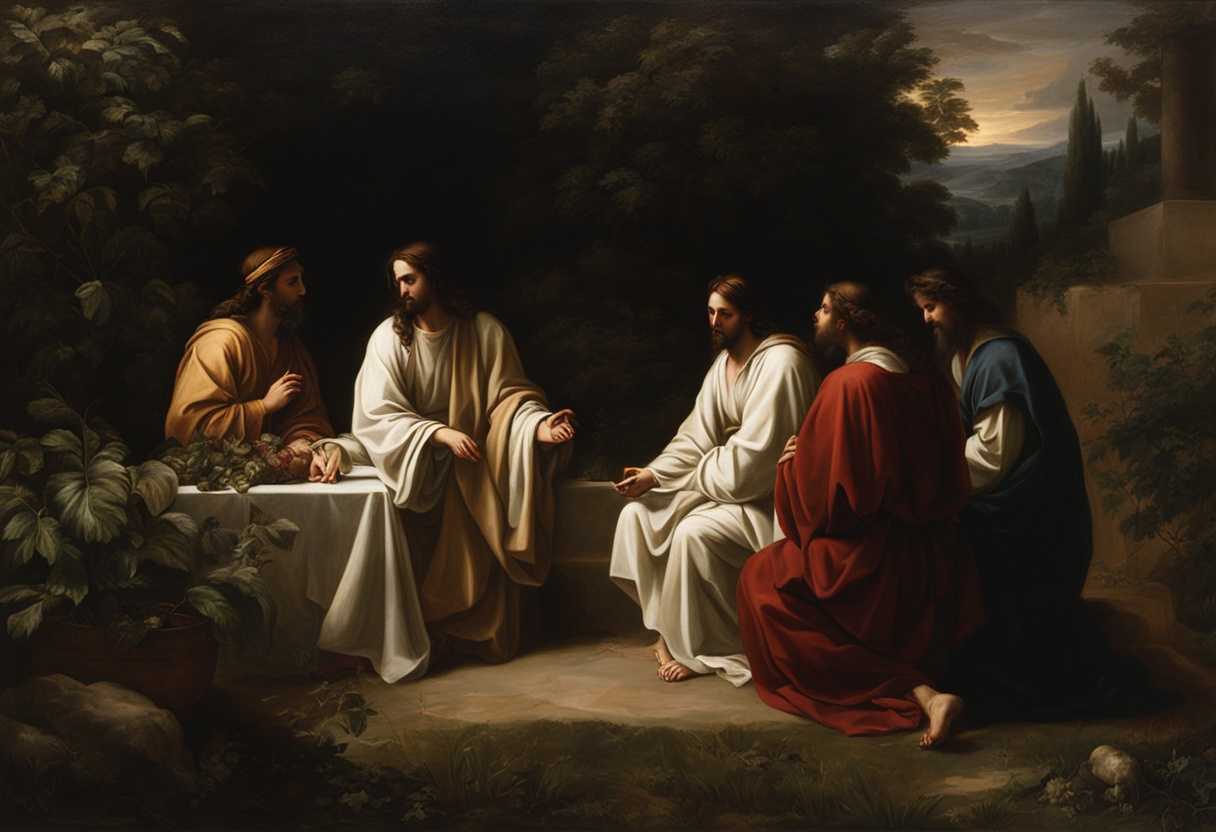
The True Meaning of Mark 14
The Gospel of Mark was written by John Mark, a companion of the apostle Peter. Mark’s account provides a vivid and concise narrative of the life, ministry, death, and resurrection of Jesus Christ. We witness the unfolding of the events leading up to the crucifixion of our Lord in this chapter. We will see the plotting of the religious authorities, the anointing of Jesus by a woman, the betrayal by Judas, and the final Passover meal shared between Jesus and his disciples. These events set the stage for the ultimate sacrifice that will be made for the salvation of all humanity. As we delve into this chapter, we will be reminded of the prophecies found in the Old Testament, such as the suffering servant described in Isaiah 53. We will also see the fulfillment of Jesus’ own words, as he foretold his betrayal and the events that would transpire. Through this passage, we are called to reflect on the depth of Christ’s love and the significance of his sacrifice, which continues to transform the lives of believers throughout the ages.
Mark 14:1-2
The chief priests and the teachers of the law were scheming to arrest Jesus secretly and kill him, as the Passover and the Festival of Unleavened Bread were only two days away, as read in Mark 14:1-2. ‘But not during the festival,’ they said, ‘or the people may riot.’”
These verses set the stage for the sequence of events leading up to the crucifixion of Jesus Christ. The Passover and the Festival of Unleavened Bread were key Jewish observances, commemorating the exodus of the Israelites from Egypt. It was during this time that Jesus would be betrayed and crucified, symbolically becoming the sacrificial lamb to atone for the sins of humanity. The timing holds deep significance, as Jesus’ sacrifice mirrors the original Passover lamb that the Israelites were commanded to sacrifice.
The chief priests and teachers of the law, rather than honoring the sacredness of the Passover season, were plotting against Jesus. Their intention to arrest and kill Him reveals the depth of their opposition to His teachings and the threat they perceived Him to be. It is a stark contrast to the motive of love and salvation that Jesus embodied. Their fear of people rioting if they took action against Jesus during the festival demonstrates their concern for maintaining order and control over the people.
These verses highlight the role of religious leaders in opposing Jesus, illustrating a recurring theme in the Bible where religious authorities often misunderstand or reject the true message of God. It serves as a cautionary tale against being blinded by self-interest, authority, or traditions to the point of missing out on recognizing and receiving the truth of God. The contrast between the religious leaders’ deceitful plotting and Jesus’s selfless sacrifice showcases the eternal battle between the ways of the world and the ways of God.
This passage foretells the coming events that will lead to Jesus’s crucifixion, showcasing the fulfillment of prophecies and God’s ultimate plan for salvation through His son. The betrayal and crucifixion of Jesus were not unexpected but were part of God’s redemptive plan, as seen in further detail in prophetic passages such as Isaiah 53 and Psalm 22. The actions of the religious leaders set the stage for the pivotal moments in Christianity’s narrative, emphasizing the significance of the sacrificial act that Jesus would soon undertake for all of humanity.
Mark 14:3-9
A woman comes to Jesus in Bethany with an alabaster jar of very expensive perfume, made of pure nard, in Mark 14:3-9. She breaks the jar and pours the perfume on His head as Jesus reclines at the table, likely in the house of Simon the leper. Some of the disciples are indignant, questioning the wastefulness of such costly perfume that could have been sold for a high price and the money given to the poor.
This act by the woman is profound in its implications. Firstly, the expensive perfume signifies the value and worth she places on Jesus, recognizing Him as greater than any earthly possession. She shows reverence, honor, and acknowledgment of His divinity by anointing His head. Jesus acknowledges her actions by stating that she has done a beautiful thing for Him, preparing Him for burial. This act foreshadows Jesus’ impending death and burial, where His body would also be anointed with spices.
The criticism from the disciples, particularly from Judas Iscariot, who questions the practicality of the woman’s gesture, highlights their misunderstanding of the true significance of what is taking place. Judas, known for his greed and eventual betrayal of Jesus, reveals his lack of spiritual insight and his ulterior motives. Jesus corrects them by commending the woman for her act of devotion, emphasizing that the poor will always be present, but He will not. This underscores the importance of recognizing and seizing opportunities for acts of kindness, worship, and devotion when they arise.
This passage serves as a reminder of the importance of sacrificial giving, both in terms of material possessions and of one’s heart. The woman’s extravagant gift of perfume is contrasted with Judas’ future betrayal for money, illustrating the difference between selfless devotion and selfish motives. It calls for believers to examine their own attitudes towards giving, whether it be in the form of material possessions, time, or love, and to do so with a spirit of generosity and humility, always mindful of the example set by Jesus and the values of the Kingdom of God.
The story of the woman anointing Jesus with perfume is also mentioned in the Gospel of John (John 12:1-8), where Mary, the sister of Lazarus, is identified as the woman who anoints Jesus. This event occurs shortly before Jesus’ triumphal entry into Jerusalem, highlighting the contrasting reactions to Jesus by those around Him, where Mary is portrayed as having a deep understanding of Jesus’ impending death and the need for sincere acts of worship and devotion.
Mark 14:10-11
Judas Iscariot, who was one of the Twelve, went to the chief priests to betray Jesus to them in Mark 14:10-11. They were delighted to hear this and promised to give him money. So he watched for an opportunity to hand him over.”
This passage depicts a pivotal moment leading up to the betrayal of Jesus by Judas Iscariot. Judas, originally chosen as one of the Twelve disciples by Jesus Himself, makes the conscious decision to betray Jesus to the religious authorities for thirty pieces of silver. This act of betrayal is characterized by greed and a lack of loyalty to the very person he had followed and learned from.
The actions of Judas highlight the theme of betrayal, a theme that echoes throughout the Bible. Betrayal by a close associate is not a new concept in the scriptures. It can be traced back to the betrayal of Joseph by his brothers in the book of Genesis (Genesis 37). Judas’ betrayal serves as a cautionary tale, illustrating how even those who are closest to someone can turn against them under the sway of sinful temptation.
This event also emphasizes the sovereignty of God in fulfilling His plan for the salvation of humanity through the sacrifice of Jesus Christ. While Judas’s betrayal may have seemed like a crushing blow, it was part of God’s divine purpose to bring about the redemption of mankind. This notion is further reinforced in Acts 2:23, where it is stated, “This man was handed over to you by God’s deliberate plan and foreknowledge; and you, with the help of wicked men, put him to death by nailing him to the cross.”
Furthermore, the response of the chief priests to Judas’s offer reveals their eagerness to seize Jesus. Their eagerness for Jesus’ arrest demonstrates their resistance to His teachings and their desire to maintain their power and authority. This highlights the religious leaders’ hypocrisy and their failure to recognize Jesus as the Messiah, despite numerous signs and miracles performed by Him. The verses in Mark 14:10-11 serve as a powerful reminder of the consequences of betrayal and the fulfillment of God’s plan through even the darkest moments. They also prompt us to reflect on our own loyalty to Christ and the importance of remaining steadfast in our faith, even in the face of temptation and pressure.
Mark 14:12-16
Jesus instructs his disciples to prepare for the Passover meal in Mark 14:12-16. This moment is significant because it not only shows Jesus’ attention to detail and preparation, but also highlights the importance of the Passover in the Jewish tradition. The Passover was a ritual meal that commemorated the Israelites’ liberation from slavery in Egypt, where the blood of a sacrificed lamb saved them from the angel of death (Exodus 12). Jesus was linking himself to the long history of God’s deliverance of his people by participating in the Passover meal.
Jesus sending his disciples to prepare the Passover demonstrates his intentionality and foreknowledge of the events about to unfold. Despite knowing that one of his own disciples would betray him, Jesus continues to carry out the Passover meal, signifying his commitment to his mission and purpose on earth. This moment also emphasizes the unity and intimacy among Jesus and his disciples as they gather to share in this sacred meal together.
The act of sharing a meal, especially the Passover meal, holds significant meaning throughout the Bible. It symbolizes not only physical nourishment but also spiritual communion and unity. Sharing a meal in the Old Testament signified peace, fellowship, and covenant. Jesus often used meals in the New Testament as an opportunity to teach important lessons and demonstrate inclusivity and love. For example, in Luke 22:14-20, during the Last Supper, Jesus instituted the practice of the Eucharist, using bread and wine to symbolize his body and blood given for the salvation of all believers. This passage in Mark 14:12-16 serves as a reminder of the significance of traditions, preparation, and sharing meals in the context of faith. The attention to detail in the preparation for the Passover meal underscores the importance of mindfulness and reverence in our worship and remembrance of God’s saving acts. Jesus’ actions and instructions to his disciples also highlight the importance of community and unity in partaking in sacred rituals and sharing in fellowship with one another.
Mark 14:17-21
Several important sections in Mark 14:17-21 shed light on the events leading up to Jesus’ betrayal. Jesus is depicted sharing the Passover meal with his disciples in verse 17, a significant event that holds deep symbolism within the Christian faith. The Passover feast was a crucial Jewish festival commemorating the Israelites’ liberation from slavery in Egypt, but for Christians, it foreshadowed the ultimate sacrifice of Jesus on the cross to free humanity from the bondage of sin. Jesus reveals that one of his trusted disciples will betray him as the scene unfolds. This revelation stirs confusion and distress among the disciples. The fact that one close to Jesus would betray him is a poignant reminder of the reality of human frailty and the presence of evil even in the midst of those who profess faith. Judas Iscariot’s impending betrayal is a betrayal of not just Jesus, but of trust, friendship, and loyalty. It serves as a sobering example of how even those who walk closely with Christ can ultimately choose to turn away from Him. Jesus’ statement “It would be better for him if he had not been born” in verse 21 is a haunting and powerful declaration of the severity and consequences of betrayal. This solemn pronouncement underscores the gravity of the choices we make and the eternal significance of our actions. It serves as a stark warning against the dangers of selfish ambition, greed, and deceit, all of which were evident in Judas’ betrayal of Jesus for thirty pieces of silver.
Throughout the Bible, the theme of betrayal is not uncommon. From the betrayal of Joseph by his brothers to the betrayal of David by his close advisor, Ahithophel, these stories highlight the pain, heartache, and consequences that betrayal brings. However, in the case of Jesus, His betrayal ultimately leads to the fulfillment of God’s redemptive plan for humanity. Jesus, in His infinite love and mercy, willingly walked the path of betrayal and suffering so that through His death and resurrection, all who believe in Him may find forgiveness and salvation. We are reminded of the importance of loyalty, sincerity, and integrity in our relationships with others, but most importantly in our relationship with God in light of this passage. It prompts us to reflect on the condition of our hearts, to examine our motives, and to uphold our commitment to follow Christ wholeheartedly, even in the face of challenges and temptations. Just as Judas’ betrayal stands as a cautionary tale, so too does Jesus’ unwavering faithfulness and sacrificial love serve as a beacon of hope and redemption for all who believe in Him.
Mark 14:22-25
The passage in Mark 14:22-25 describes the scene where Jesus institutes the Lord’s Supper during the Last Supper with his disciples. This pivotal moment holds significant importance in Christian theology as it is commemorated through the sacrament of communion in churches worldwide.
The passage begins with Jesus taking bread, giving thanks, breaking it, and giving it to his disciples, saying, “Take it; this is my body.” Here, Jesus uses the symbolism of the bread to represent his body, foreshadowing the sacrifice he is about to make on the cross for the redemption of humanity. This act serves as a potent reminder of Jesus’ ultimate sacrifice and the importance of partaking in communion as a way for believers to remember and proclaim his death until he comes again (1 Corinthians 11:26).
Following the breaking of bread, Jesus takes a cup, gives thanks, and offers it to his disciples, proclaiming, “This is my blood of the covenant, which is poured out for many. Jesus alludes to the new covenant that will be established through his sacrificial death on the cross, representing the ratification of a covenant in Jewish tradition. This act of sharing the cup as a symbol of his blood signifies the forgiveness of sins and the new life believers are granted through acceptance of Jesus as their Lord and Savior (Hebrews 9:15).
The mention of the “new covenant” in Jesus’ words recalls the prophecy in Jeremiah 31:31-34, where the prophet speaks of a time when God will make a new covenant with His people, different from the old covenant given through Moses. This new covenant would involve God’s laws being written on the hearts of believers, indicating a more intimate and personal relationship with God through Jesus Christ. Believers partake in the Lord’s Supper, remembering Jesus’ sacrifice for their sins and looking forward to sharing in the marriage supper of the Lamb in the future fulfillment of God’s kingdom as depicted in Revelation 19:6-9. This symbolic meal points to the unity believers have with Christ and with one another as part of the body of Christ. Mark 14:22-25 captures the profound significance of the Lord’s Supper instituted by Jesus during the Last Supper. It serves as a powerful reminder of the sacrificial love of Christ, the establishment of a new covenant, and the hope of future redemption for all who believe in Him. Christians partake in communion, reflecting on their identity as members of the body of Christ and living in anticipation of the glorious future promised in God’s Word.
Mark 14:26-31
Jesus and His disciples conclude their Last Supper together before heading to the Mount of Olives in Mark 14:26-31. Let’s break down this verse into important sections.
-
“When they had sung a hymn, they went out to the Mount of Olives.” – After sharing a meal together, Jesus and His disciples engaged in an act of worship by singing a hymn. This moment of singing together not only shows the unity and fellowship amongst them but also reflects the Jewish tradition of singing Psalms after the Passover meal. The hymn could have possibly been one of the Psalms which were traditionally sung during the Passover celebrations. This act of worship before heading out to a place where Jesus will face betrayal and arrest emphasizes the spiritual preparation and strength needed for the trials ahead.
-
“You will all fall away,” Jesus told them, “for it is written: ‘I will strike the shepherd, and the sheep will be scattered.’” – Here, Jesus quotes from the book of Zechariah (Zechariah 13:7) to foretell the scattering of His disciples after His arrest. This prophecy not only reveals Jesus’s deep understanding of the Scriptures and the fulfillment of prophecies concerning Himself, but it also serves to prepare the disciples for the challenges they are about to face. Jesus implicitly reminds them of the bigger picture, the divine plan that is unfolding through the events that will soon take place, by referencing this prophecy.
-
“But after I have risen, I will go ahead of you into Galilee.” – Despite warning the disciples of their temporary desertion, Jesus provides them with hope and assurance. Jesus not only demonstrates His foreknowledge of His upcoming resurrection but also gives them a focal point to regather and reunite after the traumatic events of His crucifixion by promising to meet them in Galilee after His resurrection. This promise of reunion in Galilee also symbolizes Jesus’s consistent love and forgiveness towards His followers, despite their shortcomings and failures.
-
“But Peter declared, ‘Even if all fall away, I will not.’” – Peter, known for his bold and impulsive nature, confidently declares his loyalty to Jesus above all the other disciples. This assertion foreshadows Peter’s denial of Jesus later in the chapter, highlighting the theme of human weakness in contrast to Christ’s unwavering faithfulness. This moment serves as a lesson on the dangers of overconfidence and the importance of humility and reliance on God’s strength rather than our own. We gain profound insights into the themes of unity, spiritual preparation, fulfillment of prophecy, divine assurance, human weakness, and the unyielding faithfulness of Christ by delving into each section of this passage. This episode sets the stage for the subsequent events in the Garden of Gethsemane, where Jesus grapples with the weight of His impending sacrifice, and Peter, James, and John struggle with wakefulness and understanding the gravity of the moment. The interplay between these elements underscores the complexities of faith, loyalty, and human frailty, ultimately leading to the unfolding of God’s redemptive plan through the crucifixion and resurrection of Jesus Christ.
Mark 14:32-42
The passage in Mark 14:32-42 describes the scene in the Garden of Gethsemane where Jesus, accompanied by Peter, James, and John, goes to pray before his impending arrest and crucifixion. This event is crucial in the narrative of Jesus’ final hours before his betrayal by Judas and subsequent crucifixion. Jesus expresses his anguish and sorrow to his disciples in this passage, telling them that his soul is overwhelmed with sorrow to the point of death. He asks them to stay with him and keep watch. This moment highlights the human side of Jesus, showing his vulnerability and the weight of the task he was about to face. Despite knowing the difficulties ahead, Jesus still submits to God’s will, exemplifying his obedience and faithfulness.
Peter, James, and John, who were among Jesus’ closest disciples, were asked to watch and pray with him. However, they fell asleep multiple times, unable to stay awake despite Jesus’ plea. This showcases the disciples’ human weakness and inability to fully comprehend the gravity of the situation. It also serves as a warning about the dangers of spiritual lethargy and the importance of remaining vigilant in faith.
Jesus’ prayer in this passage is powerful and poignant, as he pleads with God, saying, “Abba, Father, everything is possible for you. Take this cup from me. Yet not what I will, but what you will.” This prayer exemplifies Jesus’ submission to God’s plan, even in the face of extreme suffering. It shows his willingness to endure the cross for the redemption of humanity.
The mention of the “cup” in Jesus’ prayer is significant, as it symbolizes the suffering and death that Jesus was about to face. Throughout the Bible, the concept of the “cup” is often associated with God’s judgment and wrath. Prophets like Isaiah and Jeremiah in the Old Testament use the imagery of the cup to signify God’s punishment for sin. Jesus’ willingness to drink from this cup demonstrates his sacrifice for the sins of humanity, taking upon himself the punishment that was rightfully ours.
This passage in Mark 14 resonates with themes of obedience, sacrifice, and the human experience of suffering. It serves as a poignant reminder of Jesus’ willingness to endure unimaginable pain for the sake of humanity’s salvation. It also highlights the importance of prayer, vigilance, and submission to God’s will in times of trial. The events in the Garden of Gethsemane set the stage for Jesus’ betrayal, arrest, and crucifixion, ultimately leading to the fulfillment of God’s redemptive plan for humanity.
Mark 14:43-50
The scripture recounts the moment when Judas Iscariot betrayed Jesus in the Garden of Gethsemane in Mark 14:43-50. This passage carries immense significance in the narrative of Jesus’ arrest and the beginning of His journey towards crucifixion.
Starting with verse 43, it mentions Judas, one of Jesus’ twelve disciples, leading a crowd armed with swords and clubs to capture Jesus. The act of betrayal by Judas is a poignant reminder of the age-old struggle between good and evil, loyalty and treachery. Judas, who had walked and lived closely with Jesus, ultimately chose to betray Him for thirty pieces of silver, fulfilling the prophecy in the Old Testament (Zechariah 11:12-13). This betrayal serves as a chilling reminder of the capacity for humanity to be swayed by greed and self-interest, depicting the fragility of human loyalty and the dangers of succumbing to temptations in our lives. Jesus addresses Judas as “Friend,” showing His deep understanding and compassion even in the face of betrayal as the passage continues. This act of addressing Judas with such familiarity and warmth despite his impending betrayal reflects Jesus’ unwavering love and forgiveness towards all, even those who wrong Him. It is a powerful example of grace and mercy that Jesus embodies and implores His followers to also extend towards others in their lives. This moment serves as a lesson for Christians to embody forgiveness and love, even in moments of betrayal or hurt.
Furthermore, the disciples’ reaction to the arrest of Jesus exemplifies their confusion and fear. Verse 50 specifically mentions that all of them fled, leaving Jesus alone in the hands of His captors. This reaction highlights the human tendency to prioritize self-preservation in times of crisis, a stark contrast to Jesus’ unwavering commitment to fulfill His Father’s will, even if it meant facing suffering and death. This moment emphasizes the challenges and trials that believers may face in their faith journey, highlighting the importance of standing firm in one’s convictions even when faced with adversity. Believers are urged to examine their own hearts and actions when reflecting on this passage in Mark 14. Are we, like Judas, susceptible to the lures of material gain and betrayal? Do we, like the disciples, falter in our faith when faced with challenges? The narrative of Jesus’ arrest in the Garden of Gethsemane serves as a poignant reminder of the complexities of human nature and the unwavering love and sacrifice of Christ. We, as Christians, are called to emulate Jesus’ example of love, forgiveness, and unwavering faith, even in the midst of betrayal and trials.
Mark 14:51-52
A brief but intriguing passage is encountered in Mark 14:51-52 during the arrest of Jesus in the Garden of Gethsemane. These verses describe a young man who was following Jesus, wearing nothing but a linen cloth, being seized by the soldiers. When they tried to apprehend him, he fled naked, leaving behind the cloth.
Interpretation of this passage has sparked curiosity and debate among scholars and readers for centuries. Many believe that this young man was Mark himself, adding a personal touch to the account. Some suggest that this incident serves as a metaphor for the disciples abandoning Jesus in his time of need, as the young man fled just like the other disciples would later desert Jesus.
The linen cloth worn by the young man is symbolic and significant in Jewish culture. It was a sign of purity, often associated with the priests who served in the temple. The sudden appearance and disappearance of this young man can be seen as representing the fleeting nature of loyalty and faithfulness, contrasting with the steadfastness of Jesus in the face of betrayal.
This moment serves as a foreboding foreshadowing of the events to come, hinting at the impending suffering and crucifixion of Jesus. It underscores the idea that when faced with trials and tribulations, even the most devoted followers may falter or flee. This narrative serves as a reminder of human frailty and the need for unwavering faith and commitment, even in the most challenging circumstances.
Throughout the Bible, instances of individuals deserting or denying God or His chosen ones are not uncommon. For example, in the Old Testament, we see Peter denying Jesus three times before the rooster crows (Mark 14:66-72), echoing the theme of betrayal and abandonment. However, these stories also illuminate the power of redemption and forgiveness, as Peter later repents and becomes a leader in the early Christian church. The enigmatic account of the young man in Mark 14:51-52 serves as a poignant reminder of the complexities of faith, loyalty, and human nature. It invites readers to reflect on their own responses in times of crisis and challenge, urging them to strive for unwavering commitment to their beliefs, even in the face of adversity.
Mark 14:53-65
Jesus is brought before the Sanhedrin, the Jewish ruling council, for a trial in Mark 14:53-65. This holds significant importance as it marks a pivotal moment in the Gospel narrative, leading up to the crucifixion of Jesus.
The passage starts with Jesus being led to the high priest’s house, where the scribes and elders were gathered. It’s noteworthy to understand the setting and the characters present here. The Sanhedrin was a powerful religious body made up of chief priests, elders, and scribes who held considerable authority in Jewish society. Their decision-making power held significant influence, even though they were under Roman rule. False witnesses come forward to testify against Jesus as He is brought before the council. This act emphasizes the unjust nature of the trial, where false accusations are made to condemn an innocent man. It serves as a stark reminder of the manipulation, deceit, and corruption that can often be present in systems of power.
Jesus remains silent during these accusations until the high priest directly questions Him about whether He is the Messiah, the Son of God. Jesus responds affirmatively, invoking a strong reaction from the high priest who tears his robes, a symbol of outrage at what he considered blasphemy. This moment is significant because Jesus, by openly declaring His divine identity, seals His fate in the eyes of the religious leaders who saw this confession as deserving of death.
The reaction of the council members to Jesus’ response reveals not only their rejection of Him but also their inability to recognize the truth of His claims. It highlights the spiritual blindness and hardness of heart that can persist even in those who hold positions of religious authority.
This passage in Mark 14 echoes the prophecy in the book of Isaiah about the suffering servant who would be led like a lamb to the slaughter, silent before His accusers (Isaiah 53:7). Jesus exemplifies the humility, submission to God’s will, and willingness to suffer unjustly that characterize His sacrificial mission for humanity in this trial. This account challenges us as followers of Christ to consider how we respond to injustice, how we stand for the truth even in the face of opposition, and how we remain steadfast in our faith, just as Jesus did during this unjust trial. It also serves as a reminder of the ultimate victory of truth over lies, and the triumph of righteousness over deception, as ultimately demonstrated through the resurrection of Jesus Christ.
Mark 14:66-72
Peter, one of Jesus’ closest disciples, denies knowing Him in the heartbreaking moment witnessed in Mark 14:66-72. This passage can be broken down into three significant sections: Peter’s initial denial, the accusations made against him, and the rooster’s crowing and Peter’s realization.
Firstly, Peter finds himself in the courtyard of the high priest after Jesus has been arrested. A servant girl recognizes him as one of Jesus’ followers, and three times Peter vehemently denies any association with Jesus, fulfilling Jesus’ earlier prophecy that Peter would deny Him three times before the rooster crowed. This moment is a stark contrast to Peter’s earlier declaration that he would even die with Jesus and never disown Him (Mark 14:29-31).
This interaction sheds light on the theme of loyalty and faithfulness. Despite Peter’s love for Jesus, fear overcame him when confronted about his association with Jesus. It serves as a powerful reminder of the human tendency to falter in faith when faced with difficulty or persecution. However, it also highlights the importance of staying steadfast in one’s faith, even in the face of adversity. Peter’s denial reinforces the idea that even the most devoted followers of Christ are susceptible to moments of weakness.
Secondly, as Peter denies Jesus, the bystanders begin to accuse him of being one of Jesus’ followers. The pressure of the situation increases as others also recognize Peter as a Galilean, further linking him to Jesus. This escalation of accusations reflects the intense scrutiny and hostility directed towards Jesus and His followers during His trial and crucifixion. It demonstrates the challenging and often dangerous environment in which Jesus’ disciples found themselves during His crucifixion.
Lastly, we come to the climax of the passage: the crowing of the rooster. Peter’s realization hits him as the rooster crows for the second time, and he remembers Jesus’ prediction. The weight of his denials crashes down on him, and he breaks down in tears, overwhelmed by guilt and shame. This heartbreaking moment exemplifies the sorrow that comes from betraying one’s beliefs and failing to stand up for what is right.
Despite Peter’s denial, his story does not end here. Later, after Jesus’ resurrection, we witness a powerful moment of grace and restoration between Jesus and Peter by the sea in John 21:15-19. Jesus not only forgives Peter but also reinstates him, instructing him to feed His sheep. This moment of redemption emphasizes the transformative power of forgiveness and the possibility of renewal and second chances, no matter how grave our past mistakes may be. The account of Peter’s denial in Mark 14:66-72 serves as a poignant reminder of the complexities of human nature, the challenges of faithfulness in difficult circumstances, and the depth of God’s mercy and forgiveness. It encourages readers to reflect on their own commitment to their faith and reminds them that, despite moments of weakness, there is always an opportunity for repentance, redemption, and renewed devotion to Christ.
After Mark 14
The disciples had fled, leaving Jesus alone to face his accusers. Yet, in the darkest hour, the Son of God remained steadfast, his eyes fixed on the greater purpose that lay before him. A hush fell over the land as the sun set on that fateful day, for all knew that the events to come would forever change the course of history. The reverend closed the book, his heart heavy with the weight of the story, yet filled with the promise of redemption that was yet to unfold.

Reverend Michael Johnson is an experienced Church Minister with a profound expertise in spirituality and guidance. With a serene presence and a compassionate heart, he has faithfully served his congregation for over 20 years, leading them on a spiritual journey towards inner peace and enlightenment. Reverend Johnson’s extensive knowledge of religious philosophies and profound understanding of human nature have made him a trusted confidant and mentor to many, as he seamlessly weaves his profound wisdom into life teachings. Reverend Johnson’s calming demeanor and empathetic nature continue to uplift and heal souls, nurturing a sense of unity and tranquility within his community.