
Mark 14:26-31 is about Jesus foretelling Peter’s denial and the disciples’ abandonment of him, illustrating the weakness of human faith and loyalty even among those closest to him.
26 And when they had sung a hymn, they went out to the Mount of Olives.
27 And Jesus said to them, “You will all fall away, for it is written, ‘I will strike the shepherd, and the sheep will be scattered.’
28 But after I am raised up, I will go before you to Galilee.
29 Peter said to him, “Even though they all fall away, I will not.”
30 And Jesus said to him, “Truly, I tell you, this very night, before the rooster crows twice, you will deny me three times.”
31 But he said emphatically, “If I must die with you, I will not deny you.” And they all said the same.
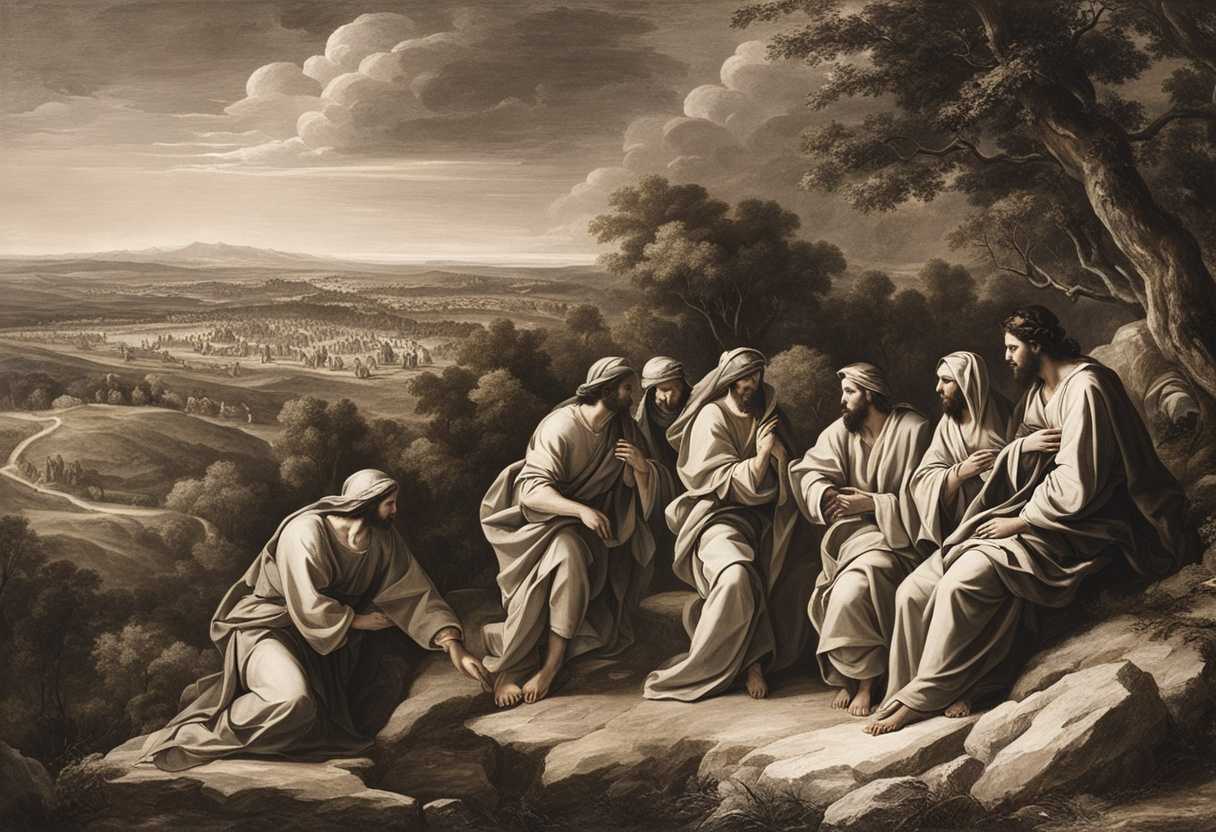
Setting the Scene for Mark 14:26-31
In Mark chapter 14, we find Jesus and his disciples gathered together in the upper room in Jerusalem to celebrate the Passover meal. The room is dimly lit by oil lamps, casting a warm glow over the group as they recline around a low table laden with unleavened bread, bitter herbs, and wine. The air is filled with the scent of roasting lamb and the sound of lively conversation as they partake in this sacred tradition.
Among those present are the twelve disciples, including Peter, James, and John, who have followed Jesus faithfully throughout his ministry. They are joined by Jesus himself, the central figure in this gathering, whose presence exudes a sense of peace and authority. As they share in the meal, Jesus speaks to them about the events that are about to unfold, foretelling his betrayal by one of their own and Peter’s denial of him.
The atmosphere in the room is tense as Jesus reveals these troubling prophecies, and the disciples are filled with a mixture of confusion and fear. Despite their loyalty to Jesus, they struggle to comprehend the magnitude of what is to come. This moment sets the stage for the dramatic events that will soon unfold in the Garden of Gethsemane and ultimately lead to Jesus’ crucifixion.
What is Mark 14:26-31 about?
Jesus is foretelling Peter’s denial before the rooster crows twice in this verse. This is a profound moment where Jesus, in his omniscience, knows what will happen in the future. Despite Peter’s initial bold declaration of loyalty, Jesus predicts that he will deny him three times before the rooster crows. This prediction serves as a powerful reminder of human weakness and our tendency to fall short of our promises and commitments, even in the face of great faith and intentions. This verse prompts us to consider our own actions and convictions as we reflect on it. How often do we, like Peter, make promises or commitments that we struggle to uphold when faced with adversity or fear? How does this prediction by Jesus highlight the importance of honesty, humility, and self-awareness in our spiritual journey? It serves as a call to examine our own hearts and behaviors, to acknowledge our weaknesses, and to seek forgiveness and redemption, just as Peter ultimately did after his denial. This verse ultimately reminds us of the complexity of human nature and the need for grace, mercy, and transformation in our lives.
Understanding what Mark 14:26-31 really means
After the poignant Last Supper, a pivotal moment unfolds as Jesus foretells the disciples’ impending abandonment. The weight of His words hangs heavy in the air, foreshadowing the events leading to His crucifixion. “You will all fall away,” Jesus declares, revealing the vulnerability and fear that lurk within even the most devoted followers. This prophecy underscores the frailty of human nature and the stark reality of impending trials.
In a striking reference to Zechariah 13:7, Jesus speaks of striking the shepherd, causing the sheep to scatter. This imagery paints a vivid picture of the impending dispersal of His followers in the face of adversity. The shepherd, symbolizing Jesus Himself, will be struck down, leading to a moment of profound disarray among His disciples. The depth of this prophecy echoes the intricate tapestry of divine providence woven throughout Scripture.
Furthermore, Jesus singles out Peter with a specific and chilling prediction: “Before the rooster crows twice, you will deny me three times.” Despite Peter’s fervent declarations of loyalty, Jesus sees through the facade of bravado to the core of Peter’s impending failure. This stark revelation serves as a stark reminder of the certainty of human weakness and the limitations of human resolve in the face of adversity.
Drawing parallels to Old Testament prophecy, the direct quote from Zechariah 13:7 underscores the seamless fulfillment of Scripture in Jesus’ words and actions. The interconnectedness of the Old and New Testaments is highlighted, emphasizing the continuity of God’s redemptive plan throughout history. Additionally, parallel accounts in Matthew 26:31-35 and John 13:36-38 offer complementary perspectives, enriching our understanding of the events leading up to Jesus’ crucifixion.
In contemplating the relevance of this passage today, we are confronted with the stark realities of human frailty and divine foreknowledge. The narrative of Peter’s denial serves as a poignant reminder that even the most steadfast believers can stumble in their faith. Yet, amidst the shadows of failure, there shines a beacon of hope in the form of redemption and restoration. Peter’s journey from denial to restoration offers a powerful testament to the transformative power of grace and forgiveness.
Consider the profound implications of a close friend’s betrayal in a time of need. The pain of abandonment is real, yet it also presents an opportunity for reconciliation and forgiveness. Similarly, Jesus’ unwavering love for His disciples, despite their impending failures, serves as a poignant reminder of His boundless grace and mercy. Just as Peter found redemption and purpose after his denial, we too can find solace in the promise of forgiveness and restoration.
As we reflect on the themes of human weakness, divine grace, and redemption woven throughout this passage, we are invited to introspection and self-examination. How have our own fears and shortcomings led us astray from our commitments? How can we, like Peter, find redemption and purpose in the midst of our failures? The narrative of Peter’s denial serves as a timeless reminder of the enduring hope and grace that await those who turn to God in times of trial.
Are we truly willing to follow Jesus to the end?
The passage you are referring to highlights Peter’s assertion of his unwavering loyalty to Jesus, saying he will never abandon Him, even if everyone else does. Despite his good intentions, Peter ultimately denies Jesus three times when faced with persecution. This serves as a reminder that our human strength and determination may falter when tested by hardship and suffering. It prompts us to reflect on our own commitment to following Jesus to the end, knowing that we may stumble along the way. We must honestly assess our willingness to stand firm in our devotion to Jesus, especially in moments of trial and difficulty, in our journey of faith. This passage challenges us to not only profess our loyalty to Christ with words, but also to embody it through our actions and decisions. It calls for a deep examination of our own hearts and a genuine surrender to His will, even if it means facing challenges or persecution. A firm resolve and a reliance on His strength rather than our own are required to follow Jesus to the end. It involves a willingness to persevere through adversity, trusting in His faithfulness and promises. Let us deepen our commitment to Jesus, taking to heart the lesson from Peter’s experience, and knowing that He is always with us, guiding and sustaining us every step of the way.
Application
Just like in our fast-paced world of deadlines, your dedication to Christ needs constant nurturing. Reflect on Mark 14:26-31. Are you staying true to your beliefs like you do to your work deadlines? Let’s be like Peter – learning from past mistakes, growing stronger in our faith. Will you commit to being unwavering in your loyalty to Christ, no matter what may come our way?

Reverend Michael Johnson is an experienced Church Minister with a profound expertise in spirituality and guidance. With a serene presence and a compassionate heart, he has faithfully served his congregation for over 20 years, leading them on a spiritual journey towards inner peace and enlightenment. Reverend Johnson’s extensive knowledge of religious philosophies and profound understanding of human nature have made him a trusted confidant and mentor to many, as he seamlessly weaves his profound wisdom into life teachings. Reverend Johnson’s calming demeanor and empathetic nature continue to uplift and heal souls, nurturing a sense of unity and tranquility within his community.