
Mark 14:14 is about Jesus instructing his disciples to go into the city, where they will meet a man carrying a jar of water, and to follow him to the place where they will prepare for the Last Supper, emphasizing the importance of trust and divine guidance in fulfilling God’s plan.
14 And wherever he enters, say to the master of the house, ‘The Teacher says, Where is my guest room, where I may eat the Passover with my disciples?’
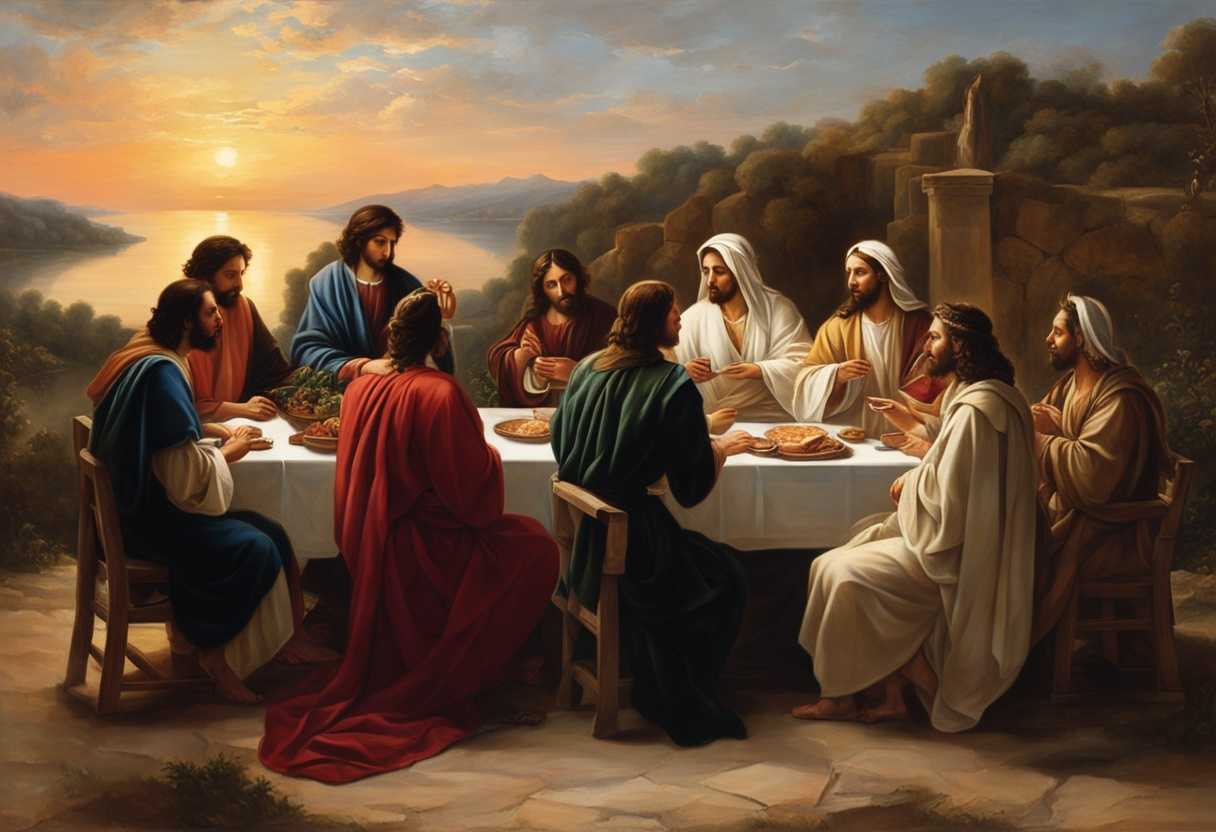
Setting the Scene for Mark 14:14
In Mark chapter 14, we find Jesus instructing his disciples to prepare for the Passover meal. The scene is set in Jerusalem, in a room that has been arranged for the occasion. Jesus is accompanied by his twelve disciples, including Peter, James, John, and Judas Iscariot. They have come together to celebrate the Passover, a significant Jewish festival commemorating the Israelites’ liberation from slavery in Egypt.
As they gather around the table, the disciples are filled with anticipation and reverence for the sacred meal. Jesus, knowing that his time on earth is coming to an end, shares poignant moments with his closest companions. The atmosphere is both solemn and intimate, as Jesus breaks bread and shares wine with his disciples, symbolizing his body and blood. Little do they know that this Passover meal will be the setting for the betrayal by Judas and the beginning of Jesus’ journey to the cross. The room is dimly lit, with the flickering light of oil lamps casting a warm glow over the group as they partake in this last supper together.
What is Mark 14:14 about?
Jesus is giving his disciples clear and precise instructions for preparing to celebrate the Passover meal in this verse. This shows the importance of organization and planning in carrying out spiritual rituals and practices. Jesus’s attention to detail demonstrates the significance of honoring traditions and following specific protocols in religious observances.
Have you ever thought about the importance of following rituals and traditions in your faith? We should honor our customs and ceremonies with care and reverence, just as Jesus instructed his disciples to prepare for the Passover meal in a specific location. The disciples were able to fully partake in the significance of the Passover meal and experience its spiritual richness by following these instructions. How can you apply this lesson in your own spiritual journey and ensure that you are fully engaged in the practices and traditions of your faith?
Understanding what Mark 14:14 really means
In the Gospel of Mark, we find a pivotal moment in Jesus’ ministry as He instructs His disciples to prepare for the Passover meal, which would later become known as the Last Supper. This event takes place at a crucial juncture, just before Jesus’ arrest and crucifixion, underscoring the significance of the upcoming events.
“The Teacher says” is a phrase that not only highlights Jesus’ authority but also emphasizes His role as a teacher and leader. It showcases the respect and recognition that Jesus commands from His disciples and serves as a reminder of His divine mission. When Jesus asks, “Where is my guest room,” it reveals His foreknowledge and divine planning. Jesus knows precisely where the preparations for the Passover meal should take place, showcasing His omniscience and sovereignty.
The mention of eating the Passover with His disciples signifies the importance of this Jewish tradition and its transformation into the Last Supper, symbolizing the establishment of a new covenant. This act of sharing a meal with His disciples holds deep spiritual significance, pointing towards the sacrificial nature of Jesus’ impending death and the redemption it would bring.
In Luke 22:10-12, we find a parallel account of the same event, providing additional details about a man carrying a jar of water whom the disciples are to follow. Exodus 12:1-14 gives us insight into the original Passover, laying the foundation for understanding its significance and how Jesus fulfills and transforms this tradition. Additionally, 1 Corinthians 11:23-26 recounts the Last Supper, emphasizing its importance for Christians as a remembrance of Jesus’ sacrifice.
The relevance of this passage extends to us today in various ways. Just as Jesus provided specific instructions to His disciples, He continues to guide us in our lives. We are called to seek and follow His direction, trusting in His divine wisdom. The disciples’ obedience in preparing the Passover meal teaches us the importance of readiness and obedience in our walk with God. Furthermore, the communal aspect of the Last Supper highlights the significance of fellowship and unity among believers, emphasizing the importance of community in our faith journey.
To illustrate this, consider a family preparing for a significant holiday meal. The parents give specific instructions to their children on what to buy and how to set the table. The children follow these instructions, and the meal becomes a time of bonding and celebration. Similarly, Jesus’ instructions to His disciples were not merely logistical; they were about creating a moment of deep spiritual significance and unity among His followers.
In conclusion, Mark 14:14 may seem straightforward at first glance, but it carries profound meaning. It speaks to Jesus’ authority, divine foresight, and the importance of preparation and obedience in our walk with God. It serves as a reminder of the significance of community and the transformative power of Jesus’ sacrifice, which we continue to commemorate and celebrate as believers today.
What does it mean to truly serve others?
To truly serve others means to show compassion, empathy, and kindness in our actions. It means putting the needs of others before our own, selflessly offering support and assistance without expecting anything in return. Serving others involves a genuine desire to alleviate their burdens, uplift their spirits, and make a positive impact in their lives.
When we serve others with a sincere heart, we embody the teachings of love, humility, and sacrifice. It is about going beyond mere gestures and delving into the depths of human connection, understanding, and care. True service is not just about meeting physical needs but also about tending to emotional, spiritual, and relational needs, fostering a sense of community, belonging, and support for all.
Application
Let the words of Mark 14:14 awaken a fire in your heart to selflessly serve others, just as Jesus did. Show empathy and kindness to those who could use a helping hand. Will you rise up to the challenge and spread love through your actions in your workplace, neighborhood, and beyond?

Reverend Michael Johnson is an experienced Church Minister with a profound expertise in spirituality and guidance. With a serene presence and a compassionate heart, he has faithfully served his congregation for over 20 years, leading them on a spiritual journey towards inner peace and enlightenment. Reverend Johnson’s extensive knowledge of religious philosophies and profound understanding of human nature have made him a trusted confidant and mentor to many, as he seamlessly weaves his profound wisdom into life teachings. Reverend Johnson’s calming demeanor and empathetic nature continue to uplift and heal souls, nurturing a sense of unity and tranquility within his community.