
Mark 14:3-8 is about a woman pouring expensive perfume on Jesus, symbolizing her deep love and devotion to him, contrasting with the disciples’ concern for practical matters, highlighting the importance of sacrificial love and dedication in serving God.
3 And while he was at Bethany in the house of Simon the leper, as he was reclining at table, a woman came with an alabaster flask of ointment of pure nard, very costly, and she broke the flask and poured it over his head.
4 There were some who said to themselves indignantly, “Why was the ointment wasted like that?
5 For this ointment could have been sold for more than three hundred denarii and given to the poor.” And they scolded her.
6 But Jesus said, “Leave her alone. Why do you trouble her? She has done a beautiful thing to me.
7 For you always have the poor with you, and whenever you want, you can do good for them. But you will not always have me.
8 She has done what she could; she has anointed my body beforehand for burial.
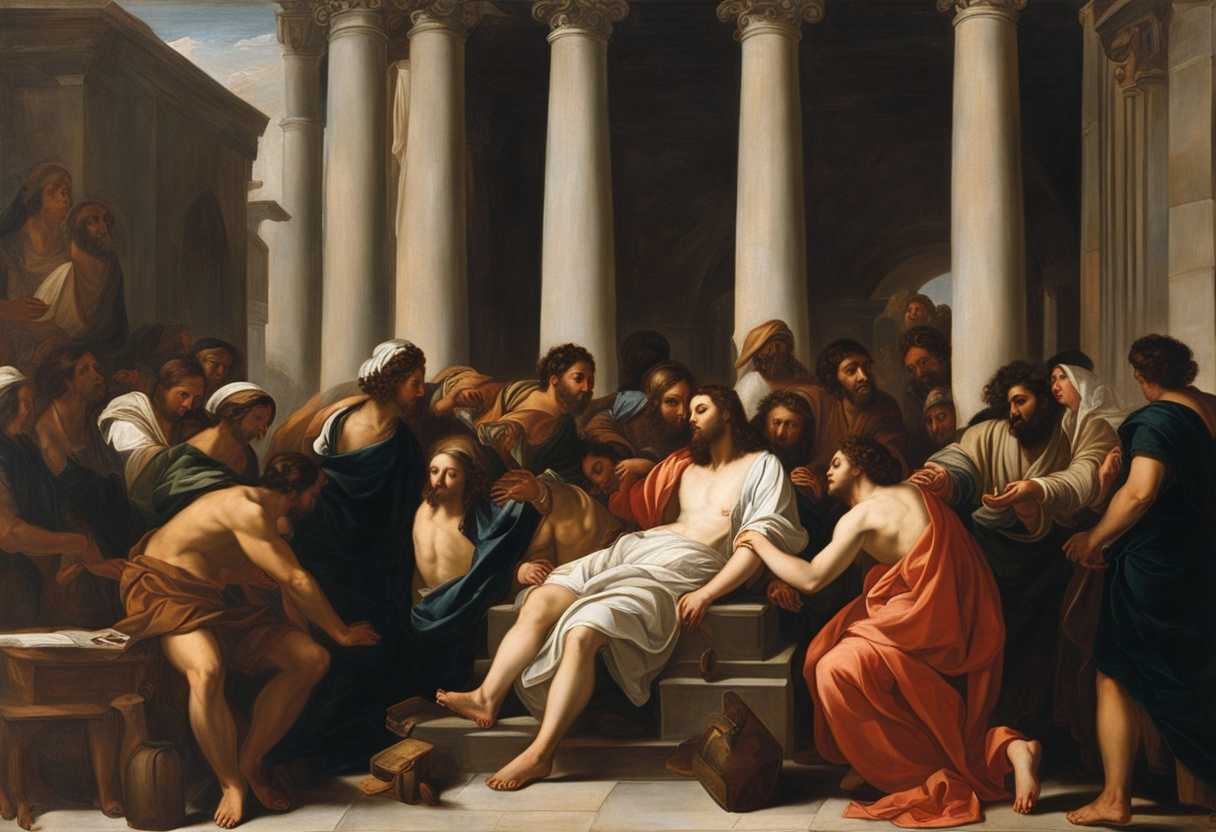
Setting the Scene for Mark 14:3-8
The scene in Mark chapter 14:3-8 takes place in the house of Simon the leper in Bethany, a village located on the eastern slope of the Mount of Olives, just outside Jerusalem. Jesus is reclining at the table with his disciples when a woman enters the room carrying an alabaster jar of expensive perfume. This woman is later identified as Mary, the sister of Martha and Lazarus.
Mary approaches Jesus and breaks the jar, pouring the fragrant oil over his head. The disciples are taken aback by this extravagant gesture, as the perfume is worth a year’s wages. They question the woman’s actions, suggesting that the perfume could have been sold and the money given to the poor. However, Jesus defends Mary, commending her for her act of devotion and explaining that she has anointed him for his burial.
The room is filled with the sweet aroma of the perfume as Mary’s act of love and sacrifice foreshadows the impending crucifixion of Jesus. This intimate moment captures the deep bond between Jesus and his followers, illustrating the profound impact of faith and devotion in the face of adversity.
What is Mark 14:3-8 about?
We see a beautiful display of love and devotion towards Jesus in this powerful verse. The act of the woman anointing Jesus with expensive perfume goes beyond a mere physical gesture – it symbolizes her deep reverence and adoration for him. This act is a reflection of the woman’s understanding of Jesus’s divinity and a profound willingness to sacrifice something precious for him. It challenges us to reflect on the depth of our own love and devotion to those we hold dear in our lives.
Have you ever experienced a moment where you were willing to go above and beyond to show someone how much you care for them? Imagine the emotions and intentions that must have been behind the woman’s actions as she poured out this costly perfume on Jesus. This verse reminds us of the power of extravagant love, the kind of love that is willing to give without expecting anything in return. It prompts us to consider how we can demonstrate our love and devotion to others in our own lives, whether it be through grand gestures or simple acts of kindness.
Understanding what Mark 14:3-8 really means
In the poignant narrative found in Mark 14:3-8, we are transported to Bethany, to the house of Simon the leper, where a woman approaches Jesus with an alabaster jar of very expensive perfume. This jar, made of pure nard, symbolizes the woman’s profound sacrifice and devotion. As she breaks the jar and pours its contents on Jesus’ head, the act of anointing unfolds before us, signifying honor, consecration, and a subtle foreshadowing of Jesus’ impending death and burial.
Jesus’ response to the disciples’ criticism of the woman’s extravagant gesture is both powerful and illuminating. “Leave her alone… She has done a beautiful thing to me,” he declares, emphasizing the beauty and significance of her sacrificial act. This defense by Jesus underscores the value he places on genuine acts of worship and devotion, even when they may seem extravagant or misunderstood by others.
The parallel accounts in John 12:1-8 and Matthew 26:6-13 provide additional layers to the narrative, shedding light on the woman’s identity as Mary, the sister of Martha and Lazarus, and emphasizing the disciples’ indignation and Jesus’ unwavering support of the woman’s actions. These passages deepen our understanding of the personal devotion and sacrificial giving exemplified by the woman, inviting us to reflect on our own willingness to give sacrificially for our faith and for the well-being of others.
In Luke 7:36-50, a similar event involving a woman anointing Jesus and facing criticism further reinforces the themes of forgiveness, love, and the preciousness of sincere acts of worship. This interconnected web of narratives serves as a poignant reminder that true acts of devotion and worship may not always align with societal expectations or norms, but they hold immense value in the eyes of God.
The timeless relevance of this passage resonates with us today, prompting introspection on our own sacrificial giving, devotion, and willingness to express love and worship in meaningful ways. Just as the woman’s extravagant gift challenged the disciples, we are encouraged to consider how we can honor God with our resources and actions, even when faced with criticism or misunderstanding from others.
Consider a modern-day scenario where someone donates a significant portion of their savings to a charitable cause or church project. Despite potential criticism or skepticism from others, the sincerity of the donor’s heart and intention mirrors the essence of the woman’s sacrificial act. Just as Jesus esteemed the woman’s sacrifice, God values our genuine acts of love and devotion, regardless of external opinions or judgments.
In conclusion, the narrative in Mark 14:3-8 serves as a profound testament to the depth of sacrificial love and devotion exemplified by the woman with the alabaster jar. It challenges us to reevaluate our own acts of worship, inspiring us to express our devotion to God in meaningful and sacrificial ways. Ultimately, it reassures us that our sincere efforts, no matter how extravagant or unconventional they may seem, are cherished and valued by God.
How can we show extravagant love for Jesus?
We can understand from this passage that extravagant love for Jesus involves giving our very best for Him. We can show our love for Him by giving sacrificially and lavishly, just as the woman in the story poured expensive perfume over Jesus’ head. This could mean giving our time, resources, talents, and even our reputation in service for Him. When we are willing to go above and beyond in demonstrating our love for Jesus, we are displaying extravagant love.
Furthermore, extravagant love for Jesus is seen in our willingness to humble ourselves before Him. The woman in the story humbled herself by kneeling before Jesus and anointing Him, despite the criticisms and judgments of those around her. Likewise, we can demonstrate our love for Jesus by humbly surrendering our pride, selfish desires, and comforts at His feet. When we are ready to set aside our own agenda and put Jesus first in our lives, we are practicing extravagant love for Him. Recognizing His worth and expressing gratitude for all that He has done for us involves extravagant love for Jesus. We can show our love for Jesus by continuously praising Him, worshipping Him, and acknowledging His lordship over our lives, just as the woman in the passage poured out her costly perfume as an act of worship and thanksgiving. When we live a life of gratitude and worship towards Jesus, we are demonstrating extravagant love for Him.
Application
Take a moment to see yourself in this story from Mark 14:3-8. Just as the woman with the expensive ointment, what are you willing to sacrifice for your faith? In a world where we juggle work and family, how do you prioritize your love for Jesus? Challenge yourself to give generously and live devotedly. Are you ready to make such a bold statement of faith?

Reverend Michael Johnson is an experienced Church Minister with a profound expertise in spirituality and guidance. With a serene presence and a compassionate heart, he has faithfully served his congregation for over 20 years, leading them on a spiritual journey towards inner peace and enlightenment. Reverend Johnson’s extensive knowledge of religious philosophies and profound understanding of human nature have made him a trusted confidant and mentor to many, as he seamlessly weaves his profound wisdom into life teachings. Reverend Johnson’s calming demeanor and empathetic nature continue to uplift and heal souls, nurturing a sense of unity and tranquility within his community.