
Mark 14:62 is about Jesus affirming his divine identity as the Son of Man who will have authority even over his accusers, emphasizing his power and future role as the ultimate judge.
62 And Jesus said, “I am, and you will see the Son of Man seated at the right hand of Power, and coming with the clouds of heaven.”
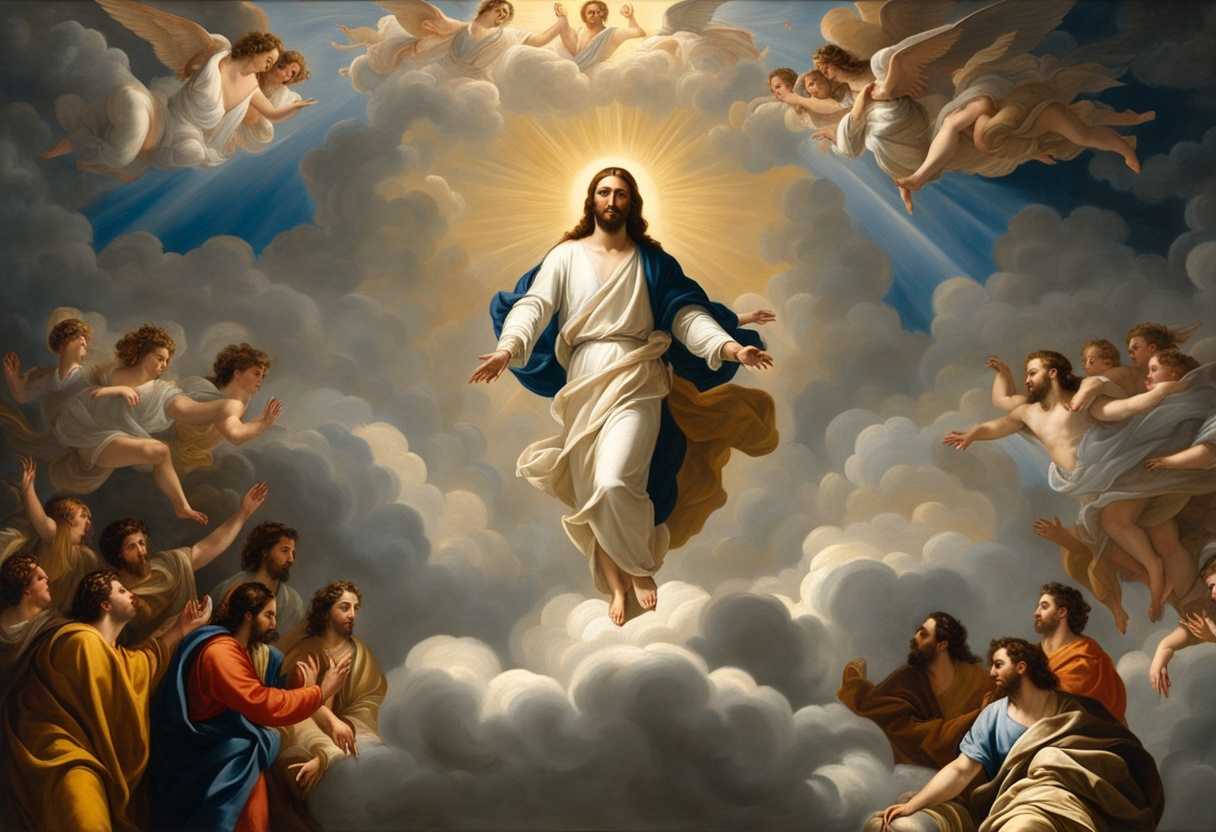
Setting the Scene for Mark 14:62
In Mark chapter 14, we find Jesus standing before the high priest during his trial. The scene is tense and charged with emotion as the religious leaders question Jesus about his identity and his teachings. The high priest, Caiaphas, is seated on a grand chair, surrounded by other members of the Sanhedrin, the Jewish council. The room is dimly lit by oil lamps, casting eerie shadows on the walls.
Jesus, clad in simple robes, stands calmly in the center of the room, his eyes filled with compassion and wisdom. His disciples, including Peter, James, and John, are gathered in a corner, watching the proceedings with a mixture of fear and confusion. The air is heavy with anticipation as everyone waits for Jesus’ response to the high priest’s question about whether he is the Messiah, the Son of God.
As Jesus utters the powerful words, “I am, and you will see the Son of Man seated at the right hand of Power, and coming with the clouds of heaven,” a hush falls over the room. The high priest rends his garments in outrage, accusing Jesus of blasphemy. The disciples exchange worried glances, realizing that their beloved teacher is on a collision course with the religious authorities. The stage is set for the dramatic events that will unfold in the days to come.
What is Mark 14:62 about?
Jesus unequivocally declares His divine identity as the Son of God in this powerful verse. Imagine the gravity of this moment – Jesus, the humble and compassionate teacher, boldly proclaiming His true nature as the Son of the Almighty. This statement is not just a simple assertion; it is a declaration of His divine mission and purpose on Earth. Jesus reaffirms His unique relationship with the Father and emphasizes the eternal bond between them by asserting His identity as the Son of God. Through this declaration, Jesus is also preparing his disciples and followers for the challenging times ahead, particularly His crucifixion. This moment serves as a moment of truth and a turning point in His ministry, solidifying His divine authority and paving the way for the ultimate sacrifice He would make for humanity’s salvation.
Reflect on the immense courage and faith it must have taken for Jesus to openly acknowledge His divine nature, knowing the consequences it would bring. Let us consider our own beliefs and understanding of who Jesus is in our lives as we meditate on this verse. May this declaration of His identity inspire us to deepen our faith, trust in His guidance, and walk in the light of His truth.
Understanding what Mark 14:62 really means
In the midst of the trial of Jesus before the Sanhedrin, a crucial moment unfolds as He is asked a direct question about His identity. The question posed to Him, “Are you the Messiah, the Son of the Blessed One?” sets the stage for Jesus’ profound response in Mark 14:62. His simple yet powerful declaration, “I am,” resonates with divine significance, echoing God’s self-revelation to Moses in Exodus 3:14 as “I AM WHO I AM.” In this moment, Jesus unequivocally affirms His divine nature, leaving no room for doubt or ambiguity.
Furthermore, Jesus’ statement about seeing the “Son of Man sitting at the right hand of the Mighty One” carries deep theological implications. This imagery draws from Psalm 110:1, a messianic psalm that speaks of the exalted position and authority of the Messiah. By referencing this verse, Jesus not only affirms His divine status but also alludes to His future exaltation and reign alongside God. The mention of “coming on the clouds of heaven” further solidifies this image, drawing from Daniel 7:13-14, where the Son of Man is given dominion and glory.
The connections to these Old Testament passages serve to emphasize the continuity and fulfillment of messianic prophecy in Jesus. His words in Mark 14:62 not only affirm His identity but also point to His future return in power and glory. This declaration transcends the immediate context of the trial and carries profound implications for believers today.
For contemporary readers, Jesus’ response in Mark 14:62 serves as a call to affirm our faith in His divine identity and authority. It challenges us to stand firm in our beliefs, even in the face of opposition or doubt. Moreover, the promise of Jesus’ return offers hope and assurance in times of uncertainty and suffering. Just as Jesus boldly proclaimed His identity, we are called to boldly witness to our faith in Him, knowing that He is ultimately victorious.
To illustrate the significance of this moment, one can imagine a courtroom drama where a truth is revealed that changes the course of events. Similarly, Jesus’ declaration in the trial scene shifts the narrative dramatically, leading to the ultimate redemption for humanity. This analogy highlights the courage and conviction displayed by Jesus in the face of adversity, inspiring us to emulate His steadfastness in our own lives.
In conclusion, Mark 14:62 encapsulates a pivotal moment in Jesus’ trial, where He boldly affirms His divine identity and future exaltation. This verse challenges us to recognize His authority, find hope in His promised return, and boldly witness to our faith. By delving into the rich biblical allusions and theological depth of this passage, we are invited to deepen our understanding of Jesus’ mission and embrace the call to stand firm in our beliefs, trusting in His ultimate victory.
What does it mean to acknowledge Jesus as Lord?
To acknowledge Jesus as Lord means to fully recognize and accept His authority and supremacy in our lives. We acknowledge Jesus as Lord, submitting ourselves to His will and recognizing Him as the ultimate ruler and sovereign over all creation. This acknowledgment goes beyond simply acknowledging Jesus as a historical figure or a moral teacher, but rather it is a heartfelt acknowledgment of His divinity and lordship over everything.
When we acknowledge Jesus as Lord, we are declaring our allegiance to Him and committing to follow Him wholeheartedly. It involves surrendering our own will and desires to His will, and seeking to live our lives in accordance with His teachings and commandments. Acknowledging Jesus as Lord requires a deep faith and trust in Him as the one who has the power to save, redeem, and guide us in our daily lives. It is a declaration of faith that Jesus is not just a part of our lives, but the central focus and foundation of everything we do and believe.
Application
Imagine Jesus declaring His identity like a lighthouse piercing through a storm. He’s not just a guide but the ultimate anchor in your busy life. Take a step today to acknowledge Him as your true compass. Strengthen your faith, share His message confidently, and let your life be a reflection of His love and truth. Are you ready to stand firm and shine His light in your daily grind?

Reverend Michael Johnson is an experienced Church Minister with a profound expertise in spirituality and guidance. With a serene presence and a compassionate heart, he has faithfully served his congregation for over 20 years, leading them on a spiritual journey towards inner peace and enlightenment. Reverend Johnson’s extensive knowledge of religious philosophies and profound understanding of human nature have made him a trusted confidant and mentor to many, as he seamlessly weaves his profound wisdom into life teachings. Reverend Johnson’s calming demeanor and empathetic nature continue to uplift and heal souls, nurturing a sense of unity and tranquility within his community.