
Mark 15:46-47 is about Joseph of Arimathea courageously stepping forward to request the body of Jesus, symbolizing his acknowledgment and honor of Jesus as the true Son of God, despite the surrounding fear and disbelief of others.
46 And Joseph bought a linen shroud, and taking him down, wrapped him in the linen shroud and laid him in a tomb that had been cut out of the rock. And he rolled a stone against the entrance of the tomb.
47 Mary Magdalene and Mary the mother of Joses saw where he was laid.
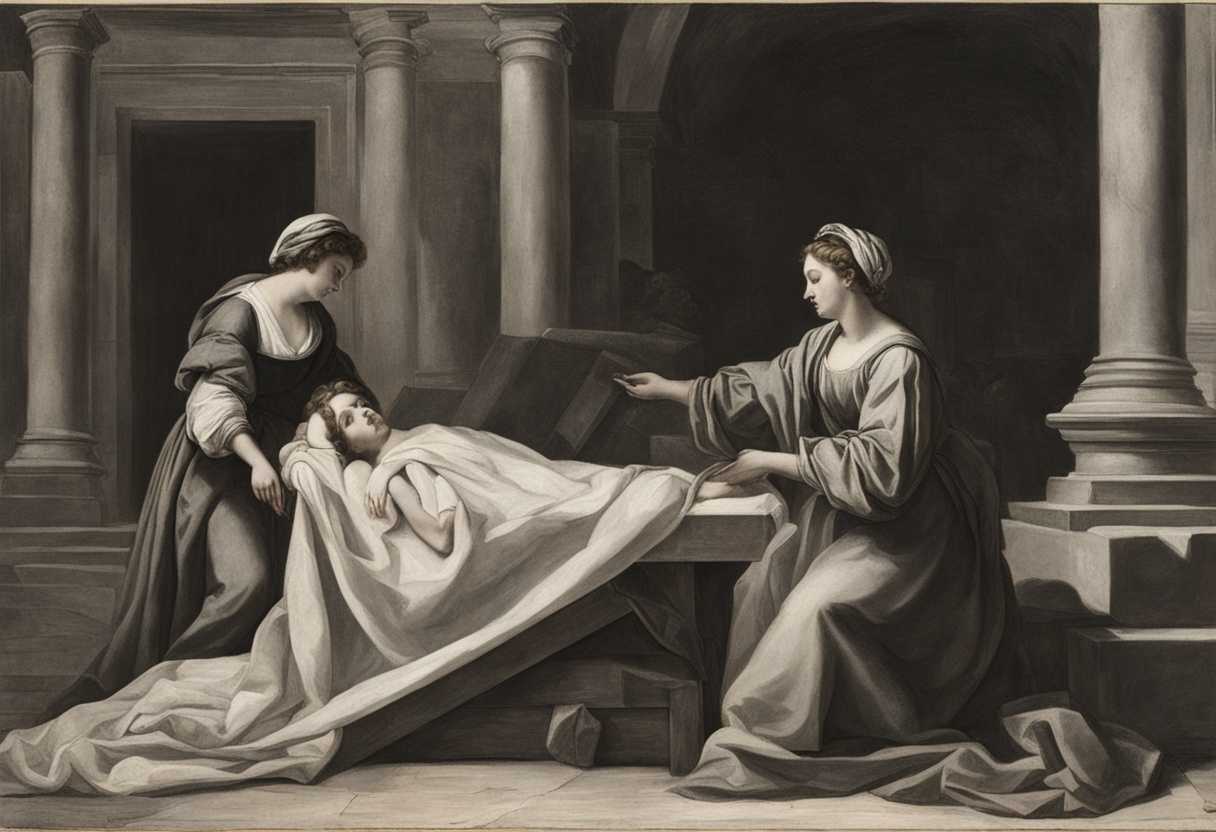
Setting the Scene for Mark 15:46-47
The scene described in Mark 15:46-47 takes place at the crucifixion of Jesus Christ on Golgotha, also known as Calvary. The main characters in this scene are Joseph of Arimathea and a man named Nicodemus. Joseph of Arimathea was a wealthy and respected member of the Jewish council who was a secret follower of Jesus. Nicodemus was also a member of the Jewish council and had previously come to Jesus by night seeking spiritual guidance.
As the day draws to a close, Joseph of Arimathea and Nicodemus approach Pontius Pilate, the Roman governor, to request permission to take down Jesus’ body from the cross and bury it. Pilate grants their request, and the two men carefully remove Jesus’ body from the cross. They wrap it in linen cloths and place it in a tomb that Joseph had recently purchased for his own burial.
The surroundings are somber and solemn, with the sound of wailing and mourning in the air as Jesus’ followers and onlookers grieve his death. The scene is filled with a sense of reverence and respect as Joseph of Arimathea and Nicodemus tenderly handle Jesus’ body, showing their love and devotion to their fallen teacher. The setting is a stark contrast to the chaos and cruelty of the crucifixion, as these two men quietly and reverently lay Jesus to rest in the tomb.
What is Mark 15:46-47 about?
This verse is a poignant moment in the biblical narrative of Jesus’s crucifixion and burial. It portrays a somber yet profound act of love and respect shown to Jesus in his final moments. Joseph of Arimathea, a member of the Sanhedrin who had secretly been following Jesus, comes forward to honor him by providing a dignified burial. The presence of Mary Magdalene and Mary the mother of Joses adds a sense of emotional weight to the scene, as they witness this act of kindness and care for their beloved teacher and son. The verse underscores the idea of solidarity and support in times of grief and difficulty by highlighting these specific individuals involved in Jesus’s burial. It also emphasizes the humanity and vulnerability of Jesus, as even in his death, he is shown tenderness and compassion. This act of burial becomes a symbol of the importance of honoring and respecting the deceased, no matter the circumstances. It prompts us to reflect on the significance of showing kindness and reverence towards others in their times of need and to consider the impact of our actions on those around us.
Understanding what Mark 15:46-47 really means
The verses in Mark 15:46-47 depict the solemn moment of Jesus’ burial after His crucifixion. Joseph of Arimathea, a respected member of the council, takes the initiative to ensure Jesus receives a proper burial. Wrapping Jesus’ body in linen, Joseph places Him in a rock-cut tomb, with Mary Magdalene and Mary the mother of Joses as witnesses to this somber event. This act of burial is not merely a logistical necessity but a profound symbol of the reality of Jesus’ death and the care taken in honoring His humanity even in His final moments.
In Isaiah 53:9, a prophecy foretells of the suffering servant being buried with the wicked and the rich in His death, aligning with Jesus’ burial in a tomb provided by the wealthy Joseph of Arimathea. John 19:38-42 offers further insights into the meticulous preparation of Jesus’ body for burial by Joseph and Nicodemus, highlighting the honor and respect accorded to Jesus even in His death. Matthew 27:57-61 corroborates the significance of the women witnessing the burial, crucial for establishing the credibility of the resurrection accounts that follow.
These verses serve as a poignant reminder of Jesus’ mortality, emphasizing His sacrifice and the humanity He shared with us through death. The actions of Joseph of Arimathea and the devoted women exemplify timeless virtues of courage, devotion, and respect, qualities that resonate with us today. The burial of Jesus foreshadows the resurrection, offering believers hope and assurance of life beyond the grave, reinforcing the central message of Christianity.
Consider a community coming together to honor a departed loved one. The care and reverence shown in preparing for the funeral reflect the deep love and esteem for that individual. Similarly, Joseph of Arimathea and the women displayed profound respect and love for Jesus in His death, inspiring us to cherish and honor those around us with similar devotion and care.
The act of Joseph purchasing a linen cloth signifies his willingness to use his resources to honor Jesus, underscoring the importance of offering our best to God and others. Placing Jesus in a tomb underscores the finality of His death, making His resurrection all the more miraculous and symbolizing the hope of eternal life beyond the grave. The presence of Mary Magdalene and Mary the mother of Joses as witnesses to the burial is pivotal in the resurrection narrative, showcasing their unwavering devotion and providing crucial eyewitness testimony to the events, reinforcing the truth of the resurrection accounts.
In contemplating these verses, we find inspiration in the courage and devotion of those who cared for Jesus in His final moments. We are reminded of the hope and promise of resurrection and eternal life, drawing strength from the enduring message of faith, love, and the triumph of life over death.
How can we demonstrate our faith through action?
We can demonstrate our faith through action by imitating Joseph of Arimathea, who showed his faith by taking bold steps to honor Jesus even in difficult circumstances. He took the initiative to ask Pilate for Jesus’ body, despite the risk and potential consequences of being associated with a condemned criminal. Joseph’s actions reflected his deep faith and commitment to Jesus, showing us that faith is not just a belief in our hearts but also a call to action. We can demonstrate our faith through our actions by boldly standing up for what we believe in, even if it means going against the norms or risking our reputation. We can show our faith by being willing to step out of our comfort zones, take risks, and make sacrifices for the sake of honoring God and following His will. Like Joseph of Arimathea, our actions can speak volumes about the depth of our faith and our commitment to living out our beliefs in tangible ways.
Through our actions, we have the opportunity to bear witness to our faith and glorify God in all that we do. We not only show our commitment to God but also inspire others to follow in our footsteps by actively living out our beliefs and values. Our actions can be a powerful testimony to the love and grace of God, inviting others to experience the transformative power of faith in their own lives.
Application
Just as Joseph of Arimathea bravely stood by Jesus in His final moments, we too are called to show unwavering dedication in our belief. Let us take a cue from Joseph’s fearless act and boldly declare our faith in the face of adversity. Are we ready to step up and lay our doubts to rest, embracing our faith wholeheartedly like Joseph did for Jesus?

Reverend Michael Johnson is an experienced Church Minister with a profound expertise in spirituality and guidance. With a serene presence and a compassionate heart, he has faithfully served his congregation for over 20 years, leading them on a spiritual journey towards inner peace and enlightenment. Reverend Johnson’s extensive knowledge of religious philosophies and profound understanding of human nature have made him a trusted confidant and mentor to many, as he seamlessly weaves his profound wisdom into life teachings. Reverend Johnson’s calming demeanor and empathetic nature continue to uplift and heal souls, nurturing a sense of unity and tranquility within his community.