
Mark 16:4-6 is about the discovery of Jesus’s empty tomb by Mary Magdalene, Mary the mother of James, and Salome, as they encounter an angel who informs them that Jesus has risen from the dead, signifying the triumph of life over death and the fulfillment of prophecy.
4 And looking up, they saw that the stone had been rolled back—it was very large.
5 And entering the tomb, they saw a young man sitting on the right side, dressed in a white robe, and they were alarmed.
6 And he said to them, “Do not be alarmed. You seek Jesus of Nazareth, who was crucified. He has risen; he is not here. See the place where they laid him.
Setting the Scene for Mark 16:4-6
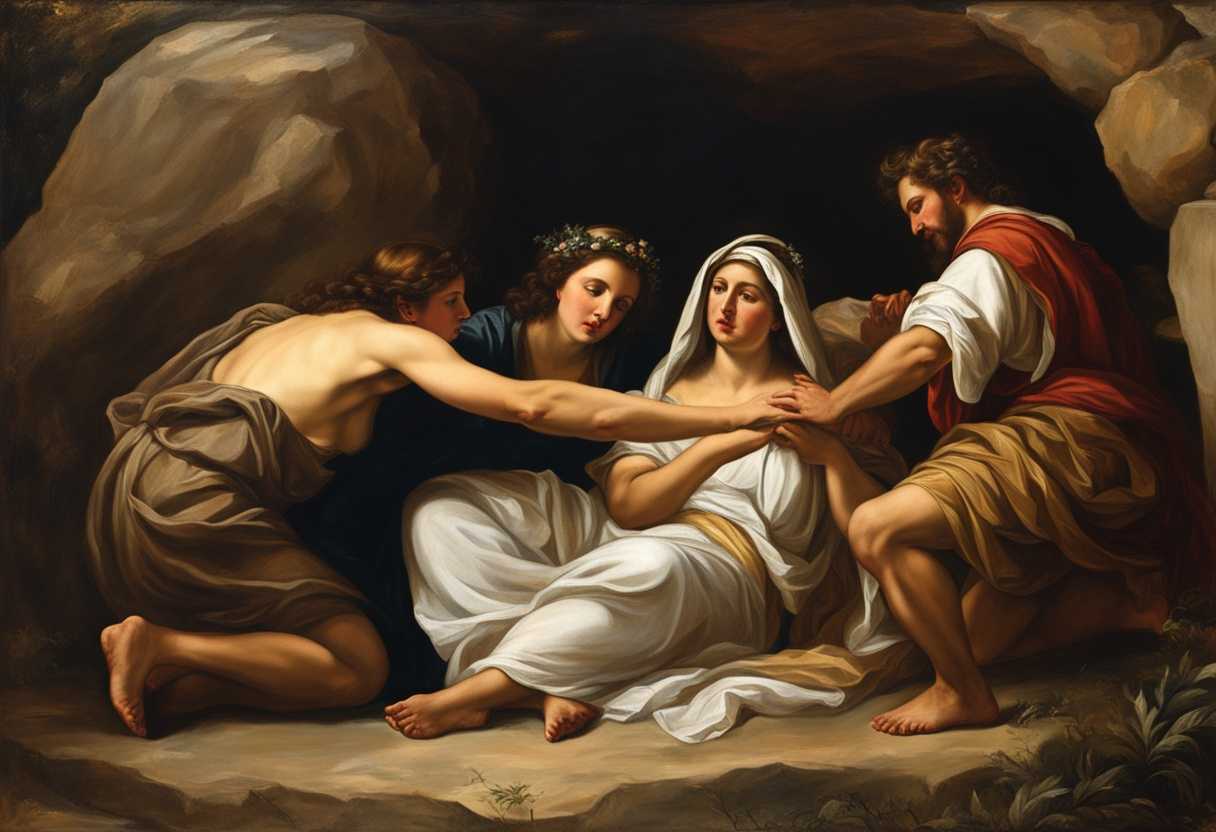
The scene in Mark 16:4-6 takes place at the tomb of Jesus on the morning of the resurrection. Mary Magdalene, Mary the mother of James, and Salome, three devoted followers of Jesus, had come to the tomb to anoint Jesus’ body with spices. As they approached the tomb, they were discussing among themselves who would roll away the large stone that sealed the entrance.
The women were filled with grief and confusion, still processing the events of Jesus’ crucifixion and death. However, as they arrived at the tomb, they were astonished to find that the stone had already been rolled away. Inside the tomb, they encountered a young man dressed in a white robe, who informed them that Jesus had risen from the dead. Overwhelmed with a mix of fear and joy, the women left the tomb to share the incredible news with the disciples.
The setting is a quiet garden tomb, with the soft light of dawn breaking through the darkness. The atmosphere is filled with a sense of mystery and wonder as the women come face to face with the miraculous reality of Jesus’ resurrection. The scene captures a pivotal moment in Christian faith, as the women become the first witnesses to the greatest event in history – the triumph of life over death.
What is Mark 16:4-6 about?
When we read Mark 16:4-6, we are presented with a powerful scene where the women who came to anoint Jesus’ body are met with an empty tomb. The angel they encounter tells them, “He has risen!” This verse carries profound significance as it symbolizes the victory of life over death, hope over despair, and faith over doubt.
Reflect on this verse – can you imagine the awe and wonder the women must have felt upon discovering the empty tomb and hearing of Jesus’ resurrection? This moment in history changed everything – it validated Jesus’ teachings, gave hope to his followers, and continues to inspire billions of believers around the world. It serves as a reminder that even in our darkest moments, there is always the possibility of new beginnings and miracles. The transformative power of faith and the enduring message of hope that Jesus’ resurrection brings should remind us as we ponder the message of Mark 16:4-6. May we too be filled with awe and gratitude for the miracle of Easter and the eternal promise it represents, just as the women were amazed by the angel’s proclamation.
Understanding what Mark 16:4-6 really means
In the Gospel of Mark, we encounter a profound moment in the resurrection narrative where the women who followed Jesus make a startling discovery at the empty tomb. This event holds immense significance in Christian belief, representing Jesus’ triumph over death and the fulfillment of divine promises. As the women arrive, they are met with the sight of the large stone rolled away, a powerful symbol of the removal of barriers between humanity and God. This act not only underscores the miraculous nature of Jesus’ resurrection but also serves as a visual representation of the liberation brought forth by His victory over death.
Amidst the scene, a young man clothed in a white robe appears, positioned on the right side. This figure, often interpreted as an angel, embodies divine intervention and the presence of God in the momentous event of Jesus’ resurrection. The white robe worn by the angel signifies purity and holiness, emphasizing the sacred nature of the occasion. The proclamation made by the angel, “He has risen! He is not here,” encapsulates the core message of Christian faith – the resurrection of Jesus Christ. This declaration not only fulfills Jesus’ prophecy regarding His own resurrection but also serves as a beacon of hope and renewal for believers.
The parallels found in related Bible passages, such as Matthew 28:5-6, Luke 24:5-6, and John 20:1-18, further illuminate the significance of the resurrection narrative across the Gospels. These accounts collectively reinforce the central message of Jesus’ triumph over death and the profound impact of His resurrection on the course of human history. Today, the message of hope and renewal embedded in the resurrection narrative continues to resonate with individuals facing challenges and seeking spiritual solace.
The imagery of the stone being rolled away from the tomb serves as a poignant reminder that with faith, obstacles can be overcome, and new beginnings are always within reach. Just as the women encountered the unexpected presence of the angel at the empty tomb, we are reminded of the ever-present divine intervention in our lives, offering reassurance and guidance in times of darkness. The resurrection narrative not only speaks to the transformative power of faith but also underscores the enduring promise of God’s presence amidst life’s trials and tribulations.
Consider a scenario where an individual grapples with a seemingly insurmountable life challenge, akin to being trapped in a tomb of despair. In this moment of desperation, the image of the stone being rolled away serves as a beacon of hope, symbolizing the unexpected breakthroughs and divine interventions that can manifest through unwavering faith. Just as the women were met with the miraculous sight of the empty tomb, we are called to trust in the greater plan that God has ordained for our lives, transcending our immediate circumstances and embracing the transformative power of resurrection faith.
What does the empty tomb signify about Jesus’ resurrection?
The empty tomb signifies the reality of Jesus’ resurrection. The absence of Jesus’ body in the tomb validates the angel’s announcement that Jesus has risen from the dead. It is a powerful symbol of Jesus’ victory over death and his fulfillment of his promises to his disciples. The empty tomb demonstrates that Jesus’ resurrection was not just a spiritual or metaphorical event, but a physical resurrection, showing his power over sin and death. The empty tomb serves as a confirmation of Jesus’ identity as the Son of God. Jesus proves his divinity and his authority over all creation by rising from the dead. It signifies the completion of his earthly mission and his triumph over the forces of darkness. The empty tomb gives hope to believers that just as Jesus conquered death, they too can have eternal life through faith in him. It is a powerful reminder of the central message of Christianity – that Jesus is the risen Savior who offers salvation to all who believe in him.
Application
Friends, when you read about the women finding the empty tomb and the message of Jesus’ resurrection in Mark 16:4-6, it’s a reminder of the incredible victory over darkness and despair. Let this inspiring event ignite a fire within you, propelling you to live with renewed faith and courage. Just as the women were filled with awe, let this powerful truth fill your heart with hope and determination. Will you let the resurrection story shape your very being and embolden you to share His incredible triumph with those around you?

Reverend Michael Johnson is an experienced Church Minister with a profound expertise in spirituality and guidance. With a serene presence and a compassionate heart, he has faithfully served his congregation for over 20 years, leading them on a spiritual journey towards inner peace and enlightenment. Reverend Johnson’s extensive knowledge of religious philosophies and profound understanding of human nature have made him a trusted confidant and mentor to many, as he seamlessly weaves his profound wisdom into life teachings. Reverend Johnson’s calming demeanor and empathetic nature continue to uplift and heal souls, nurturing a sense of unity and tranquility within his community.