
Mark 1:6-11 is about the baptism of Jesus by John the Baptist, symbolizing Jesus’ initiation into his earthly ministry and his relationship with God as his beloved Son.
6 Now John was clothed with camel’s hair and wore a leather belt around his waist and ate locusts and wild honey.
7 And he preached, saying, “After me comes he who is mightier than I, the strap of whose sandals I am not worthy to stoop down and untie.
8 I have baptized you with water, but he will baptize you with the Holy Spirit.”
9 In those days Jesus came from Nazareth of Galilee and was baptized by John in the Jordan.
10 And when he came up out of the water, immediately he saw the heavens being torn open and the Spirit descending on him like a dove.
11 And a voice came from heaven, “You are my beloved Son; with you I am well pleased.”
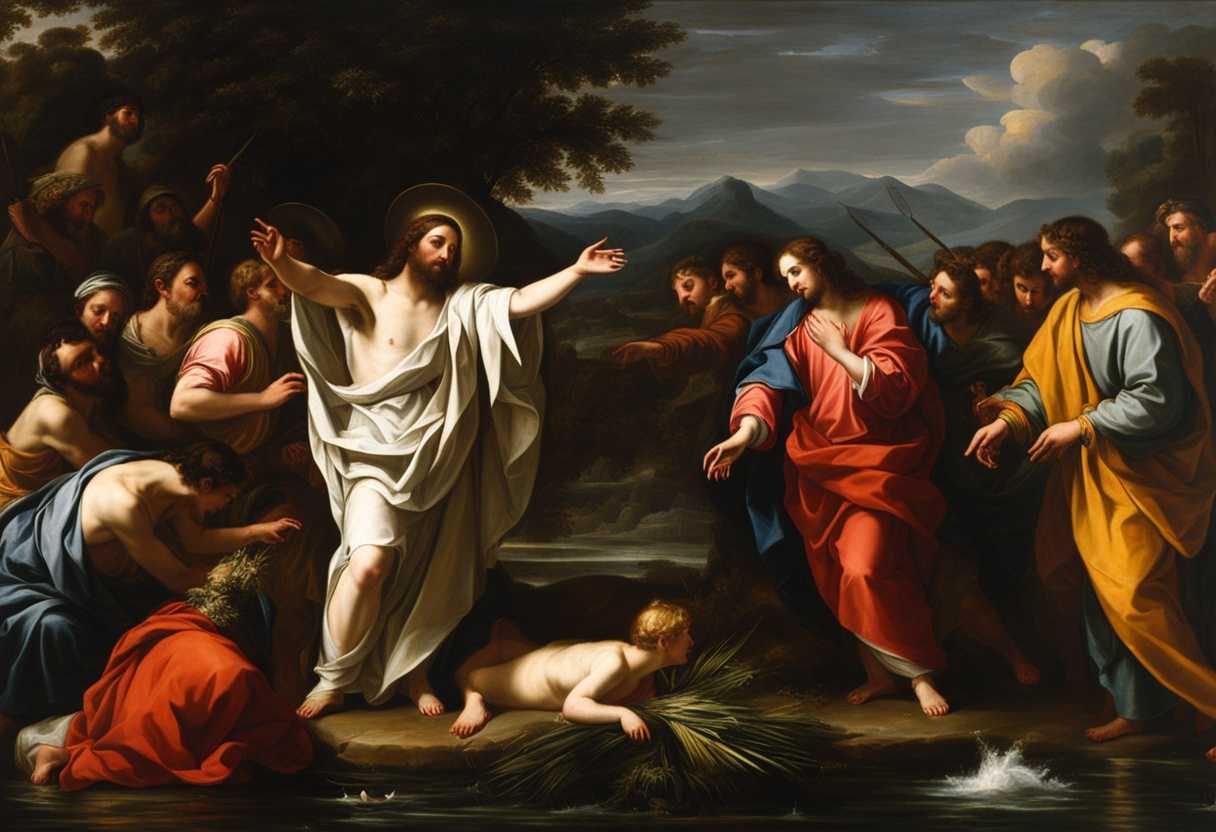
Setting the Scene for Mark 1:6-11
In Mark chapter 1, we find John the Baptist preaching and baptizing in the wilderness of Judea. Crowds of people from Jerusalem, Judea, and the surrounding regions are drawn to John’s message of repentance and the coming of the Messiah. Among the people who come to John is Jesus of Nazareth, who travels from Galilee to be baptized by him.
The scene is set along the banks of the Jordan River, where John is baptizing the people who come to him. The atmosphere is charged with anticipation and excitement as John proclaims the arrival of the one who is mightier than him, the one who will baptize with the Holy Spirit. As Jesus approaches, John recognizes him as the promised Messiah and hesitates to baptize him, feeling unworthy. However, Jesus insists, and as he comes up out of the water, the heavens open, the Spirit descends like a dove, and a voice from heaven declares, “You are my beloved Son; with you I am well pleased.”
This powerful moment marks the beginning of Jesus’ public ministry, as he is anointed by the Holy Spirit and affirmed by God the Father. The witnesses present, including John the Baptist and the crowds gathered along the river, are left in awe of this divine manifestation and the significance of what has just taken place.
What is Mark 1:6-11 about?
Jesus is baptized by John the Baptist in the Jordan River in this powerful verse, marking a pivotal moment. The heavens open as Jesus emerges from the water, and the voice of God resounds, declaring, “You are my beloved Son; with you I am well pleased.”” This divine proclamation signifies the unique and special relationship between God the Father and Jesus, recognizing Jesus as the beloved Son of God.
Can you imagine the awe and reverence that must have filled the hearts of those present as they heard God’s voice affirming Jesus’ identity and mission? This moment marks the beginning of Jesus’ public ministry and sets the stage for the transformative teachings and miracles to come. The baptism of Jesus symbolizes not only his purification and readiness for his mission but also serves as a profound example for all believers to follow in the footsteps of obedience, humility, and dedication to God’s will. We reflect on this verse, reminding us of the importance of our own baptism and the significance of being called children of God. We too should seek to live in a way that pleases our Heavenly Father, walking in the footsteps of Jesus with faith, love, and obedience, just as Jesus received the affirmation of his identity and purpose from God. We should embrace the truth of our own belovedness in God’s eyes and strive to reflect the light of Christ in all that we do.
Understanding what Mark 1:6-11 really means
In the Gospel of Mark, we encounter the profound moment of Jesus’ baptism by John the Baptist. This event marks the beginning of Jesus’ public ministry and holds significant importance in the New Testament narrative, highlighting Jesus’ identification with humanity and the divine affirmation of his mission.
John the Baptist, known for his ascetic lifestyle, was clothed in camel’s hair with a leather belt, and he sustained himself with locusts and wild honey. These choices in attire and diet symbolize his dedication to his prophetic mission and separation from worldly comforts. Matthew 3:4 further emphasizes John’s unique appearance and diet, underscoring his role as the forerunner preparing the way for Christ.
In his humility, John proclaims the coming of Jesus, acknowledging his unworthiness to even untie the sandals of the one who is more powerful. This recognition of Jesus’ divine authority is echoed in John 1:27, where John reiterates his inferiority compared to the Messiah. John’s baptism with water is contrasted with the transformative baptism Jesus offers, symbolized by the baptism with the Holy Spirit mentioned in Acts 1:5.
As Jesus emerges from the waters of the Jordan River, the heavens open, and the Spirit descends like a dove upon him. This imagery signifies divine approval and marks the beginning of Jesus’ ministry on earth. The voice from heaven declaring, “You are my Son, the Beloved; with you I am well pleased,” affirms Jesus’ identity and mission, echoing prophecies from Psalm 2:7 and Isaiah 42:1 about the chosen Messiah.
The humility displayed by John and Jesus’ willingness to be baptized serve as examples for us today. We are called to emulate their attitudes of humility and service in our own lives, reflecting on how we can follow in their footsteps. Understanding our identity as beloved children of God, just as Jesus was affirmed by the heavenly voice, is crucial for finding strength and purpose in our faith journey.
The transformative power of the Holy Spirit, promised by Jesus, has the potential to bring about significant changes in our lives. Through the work of the Spirit, we can experience a profound transformation that shapes us into the image of Christ. As we reflect on the baptism of Jesus and the events surrounding it, may we be inspired to seek humility, embrace our identity as beloved children of God, and open ourselves to the transformative work of the Holy Spirit in our lives.
What does baptism signify about Jesus’ identity and mission?
Baptism signifies Jesus’ identity as the Son of God and his mission to fulfill God’s plan for salvation. The heavens opening and the Spirit descending on Jesus like a dove symbolize the divine approval and anointing upon him. The voice from heaven declaring, “You are my beloved Son; with you, I am well pleased,” confirms Jesus’ unique relationship with God as his Son.
Through his baptism, Jesus publicly identifies with humanity, foreshadowing his role as the Suffering Servant who would bear the sins of the world. The act of baptism signifies Jesus’ willingness to take on the burden of humanity’s sin and pave the way for reconciliation with God. This event marks the beginning of Jesus’ public ministry, highlighting his commitment to fulfilling God’s redemptive plan and ultimately sacrificing himself for the salvation of mankind.
Application
Be a guiding light in the chaos of the digital world, just as John the Baptist was a beacon of truth in his time. Embrace humility, service, and obedience in your daily actions, paving the way for goodness to flourish in the modern world. Will you courageously step into the role of a messenger of positivity and hope, guiding others towards a path of love and compassion?

Reverend Michael Johnson is an experienced Church Minister with a profound expertise in spirituality and guidance. With a serene presence and a compassionate heart, he has faithfully served his congregation for over 20 years, leading them on a spiritual journey towards inner peace and enlightenment. Reverend Johnson’s extensive knowledge of religious philosophies and profound understanding of human nature have made him a trusted confidant and mentor to many, as he seamlessly weaves his profound wisdom into life teachings. Reverend Johnson’s calming demeanor and empathetic nature continue to uplift and heal souls, nurturing a sense of unity and tranquility within his community.