
Matthew 12:33 is about the importance of examining the condition of our hearts and recognizing that the words we speak are a reflection of what is in our hearts, with good hearts producing good words and evil hearts producing evil words.
33 “Either make the tree good and its fruit good, or make the tree bad and its fruit bad, for the tree is known by its fruit.
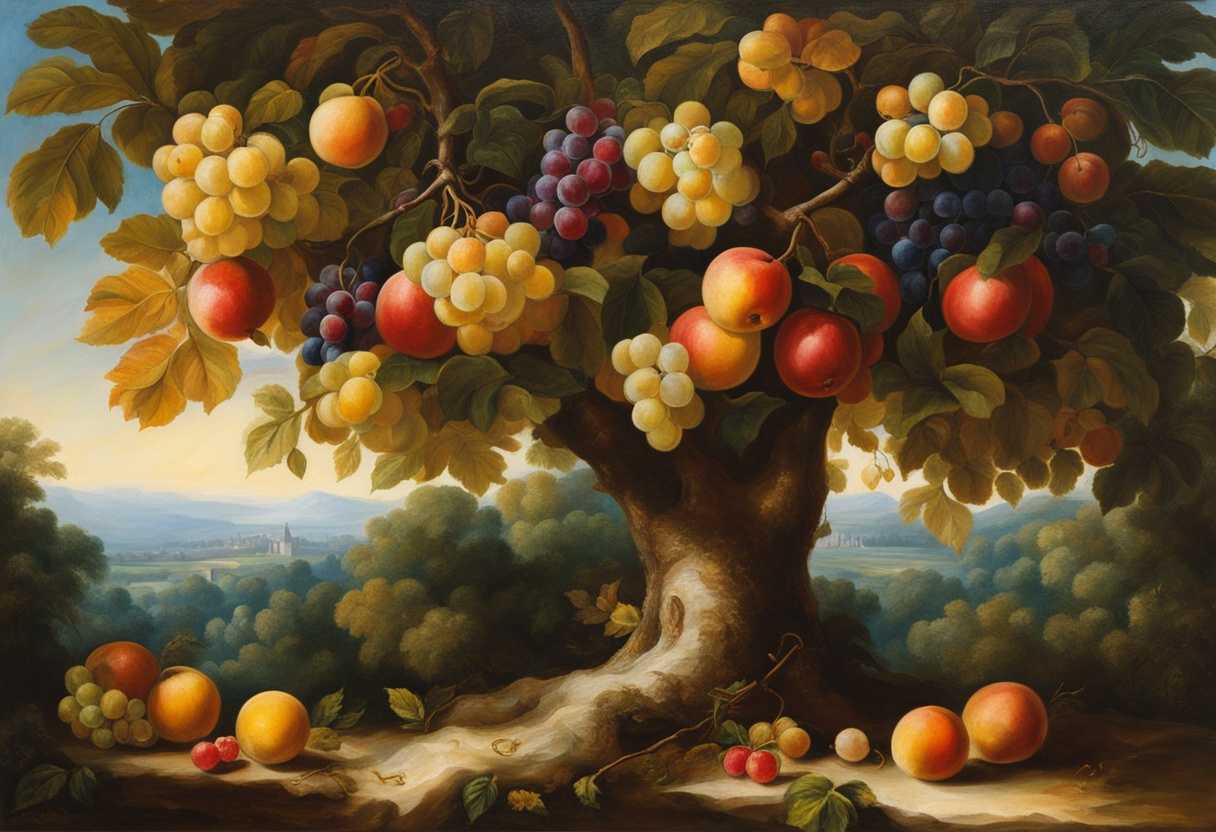
Setting the Scene for Matthew 12:33
In Matthew chapter 12, we find Jesus teaching a crowd of people in the countryside. The scene is set on a gentle hillside overlooking the Sea of Galilee, with the sun beginning to set in the distance, casting a warm golden glow over the landscape. The crowd is a mix of curious onlookers, religious leaders, and Jesus’ disciples, all gathered around to hear His teachings.
Among the crowd are Pharisees and scribes who have been following Jesus, questioning His authority and teachings. They are there to challenge Him and find fault in His words and actions. Jesus, aware of their intentions, uses this opportunity to deliver a powerful message about the importance of good fruit coming from a good tree, and how our words and actions reflect the condition of our hearts.
As Jesus speaks, His disciples listen intently, absorbing His wisdom and seeking to understand the deeper meaning behind His parables. The atmosphere is charged with tension as the religious leaders try to trap Jesus with their questions, but He responds with grace and truth, revealing His divine knowledge and authority. The scene captures a pivotal moment in Jesus’ ministry, where He confronts hypocrisy and reveals the true nature of righteousness.
What is Matthew 12:33 about?
This verse is a profound metaphor that conveys the idea that our actions and behaviors are a reflection of our true selves. We are judged by the impact of our actions on the world, just as a tree is judged by the quality of its fruit. Are we producing positive, kind, and beneficial outcomes? Or are we yielding negative, harmful, or destructive results? We can gain insight into our character and values by examining the “fruit” of our thoughts, words, and deeds.
Think about it – when you see a tree bearing delicious, ripe fruits, you immediately recognize it as a healthy and valuable tree. We reveal the goodness within us when our actions produce positivity, kindness, and love. Conversely, if our actions yield negativity, cruelty, and harm, it indicates a need for self-reflection and growth. This verse challenges us to be mindful of the impact of our choices on ourselves and others, encouraging us to strive for goodness and integrity in all that we do. We have the power to shape our character and contribute positively to the world around us by being conscious of the fruit we bear.
Understanding what Matthew 12:33 really means
In Matthew 12:33, Jesus addresses the Pharisees, highlighting the significance of inner goodness and integrity in shaping one’s character. He draws a parallel between a person and a tree, asserting that just as a tree is known by its fruit, a person’s nature is revealed through their actions and words. This analogy underscores the intrinsic connection between one’s inner being and their outward expressions. The phrase “Make a tree good and its fruit will be good” emphasizes that a virtuous heart naturally produces positive deeds, while “Make a tree bad and its fruit will be bad” highlights the detrimental outcomes of a corrupt heart.
Furthermore, the statement “For a tree is recognized by its fruit” reinforces the idea that genuine character is discerned not by mere words or appearances but by consistent behavior and speech. This principle echoes throughout other biblical passages, such as Luke 6:43-45, where Jesus reiterates the concept that a person’s actions align with their inner self. Similarly, in Galatians 5:22-23, Paul delineates the fruits of the Spirit as indicators of a life guided by divine influence, showcasing the tangible outcomes of inner transformation.
The relevance of this verse in contemporary society is profound. It prompts individuals to uphold personal integrity, urging them to manifest their professed beliefs through consistent actions. By discouraging superficial judgments and advocating for a deeper evaluation based on behavior and speech, the verse encourages a more profound understanding of others. Moreover, it serves as a catalyst for self-reflection, compelling individuals to align their conduct with their values and beliefs.
To illustrate the importance of congruence between inner values and outward behavior, consider a scenario where a community leader espouses kindness and charity in public but mistreats their loved ones in private. This incongruity between their public persona and private actions mirrors a tree bearing rotten fruit despite its outward appearance of health. Such anecdotes underscore the significance of authenticity and consistency in character.
In conclusion, Matthew 12:33 resonates as a poignant reminder that our true essence is unveiled through our deeds and words. It beckons individuals to nurture inner goodness, ensuring that their lives yield enduring, positive outcomes. By harmonizing inner virtues with external expressions, individuals can live authentically and impact those around them meaningfully. This verse serves as a timeless beacon, guiding individuals towards a life of integrity and genuine character.
Are we producing good or bad fruit in our lives?
We need to reflect on the kind of fruit we are producing in our lives. Our actions and words reveal the condition of our hearts and the nature of our character, just as a tree is known by its fruit. Are we displaying qualities such as love, kindness, patience, and self-control? Or are we exhibiting traits like anger, dishonesty, pride, and selfishness? It is important for us to assess whether the fruit we are bearing aligns with the values of goodness and righteousness. We can gain insight into the state of our relationship with God and others by examining the fruit we are producing. If we are consistently manifesting positive attributes and spreading joy and positivity, it is a sign that our hearts are rooted in God’s love and grace. However, if our actions are leading to negativity, hurt, and division, it may be an indication that we need to seek forgiveness, healing, and transformation in order to bear good fruit and honor God in all that we do. Let us strive to cultivate a life that glorifies God by producing fruit that reflects His goodness and truth.
Application
Think about how your daily grind shapes who you are. Just like a well-prepared project or a nurturing family, your words and actions reveal your true self. Work on your heart’s garden; plant seeds of love, kindness, and integrity. Your inner transformation will shine through in everything you do. Are you ready to let your actions and words reflect the best version of you for everyone to see?

Reverend Michael Johnson is an experienced Church Minister with a profound expertise in spirituality and guidance. With a serene presence and a compassionate heart, he has faithfully served his congregation for over 20 years, leading them on a spiritual journey towards inner peace and enlightenment. Reverend Johnson’s extensive knowledge of religious philosophies and profound understanding of human nature have made him a trusted confidant and mentor to many, as he seamlessly weaves his profound wisdom into life teachings. Reverend Johnson’s calming demeanor and empathetic nature continue to uplift and heal souls, nurturing a sense of unity and tranquility within his community.