
Matthew 12:6 is about Jesus stating that something greater than the temple is present among them, referring to himself as the Son of Man who has authority on earth to forgive sins.
6 I tell you, something greater than the temple is here.
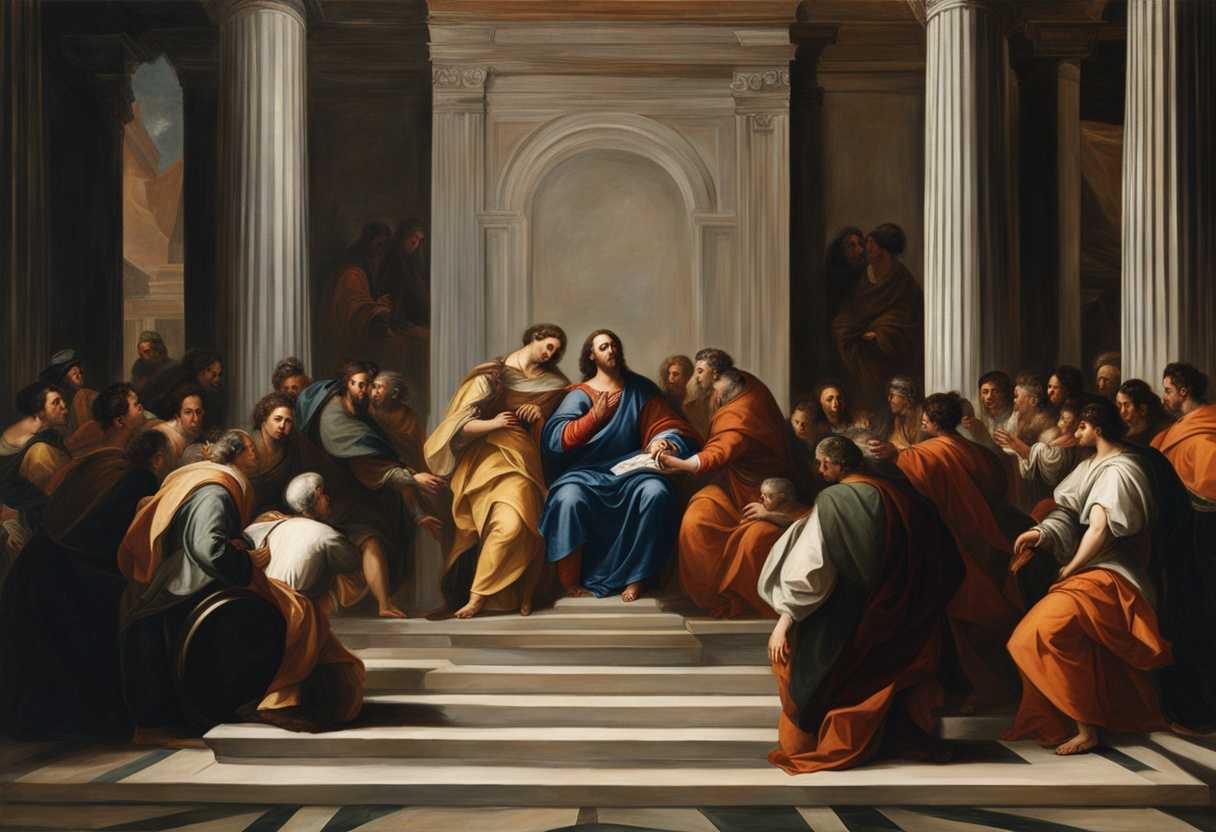
Setting the Scene for Matthew 12:6
In Matthew chapter 12, we find Jesus and his disciples walking through a grainfield on the Sabbath. The disciples, being hungry, begin to pick some heads of grain and eat them. This action sparks a debate with the Pharisees, who accuse Jesus and his disciples of breaking the Sabbath law by harvesting on the day of rest.
The scene is set in the countryside, with the golden grain swaying gently in the breeze under the warm sun. Jesus, the central figure, is surrounded by his devoted disciples who have been following him closely, eager to learn from his teachings and witness his miracles. The Pharisees, on the other hand, are watching from a distance, ready to pounce on any perceived transgression of the law.
As the tension mounts between Jesus and the Pharisees, the contrasting attitudes towards the Sabbath and the interpretation of the law come to the forefront. Jesus uses this opportunity to challenge the traditional legalistic views of the Pharisees and emphasize the importance of mercy and compassion over rigid adherence to rules. The serene setting of the grainfield provides a stark contrast to the heated debate unfolding among the characters, highlighting the clash between legalism and grace.
What is Matthew 12:6 about?
This verse is a powerful statement made by Jesus to show that He, as the Son of God, holds a position of authority and importance above all earthly things, even the sacred temple in Jerusalem. Jesus is indicating His superiority over the temple by proclaiming that He is the ultimate source of spiritual truth and power, and that He transcends the physical structures and rituals of religion. This declaration challenges the traditional understanding of the temple as the central place of worship and signifies that true worship and connection with God come through a personal relationship with Jesus. Jesus is inviting us to shift our focus from external forms of worship to an inward journey of faith and discipleship by declaring Himself greater than the temple. He is calling us to recognize His divine nature and to place our trust and devotion in Him above all else. This verse challenges us to deepen our understanding of who Jesus is and to allow His presence to transform our lives in ways that mere religious practices cannot. Jesus’ declaration in Matthew 12:6 ultimately invites us to reorient our faith and center it on Him as the true source of spiritual fulfillment and salvation.
Understanding what Matthew 12:6 really means
In Matthew 12:6, Jesus makes a profound statement to the Pharisees, declaring, “Something greater than the temple is here.” This assertion is not merely a comparison but a declaration of His divine authority and significance. To grasp the weight of this statement, we must understand the context in which it was made. Jesus was responding to the Pharisees’ criticism of His disciples for plucking grain on the Sabbath, challenging their legalistic interpretation of the Sabbath law. By asserting His authority over the temple, Jesus was highlighting His role as the ultimate fulfillment of the law and the prophets.
The temple held immense significance in Jewish worship as the physical dwelling place of God’s presence. By claiming to be greater than the temple, Jesus was asserting His divine nature and authority. This statement was a radical departure from the religious norms of the time and a direct challenge to the religious leaders who prided themselves on their adherence to the temple rituals. Jesus was redirecting their focus from external observances to the heart of true worship – a personal relationship with Him.
This verse not only speaks to the authority of Jesus but also challenges us to reevaluate our priorities in faith. It prompts us to consider whether we are placing more emphasis on religious rituals and traditions than on cultivating a deep, personal relationship with Christ. Just as the Pharisees were rebuked for their legalistic approach to the Sabbath, we are called to examine our own hearts and ensure that our worship is centered on Christ rather than on empty religious practices.
In our modern context, it is easy to fall into the trap of going through the motions of religion without truly engaging with the transformative power of a relationship with Jesus. We may attend church, participate in rituals, and follow traditions, yet miss the essence of faith – knowing and following Christ. Jesus’ statement challenges us to seek a deeper, more meaningful connection with Him, recognizing that He is the ultimate fulfillment of all that the temple symbolized.
Consider the contrast between someone who diligently follows religious rules but lacks a personal relationship with God, and another person whose life radiates the joy and peace that come from knowing Jesus intimately. The former may be bound by legalism and external observances, while the latter experiences true freedom and rest in Christ. This serves as a poignant illustration of the difference between religion and relationship, emphasizing the surpassing importance of knowing Jesus above all else.
As we reflect on Matthew 12:6, let us examine our own lives and attitudes towards faith. Are there areas where we prioritize religious rituals over a genuine, heartfelt relationship with Jesus? Are we seeking to deepen our connection with Him, recognizing His authority and supremacy over all religious practices? May we embrace the profound truth that Jesus is greater than any temple, tradition, or ritual, and find true fulfillment and rest in Him alone.
Do we prioritize mercy over sacrifice in our faith?
Jesus highlights the importance of mercy over sacrifice in the passage from Matthew 12:6 by pointing out the significance of understanding the true meaning behind God’s desires. Jesus is emphasizing in this context that God values compassion and kindness towards others over ritualistic sacrifices. We embody the true essence of God’s will by showcasing mercy and understanding towards one another.
This verse serves as a reminder for believers to focus on prioritizing acts of mercy and love in their interactions with others. It encourages us to move beyond mere outward displays of religious practices and instead emphasizes the importance of showing genuine care and concern for those around us. The verse illuminates the core principle that our faith is intrinsically tied to how we treat others, emphasizing the importance of actively practicing mercy in our daily lives.
Application
Just like you juggle deadlines at work and care for your family, life demands you stand firm in what matters most. Let the words from Matthew 12:6 ignite that fire within you. Christ’s power is your power—use it to proclaim your faith confidently, even when faced with challenges. Show the world your unshakeable beliefs through your actions. Are you ready to stand as unwavering in your faith as you do in your daily life?

Reverend Michael Johnson is an experienced Church Minister with a profound expertise in spirituality and guidance. With a serene presence and a compassionate heart, he has faithfully served his congregation for over 20 years, leading them on a spiritual journey towards inner peace and enlightenment. Reverend Johnson’s extensive knowledge of religious philosophies and profound understanding of human nature have made him a trusted confidant and mentor to many, as he seamlessly weaves his profound wisdom into life teachings. Reverend Johnson’s calming demeanor and empathetic nature continue to uplift and heal souls, nurturing a sense of unity and tranquility within his community.