
Matthew 15:11-20 is about Jesus teaching that true defilement comes from what is inside a person’s heart – their thoughts, intentions, and actions – rather than from external sources such as food or other customs.
11 it is not what goes into the mouth that defiles a person, but what comes out of the mouth; this defiles a person.
12 Then the disciples came and said to him, “Do you know that the Pharisees were offended when they heard this saying?”
13 He answered, “Every plant that my heavenly Father has not planted will be rooted up.
14 Let them alone; they are blind guides. And if the blind lead the blind, both will fall into a pit.
15 But Peter said to him, “Explain the parable to us.”
16 And he said, “Are you also still without understanding?
17 Do you not see that whatever goes into the mouth passes into the stomach and is expelled?
18 But what comes out of the mouth proceeds from the heart, and this defiles a person.
19 For out of the heart come evil thoughts, murder, adultery, sexual immorality, theft, false witness, slander.
20 These are what defile a person. But to eat with unwashed hands does not defile anyone.”
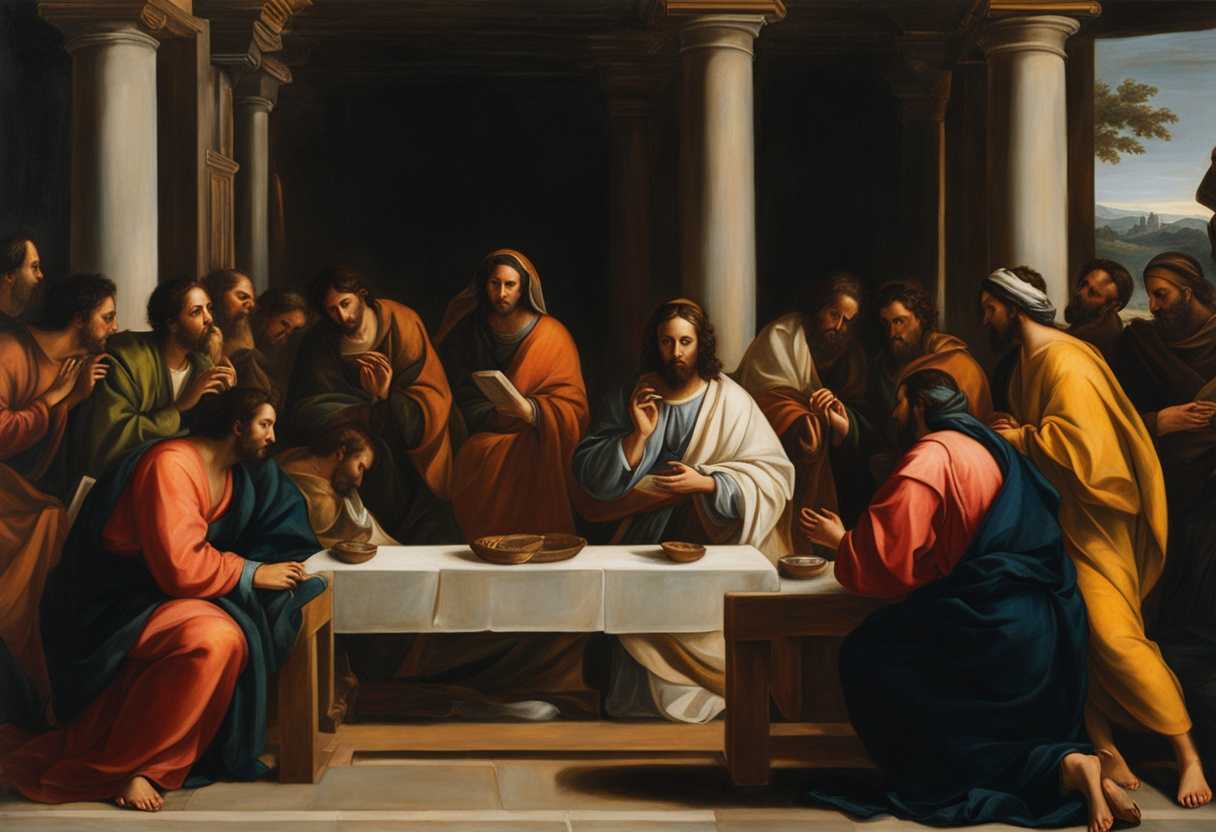
Setting the Scene for Matthew 15:11-20
In Matthew chapter 15, Jesus is surrounded by a crowd of people who have gathered to hear Him teach and witness His miracles. Among the crowd are His disciples, who have been traveling with Him and learning from Him. The scene takes place in the countryside, where Jesus often went to find solitude and teach the people who sought Him out.
As Jesus speaks to the crowd, He addresses the Pharisees and teachers of the law who have come to question Him about why His disciples do not follow the tradition of washing their hands before they eat. Jesus uses this opportunity to teach about true defilement, explaining that it is not what goes into the body that defiles a person, but what comes out of the heart. He emphasizes the importance of purity of heart and the power of words in shaping one’s character.
The atmosphere is charged with tension as Jesus challenges the religious leaders and calls the crowd to listen and understand the deeper meaning behind His words. The disciples are attentive, eager to learn from their teacher, while the Pharisees are skeptical and critical of Jesus’ teachings. The scene captures a pivotal moment in Jesus’ ministry, where He confronts hypocrisy and emphasizes the importance of inner purity and righteousness.
What is Matthew 15:11-20 about?
Isn’t it fascinating how often we focus on external actions rather than internal intentions? Jesus in this verse reminds us that true defilement does not come from what we eat or what we do, but from our hearts and minds. It’s a powerful message about the importance of our inner thoughts and motives.
We can easily get caught up in following rules and traditions without paying attention to the state of our hearts. Jesus is calling us to look inward and examine our intentions, attitudes, and beliefs. This verse challenges us to prioritize inner purity and righteousness over outward appearances.
So, let’s reflect on our own lives. Are we more concerned with following external rules or with cultivating a pure heart? Are we focused on appearances or on the condition of our inner selves? Let’s take Jesus’ words to heart and strive for true purity from within.
Understanding what Matthew 15:11-20 really means
In Matthew 15:11-20, Jesus addresses the Pharisees and the crowd, shifting the focus from external rituals to the condition of the heart. He emphasizes that what goes into someone’s mouth, like food, does not defile them. Instead, it is what comes out of their mouth that truly reflects their inner state. Our words and actions are direct reflections of the state of our hearts, highlighting the importance of inner purity over external appearances.
Proverbs 4:23 advises us to guard our hearts above all else, as everything we do flows from it. This aligns with Jesus’ teaching, emphasizing the significance of maintaining inner purity. James 3:6 further elaborates on the power of the tongue, describing it as a fire capable of great harm. Mark 7:20-23 parallels Matthew’s passage, listing specific evils that originate from within a person, reinforcing the message of the importance of inner transformation.
In today’s world, where external appearances often take precedence over inner character, this teaching remains relevant. It challenges us to prioritize inner purity over mere external rituals and compliance. The power of words is especially poignant in the age of social media, where our speech can have far-reaching consequences. This passage serves as a reminder to speak with integrity, kindness, and love, reflecting the transformation of the heart.
Consider the illustration of two individuals: one meticulously follows religious rituals but speaks harshly, while the other may not adhere perfectly to every ritual but speaks with kindness and compassion. The contrast highlights the essence of Jesus’ message – true purity comes from within, manifesting in righteous words and actions. This anecdote underscores the importance of heart transformation over outward observance, challenging us to examine our own hearts and strive for inner purity.
In conclusion, Matthew 15:11-20 urges us to focus on cultivating a pure heart, recognizing that our words and actions are indicators of our inner state. It prompts us to prioritize inner spiritual health over external compliance, emphasizing the transformative power of a heart aligned with righteousness. Let us heed this call to introspection and strive for a heart that reflects the love and truth of Christ in all we say and do.
What defiles a person according to God’s standards?
According to God’s standards, what defiles a person is not what goes into the mouth but what comes out of the mouth. The things that come out of the mouth, such as evil thoughts, murder, adultery, sexual immorality, theft, false testimony, and slander, are what defile a person. It is not external things like food or drink that make a person unclean, but rather the sinful words and actions that originate from within a person’s heart.
Jesus teaches that the condition of one’s heart is what truly matters in God’s eyes. Outward rituals or practices do not make a person clean or unclean before God; it is the inner thoughts and intentions that reveal a person’s true defilement. This passage emphasizes the importance of cultivating a pure heart and guarding against sinful thoughts and behaviors, as these are what truly defile a person in God’s sight. It is a call to focus on the state of one’s heart and strive for righteousness in thoughts, words, and actions.
Application
Your words are the mirror to your soul. They show who you truly are. Choose to let kindness and love flow from your lips, uplifting and inspiring those around you. Your words have the power to create a positive ripple effect in the world. Will you join the movement of spreading light and goodness through your speech?

Reverend Michael Johnson is an experienced Church Minister with a profound expertise in spirituality and guidance. With a serene presence and a compassionate heart, he has faithfully served his congregation for over 20 years, leading them on a spiritual journey towards inner peace and enlightenment. Reverend Johnson’s extensive knowledge of religious philosophies and profound understanding of human nature have made him a trusted confidant and mentor to many, as he seamlessly weaves his profound wisdom into life teachings. Reverend Johnson’s calming demeanor and empathetic nature continue to uplift and heal souls, nurturing a sense of unity and tranquility within his community.