
1 At that time the disciples came to Jesus, saying, “Who is the greatest in the kingdom of heaven?”
2 And calling to him a child, he put him in the midst of them
3 and said, “Truly, I say to you, unless you turn and become like children, you will never enter the kingdom of heaven.
4 Whoever humbles himself like this child is the greatest in the kingdom of heaven.
5 “Whoever receives one such child in my name receives me,
6 but whoever causes one of these little ones who believe in me to sin, it would be better for him to have a great millstone fastened around his neck and to be drowned in the depth of the sea.
7 “Woe to the world for temptations to sin! For it is necessary that temptations come, but woe to the one by whom the temptation comes!
8 And if your hand or your foot causes you to sin, cut it off and throw it away. It is better for you to enter life crippled or lame than with two hands or two feet to be thrown into the eternal fire.
9 And if your eye causes you to sin, tear it out and throw it away. It is better for you to enter life with one eye than with two eyes to be thrown into the hell of fire.
10 “See that you do not despise one of these little ones. For I tell you that in heaven their angels always see the face of my Father who is in heaven.
11 For the Son of Man came to save the lost.
12 What do you think? If a man has a hundred sheep, and one of them has gone astray, does he not leave the ninety-nine on the mountains and go in search of the one that went astray?
13 And if he finds it, truly, I say to you, he rejoices over it more than over the ninety-nine that never went astray.
14 So it is not the will of my Father who is in heaven that one of these little ones should perish.
15 “If your brother sins against you, go and tell him his fault, between you and him alone. If he listens to you, you have gained your brother.”
16 But if he does not listen, take one or two others along with you, that every charge may be established by the evidence of two or three witnesses.
17 If he refuses to listen to them, tell it to the church. And if he refuses to listen even to the church, let him be to you as a Gentile and a tax collector.
18 Truly, I say to you, whatever you bind on earth shall be bound in heaven, and whatever you loose on earth shall be loosed in heaven.
19 Again I say to you, if two of you agree on earth about anything they ask, it will be done for them by my Father in heaven.
20 For where two or three are gathered in my name, there am I among them.”
21 Then Peter came up and said to him, “Lord, how often will my brother sin against me, and I forgive him? As many as seven times?”
22 Jesus said to him, “I do not say to you seven times, but seventy-seven times.
23 “Therefore the kingdom of heaven may be compared to a king who wished to settle accounts with his servants.
24 When he began to settle, one was brought to him who owed him ten thousand talents.
25 So when his fellow servants saw what had taken place, they were greatly distressed, and they went and reported to their master all that had taken place.
26 So the servant fell on his knees, imploring him, ‘Have patience with me, and I will pay you.’
27 And out of pity for him, the master of that servant released him and forgave him the debt.
28 But when that same servant went out, he found one of his fellow servants who owed him a hundred denarii, and seizing him, he began to choke him, saying, ‘Pay what you owe.’
29 So his fellow servant fell down and pleaded with him, ‘Have patience with me, and I will pay you.’
30 He refused and went and put him in prison until he should pay the debt.
31 When his fellow servants saw what had taken place, they were greatly distressed, and they went and reported to their master all that had taken place.
32 Then his master summoned him and said to him, ‘You wicked servant! I forgave you all that debt because you pleaded with me.
33 And should not you have had mercy on your fellow servant, as I had mercy on you?’
34 And in anger his master delivered him to the jailers, until he should pay all his debt.
35 So also my heavenly Father will do to every one of you, if you do not forgive your brother from your heart.”
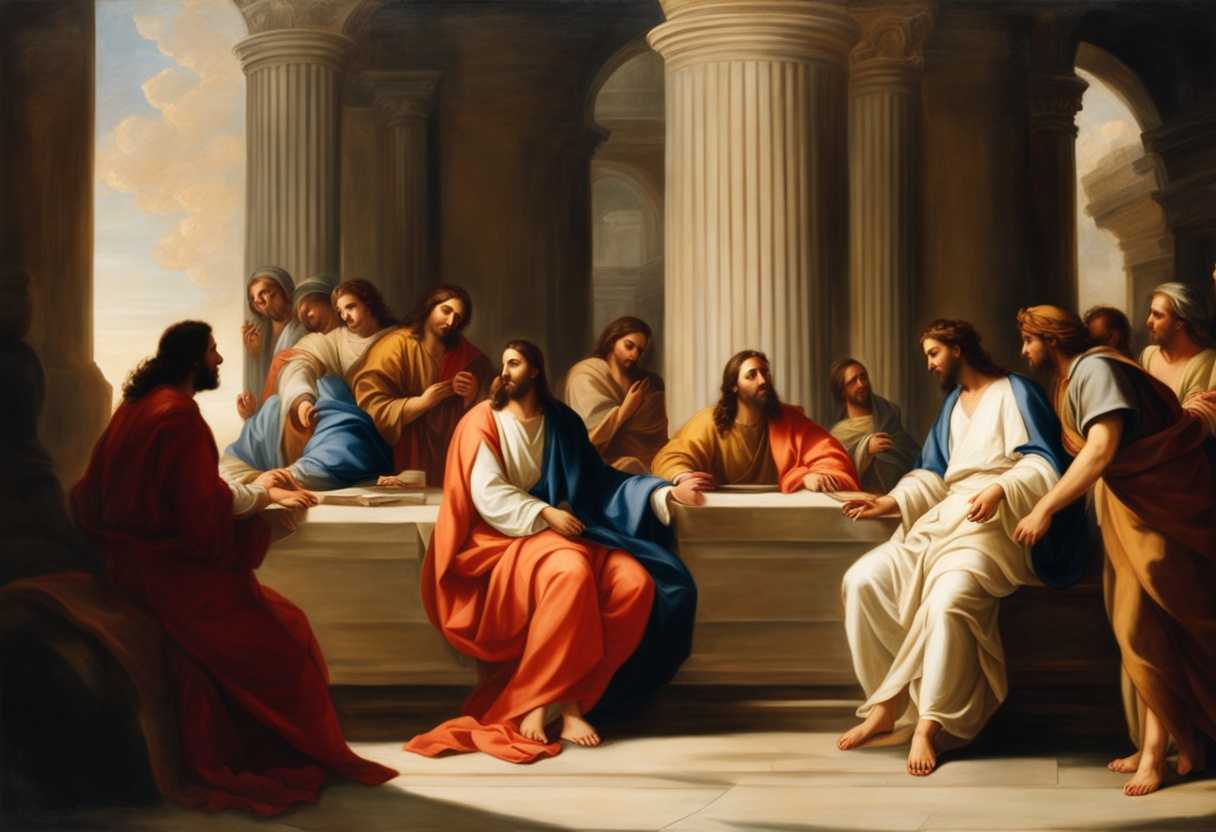
The True Meaning of Matthew 18
The Gospel of Matthew was written by the apostle Matthew, also known as Levi, who was one of the twelve disciples of Jesus Christ. Matthew, a former tax collector, had a unique perspective on the teachings and ministry of Jesus. Matthew recounts Jesus’ instructions to his disciples on how to live in community and address conflicts within the church in this chapter. The chapter foreshadows the importance of humility, forgiveness, and the value of each individual believer. We will see Jesus emphasize the need to care for the “little ones” and the consequences of leading them astray.
Throughout the passage, Jesus makes references to other parts of Scripture, such as the parable of the lost sheep from the book of Luke. This demonstrates the continuity of God’s plan and the fulfillment of the Old Testament prophecies in the life and teachings of Jesus Christ.
Matthew 18:1-5
The disciples come to Jesus in Matthew 18:1-5 and ask, “Who is the greatest in the kingdom of heaven?”” This question reflects the disciples’ desire for position and power within the kingdom. Jesus responds by calling a little child to Him, placing the child among them, and saying, “Truly I tell you, unless you change and become like little children, you will never enter the kingdom of heaven. Therefore, whoever takes the lowly position of this child is the greatest in the kingdom of heaven.”
This interaction holds significant meaning in the context of the Bible. Children in ancient society were often seen as powerless and without status, so Jesus’ choice of a child as an example is quite profound. Jesus is pointing out the importance of humility, innocence, trust, and dependence on God by emphasizing the need to become like little children. This challenges the disciples’ worldly understanding of greatness and power, redirecting their focus towards a childlike faith.
Furthermore, Jesus’ statement that those who humble themselves like a child are the greatest in the kingdom of heaven reinforces the theme of humility that runs throughout the Bible. Jesus reiterates this idea in Matthew 23:12 by saying, “For those who exalt themselves will be humbled, and those who humble themselves will be exalted.”” This concept of humility and a servant’s heart is also echoed in Philippians 2:3-4, where believers are urged to value others above themselves and look to the interests of others. This passage serves as a reminder to prioritize humility, simplicity, and childlike faith in our walk with God. It challenges us to let go of worldly desires for power and recognition and instead embrace a humble posture before God and others. Through this transformation, we can truly embody the essence of greatness in the kingdom of heaven.
Matthew 18:6-9
Jesus addresses His disciples in Matthew 18:6-9, emphasizing the seriousness of causing others to stumble in their faith. The verses read, “If anyone causes one of these little ones—those who believe in me—to stumble, it would be better for them to have a large millstone hung around their neck and to be drowned in the depths of the sea. Woe to the world because of the things that cause people to stumble! Such things must come, but woe to the person through whom they come! If your hand or your foot causes you to stumble, cut it off and throw it away. It is better for you to enter life maimed or crippled than to have two hands or two feet and be thrown into eternal fire. And if your eye causes you to stumble, gouge it out and throw it away. It is better for you to enter life with one eye than to have two eyes and be thrown into the fire of hell.”
This passage illustrates the gravity of leading others away from God, especially those who are new or weak in their faith (referred to as “little ones”). Jesus’ use of strong imagery emphasizes the drastic measures one should take to avoid causing others to sin. He speaks of a millstone, a heavy stone used for grinding grain, being tied around the neck and the person thrown into the sea. This imagery depicts the severe consequences awaiting those who lead others astray.
The reference to cutting off a hand or foot or gouging out an eye if they cause one to stumble emphasizes the importance of radical obedience to God and the removal of anything that leads one away from Him. While not to be taken literally, these extreme examples demonstrate the necessity of removing sin and temptation from one’s life, even if it requires painful sacrifice. It underscores the idea that it is better to endure hardship and enter life eternal with God, than to be comfortable in sin and face eternal condemnation. This passage aligns with the teachings of Jesus regarding the importance of loving others, being humble, and avoiding sin in the broader context of the Bible. It echoes themes of accountability and responsibility within the Christian community, emphasizing the need to watch out for one another and not lead others astray. Paul in Romans 14:13 also touches on this idea, urging believers not to put stumbling blocks in the way of others. Matthew 18:6-9 ultimately serves as a poignant reminder of the serious consequences of leading others away from God and the importance of living a life that reflects Christ’s love and truth. It challenges believers to consider their actions and the impact they have on those around them, especially new or weaker members of the faith community. We, as followers of Christ, are called to build up, support, and encourage one another on our journey of faith, rather than being a hindrance or stumbling block in someone else’s walk with God.
Matthew 18:10-14
Jesus addresses his disciples in Matthew 18:10-14, emphasizing the importance of each individual believer in the eyes of God. The passage specifically mentions angels, children, and a shepherd searching for a lost sheep.
Starting with verse 10, Jesus speaks about angels and how they are always in the presence of God, beholding the face of the Father. This highlights the idea of divine protection and care that believers have, as even the angels are attentive to their well-being. It also underscores the idea that every individual, no matter how seemingly insignificant, has value and worth in the eyes of God.
Moving on to verse 12, Jesus introduces the parable of the lost sheep. He speaks of a shepherd who leaves the ninety-nine sheep that are safe in order to search for the one lost sheep. When he finds it, he rejoices more over that one sheep than over the ninety-nine that were never lost. This parable illustrates the depth of God’s love and care for each individual who may have strayed or become lost. It emphasizes God’s relentless pursuit of those who are lost, showcasing his desire for all to be saved and included in his flock.
The parable of the lost sheep ties into the broader theme of seeking out the lost and bringing them back into the fold of believers. This aligns with the message of redemption and forgiveness that runs throughout the Bible. Through the actions of the shepherd in the parable, Jesus exemplifies his role as the Good Shepherd who seeks out the lost and brings them back, as seen in John 10:11 where Jesus declares, “I am the good shepherd. The good shepherd lays down his life for the sheep. Jesus concludes in verse 14 by stating that it is not the will of God that any of these little ones should perish. This highlights God’s desire for all to come to repentance and salvation, mirroring verses like 2 Peter 3:9, which states, “The Lord is not slow in keeping his promise, as some understand slowness. Instead he is patient with you, not wanting anyone to perish, but everyone to come to repentance. This passage in Matthew 18 serves as a reminder of God’s unwavering love and concern for each individual believer. It emphasizes the importance of seeking out the lost and the marginalized, bringing them back into the community of faith. It also underscores the concept of redemption and the value of each soul in the eyes of God, reinforcing the idea that no one is ever beyond God’s reach or care.
Matthew 18:15-20
Jesus lays out a clear process for dealing with conflict within the community of believers in Matthew 18:15-20. Let’s break down this passage into important sections for further analysis.
-
Verse 15: “If your brother or sister sins, go and point out their fault, just between the two of you. If they listen to you, you have won them over. Jesus instructs his followers on how to address conflicts or sins within the community of believers in this verse. The emphasis here is on handling interpersonal issues privately and with a spirit of reconciliation rather than retaliation. This is a foundational principle in building and maintaining healthy relationships within the body of believers. It shows the importance of conflict resolution through dialogue and personal confrontation rather than gossip or escalation.
-
Verse 16: “But if they will not listen, take one or two others along, so that ‘every matter may be established by the testimony of two or three witnesses.’”
If the initial one-on-one attempt at reconciliation does not resolve the issue, Jesus advises bringing one or two others into the conversation. This step serves multiple purposes. Firstly, it provides witnesses to the situation, ensuring fairness and accountability. Secondly, it introduces additional perspectives and potential mediators to help facilitate reconciliation. This process aligns with the Biblical principle of seeking wise counsel in times of conflict or difficulty (Proverbs 15:22).
-
Verse 17: “If they still refuse to listen, tell it to the church; and if they refuse to listen even to the church, treat them as you would a pagan or a tax collector. Jesus outlines the final step in the conflict resolution process within the community of believers in this verse. If the individual in question remains unrepentant even after involving more members of the community, the matter is to be brought before the entire church. This demonstrates the importance of accountability and community correction in maintaining the integrity of the body of believers. The reference to treating the unrepentant person as a pagan or a tax collector implies a stance of excommunication or removal from the fellowship, not for the purpose of punishment but for the hope of eventual repentance and restoration (1 Corinthians 5:5).
-
Verses 18-20: “Truly I tell you, whatever you bind on earth will be bound in heaven, and whatever you loose on earth will be loosed in heaven. Again, truly I tell you that if two of you on earth agree about anything they ask for, it will be done for them by my Father in heaven. For where two or three gather in my name, there am I with them.”
These verses bring a powerful promise and reassurance to the community of believers. They highlight the significance of unity and agreement in prayer among believers. The concept of binding and loosing on earth and in heaven speaks to the authority given to the body of believers, guided by the Holy Spirit, in matters of discipline and reconciliation within the church. The assurance of Christ’s presence in the midst of even a small gathering underscores the importance of community and fellowship in the life of believers (Hebrews 10:24-25). Matthew 18:15-20 provides a comprehensive guide for handling conflict and promoting reconciliation within the Christian community. It emphasizes the importance of seeking resolution privately, seeking wise counsel, maintaining accountability within the community, and praying in agreement. This passage ultimately reflects the principles of love, forgiveness, and restoration that should characterize relationships among believers, in line with Christ’s teachings throughout the Gospels.
Matthew 18:21-35
Peter opens the section in Matthew 18:21-35 by asking Jesus how many times he must forgive someone who sins against him – suggesting forgiving up to seven times. Jesus’ response is significant, emphasizing the importance of forgiveness by saying not just seven times, but seventy-seven times or seventy times seven depending on the translation. This message underscores the necessity of infinite forgiveness, mirroring God’s endless grace and mercy towards us. Jesus challenges his followers to embody this same forgiveness in their own lives by setting a high standard for forgiveness.
The parable that follows in verses 23-35 is a powerful illustration of the importance of forgiveness and the consequences of harboring unforgiveness. The parable tells of a king settling accounts with his servants. One servant owes a great debt that he cannot repay, and when he begs for mercy, the king forgives him entirely. However, this same servant goes on to refuse to forgive a fellow servant who owes him a much smaller amount. When the king hears of this, he is outraged and hands the unforgiving servant over to be tortured until he could pay back what he owed.
This parable serves as a cautionary tale, warning against the dangers of holding onto grudges and the importance of extending the same mercy we have received to others. It highlights the hypocrisy of receiving forgiveness from God but failing to extend that forgiveness to others. Just as the king in the parable revoked his mercy upon the unforgiving servant, so too will God hold us accountable for our unwillingness to forgive others.
The parable also echoes the Lord’s Prayer in emphasizing the connection between receiving forgiveness and extending it to others. Jesus states in Matthew 6:14-15, “For if you forgive other people when they sin against you, your heavenly Father will also forgive you.” But if you do not forgive others their sins, your Father will not forgive your sins.” This interplay between forgiveness received and forgiveness given reinforces the message that forgiveness is a central tenet of the Christian faith. The passage in Matthew 18:21-35 serves as a poignant reminder of the transformative power of forgiveness and calls for believers to embody a spirit of mercy and grace towards others. It challenges us to examine our own hearts and actions, prompting us to reflect on our willingness to forgive as we have been forgiven by God. The timeless message of this passage continues to resonate today, reminding Christians of the profound impact of forgiveness in their own lives and in the world around them.
After Matthew 18
Jesus teaches his disciples about the importance of humility and forgiveness in this chapter. He emphasizes the need to treat others with love and compassion, especially those who have wronged us. Jesus uses the parable of the lost sheep to illustrate God’s unwavering love and desire for all to be saved. Let us remember to approach conflicts with a spirit of reconciliation and understanding as we reflect on the teachings of Jesus in Matthew 18. We should strive to forgive others as God has forgiven us. In the next chapter, we will delve deeper into the concept of forgiveness and explore how it can bring healing and restoration to our relationships.

Reverend Michael Johnson is an experienced Church Minister with a profound expertise in spirituality and guidance. With a serene presence and a compassionate heart, he has faithfully served his congregation for over 20 years, leading them on a spiritual journey towards inner peace and enlightenment. Reverend Johnson’s extensive knowledge of religious philosophies and profound understanding of human nature have made him a trusted confidant and mentor to many, as he seamlessly weaves his profound wisdom into life teachings. Reverend Johnson’s calming demeanor and empathetic nature continue to uplift and heal souls, nurturing a sense of unity and tranquility within his community.