
Matthew 18:1-5 is about humility and childlike faith being essential characteristics for entering the kingdom of heaven, emphasizing the importance of a humble and trusting heart in following God.
1 At that time the disciples came to Jesus, saying, “Who is the greatest in the kingdom of heaven?”
2 And calling to him a child, he put him in the midst of them
3 and said, “Truly, I say to you, unless you turn and become like children, you will never enter the kingdom of heaven.
4 Whoever humbles himself like this child is the greatest in the kingdom of heaven.
5 “Whoever receives one such child in my name receives me,
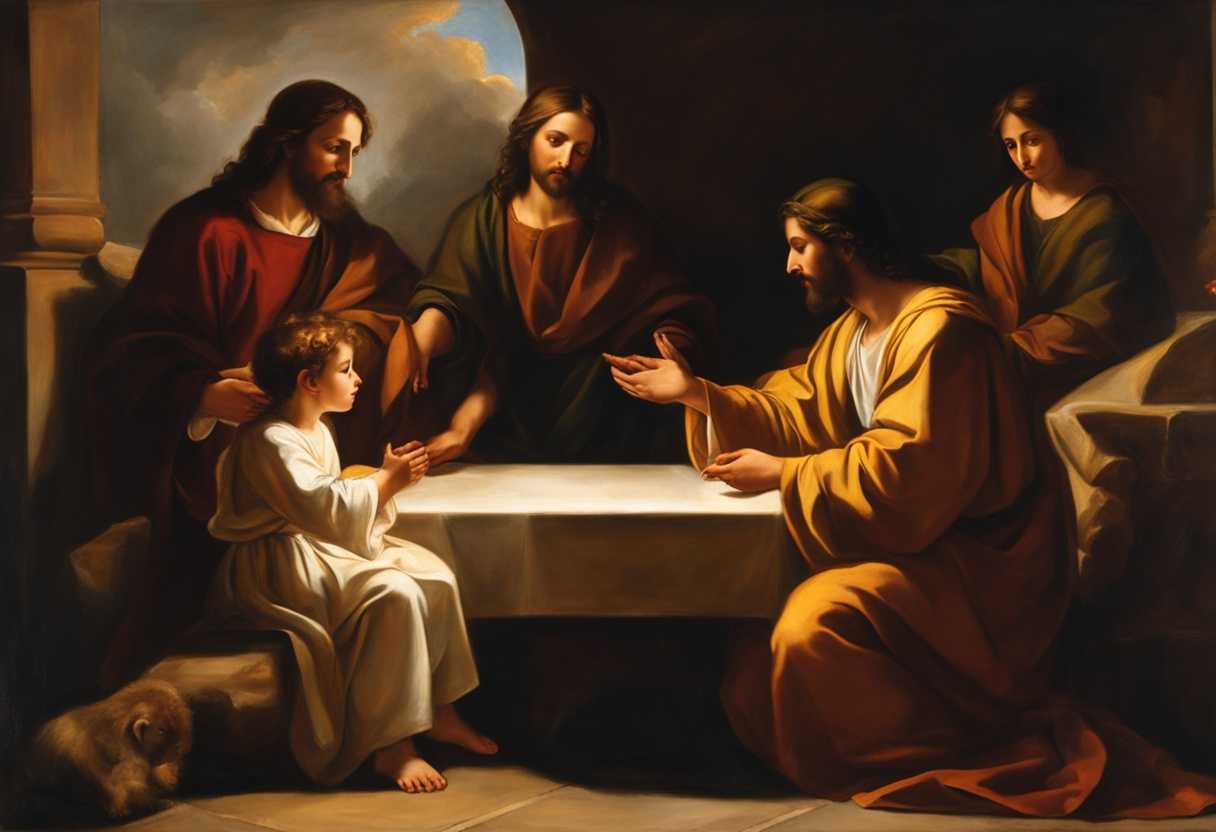
Setting the Scene for Matthew 18:1-5
The scene in Matthew 18:1-5 takes place in a humble setting, likely a simple room or courtyard where Jesus is surrounded by his disciples. The disciples, including Peter, James, John, and others, have gathered around Jesus as he sits down to teach them. The atmosphere is one of intimacy and earnestness, with the disciples eager to learn from their beloved teacher.
The disciples had been walking with Jesus, witnessing his miracles and hearing his teachings. They had seen the crowds flock to him and the religious leaders challenge him. In this moment, they are seeking further understanding from Jesus, perhaps hoping to gain insight into the kingdom of heaven that he often spoke about.
As Jesus begins to speak, the disciples listen attentively, their eyes fixed on him as he imparts wisdom and guidance. The disciples, like eager students, are eager to grasp the deeper meanings behind Jesus’ words and to understand how they can live out his teachings in their own lives. The scene is one of discipleship and mentorship, with Jesus patiently guiding his followers in their journey of faith.
What is Matthew 18:1-5 about?
This verse emphasizes the importance of humility and childlike faith in our spiritual journey. Jesus teaches us to embody humility, acknowledge our limitations, and approach God with a sense of dependence and trust in a world that often values power, prestige, and wealth. Humility allows us to recognize the greatness of God and our own need for His grace and guidance.
Furthermore, Jesus uses the metaphor of a child to illustrate the kind of faith that pleases God. Children are characterized by their innocence, trust, and openness. Similarly, our faith should be marked by a simple trust in God’s goodness and a willingness to surrender control. Jesus highlights the need for us to approach God with a sense of wonder, curiosity, and sincerity, much like a child interacts with the world.
Reflecting on this verse, consider how you can cultivate humility in your daily life and nurture a childlike faith in your relationship with God. How can you let go of pride and self-sufficiency, and instead, approach God with a humble heart and a trusting spirit? Embracing humility and childlike faith can transform the way we perceive and experience the kingdom of heaven, leading us to a deeper relationship with God and a greater sense of peace and fulfillment.
Understanding what Matthew 18:1-5 really means
In Matthew 18:1-5, we find the disciples seeking to understand who holds the greatest position in the kingdom of heaven. Jesus, in response, brings a child forward, signaling a shift in perspective. The key phrase “Unless you change and become like little children” underscores the importance of humility, innocence, and trust in our approach to God. This challenges the disciples, and us, to reevaluate our understanding of greatness in the kingdom of heaven, which is now defined by humility and childlike faith. Furthermore, the statement “Whoever welcomes one such child in my name” emphasizes the value of accepting and valuing those who embody humility and dependence.
Drawing connections to other biblical passages enriches our understanding of this teaching. Matthew 5:3 highlights the blessedness of the poor in spirit, reinforcing the significance of humility. Mark 10:15 stresses the necessity of receiving the kingdom of God with childlike faith. Additionally, 1 Peter 5:5 emphasizes the importance of humility in our interactions with others, as God favors the humble.
The relevance of this passage in modern society is profound. In a world that often exalts power and self-promotion, the call to embrace humility and simplicity stands as a counter-cultural challenge. It prompts believers to trust in God with the same unwavering dependence and faith that a child places in their parents.
Consider the anecdote of a child’s faith, such as a story of a child fervently praying for a sick family member, believing wholeheartedly in God’s healing power. This narrative serves as a powerful illustration of how adults can learn from children’s faith to trust God more fully and approach Him with humility.
As we reflect on these teachings, let us examine our lives for areas where we can cultivate a more childlike faith and humility. May we be inspired to trust God wholeheartedly and approach Him with the innocence and dependence of a child. Let us pray for God’s guidance in nurturing these qualities in our hearts, that we may truly embody the humility and faith that Jesus calls us to embrace.
How can we humble ourselves like little children?
To humble ourselves like little children, we must approach God with a childlike faith and dependence. We should trust in God’s wisdom, love, and care for us just as children trust their parents completely and rely on them for guidance and provision. This involves surrendering our own will and desires to God’s will, acknowledging our need for His guidance and help in every aspect of our lives.
Furthermore, we can humble ourselves by having a teachable spirit, just like children who are constantly learning and growing. We should be open to receiving instructions and correction from God, through His Word, prayer, and the Holy Spirit. This requires being humble enough to admit when we are wrong, willing to learn from our mistakes, and eager to grow in our faith and relationship with God.
Additionally, we can humble ourselves by approaching others with a sense of innocence, love, and humility, just as children often do. This involves showing kindness, compassion, and forgiveness towards others, without judgment or pride. We can reflect the love of Christ and demonstrate a Christ-like humility that pleases God by imitating the humble and pure-hearted nature of children in our interactions with others.
Application
Imagine you’re juggling work, family, and all life’s demands. Amid this chaos, there’s a call to find simplicity and humility, like a child’s perspective. Jesus wants us to strip away our pride and come to Him with unguarded, childlike trust. Can you carve out a moment today to let go of distractions and simply trust in His plan?

Reverend Michael Johnson is an experienced Church Minister with a profound expertise in spirituality and guidance. With a serene presence and a compassionate heart, he has faithfully served his congregation for over 20 years, leading them on a spiritual journey towards inner peace and enlightenment. Reverend Johnson’s extensive knowledge of religious philosophies and profound understanding of human nature have made him a trusted confidant and mentor to many, as he seamlessly weaves his profound wisdom into life teachings. Reverend Johnson’s calming demeanor and empathetic nature continue to uplift and heal souls, nurturing a sense of unity and tranquility within his community.