
Matthew 18:1-11 is about Jesus teaching his disciples the importance of humility, warning against causing others to stumble, and emphasizing the preciousness of every individual to God.
1 At that time the disciples came to Jesus, saying, “Who is the greatest in the kingdom of heaven?”
2 And calling to him a child, he put him in the midst of them
3 and said, “Truly, I say to you, unless you turn and become like children, you will never enter the kingdom of heaven.
4 Whoever humbles himself like this child is the greatest in the kingdom of heaven.
5 “Whoever receives one such child in my name receives me,
6 but whoever causes one of these little ones who believe in me to sin, it would be better for him to have a great millstone fastened around his neck and to be drowned in the depth of the sea.
7 “Woe to the world for temptations to sin! For it is necessary that temptations come, but woe to the one by whom the temptation comes!
8 And if your hand or your foot causes you to sin, cut it off and throw it away. It is better for you to enter life crippled or lame than with two hands or two feet to be thrown into the eternal fire.
9 And if your eye causes you to sin, tear it out and throw it away. It is better for you to enter life with one eye than with two eyes to be thrown into the hell of fire.
10 “See that you do not despise one of these little ones. For I tell you that in heaven their angels always see the face of my Father who is in heaven.
11 For the Son of Man came to save the lost.
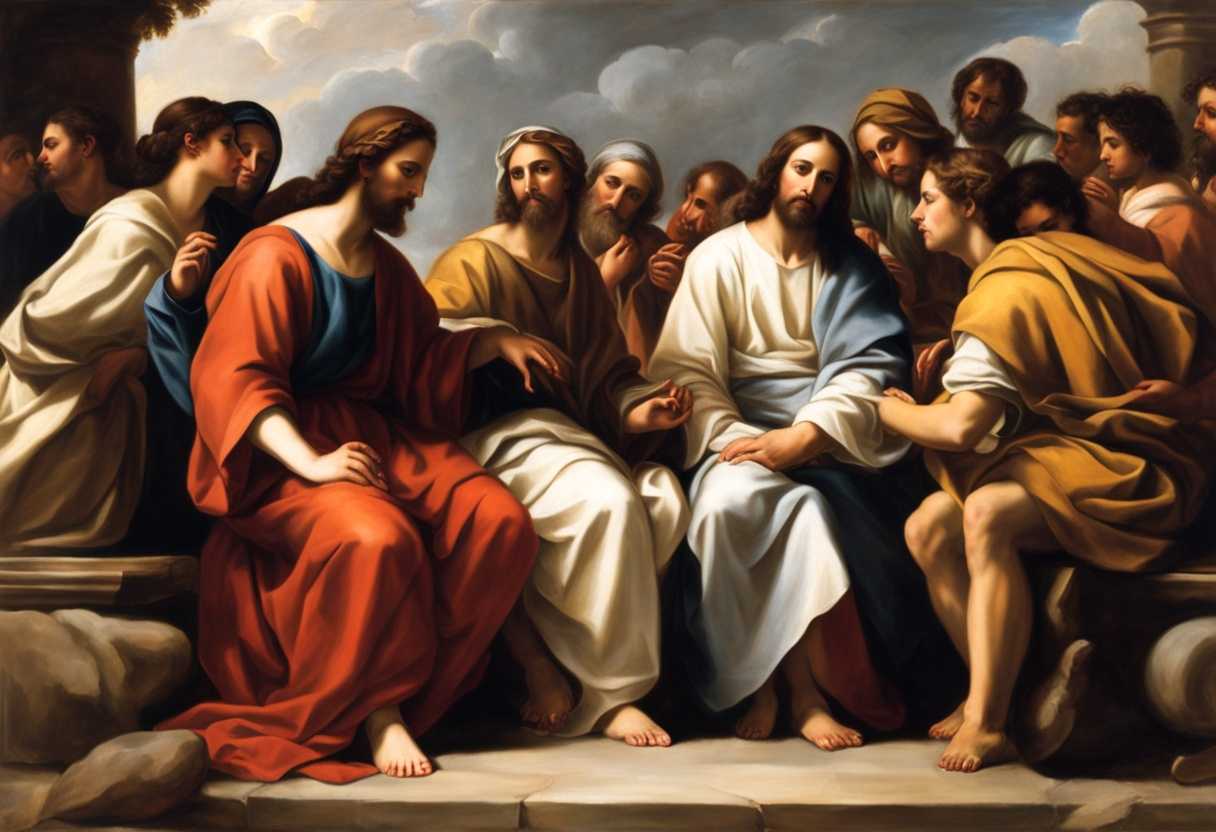
Setting the Scene for Matthew 18:1-11
In Matthew chapter 18, we find Jesus sitting down with his disciples on a hillside overlooking the Sea of Galilee. The disciples, including Peter, James, John, and the others, have gathered around Jesus, eager to listen and learn from their beloved teacher. The sun is beginning to set, casting a warm golden glow over the group as they settle in for an evening of teaching and discussion.
As they sit together, Jesus begins to speak to his disciples about the importance of humility and childlike faith. He gestures towards a nearby group of children playing in the distance, using them as an example of the kind of innocence and trust that he desires his followers to have. The disciples listen intently, absorbing his words and pondering the deeper meaning behind his teachings.
The atmosphere is peaceful and serene, with the gentle lapping of the waves from the Sea of Galilee providing a soothing background soundtrack to Jesus’ words. The disciples are filled with a sense of awe and reverence as they sit in the presence of their master, soaking in his wisdom and guidance. It is a moment of profound connection and spiritual growth as they continue to walk alongside Jesus on their journey of faith.
What is Matthew 18:1-11 about?
This verse emphasizes the virtue of humility and the importance of not leading others astray. Humility is the quality of being humble and modest, recognizing our own limitations and weaknesses. We may inadvertently cause others to stumble in their own journeys of faith and self-discovery by exalting ourselves, seeking attention and praise. Jesus reminds us that true greatness comes from being humble and serving others rather than seeking recognition or power. We, as educators, must embody humility in our interactions with students and colleagues. We create a safe and supportive environment for learning and growth by acknowledging our own imperfections and vulnerabilities. Additionally, we must be mindful of our words and actions, ensuring that we do not lead others astray by promoting arrogance or selfishness. Instead, let us follow Jesus’ teachings by cultivating humility and compassion in our daily lives, inspiring others to do the same. True greatness lies in serving others and uplifting those around us.
Understanding what Matthew 18:1-11 really means
In the passage from Matthew 18:1-11, Jesus imparts essential teachings to His disciples, emphasizing the virtues of humility, the significance of childlike faith, and the gravity of leading others astray. When the disciples inquire about who is the greatest in the kingdom of heaven, Jesus uses a child as a poignant illustration, highlighting that true greatness is not defined by status or power but by humility and simplicity. This message resonates with Jesus’ broader teachings, such as the Beatitudes in Matthew 5:3, which extol the virtues of the poor in spirit, and Paul’s exhortation in Philippians 2:3 to prioritize humility and esteem others above oneself. In a world fixated on power and prestige, Jesus’ lesson serves as a poignant reminder that authentic greatness stems from humility and unwavering trust in God.
Moreover, Jesus underscores the importance of welcoming and valuing the humble and vulnerable, stating that welcoming such individuals is akin to welcoming Him. This teaching aligns with other biblical passages like Mark 9:37 and James 1:27, which emphasize caring for the marginalized and vulnerable in society. By encouraging us to extend compassion and care to those in need, Jesus prompts us to embody His love and compassion in tangible ways. Consider a community that rallies around a struggling family, offering support and love – this collective act of kindness mirrors Jesus’ call to embrace and care for the vulnerable among us.
Furthermore, Jesus issues a solemn warning about the detrimental effects of causing others to stumble into sin, urging us to take drastic measures to avoid leading others astray. This cautionary message aligns with the apostle Paul’s counsel in Romans 14:13 and 1 Corinthians 8:9, emphasizing the importance of refraining from actions that could hinder others’ spiritual growth. By fostering a community where individuals uplift and support one another in faith, we cultivate an environment conducive to spiritual growth and mutual edification. Imagine a mentor who conscientiously guides their mentee, mindful of the influence their words and deeds wield – such intentional mentorship embodies the spirit of Jesus’ admonition.
Lastly, Jesus highlights the intrinsic value of every individual, particularly those characterized by humility and childlike faith. This emphasis on cherishing each person echoes sentiments found in Luke 15:7 and Psalm 34:18, which underscore God’s profound love and care for the brokenhearted and repentant. By recognizing the worth of every individual, we mirror God’s heart and demonstrate His love in tangible ways. Picture a teacher who uplifts and supports a struggling student, recognizing their potential and intrinsic value – this act of affirmation reflects the essence of Jesus’ message.
In conclusion, the passage from Matthew 18:1-11 beckons us to embody humility, extend compassion to the vulnerable, be mindful of our influence on others, and acknowledge the worth of each individual. As we navigate our daily lives, let us strive to live out these teachings by exemplifying humility, caring for the marginalized, being intentional in our interactions, and valuing each person as God does. In doing so, we not only honor Jesus’ teachings but also reflect His love and grace to a world in need of compassion and kindness.
How can we become humble like a child?
To become humble like a child, we can learn from the verse that children possess qualities such as innocence, trust, and a lack of pride that believers should emulate. Children are teachable, eager to learn, and quick to trust, showing a humble acceptance of guidance and a simple faith that we can strive to replicate. We can embody this humility by aiming to approach our relationship with God with a childlike trust, dependency, and willingness to learn and grow in faith. We can seek to let go of our pride, self-sufficiency, and need to control outcomes, recognizing that true humility involves acknowledging our dependence on God and submitting to His will. We can embrace a posture of humility that values simplicity, openness, and a willingness to receive God’s love, grace, and direction without striving to prove ourselves or relying on our own abilities by cultivating a childlike faith that places our trust fully in God. We can grow in humility and draw closer to God by modeling our attitudes and behaviors on the qualities of trust, innocence, and reliance found in the childlike nature.
Application
Let’s mirror Jesus’ humility from Matthew 18:1-11, embodying childlike innocence and service. Shedding pride, let’s uplift others with sincerity. Vigilantly steer clear of stumbling blocks, supporting fellow believers on their faith path. Will you choose humility and service, inspired by Jesus’ love?

Reverend Michael Johnson is an experienced Church Minister with a profound expertise in spirituality and guidance. With a serene presence and a compassionate heart, he has faithfully served his congregation for over 20 years, leading them on a spiritual journey towards inner peace and enlightenment. Reverend Johnson’s extensive knowledge of religious philosophies and profound understanding of human nature have made him a trusted confidant and mentor to many, as he seamlessly weaves his profound wisdom into life teachings. Reverend Johnson’s calming demeanor and empathetic nature continue to uplift and heal souls, nurturing a sense of unity and tranquility within his community.