
21 Then Peter came up and said to him, “Lord, how often will my brother sin against me, and I forgive him? As many as seven times?”
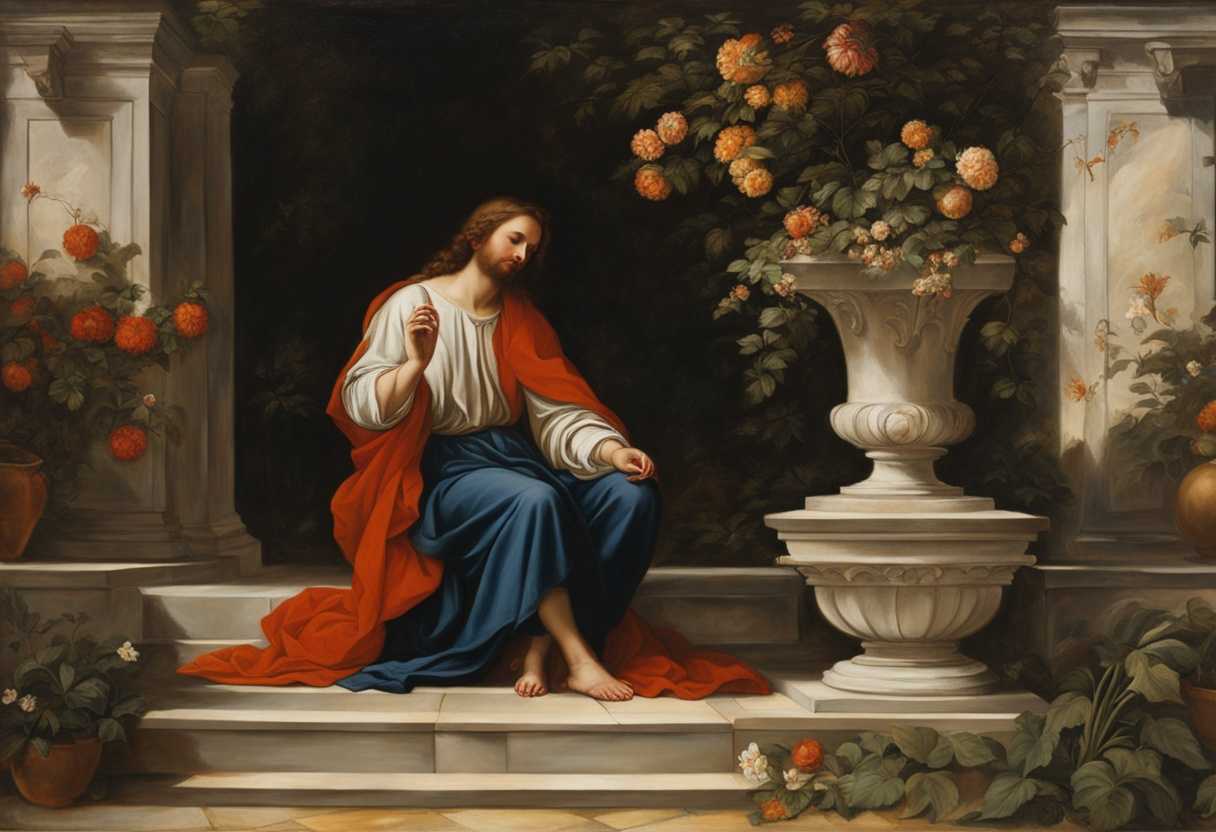
Setting the Scene for Matthew 18:21
In Matthew chapter 18, we find Jesus teaching his disciples about forgiveness. The scene is set on a quiet hillside overlooking the Sea of Galilee. The disciples, including Peter, John, James, and the others, are gathered around Jesus, eager to learn from their beloved teacher. The sun is beginning to set, casting a warm golden glow over the group as they sit in a circle, listening intently to Jesus’ words.
As Jesus speaks about the importance of forgiveness, Peter, always eager to understand more deeply, asks a question that has been weighing on his heart. “Lord, how often should I forgive someone who sins against me? Up to seven times?” Peter inquires, hoping to show his dedication to following Jesus’ teachings. Jesus, with his gentle and patient demeanor, responds with a parable about the unforgiving servant, illustrating the boundless mercy and forgiveness that God extends to us.
The disciples are moved by Jesus’ words, realizing the depth of forgiveness that is required of them as followers of Christ. The serene setting of the hillside, the gentle lapping of the waves in the distance, and the profound teachings of Jesus create a sacred moment of reflection and learning for all who are present.
What is Matthew 18:21 about?
When we reflect on the idea of forgiveness, we often measure it against our own standards and experiences. We might ask ourselves questions like: How much should someone apologize before we forgive them? Do their actions match up with our expectations for forgiveness? However, this verse reminds us that forgiveness should not be constrained by these human limitations. It challenges us to think beyond our own preconceived notions and biases when it comes to extending grace and mercy to others.
Think about a time when you were hesitant to forgive someone. What were the reasons behind your reluctance? Was it because their actions seemed unforgivable by your standards? This verse encourages us to think about forgiveness in a more expansive way, one that transcends our own fallible judgments. We open ourselves up to healing and reconciliation by embracing a spirit of generous forgiveness, benefiting not just the person we forgive but also ourselves. It challenges us to ask: What does it look like to offer forgiveness without reservation or limitation? How can we embody this message of boundless grace and mercy in our own lives and relationships?
Understanding what Matthew 18:21 really means
Let’s break down this verse step by step to uncover its deeper meaning and relevance for us today.
Structure of the Commentary:
- Context and Background
- Key Phrases and Their Meanings
- Cross-References with Other Biblical Passages
- Relevance to Modern Life
- Anecdote for Practical Understanding
- Peter approaches Jesus with a question about forgiveness in this verse. He asks how many times he should forgive someone who sins against him. This inquiry sets the stage for Jesus’ teaching on the boundless nature of forgiveness. Understanding the cultural and historical context is crucial. Jewish tradition considered forgiving three times sufficient. Peter’s suggestion of seven times shows he is already thinking generously.
Key Phrases and Their Meanings
Peter’s query, “how many times shall I forgive my brother or sister who sins against me?” highlights the human tendency to seek limits. “By asking ‘up to seven times?” becomes “The question is asked ‘up to seven times?””, Peter is testing the boundaries of grace. Jesus’ response, which follows in the next verses, expands this notion infinitely. The phrase “my brother or sister” emphasizes the personal and relational aspect, making it clear that forgiveness is not just a legalistic duty but a relational imperative.
Cross-References with Other Biblical Passages
Jesus’ teaching on forgiveness is echoed throughout the New Testament. For instance, in Matthew 6:14-15, Jesus states, “For if you forgive other people when they sin against you, your heavenly Father will also forgive you.” Similarly, in Colossians 3:13, Paul writes, “Bear with each other and forgive one another if any of you has a grievance against someone. Forgive as the Lord forgave you.” These verses collectively underscore the importance of forgiveness as a cornerstone of Christian faith. This verse is incredibly relevant in today’s world, where grudges and unforgiveness can lead to division and strife. The act of forgiveness is not just about the other person; it’s also about freeing ourselves from the chains of resentment. We reflect God’s love and grace abundantly given to us by forgiving. Consider the challenges you face—whether at work, in your family, or among friends. How often do you find yourself holding onto past wrongs?
Anecdote for Practical Understanding
Let me share a story to illustrate this point. A member of our congregation once shared how he struggled to forgive his business partner who had betrayed him. For years, he harbored anger and resentment. It wasn’t until he came across this verse and truly understood its message that he decided to forgive. The act of forgiving not only mended his relationship but also brought him immense peace. His ability to forgive became a testimony to others about the power of grace. Peter’s question and Jesus’ subsequent teaching challenge us to rethink our approach to forgiveness. It’s not about keeping score but about embodying the limitless grace that God offers us. Reflect on your own life. Are there areas where you need to extend forgiveness? Are you setting limits on grace that should be boundless? We not only follow Jesus’ teachings but also bring healing and unity into our lives and communities by embracing the call to forgive.
Let this verse be a reminder that forgiveness is an ongoing journey, one that mirrors the infinite love and mercy of God. How will you take steps today to embody this divine attribute in your interactions?
How can we show endless mercy to others?
We can show endless mercy to others by forgiving them repeatedly, just as the verse emphasizes. This means that we should let go of any feelings of anger or resentment towards those who wrong us, continually extending forgiveness and compassion to them. Rather than holding grudges or seeking revenge, showing endless mercy involves choosing to release any negative emotions we may harbor towards others and choosing to treat them with kindness and understanding. We mirror the boundless mercy that God shows towards us by choosing to forgive others without limits. This act of grace not only benefits the person we forgive but also helps us experience healing and release from the burden of carrying grievances. We recognize that we all fall short at times and are in need of mercy and forgiveness ourselves. Displaying endless mercy to others ultimately cultivates a spirit of love, patience, and humility within us, fostering healthier relationships and promoting peace and reconciliation.
Application
Think about the countless emails, tasks, and deadlines you face each day. Now, imagine the weight lifted off your shoulders with each act of forgiveness you extend. Matthew 18:21 doesn’t just suggest forgiveness; it calls for radical, limitless grace and mercy. What if you extended this same grace to your family, colleagues, and friends, just as God has done for you? Forgive the unkind words, the missed deadlines, the small slights that build up. How will you change the world around you today through this powerful choice?

Reverend Michael Johnson is an experienced Church Minister with a profound expertise in spirituality and guidance. With a serene presence and a compassionate heart, he has faithfully served his congregation for over 20 years, leading them on a spiritual journey towards inner peace and enlightenment. Reverend Johnson’s extensive knowledge of religious philosophies and profound understanding of human nature have made him a trusted confidant and mentor to many, as he seamlessly weaves his profound wisdom into life teachings. Reverend Johnson’s calming demeanor and empathetic nature continue to uplift and heal souls, nurturing a sense of unity and tranquility within his community.