
16 So the last will be first, and the first last.
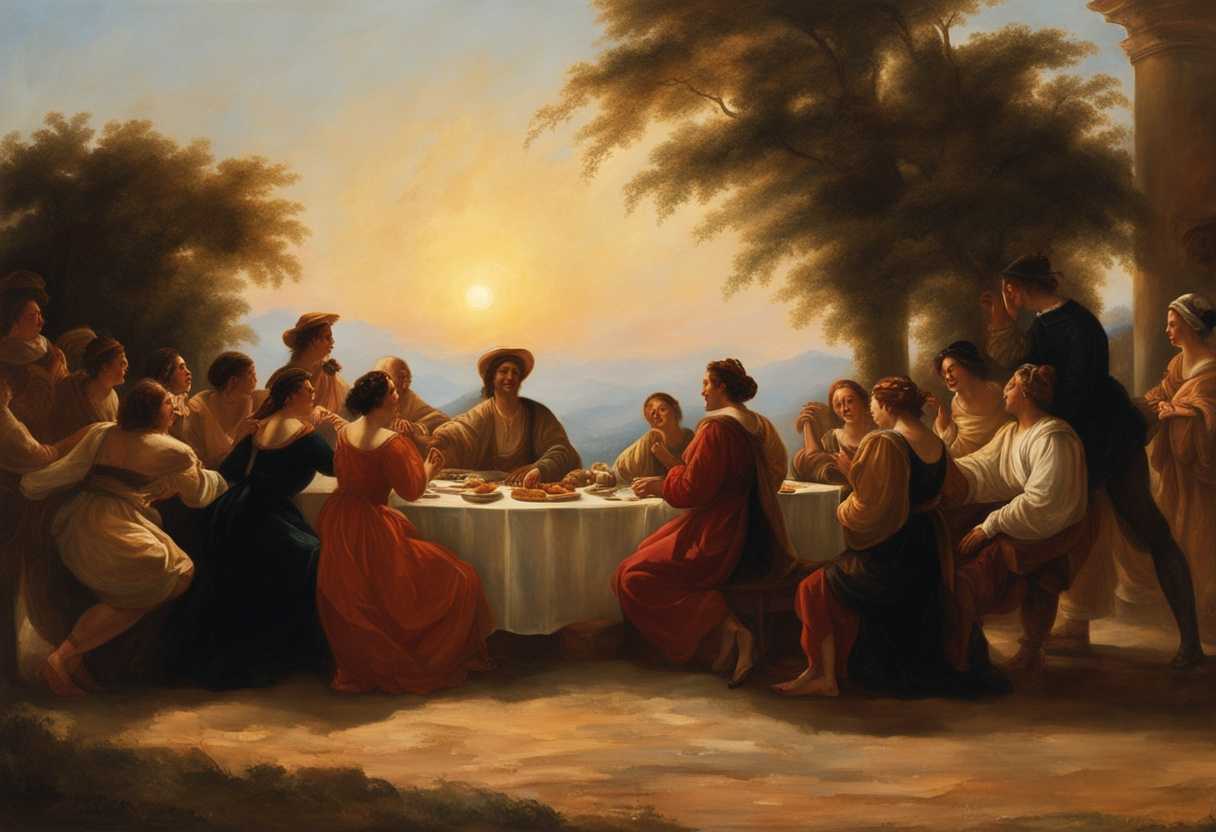
Setting the Scene for Matthew 20:16
In Matthew chapter 20, Jesus tells the parable of the workers in the vineyard. The scene is set in a vineyard where a landowner goes out early in the morning to hire workers for his vineyard. Throughout the day, he goes out several times to hire more workers, even up until the eleventh hour. As evening approaches, the workers gather to receive their wages.
The characters in this scene include the landowner, who represents God, and the workers he hires at different times during the day. The workers are a diverse group, some who have worked the entire day and others who have only worked for a short time. As they line up to receive their wages, tensions rise as those who worked longer expect to be paid more than those who worked for a shorter period.
The surroundings are described as a lush vineyard with rows of grapevines stretching out into the distance. The sun is setting, casting a warm golden light over the scene as the workers eagerly await their wages. The landowner’s actions challenge the traditional notions of fairness and justice, highlighting God’s grace and generosity towards all who come to work in His kingdom.
What is Matthew 20:16 about?
This verse from the Bible challenges our conventional understanding of success and status. It emphasizes the idea that in God’s eyes, things are not always as they seem in the worldly sense. The phrase “the last will be first, and the first will be last” highlights the importance of humility, servitude, and putting others before ourselves. It encourages us to prioritize spiritual values over earthly achievements and to treat everyone with respect and compassion, regardless of their social status or position.
Have you ever thought about what it truly means to be first or last in the eyes of God? Could it be that the ones who are often overlooked or marginalized in society are actually the ones who hold the most significance in God’s kingdom? This verse challenges us to reevaluate our priorities and perceptions of success. It prompts us to reflect on how we can better live out the values of humility, generosity, and love in our own lives. So, the next time you find yourself striving to be first, remember that true greatness lies in serving others and living a life that is aligned with God’s will.
Understanding what Matthew 20:16 really means
Structure for Commentary:
- Introduction to the Verse
- Explanation of Key Phrases
- Biblical Cross-References
- Relevance Today
- Anecdote for Illustration
- Reflective Questions
- Jesus declares in this verse, “So the last will be first, and the first will be last.”” This statement forms part of the Parable of the Workers in the Vineyard, a story that challenges our notions of fairness and divine grace. We’ll delve deeper by exploring its key phrases, referencing other biblical passages that echo similar themes, and considering its relevance to our lives today.
Explanation of Key Phrases
The phrase “the last will be first, and the first will be last” flips conventional wisdom on its head. It suggests a reversal of worldly status and invites us to see God’s kingdom through a lens of divine justice rather than human merit. Jesus often used such paradoxes to teach profound spiritual truths, emphasizing humility, service, and the unexpected nature of God’s grace. Jesus blesses the poor in spirit and those who mourn in the Beatitudes in Matthew 5. Similarly, in Mark 9:35, Jesus says, “Anyone who wants to be first must be the very last, and the servant of all.” These passages consistently highlight God’s preference for humility and service over social status and self-promotion. This verse challenges us to rethink our values in our achievement-oriented society. We often equate success with power, wealth, and recognition, but Jesus offers a counter-cultural message. He calls us to prioritize service, humility, and grace, reminding us that God’s kingdom operates on different principles than the world does.
Anecdote for Illustration
Imagine a race where the last runner to cross the finish line receives the gold medal. This would seem absurd in our competitive world, yet it beautifully illustrates Jesus’ teaching. I remember a story of a janitor at a large corporation who was beloved by everyone. Despite his lowly position, his kindness, humility, and willingness to help others made him a revered figure. When he retired, the entire company celebrated him, underscoring how true greatness lies in character, not position.
Reflective Questions
How often do we judge ourselves and others by worldly standards of success? Are we willing to serve and uplift those who society deems “last”? How can we embody the principles of God’s kingdom in our daily lives?
Conclusion
Matthew 20:16 invites us to embrace a radical reordering of values. We align ourselves more closely with God’s heart by viewing success through the lens of humility and service. Let this verse be a reminder that in God’s economy, love and grace trump all else, turning our worldly expectations upside down.
How can we cultivate humility and servanthood?
We can cultivate humility and servanthood by recognizing that, ultimately, everything we have and all our abilities come from God. This understanding can help us remain humble and realize that we are not self-sufficient but rather dependent on God for everything. We can develop a spirit of servanthood by acknowledging this truth and having a willing and humble attitude to serve others with the gifts and resources we have been blessed with.
Additionally, reflecting on the sacrificial love and service of Jesus Christ can inspire us to emulate His example of humility and servanthood. Jesus, who was the ultimate example of humility, demonstrated servanthood by washing his disciples’ feet and ultimately laying down His life for the salvation of humanity. We can grow in humility and cultivate a heart of servanthood that seeks to glorify God through loving and serving others by following His example and seeking to serve others selflessly.
Practicing gratitude and thankfulness can also help us cultivate humility and servanthood. We can foster a humble attitude that recognizes the goodness of God and the contributions of others by acknowledging the blessings in our lives and expressing gratitude for them. This mindset of gratitude can inspire us to serve others willingly and joyfully, seeing opportunities to bless others as a way to show our thankfulness for what we have been given.
Application
Think of your life as a bustling office or a busy family dinner—every role matters, and everyone deserves respect. Embrace humility and perseverance like a trusted colleague or a patient parent. Serve others with genuine love and compassion, just as you would want for yourself. How will you rise to embody Jesus’s teachings in your everyday interactions?

Reverend Michael Johnson is an experienced Church Minister with a profound expertise in spirituality and guidance. With a serene presence and a compassionate heart, he has faithfully served his congregation for over 20 years, leading them on a spiritual journey towards inner peace and enlightenment. Reverend Johnson’s extensive knowledge of religious philosophies and profound understanding of human nature have made him a trusted confidant and mentor to many, as he seamlessly weaves his profound wisdom into life teachings. Reverend Johnson’s calming demeanor and empathetic nature continue to uplift and heal souls, nurturing a sense of unity and tranquility within his community.