
Matthew 26:20 is about Jesus sitting down with his disciples to share the Last Supper, signaling the beginning of the events leading to his crucifixion and the establishment of the Eucharist.
20 When it was evening, he reclined at table with the twelve.
Setting the Scene for Matthew 26:20
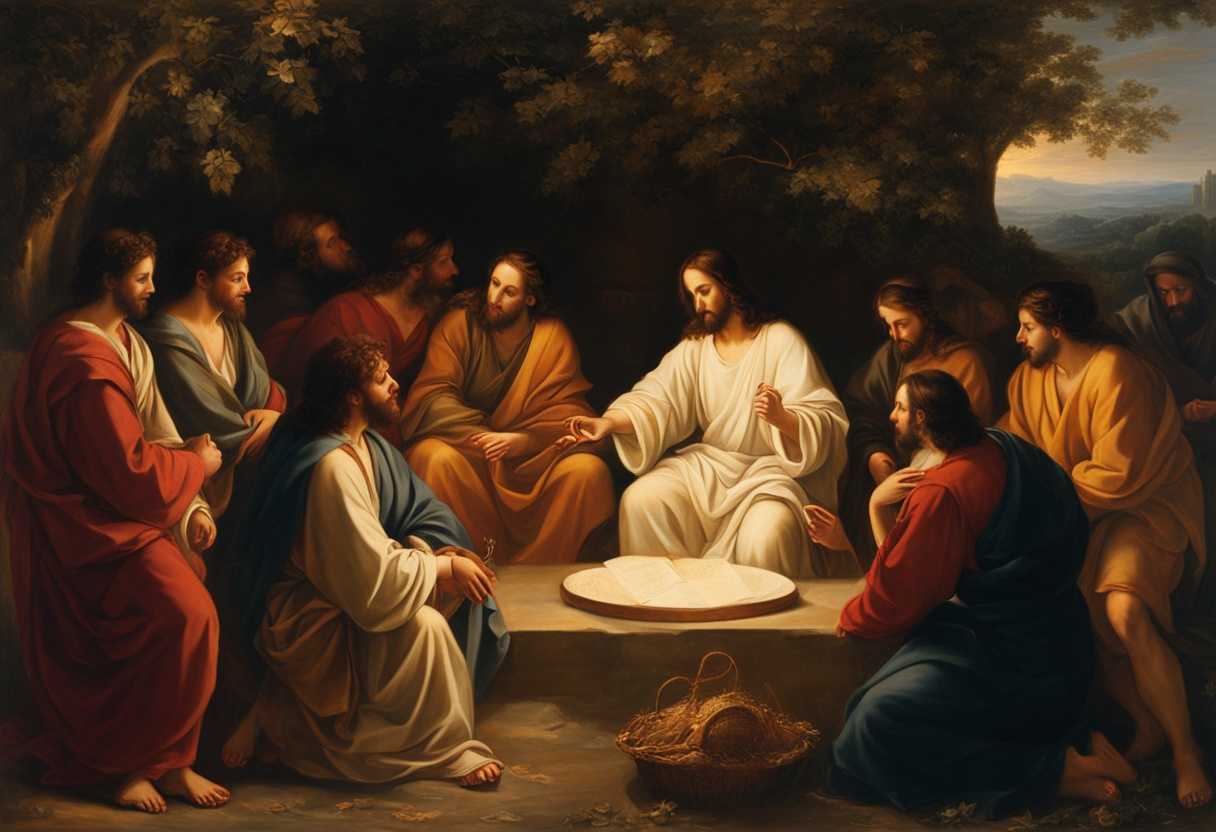
In Matthew chapter 26, we find Jesus and his twelve disciples gathered together in a room in Jerusalem to celebrate the Passover meal. The room is dimly lit by oil lamps, casting a warm glow over the faces of those present. The air is filled with the scent of roasted lamb, unleavened bread, and bitter herbs, as the disciples recline around a low table, their sandals kicked off and their feet tucked beneath them.
Jesus, the central figure in the room, sits at the head of the table, his eyes filled with a mixture of love and sorrow. His closest disciple, Judas Iscariot, is seated beside him, his face betraying a sense of unease. The other disciples, including Peter, James, and John, are engaged in quiet conversation, their voices hushed as they reflect on the events of the day.
As the meal progresses, Jesus takes a loaf of bread, blesses it, and breaks it, passing it around to his disciples, saying, “Take, eat; this is my body.” The disciples look at him in confusion, not fully understanding the significance of his words. Little do they know that this Passover meal will mark the beginning of the events that will lead to Jesus’ crucifixion and ultimate sacrifice for the sins of humanity.
What is Matthew 26:20 about?
Jesus sharing a meal with his disciples is a simple but powerful image seen in this verse. The act of reclining at the table signifies a sense of intimacy, closeness, and fellowship. It’s a moment of connection and unity, where Jesus and his disciples come together to share not only a physical meal but also spiritual nourishment and companionship. This scene illustrates the importance of community, shared experiences, and hospitality in the Christian faith.
Imagine the scene: the soft light of evening, the sound of voices sharing stories and laughter, the aroma of food filling the air. It’s in these seemingly ordinary moments that Jesus often imparted profound teachings and demonstrated boundless love for others. Reflecting on this verse reminds us of the significance of coming together with our fellow believers, breaking bread, and nurturing relationships built on faith and love. It prompts us to consider the ways in which we can cultivate similar moments of togetherness and fellowship in our own lives, drawing strength and inspiration from the example set by Jesus and his disciples.
Understanding what Matthew 26:20 really means
The verse Matthew 26:20 takes us back to a poignant moment during the Last Supper, a significant event in the New Testament where Jesus shared a final meal with His disciples before His crucifixion. This setting is crucial as it marks the institution of the Eucharist, a central sacrament in Christian worship that symbolizes the body and blood of Christ. The parallel accounts in Luke 22:14-20, John 13:1-30, and 1 Corinthians 11:23-26 provide additional insights into the Last Supper, emphasizing themes of the New Covenant, service, humility, and the importance of Communion in Christian practice.
In today’s world, marked by division and isolation, the Last Supper holds relevance by reminding us of the significance of fellowship, sacrifice, and the establishment of a new covenant between God and humanity. It serves as a powerful example of coming together in faith and community, despite differences and challenges. The act of Jesus sharing a meal with His disciples, even knowing that Judas would betray Him, teaches us about forgiveness, unconditional love, and the transformative power of grace.
Imagine a family gathering around a dinner table after a period of separation, setting aside past conflicts to share a meal and strengthen their bonds. This scene reflects the essence of the Last Supper, where Jesus, in the face of betrayal, chose unity and love over division. The phrase “When evening came” sets a solemn tone, signaling a significant event about to unfold. Jesus reclining at the table with the Twelve signifies an intimate and relaxed setting, highlighting the close relationship He had with His disciples and the profound teachings that would follow.
“The Twelve” refers to the apostles, symbolizing the foundation of the early Church. Despite the knowledge of betrayal, Jesus included all, showcasing His inclusive love and grace. Reflecting on this verse prompts us to consider the themes of community, forgiveness, and sacrificial love that Jesus embodied. These timeless lessons encourage us to nurture unity, compassion, and reconciliation in our relationships, mirroring the spirit of the Last Supper in our lives today.
How can we discern who may betray us?
One way in which we can discern who may betray us is by being observant of their behavior and actions. People who may be inclined to betray us may show signs of deceit or disloyalty through their words and actions. For example, they may exhibit inconsistent behavior, withhold important information, or be overly secretive. We may be able to identify individuals who could potentially betray our trust by paying attention to these signs.
Furthermore, it is important to be cautious of individuals who do not have our best interests at heart. People who may betray us could exhibit selfish tendencies, prioritize their own gain over our well-being, or show a lack of concern for how their actions may impact us. It is crucial to be mindful of the motivations and intentions of those around us in order to protect ourselves from potential betrayal.
Additionally, building strong relationships based on trust and open communication can help us discern who may betray us. We can create an environment where betrayals are less likely to occur by fostering honest and transparent connections with others. Trustworthy individuals will value honesty and integrity in their interactions, making it easier to discern who we can rely on in times of need.
Application
Reflect on the closeness of Jesus’ last supper with His disciples and think about your own relationships. Imagine sharing a meal and genuinely connecting with those around you, be it family, friends, or colleagues. Make the effort today to create these moments of true connection and presence. What can you do right now to build stronger bonds in your life?

Reverend Michael Johnson is an experienced Church Minister with a profound expertise in spirituality and guidance. With a serene presence and a compassionate heart, he has faithfully served his congregation for over 20 years, leading them on a spiritual journey towards inner peace and enlightenment. Reverend Johnson’s extensive knowledge of religious philosophies and profound understanding of human nature have made him a trusted confidant and mentor to many, as he seamlessly weaves his profound wisdom into life teachings. Reverend Johnson’s calming demeanor and empathetic nature continue to uplift and heal souls, nurturing a sense of unity and tranquility within his community.