
Matthew 27:18 is about the realization by Pilate that the religious leaders were envious of Jesus’ innocence and genuine authority, leading him to seek to release Jesus while the crowd demanded his crucifixion.
18 For he knew that it was out of envy that they had delivered him up.
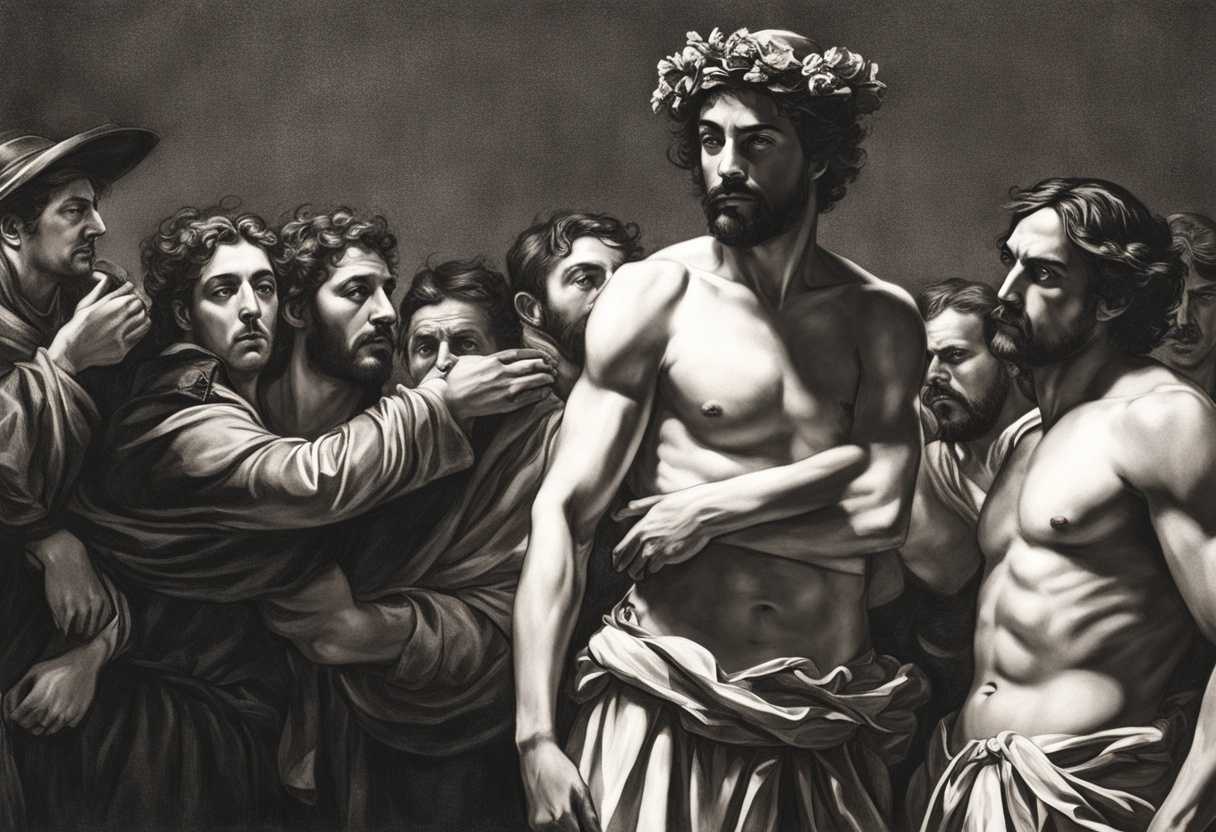
Setting the Scene for Matthew 27:18
The scene in Matthew 27:18 takes place in Jerusalem during the time of Jesus’ trial before Pontius Pilate. The main characters in this scene are Jesus, Pilate, and the chief priests and elders who have brought Jesus to Pilate seeking his crucifixion. The atmosphere is tense and charged with emotion as the religious leaders accuse Jesus of blasphemy and inciting rebellion against the Roman Empire.
Pilate, the Roman governor, finds no fault in Jesus but is pressured by the crowd to release Barabbas, a notorious criminal, instead of Jesus. The chief priests and elders manipulate the crowd to demand Jesus’ crucifixion, leading to Pilate washing his hands of the matter and allowing Jesus to be sentenced to death by crucifixion.
The setting is likely in a courtyard or a public square outside Pilate’s residence, with a large crowd gathered to witness the proceedings. The scene is filled with political intrigue, religious tension, and the clash of power dynamics between the Roman authorities and the Jewish religious leaders.
What is Matthew 27:18 about?
This verse underscores the tragic irony in the story of Jesus’ crucifixion. While Pilate’s wife recognizes Jesus’ innocence and sees the truth about him, her insight is ultimately powerless to prevent the unjust execution that was about to take place. This betrayal of innocence and justice highlights the deep injustice that Jesus faced on the path to his crucifixion.
Imagine the weight of this moment – the wife of a powerful figure acknowledging the innocence of Jesus, yet being unable to stop the unfolding tragedy. It serves as a sobering reminder of the complexities of human nature and the limitations of human justice. Despite having the truth right before their eyes, those in positions of power still chose to condemn Jesus unjustly, ultimately leading to his crucifixion. Let us reflect on this verse and consider not only the role of Pilate’s wife but also examine our own lives. Are we willing to stand up for truth and innocence, even when it may be difficult or unpopular? Let us learn from the example of Pilate’s wife and strive to seek justice and truth in all facets of our lives, just as Jesus did in the face of overwhelming adversity.
Understanding what Matthew 27:18 really means
In the narrative of Jesus’ trial before Pontius Pilate, Matthew 27:18 sheds light on the underlying motivations of the religious leaders who handed Jesus over. The phrase “out of envy” reveals a deep-seated jealousy and resentment towards Jesus, stemming from His influence and the love He garnered from the people. This envy was a driving force behind their actions, as they perceived Jesus as a threat to their own power and status. The act of “handing him over” symbolizes betrayal, marking the moment when Jesus was transferred to the Roman authorities, ultimately leading to His crucifixion.
This verse finds resonance in other biblical passages, such as Mark 15:10, which reinforces the notion that envy was the primary catalyst for the religious leaders’ betrayal. Proverbs 14:30 vividly illustrates the corrosive nature of envy, likening it to a force that decays the very core of a person. James 3:16 further expands on the consequences of envy, highlighting how it breeds disorder and paves the way for various forms of evil.
The relevance of this theme extends to contemporary society, where envy continues to sow discord and harm relationships. In a world where social media often fuels comparison and jealousy, understanding the dangers of envy becomes paramount for maintaining mental and spiritual well-being. Consider a workplace scenario where envy festers over a colleague’s promotion, leading to toxic behaviors like gossip and sabotage. However, choosing to confront and overcome envy can pave the way for personal growth and a more harmonious work environment.
Just as the religious leaders’ envy culminated in betrayal and injustice, our own struggles with envy can have far-reaching consequences. By acknowledging and addressing envy in our lives, we can prevent harm to ourselves and others. This verse serves as a poignant reminder of the destructive power of envy and the importance of cultivating gratitude and contentment. Through reflection on these teachings, we can aspire to foster a community built on love, support, and understanding.
What motives drive my decisions and actions?
The motives that drive my decisions and actions are crucial in shaping the outcomes of my life. Understanding the factors that influence my choices can help me make wiser and more intentional decisions. I can gain insight into whether my actions are driven by values such as integrity, love, and compassion, or if they stem from selfishness, pride, or fear by reflecting on the meaning behind my motives.
It is essential to evaluate the intentions behind my decisions and actions, as they reveal a lot about my character and priorities. Aligning my motives with what is just, righteous, and honorable can lead to positive outcomes and contribute to my personal growth and the well-being of others. I can strive to live a purposeful and fulfilling life centered on values that reflect my faith and beliefs by continually examining and refining the motives that guide my choices.
Application
Think about the times envy and betrayal have crept into your work or family life. Challenge yourself to embrace contentment and loyalty, steering clear of jealousy and deceit. Are you prepared to stand strong in doing what’s right and let go of envy and betrayal?

Reverend Michael Johnson is an experienced Church Minister with a profound expertise in spirituality and guidance. With a serene presence and a compassionate heart, he has faithfully served his congregation for over 20 years, leading them on a spiritual journey towards inner peace and enlightenment. Reverend Johnson’s extensive knowledge of religious philosophies and profound understanding of human nature have made him a trusted confidant and mentor to many, as he seamlessly weaves his profound wisdom into life teachings. Reverend Johnson’s calming demeanor and empathetic nature continue to uplift and heal souls, nurturing a sense of unity and tranquility within his community.