
Habakkuk 1:6-7 is about God’s use of the Babylonian empire as a tool of judgment against the wickedness of Judah, illustrating God’s sovereignty in using unlikely means to accomplish His purposes.
6 For behold, I am raising up the Chaldeans, that bitter and hasty nation, who march through the breadth of the earth, to seize dwellings not their own.
7 They are dreaded and fearsome;
their justice and dignity go forth from themselves.
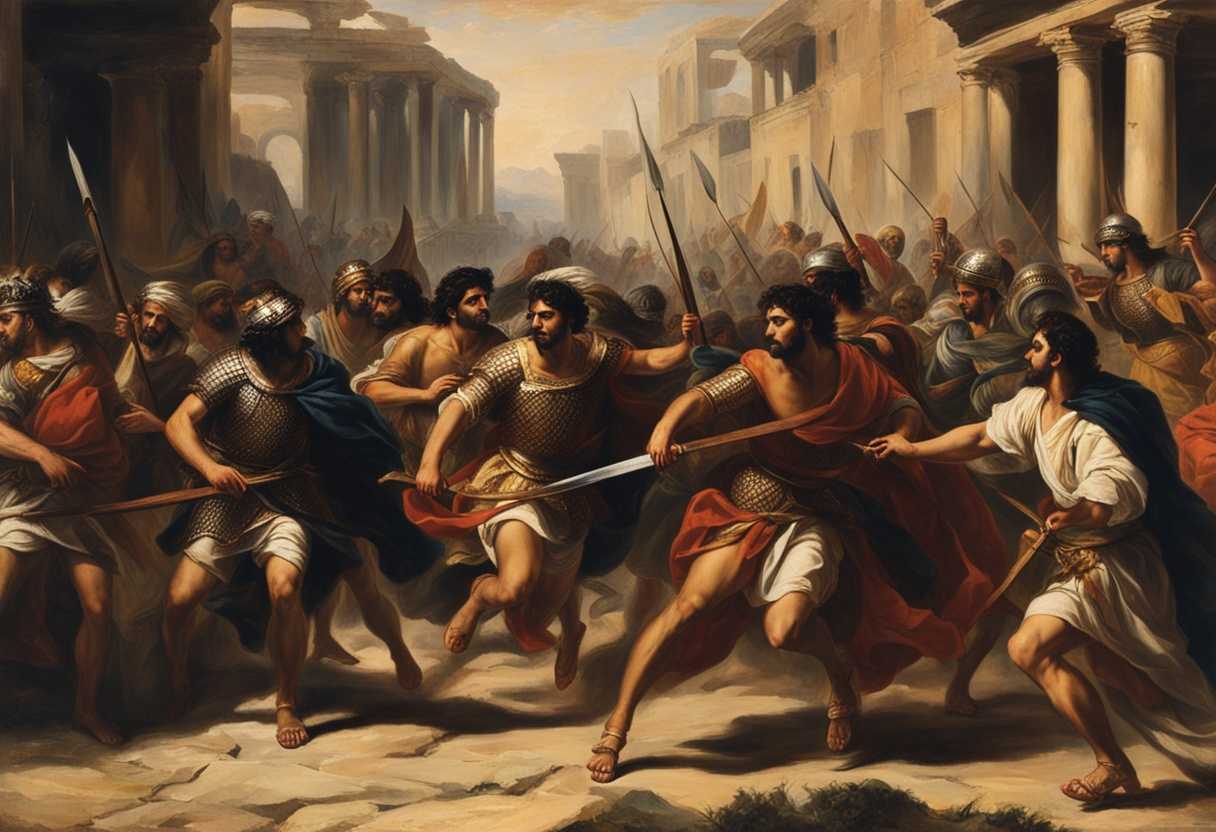
Setting the Scene for Habakkuk 1:6-7
The scene in Habakkuk 1:6-7 is set in the ancient kingdom of Judah during a time of great turmoil and unrest. Habakkuk, a prophet of God, is standing on a hill overlooking the land, his heart heavy with the burden of the wickedness and injustice he sees around him. The sun is setting, casting a golden hue over the rugged terrain, as Habakkuk lifts his voice in prayer and lamentation to the Lord.
As he prays, Habakkuk is joined by a small group of faithful followers who have gathered around him, drawn by his reputation as a man of God and a voice of truth in troubled times. Among them are men and women of all ages, their faces etched with worry and fear for the future of their nation. They have come to seek solace and guidance from the prophet, hoping for a word of comfort or a glimmer of hope in the midst of darkness.
In the distance, the city of Jerusalem looms large, its walls a stark reminder of the power and glory of the kingdom. But even as the sun dips below the horizon, casting long shadows across the land, Habakkuk and his followers know that darker days are yet to come. And so they stand together, united in faith and resolve, ready to face whatever trials may lie ahead with courage and trust in the Lord.
What is Habakkuk 1:6-7 about?
This verse reflects the concept of divine retribution and the cyclical nature of consequences. It serves as a powerful reminder that even when God uses a nation or group of people as instruments of His judgment, they are not exempt from being held accountable for their own actions. The Babylonians, chosen by God to bring judgment upon the Israelites, are not immune to facing consequences for their own deeds. Educators can delve into the complexities of this verse with our students, encouraging critical thinking and reflection. We can pose questions such as: How does this verse challenge our understanding of justice and accountability? What does it teach us about the interconnectedness of actions and consequences? We can guide our students towards a deeper understanding of God’s justice and the universal principles of cause and effect by exploring these questions. This verse can serve as a reminder of the importance of acting with integrity and compassion in our own lives, knowing that our actions have repercussions not only on others but also on ourselves. It prompts us to reflect on the ways in which we hold ourselves accountable for our behavior and how we can strive to break the cycle of negative consequences through conscious and virtuous choices.
Understanding what Habakkuk 1:6-7 really means
The Book of Habakkuk presents a profound dialogue between the prophet Habakkuk and God, addressing the prophet’s concerns about the prevalence of evil and injustice in Judah. In Habakkuk 1:6-7, God reveals His plan to raise the Babylonians as an instrument of judgment against Judah, showcasing His sovereignty and control over nations and history. The phrase “I am raising up the Babylonians” underscores God’s authority over even powerful empires, demonstrating that they can be utilized for His divine purposes. Moreover, the description of the Babylonians as “that ruthless and impetuous people” highlights their aggressive and relentless nature, serving as a stark warning about the severity of the impending judgment.
The passage further emphasizes the Babylonians’ conquests, illustrating their disregard for the rights and properties of others as they “sweep across the whole earth to seize dwellings not their own.” This portrayal accentuates the imminent threat and the gravity of God’s impending judgment upon Judah. Drawing parallels, related biblical passages such as Jeremiah 25:9, Isaiah 10:5-6, and Daniel 4:17 reinforce the concept of divine sovereignty, showcasing God’s utilization of foreign nations as instruments of judgment throughout history.
In a contemporary context, Habakkuk 1:6-7 prompts reflection on divine sovereignty amidst a world rife with injustice and evil. It serves as a reminder that God is ultimately in control, orchestrating His plan even through unexpected or challenging means. Just as Habakkuk had to trust in God’s plan despite not fully comprehending it, we are likewise called to place our trust in God’s wisdom and timing in our own lives.
To illustrate this point, consider a community grappling with a severe economic downturn, where leaders opt to bring in a corporation known for its aggressive practices to stimulate growth. Though the corporation’s methods may appear harsh, the long-term outcome is economic revitalization. Similarly, God may employ difficult or unforeseen methods to fulfill His purposes, urging us to have faith in His overarching plan.
In conclusion, Habakkuk 1:6-7 challenges us to acknowledge God’s sovereignty and have faith in His plans, even amidst trying circumstances. It encourages us to transcend immediate challenges, fostering trust in God’s ultimate purpose and justice. This passage beckons us to embrace a perspective that looks beyond the present moment, anchoring our faith in the unwavering sovereignty and wisdom of God.
How can we trust God’s justice during evil times?
During evil times, we can trust in God’s justice by acknowledging His sovereignty and understanding that His ways are higher than ours. Even when we cannot comprehend the reasons behind the evil and suffering in the world, we can be assured that God is just and righteous in all His judgments. The events around us may seem chaotic and unjust, but God sees the bigger picture and ultimately brings about justice in His perfect timing.
When faced with evil and injustice, we can find comfort in knowing that God’s justice is not based on our limited human understanding or timeline. He will hold the perpetrators of evil accountable for their actions and will ultimately bring about justice and redemption. We can have faith that God will work all things together for good by placing our trust in His sovereignty and righteousness, even in the midst of difficult and troubling times.
Application
Embrace the wisdom of Habakkuk 1:6-7, see God working in our modern challenges, guiding us towards justice. Trust in His divine plans despite the uncertainties. Let this scripture be our compass, grounding us in faith and righteousness. Will you stand with me, embracing God’s sovereignty, and living out His will in our daily lives?

Reverend Michael Johnson is an experienced Church Minister with a profound expertise in spirituality and guidance. With a serene presence and a compassionate heart, he has faithfully served his congregation for over 20 years, leading them on a spiritual journey towards inner peace and enlightenment. Reverend Johnson’s extensive knowledge of religious philosophies and profound understanding of human nature have made him a trusted confidant and mentor to many, as he seamlessly weaves his profound wisdom into life teachings. Reverend Johnson’s calming demeanor and empathetic nature continue to uplift and heal souls, nurturing a sense of unity and tranquility within his community.