
Matthew 2:7 is about King Herod deceitfully summoning the wise men to determine the exact time the star had appeared, revealing his true malicious intentions to harm the newborn King of the Jews.
7 Then Herod summoned the wise men secretly and ascertained from them what time the star had appeared.
Setting the Scene for Matthew 2:7
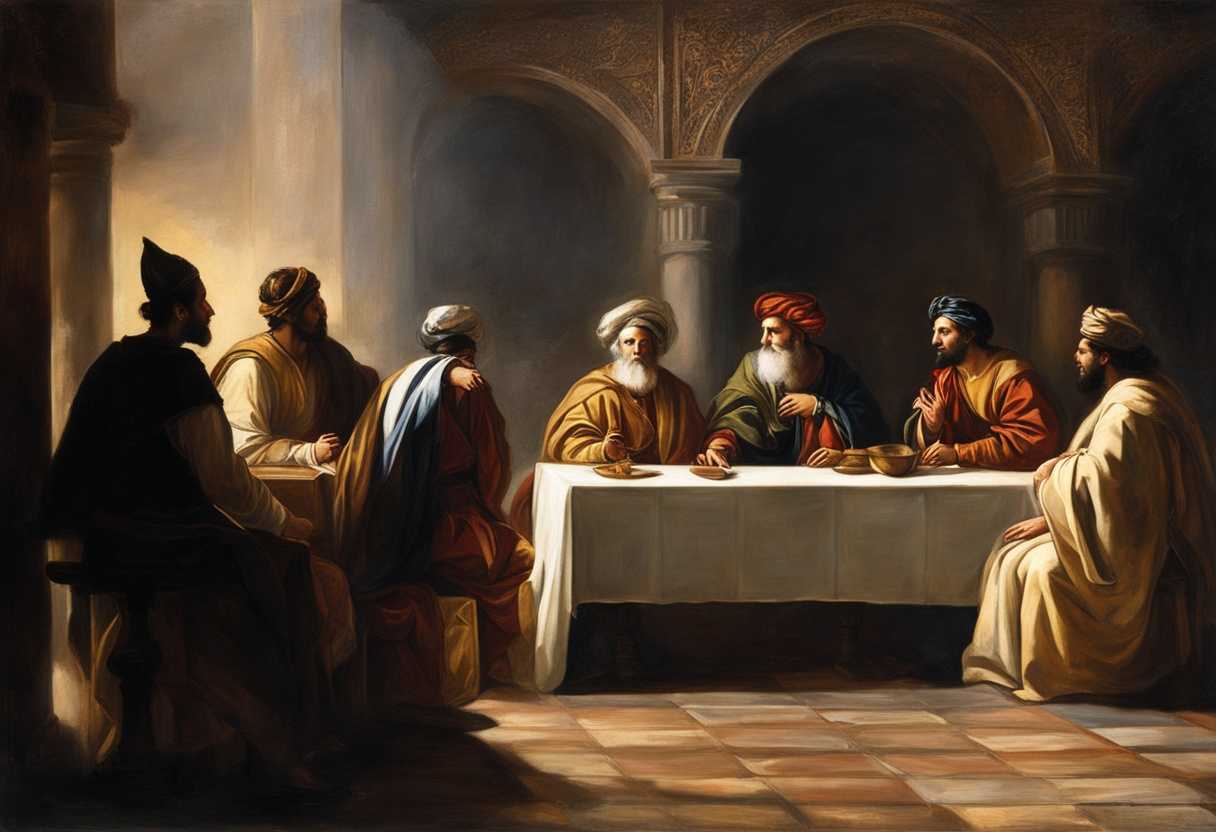
In Matthew chapter 2, we find King Herod secretly meeting with the Magi, also known as the Wise Men, in Jerusalem. The scene is set in Herod’s grand palace, adorned with opulent decorations and guarded by soldiers. The air is thick with tension as the Magi present their inquiries about the newborn King of the Jews, a prophecy they had seen in the stars.
The Magi, distinguished by their rich robes and exotic appearance, had traveled a great distance following a miraculous star that led them to Jerusalem. Their arrival had caused quite a stir in the city, as they sought an audience with King Herod to inquire about the newborn King. Herod, known for his paranoia and ruthless nature, feigned interest in the prophecy, asking the Magi to report back to him once they found the child so that he too could pay homage.
As the Magi departed from Herod’s presence, they continued their journey guided by the star towards Bethlehem, where they would eventually find the infant Jesus and present him with gifts of gold, frankincense, and myrrh. This pivotal scene in Matthew chapter 2 sets the stage for the unfolding of the fulfillment of ancient prophecies and the revelation of Jesus as the long-awaited Messiah.
What is Matthew 2:7 about?
This verse, Matthew 2:7, reveals the dark and deceitful nature of King Herod. Despite pretending to be interested in worshiping the newborn Jesus, Herod’s true intention was to eliminate any potential threat to his reign. This act of seeking to harm an innocent child illustrates the depths of Herod’s cruelty and his willingness to go to extreme measures to protect his power. Herod demonstrates the lengths to which some individuals will go to maintain control and eliminate any challenge to their authority by secretly plotting against Jesus.
Reflecting on this verse prompts us to consider the complexities of power dynamics and the consequences of unchecked ambition. It raises important questions about the ethics of leadership and the ways in which individuals can misuse their positions of authority. Additionally, it serves as a reminder of the timeless struggle between good and evil, and the challenges that arise when individuals prioritize their own interests above the well-being of others. This verse invites us to reflect on our own actions and motivations, urging us to consider the impacts of our choices on those around us.
Understanding what Matthew 2:7 really means
In Matthew 2:7, we delve into a pivotal moment in the narrative of Jesus’ birth, where King Herod, feeling threatened by the prophecy of a new “king of the Jews,” covertly summons the Magi to ascertain the exact time the star appeared. This action by Herod is not merely a historical event but a profound illustration of the lengths to which fear and power can drive individuals to act. To truly grasp the weight of Herod’s actions, it is essential to comprehend the historical and cultural context of his reign, marked by paranoia and a desperate grip on authority.
The subsequent passage in Matthew 2:16, where Herod orders the massacre of all male children in Bethlehem under two years old, serves as a chilling testament to the depths of his fear and cruelty. This atrocity echoes the prophecy in Jeremiah 31:15, depicting Rachel weeping for her children, a poignant reminder of the sorrow and devastation wrought by Herod’s actions. Proverbs 29:2 further emphasizes the impact of wicked rulers on their people, with Herod’s reign serving as a stark example of the mourning that accompanies the rule of the unrighteous.
While these events may seem distant in time, the themes of power, fear, and deception portrayed in Matthew 2:7 remain strikingly relevant in today’s world. Leaders driven by insecurity and fear can still make detrimental decisions that harm those under their authority. This verse serves as a cautionary tale, urging individuals to seek truth and wisdom in the face of manipulation and fear.
Consider a scenario in a modern workplace where a manager, threatened by a talented new employee, resorts to covert tactics to undermine them out of fear of losing their position. This toxic environment mirrors the atmosphere created by Herod’s actions, where fear and insecurity led to tragic consequences. The phrase “secretly called the Magi” encapsulates Herod’s deceitful nature, showcasing how fear can breed secrecy and manipulation in leadership.
The meticulous inquiry by Herod to determine the exact time the star appeared underscores his calculating nature. Unlike the genuine seeking of truth, Herod’s motives were driven by a desire to eliminate a perceived threat rather than worship the newborn King. This distinction highlights the importance of discerning between authentic pursuit of knowledge and manipulative agendas.
As we reflect on Matthew 2:7 and its implications, it prompts us to examine our own lives for areas where fear may be steering our actions. Are our decisions rooted in trust and integrity, or are they tainted by insecurity and manipulation? Let us strive to emulate the pursuit of truth and wisdom, steering clear of the pitfalls of deception and fear that ensnared Herod.
How can we recognize and follow the divine signs?
We can recognize and follow divine signs by opening our hearts and minds to the guidance of the divine. We too can experience divine signs when we are in tune with our spirituality and inner wisdom, just as the wise men in the Bible were attentive to the signs leading them to the newborn Jesus. These signs may manifest in various ways, such as intuitive feelings, synchronicities, or messages through dreams or meditation.
To recognize and follow the divine signs, we should cultivate a sense of awareness and mindfulness in our daily lives. We can notice the subtle messages and guidance that the universe may be sending us by being present and attuned to our surroundings. It is essential to trust our intuition and have faith in the divine plan, even when we may not fully understand or see the bigger picture at the moment. We can develop a deeper understanding of the divine signs and their significance in our lives as we stay connected to our spiritual beliefs and practices. We can create a harmonious relationship that allows us to recognize and follow the signs meant to lead us on our spiritual journey by maintaining a sense of reverence and gratitude towards the divine.
Application
Consider running your life like a well-oiled machine; every part has its purpose and needs your attention. Instead of skimming the surface, dive deep and discover the truths that can transform your daily grind into meaningful progress. Make the choice to immerse yourself in Scripture, allowing it to guide and shape everything from your work ethic to your family values. Are you ready to let these teachings fuel your journey and redefine your purpose?

Reverend Michael Johnson is an experienced Church Minister with a profound expertise in spirituality and guidance. With a serene presence and a compassionate heart, he has faithfully served his congregation for over 20 years, leading them on a spiritual journey towards inner peace and enlightenment. Reverend Johnson’s extensive knowledge of religious philosophies and profound understanding of human nature have made him a trusted confidant and mentor to many, as he seamlessly weaves his profound wisdom into life teachings. Reverend Johnson’s calming demeanor and empathetic nature continue to uplift and heal souls, nurturing a sense of unity and tranquility within his community.