
23 So if you are offering your gift at the altar and there remember that your brother has something against you,
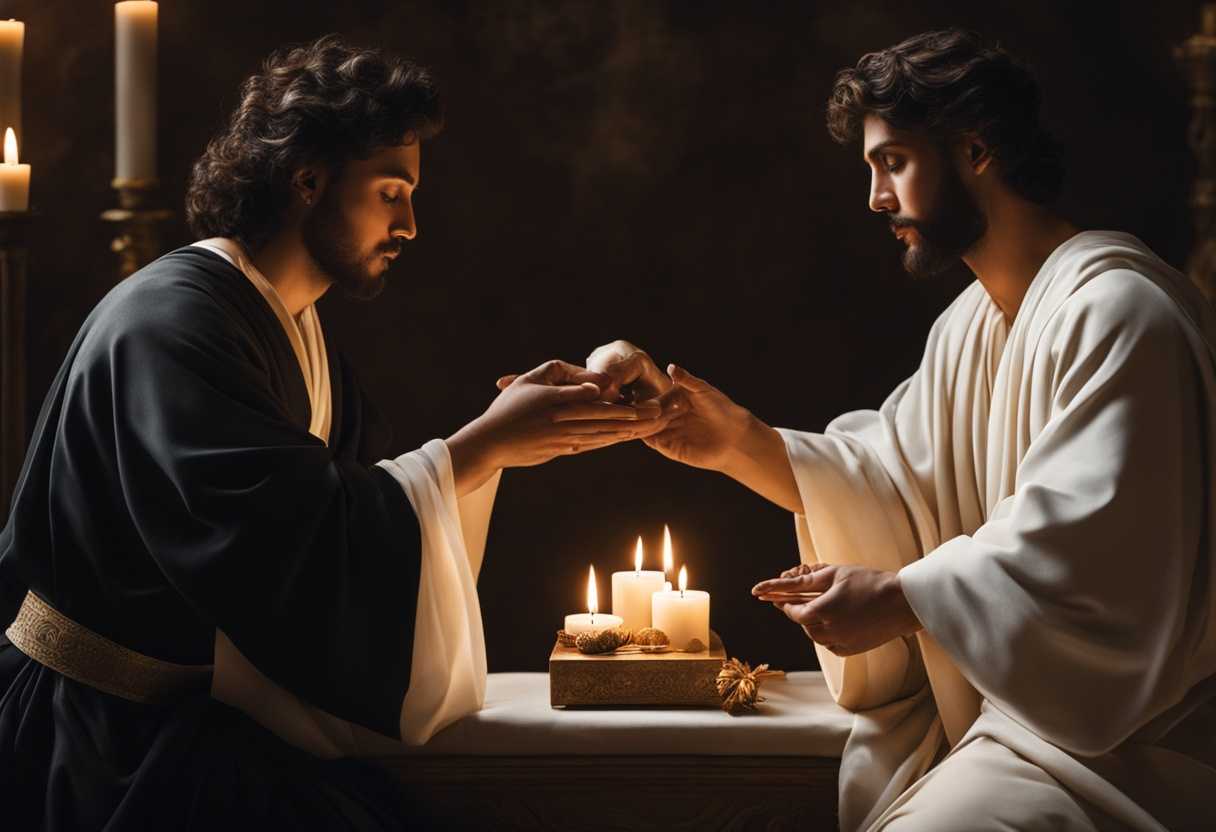
Setting the Scene for Matthew 5:23
In Matthew chapter 5, we find Jesus teaching a large crowd on a mountainside, known as the Sermon on the Mount. The scene is serene, with the gentle breeze carrying the scent of wildflowers and the distant sound of birds chirping. The crowd is a mix of people from all walks of life, gathered to hear the teachings of this renowned rabbi.
Among the crowd are the disciples, who have been following Jesus closely and learning from his wisdom and miracles. They sit at the feet of Jesus, eager to absorb every word he speaks. As Jesus continues to preach about various aspects of righteous living, he pauses to address the issue of reconciliation. He speaks about the importance of making amends with others before coming to offer gifts at the altar, emphasizing the value of peace and unity among believers.
In this particular moment, Jesus’s words on reconciliation strike a chord with the listeners. Some in the crowd may have been harboring grudges or unresolved conflicts with their fellow brothers and sisters. As they reflect on Jesus’s teachings, they are moved to take action and seek reconciliation with those they have wronged or who have wronged them. The atmosphere is charged with a sense of conviction and a desire for restoration and healing in relationships.
What is Matthew 5:23 about?
This verse emphasizes the importance of reconciliation and resolving conflicts with others before engaging in acts of worship. It stresses that maintaining harmonious relationships with those around us is crucial in our spiritual journey. Jesus teaches us to prioritize reconciliation and peacemaking as fundamental to our faith and relationship with God. We mend broken relationships and demonstrate our commitment to love, forgiveness, and unity as followers of Christ by addressing conflicts and seeking reconciliation with others.
Think about the implications of this verse. How often do we rush into prayer or worship without considering the state of our relationships with others? Are there unresolved conflicts or lingering tensions that might hinder our connection with God? Jesus reminds us that true worship involves not only our actions towards God but also our interactions with our fellow human beings. We can cultivate a spirit of unity, forgiveness, and love within our communities by prioritizing reconciliation and resolving conflicts. Let us reflect on this teaching and strive to embody reconciliation in our daily lives, both in our worship and in our relationships with others.
Understanding what Matthew 5:23 really means
Structure for Commentary:
- Introduction: Briefly introduce the verse and its context within the Sermon on the Mount.
- Contextual Analysis: Discuss the immediate context of the verse within the chapter and the broader message of Matthew.
- Key Phrases and Detailed Meaning: Break down significant phrases and explore their deeper meanings.
- Cross-References to Other Scriptures: Relate other biblical passages that reinforce or expand on the message.
- Relevance to Today’s Readers: Explain why this verse is significant for modern believers.
- Anecdote and Practical Application: Share a relatable story or practical advice to illustrate the verse’s principles in everyday life.
- Conclusion: Summarize the main points and encourage further reflection. Jesus speaks about the importance of reconciliation with others before offering gifts at the altar in Matthew 5:23. This verse is part of the Sermon on the Mount, where Jesus lays out the foundation for Christian ethics and interpersonal relationships. It prompts us to examine the state of our hearts and relationships with others before we approach God.
Contextual Analysis
This verse falls within a passage where Jesus addresses the deeper implications of the commandments, specifically dealing with anger and reconciliation. He emphasizes that righteousness is not only about our actions but also the condition of our hearts. Jesus underscores the importance of maintaining peace and unity within the community by calling us to reconcile with others before presenting our offerings.
Key Phrases and Detailed Meaning
The phrase “if you are offering your gift at the altar” references the Jewish practice of bringing sacrifices to the temple. However, Jesus shifts the focus from ritualistic practices to relational integrity. The command “first go and be reconciled to them” highlights the priority Jesus places on mending relationships. This reconciliation is not merely a formality but a sincere effort to restore harmony and love.
Cross-References to Other Scriptures
This teaching echoes other passages, such as 1 John 4:20, which states that one cannot love God while hating a brother or sister. Similarly, in Mark 11:25, Jesus instructs us to forgive others so that our prayers may be effective. These cross-references reinforce the idea that our relationship with God is intertwined with our relationships with others. This verse is a powerful reminder of the need for reconciliation in today’s world, where conflicts and misunderstandings are common. It challenges us to prioritize our relationships and seek forgiveness and unity. Whether in families, workplaces, or communities, the principles of reconciliation can transform our interactions and bring about peace. The story of a man who had a falling out with his friend over a business deal is worth considering. Both harbored resentment, which affected not only their friendship but also their spiritual lives. One day, the man felt convicted by this verse and decided to reach out, apologize, and seek reconciliation. This act of humility and love not only restored their friendship but also brought a renewed sense of peace and closeness to God. It shows that taking the first step towards reconciliation, though challenging, can lead to profound healing and spiritual growth.
Conclusion
Matthew 5:23 calls us to examine our relationships and make peace with others as a prerequisite for genuine worship. It teaches us that our spiritual lives are deeply connected to how we treat those around us. Let’s remember that as we strive to live out this principle, reconciliation is a pathway to deeper communion with God and each other. Reflect on your own relationships today—what steps can you take to foster reconciliation and embody Christ’s love?
How can we reconcile with those we have wronged?
We must first recognize our fault and take responsibility for our actions in order to reconcile with those we have wronged. This involves acknowledging the harm we have caused and seeking forgiveness from the person we have wronged. It also requires humility to approach the individual with a sincere heart and genuine intentions to make amends.
We can reconcile with those we have wronged by showing true remorse and offering to make reparations for the harm we have caused. This may involve making restitution, offering an apology, and actively working to rebuild trust and repair the relationship. We demonstrate a willingness to value the relationship and work towards healing and restoration with the person we have wronged by taking the initiative to seek reconciliation.
Application
Think back to a time when you had a disagreement at work or home. Matthew 5:23 teaches us that before we focus on any goal, we must first clear the air with those we’ve wronged. Just like you wouldn’t ignore an email from your boss or a request from your family, don’t neglect to mend those important relationships. Reflect on who you need to make peace with and take action today. How can you truly move forward if you’re holding onto unresolved conflicts?

Reverend Michael Johnson is an experienced Church Minister with a profound expertise in spirituality and guidance. With a serene presence and a compassionate heart, he has faithfully served his congregation for over 20 years, leading them on a spiritual journey towards inner peace and enlightenment. Reverend Johnson’s extensive knowledge of religious philosophies and profound understanding of human nature have made him a trusted confidant and mentor to many, as he seamlessly weaves his profound wisdom into life teachings. Reverend Johnson’s calming demeanor and empathetic nature continue to uplift and heal souls, nurturing a sense of unity and tranquility within his community.