
Matthew 6:1-24 is about the importance of sincerity and humility in practicing righteousness, emphasizing that acts of charity, prayer, and fasting should be done in secret without seeking recognition from others, as true treasures are stored in heaven rather than on earth.
1 “Beware of practicing your righteousness before other people in order to be seen by them, for then you will have no reward from your Father who is in heaven.”
2 “Thus, when you give to the needy, sound no trumpet before you, as the hypocrites do in the synagogues and in the streets, that they may be praised by others. Truly, I say to you, they have received their reward.”
3 But when you give to the needy, do not let your left hand know what your right hand is doing,
4 so that your giving may be in secret. And your Father who sees in secret will reward you.
5 “And when you pray, you must not be like the hypocrites. For they love to stand and pray in the synagogues and at the street corners, that they may be seen by others. Truly, I say to you, they have received their reward.”
6 But when you pray, go into your room and shut the door and pray to your Father who is in secret. And your Father who sees in secret will reward you.
7 “And when you pray, do not heap up empty phrases as the Gentiles do, for they think that they will be heard for their many words.”
8 Do not be like them, for your Father knows what you need before you ask him.
9 Pray then like this: “Our Father in heaven, hallowed be your name.”
10 Your kingdom come, your will be done, on earth as it is in heaven.
11 Give us this day our daily bread.
12 and forgive us our debts, as we also have forgiven our debtors.
13 And lead us not into temptation, but deliver us from evil.
14 For if you forgive others their trespasses, your heavenly Father will also forgive you,
15 But if you do not forgive others their trespasses, neither will your Father forgive your trespasses.
16 “And when you fast, do not look gloomy like the hypocrites, for they disfigure their faces that their fasting may be seen by others. Truly, I say to you, they have received their reward.”
17 But when you fast, anoint your head and wash your face,
18 that your fasting may not be seen by others but by your Father who is in secret. And your Father who sees in secret will reward you.
19 “Do not lay up for yourselves treasures on earth, where moth and rust destroy and where thieves break in and steal,
20 but lay up for yourselves treasures in heaven, where neither moth nor rust destroys and where thieves do not break in and steal.
21 For where your treasure is, there your heart will be also.
22 “The eye is the lamp of the body. So, if your eye is healthy, your whole body will be full of light,”
23 But if your eye is bad, your whole body will be full of darkness. If then the light in you is darkness, how great is the darkness!
24 “No one can serve two masters, for either he will hate the one and love the other, or he will be devoted to the one and despise the other. You cannot serve God and money.
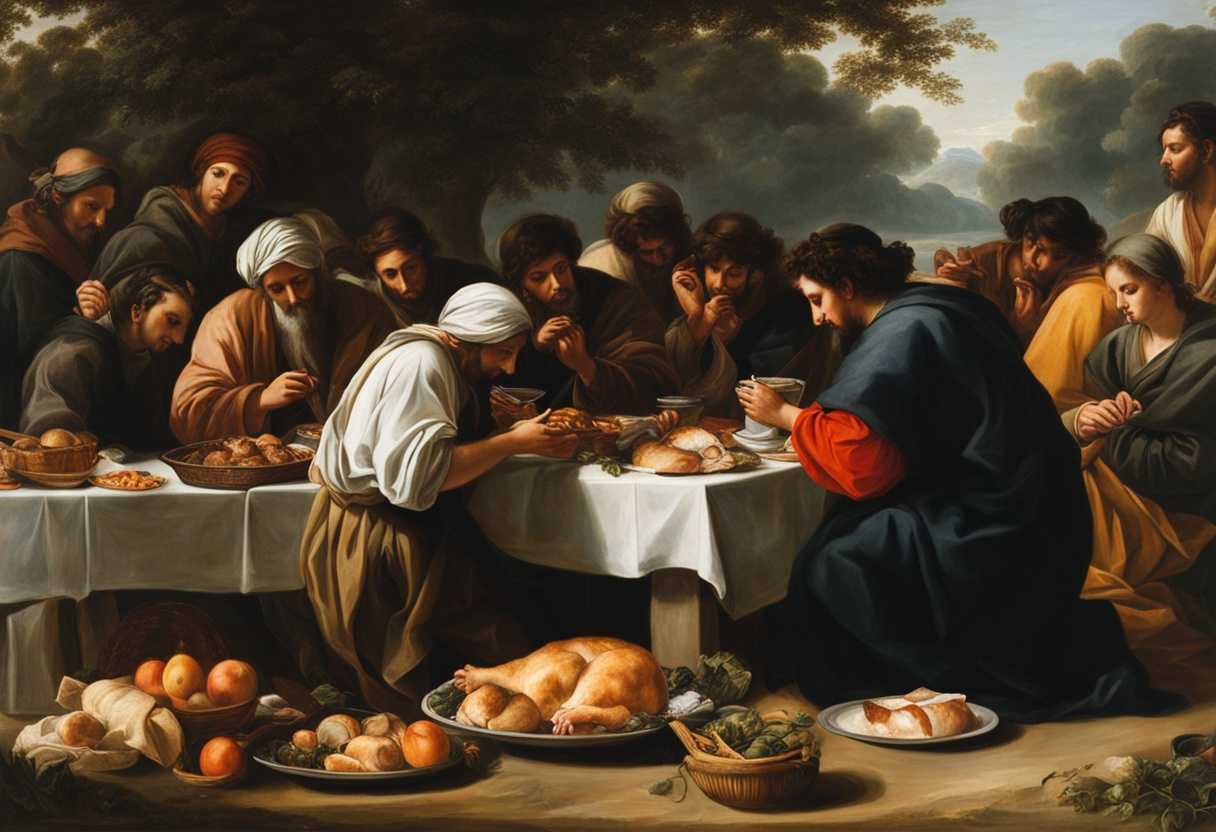
Setting the Scene for Matthew 6:1-24
In Matthew chapter 6, Jesus is depicted teaching a large crowd on a mountainside. The scene is serene, with the gentle rustling of leaves and the distant sound of birds chirping in the background. The crowd is a mix of people from various walks of life, gathered to listen to the teachings of Jesus.
Among the crowd are Jesus’ disciples, who have been following him closely and learning from his wisdom and miracles. They sit at the front, eager to absorb every word that Jesus speaks. Also present are curious onlookers who have heard of Jesus’ teachings and have come to see and hear for themselves.
As Jesus begins to speak, the crowd falls silent, captivated by his words. He imparts valuable lessons on humility, prayer, fasting, and the importance of storing up treasures in heaven rather than on earth. The atmosphere is charged with a sense of reverence and awe as Jesus imparts his teachings with authority and compassion.
What is Matthew 6:1-24 about?
Jesus emphasizes the importance of performing acts of giving, praying, and fasting with sincerity and humility, rather than seeking attention or approval from others in this verse. He highlights the significance of focusing on one’s inner intentions and relationship with God rather than engaging in religious practices for public recognition or show. Jesus calls upon his followers to cultivate authentic and genuine connections with God by stressing the importance of sincerity in giving, prayer, and fasting, devoid of any pretense or ego-driven motives.
Let’s ponder on these teachings – why do we engage in acts of giving, prayer, and fasting? Is it solely for the praise and admiration of others, or are these actions motivated by a genuine desire to connect with a higher purpose? Jesus challenges us to reflect on our intentions and encourages us to approach our spiritual practices with a pure heart and a sincere desire to deepen our relationship with God. Jesus invites us to align our actions with our inner convictions and to seek fulfillment in the authenticity of our faith rather than in the approval of society by emphasizing sincerity over outward displays of piety.
Understanding what Matthew 6:1-24 really means
In Matthew 6:1-24, part of the Sermon on the Mount, Jesus delves into the essence of genuine piety and righteousness. The passage covers various aspects of Christian living, including almsgiving, prayer, fasting, treasures in heaven, and the conflict between serving God and wealth.
When Jesus speaks about almsgiving in verses 1-4, He emphasizes the need for humility and secrecy in charitable acts. The phrase “Do not let your left hand know what your right hand is doing” underscores the importance of genuine generosity without seeking human praise. This aligns with Proverbs 19:17 and 2 Corinthians 9:7, highlighting the joy of giving without expectation of recognition.
Moving on to verses 5-15, Jesus addresses the topic of prayer, advocating for private and sincere communication with God. The instruction to pray in secret emphasizes the intimacy of the relationship between an individual and their Creator. This resonates with Philippians 4:6 and James 5:16, emphasizing the power of personal prayer in seeking guidance and solace.
In verses 16-18, Jesus discusses fasting, urging believers to engage in this spiritual discipline without drawing attention to themselves. The focus is on the internal transformation that fasting can bring rather than external displays of piety. This concept is echoed in Isaiah 58:6 and Joel 2:12, emphasizing the importance of heartfelt devotion in spiritual practices.
The passage concludes in verses 19-24 with a reflection on treasures in heaven and the challenge of serving two masters. Jesus warns against the love of material wealth, urging His followers to prioritize spiritual riches. This aligns with 1 Timothy 6:10 and Colossians 3:2, emphasizing the eternal value of heavenly treasures over fleeting earthly possessions.
In summary, Matthew 6:1-24 underscores the significance of sincerity in spiritual practices and the prioritization of eternal values over worldly pursuits. It challenges believers to examine their motivations in acts of charity, prayer, fasting, and the pursuit of wealth, encouraging a genuine alignment of actions with faith and devotion to God. As we reflect on these teachings, may we strive to live out our faith authentically and seek treasures that endure beyond this temporal life.
How can we guard against hypocrisy in our spiritual practices?
One way to guard against hypocrisy in our spiritual practices is to check our motives. Are we doing things only to be seen by others and receive their praise, or are we genuinely seeking to honor God in our actions? It is important to examine our hearts and ensure that our intentions are pure, focusing on pleasing God rather than seeking the approval of people. This self-reflection can help us stay genuine in our spiritual practices and avoid falling into the trap of hypocritical behavior.
Another way to guard against hypocrisy is to cultivate a sincere and authentic relationship with God. Spending time in prayer, studying His word, and seeking His guidance can help us develop a genuine faith that is not based on outward appearances or the expectations of others. We can align our actions with His will and live in a way that is pleasing to Him by nurturing our connection with God, rather than simply going through the motions to appear religious or righteous in the eyes of others.
Additionally, it is important to practice humility in our spiritual journey. Recognizing our own shortcomings and the grace that God extends to us can keep us humble and prevent us from becoming prideful or judgmental towards others. We can guard against the temptation to be hypocritical in our spiritual practices by acknowledging our dependence on God and our constant need for His guidance and forgiveness.
Application
Let’s embody true humility and sincerity in our righteousness, just as Matthew 6:1-24 teaches us. Our good deeds are not for show but for the eyes of the divine, a reflection of our inner beliefs. Let’s invest in our spiritual wealth over material gains, aligning our actions with our faith. Will we embrace this challenge and live authentically for the glory of our Creator?

Reverend Michael Johnson is an experienced Church Minister with a profound expertise in spirituality and guidance. With a serene presence and a compassionate heart, he has faithfully served his congregation for over 20 years, leading them on a spiritual journey towards inner peace and enlightenment. Reverend Johnson’s extensive knowledge of religious philosophies and profound understanding of human nature have made him a trusted confidant and mentor to many, as he seamlessly weaves his profound wisdom into life teachings. Reverend Johnson’s calming demeanor and empathetic nature continue to uplift and heal souls, nurturing a sense of unity and tranquility within his community.