
Matthew 9:9-17 is about Jesus calling Matthew, a tax collector, as one of His disciples and then explaining to the Pharisees why He associates with sinners by using the analogy of new wine needing new wineskins, illustrating that His message brings new life and cannot be contained by old legalistic traditions.
9 As Jesus passed on from there, he saw a man called Matthew sitting at the tax booth, and he said to him, “Follow me.” And he rose and followed him.
10 And as Jesus reclined at table in the house, behold, many tax collectors and sinners came and were reclining with Jesus and his disciples.
11 And when the Pharisees saw this, they said to his disciples, “Why does your teacher eat with tax collectors and sinners?”
12 But when he heard it, he said, “Those who are well have no need of a physician, but those who are sick.
13 Go and learn what this means: ‘I desire mercy, and not sacrifice.’ For I came not to call the righteous, but sinners.”
14 Then the disciples of John came to him, saying, “Why do we and the Pharisees fast, but your disciples do not fast?”
9 And Jesus said to them, “Can the wedding guests mourn as long as the bridegroom is with them? The days will come when the bridegroom is taken away from them, and then they will fast.
16 No one puts a piece of unshrunk cloth on an old garment, for the patch tears away from the garment, and a worse tear is made.
17 Neither is new wine put into old wineskins. If it is, the skins burst and the wine is spilled and the skins are destroyed. But new wine is put into fresh wineskins, and so both are preserved.
Setting the Scene for Matthew 9:9-17
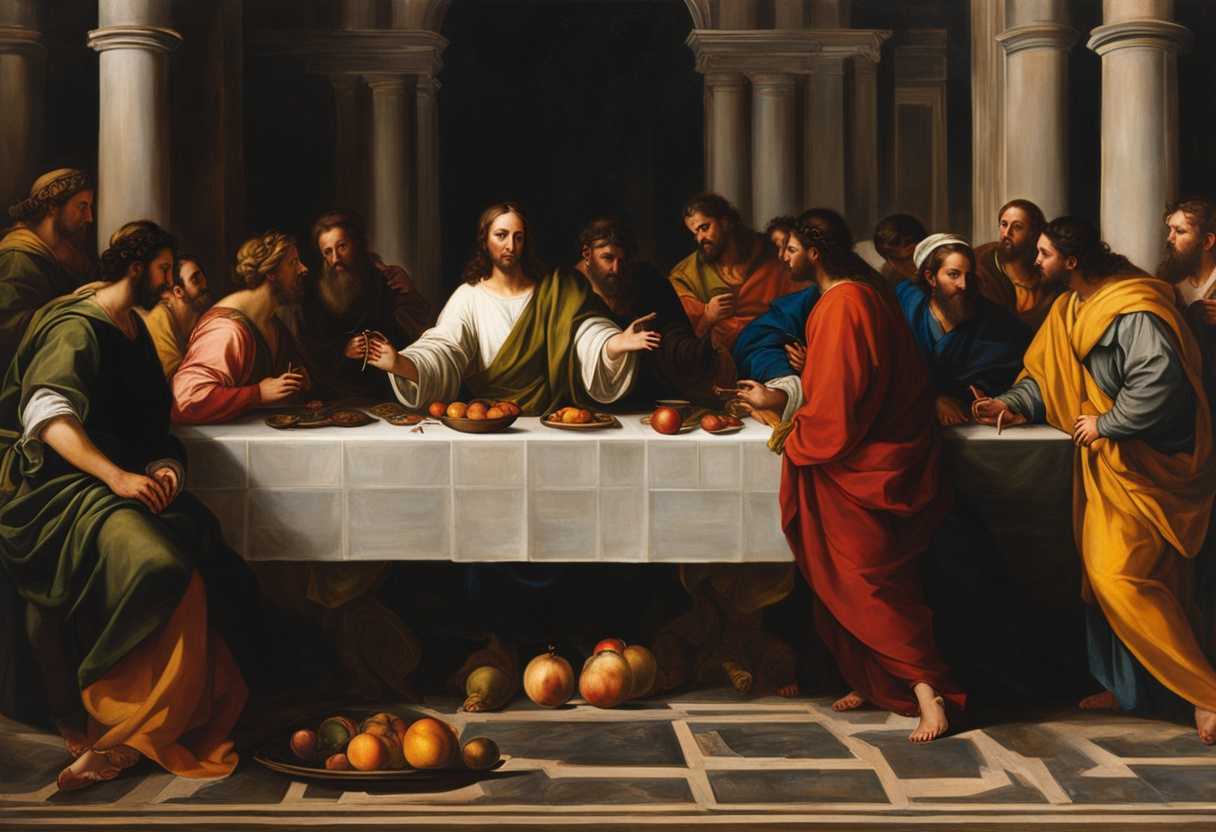
In Matthew chapter 9, we find Jesus walking along the shores of the Sea of Galilee. As He continues His ministry, He comes across a tax collector named Matthew, also known as Levi. Matthew was sitting at his tax booth, collecting taxes from the people passing by. Jesus stops in front of Matthew and simply says, “Follow me.” Without hesitation, Matthew gets up, leaves everything behind, and follows Jesus.
Soon after, Jesus and Matthew find themselves in a house, surrounded by tax collectors and sinners. These were the outcasts of society, the ones deemed unworthy by the religious leaders. Jesus sits down to eat with them, breaking bread and sharing in fellowship. This act of inclusivity and love towards those considered undesirable by society sparks criticism from the Pharisees, who question why Jesus would associate with such people.
The scene is filled with a mix of emotions – curiosity, judgment, acceptance, and love. Jesus uses this moment to teach about the importance of mercy and compassion, emphasizing that He came not for the righteous, but for sinners in need of repentance. The setting is humble, yet profound, as Jesus demonstrates His mission to seek and save the lost, regardless of their past or societal status.
What is Matthew 9:9-17 about?
Jesus reaches out to those who may have been considered outcasts by society at that time. Jesus demonstrates the power of acceptance and redemption by calling Matthew, a tax collector, to be one of His disciples. Despite Matthew’s profession and societal status, Jesus saw the potential for goodness within him and extended His grace and invitation to follow Him. This act shows us that no one is beyond the reach of God’s love and that everyone has the opportunity to be transformed by His presence.
Furthermore, by dining with sinners and tax collectors, Jesus challenges the social norms of His time and emphasizes the importance of showing compassion and understanding to all individuals, regardless of their background or reputation. Through His actions, Jesus teaches us the value of empathy and the need to look beyond societal labels to see the inherent worth and dignity of every person. Additionally, His teachings about fasting and new wine symbolize a new era of spiritual understanding and liberation, where old traditions are reexamined in light of the transformative power of His message. We are encouraged to reflect on this verse and consider how we can follow Jesus’ example in our own lives by reaching out to those in need, practicing empathy and understanding, and embracing the new and liberating truths He offers us.
Understanding what Matthew 9:9-17 really means
In Matthew 9:9-17, we witness a profound interaction between Jesus and Matthew, a tax collector, followed by a meal with tax collectors and sinners that sparks criticism from the Pharisees. Jesus responds with teachings on mercy, sacrifice, and the newness found in the Kingdom of God.
When Jesus calls Matthew with the simple command, “Follow me,” it symbolizes a transformative invitation to leave behind his old life and embrace a new purpose. This act mirrors Luke 5:27-28, where Matthew (Levi) responds by forsaking everything to follow Jesus, illustrating the life-altering power of Christ’s call.
The Pharisees’ question, “Why does your teacher eat with tax collectors and sinners?” exposes their misunderstanding of Jesus’ mission. Similarly, in Luke 15:1-2, Jesus is criticized for associating with sinners, emphasizing His role as a shepherd seeking the lost.
Jesus’ response, “I desire mercy, not sacrifice,” echoes Hosea 6:6, emphasizing the primacy of compassion over ritualistic practices. This sentiment aligns with Micah 6:6-8, which underscores God’s preference for justice, mercy, and humility over mere offerings.
In the parable of the new cloth and wineskins, Jesus uses the metaphor of new wine into new wineskins to illustrate the incompatibility of old religious practices with the new covenant He brings. This concept resonates with 2 Corinthians 5:17, which speaks of becoming a new creation in Christ, emphasizing the theme of transformation.
The relevance of these teachings today is profound. They challenge us to embrace inclusivity and compassion, reaching out to those marginalized by society. Stories of community outreach programs transforming lives through acceptance and support exemplify this principle. The call to follow Jesus signifies a journey of transformation and new beginnings, urging us to leave behind old ways and embrace a new life in Christ. Personal testimonies of radical life changes after encountering Jesus highlight this transformative power.
Emphasizing mercy over ritual, Jesus calls believers to prioritize genuine compassion and acts of kindness. Examples of individuals or churches prioritizing mercy over tradition can inspire us to make a significant impact on our communities. The phrases “Follow me,” “I desire mercy, not sacrifice,” and “New wine into new wineskins” encapsulate profound truths about faith, relationship, and transformation.
In conclusion, Jesus’ teachings in Matthew 9:9-17 underscore the importance of following Him, embracing inclusivity and compassion, prioritizing mercy over ritual, and embracing newness in faith. As we reflect on these lessons, may we cultivate a deeper, more compassionate, and transformative faith journey in our own lives.
How can we embrace change in our spiritual journey?
We can embrace change in our spiritual journey by being open and willing to leave behind old ways of thinking and habits that no longer serve us. We too must be ready to let go of what is holding us back in order to fully embrace the new path ahead, just as Matthew left everything behind when he chose to follow Jesus.
Change can be uncomfortable and scary, but it is often necessary for growth and spiritual development. We allow ourselves to be transformed and renewed by being open to change, just like old wineskins cannot contain new wine. Embracing change in our spiritual journey requires faith, trust, and a willingness to step into the unknown with confidence that God is guiding our steps. Remembering that change is a natural part of our spiritual growth is important as we journey through life. We can allow God to work in us and through us in new and unexpected ways by embracing change with an open heart and mind. We can experience transformation and renewal by being open to the changes that come our way in our spiritual journey, just as Jesus invited Matthew to follow him and experience a new way of life.
Application
Seize this moment to be transformed by the power of Jesus’ words and actions, just like Matthew was. Step out in faith and embrace a life of humility, service, and righteousness. Let His teachings guide you to spread love and truth in all you do. Will you answer His call to be a disciple in the modern world and share His message far and wide?

Reverend Michael Johnson is an experienced Church Minister with a profound expertise in spirituality and guidance. With a serene presence and a compassionate heart, he has faithfully served his congregation for over 20 years, leading them on a spiritual journey towards inner peace and enlightenment. Reverend Johnson’s extensive knowledge of religious philosophies and profound understanding of human nature have made him a trusted confidant and mentor to many, as he seamlessly weaves his profound wisdom into life teachings. Reverend Johnson’s calming demeanor and empathetic nature continue to uplift and heal souls, nurturing a sense of unity and tranquility within his community.