
Nehemiah 12:1-26 is about the procession of the priests, Levites, and leaders of Israel in the dedication of the walls of Jerusalem, highlighting the importance of remembering and celebrating God’s faithfulness in bringing about restoration and unity among His people.
1 These are the priests and the Levites who came up with Zerubbabel the son of Shealtiel, and Jeshua: Seraiah, Jeremiah, Ezra,
2 Amariah, Malluch, Hattush,
3 and Shebaniah, Joshaphat, Nethanel, Amasai, Zechariah, Benaiah, and Eliezer, the priests, should blow the trumpets before the ark of God.
4 Iddo, Ginnethoi, Abijah,
5 and of the priests: the sons of Hobaiah, the sons of Hakkoz, the sons of Barzillai (who had taken a wife of the daughters of Barzillai the Gileadite and was called by their name).
6 These were the priests and the Levites who came up with Zerubbabel the son of Shealtiel, and Jeshua: Seraiah, Jeremiah, Ezra,
7 Sallu, Amok, Hilkiah, Jedaiah. These were the chiefs of the priests and of their brothers in the days of Jeshua.
8 And the Levites: Jeshua, Binnui, Kadmiel, Sherebiah, Judah, and Mattaniah, who with his brothers was in charge of the songs of thanksgiving.
9 and Bakbukiah and Unni and their brothers stood opposite them in the service.
10 And Jeshua fathered Joiakim, Joiakim fathered Eliashib, Eliashib fathered Joiada,
11 and Joiada the father of Jonathan, and Jonathan the father of Jaddua.
12 And in the days of Joiakim were priests, heads of fathers’ houses: of Seraiah, Meraiah; of Jeremiah, Hananiah;
13 and certain of the priests’ sons with trumpets: Zechariah the son of Jonathan, son of Shemaiah, son of Mattaniah, son of Micaiah, son of Zaccur, son of Asaph,
14 Of Malluchi, Jonathan; of Shebaniah, Joseph;
15 And of the Levites: Shemaiah the son of Hasshub, son of Azrikam, son of Hashabiah, son of Bunni;
16 and of Iddo, Zechariah of Ginnethon.
17 And the Levites: Jeshua the son of Azaniah, Binnui of the sons of Henadad, Kadmiel.
18 And the Levites in the days of Joiakim, Jeshua, and Johanan, and Jaddua were recorded heads of fathers’ houses; also the priests, to the reign of Darius the Persian.
19 And of Joiakim, the chiefs of the priests: Meraiah, of Jeremiah, Hananiah, of Ezra
20 And the rest of the people, the priests, the Levites, the gatekeepers, the singers, the temple servants, and all who have separated themselves from the peoples of the lands to the Law of God, their wives, their sons, their daughters, all who have knowledge and understanding,
21 And of the sons of Harim: Maaseiah, Elijah, Shemaiah, Jehiel, and Uzziah.
22 As for the Levites, in the days of Eliashib, Joiada, Johanan, and Jaddua, they were recorded heads of fathers’ houses; also the priests, to the reign of Darius the Persian.
23 And the sons of Levi, the heads of fathers’ houses, were written in the Book of the Chronicles until the days of Johanan the son of Eliashib.
24 And the chiefs of the Levites: Hashabiah, Sherebiah, and Jeshua the son of Kadmiel, with their brothers who stood opposite them, to praise and to give thanks, according to the commandment of David the man of God, watch by watch.
25 Mattaniah, Bakbukiah, Obadiah, Meshullam, Talmon, and Akkub were gatekeepers standing guard at the storehouses of the gates.
26 These were in the days of Joiakim the son of Jeshua, son of Jozadak, and in the days of Nehemiah the governor and of Ezra the priest, the scribe.
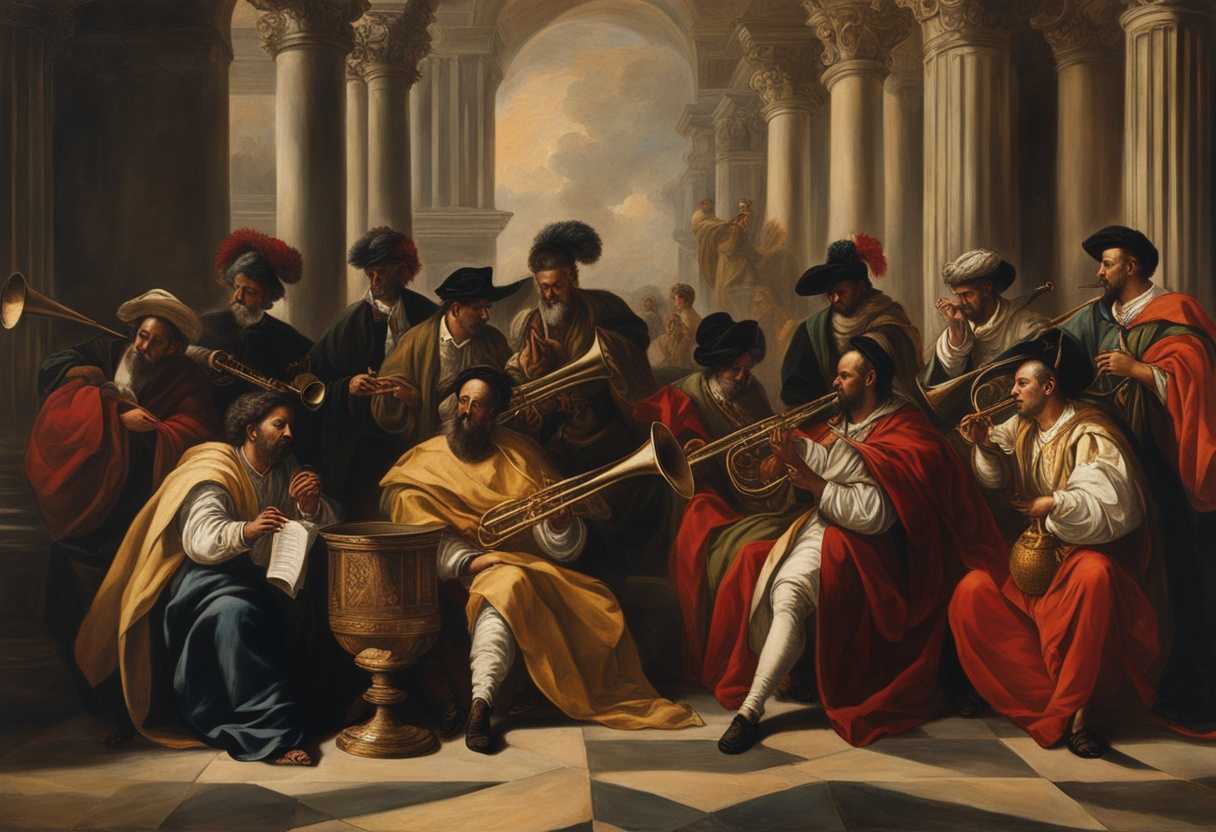
Setting the Scene for Nehemiah 12:1-26
In Nehemiah chapter 12, we find a joyous and celebratory scene unfolding in Jerusalem. The walls of the city have been rebuilt, and the people have gathered together to dedicate the newly constructed wall. The atmosphere is filled with gratitude and praise as the community comes together to give thanks to God for His faithfulness and provision throughout the rebuilding process.
Among those present are Nehemiah, the governor who led the efforts to rebuild the wall, and Ezra, the priest and scribe who played a significant role in the spiritual renewal of the people. The scene is bustling with activity as priests, Levites, and leaders from all the surrounding regions come to Jerusalem to participate in the dedication ceremony. The sound of music and singing fills the air as the people march in procession along the wall, offering songs of thanksgiving and praise to God.
The city of Jerusalem is adorned with banners and decorations, and the streets are lined with crowds of people who have come to witness this historic event. The scene is a powerful reminder of God’s faithfulness and the unity of His people as they come together to celebrate His goodness and provision.
What is Nehemiah 12:1-26 about?
This verse highlights the return of priests and Levites to Jerusalem after their exile. It serves as a record of those who were dedicated to serving religious duties in the community. The verse emphasizes the importance of lineage and continuity in religious leadership by listing the names of priests and Levites.
Think about the significance of these individuals coming back to Jerusalem after a period of exile. What does it say about their commitment to their faith and their desire to restore religious practices in their community? Reflect on the roles of priests and Levites in ancient Jewish society and how their return would have impacted the religious life of the people. Consider how Judean history is influenced by the wider historical context of exile and return. What lessons can we learn from this verse about perseverance, faith, and the importance of religious leadership in times of hardship? The priests and Levites sought to rebuild and renew the spiritual life of their community after facing exile, and we can appreciate their resilience as we ponder these questions.
Understanding what Nehemiah 12:1-26 really means
Nehemiah 12:1-26 provides a detailed account of the priests and Levites who played crucial roles in the worship and service to God during different periods in Israel’s history. These individuals were not merely names on a list but represented a lineage of spiritual leaders who upheld the traditions and teachings of their faith. The passage underscores the significance of leadership, heritage, and continuity in maintaining the spiritual health of a community, highlighting the importance of passing down faith from one generation to the next.
The mention of priests and Levites in the passage serves as a reminder of the essential roles these groups played in the spiritual life of Israel. They were tasked with leading worship, teaching the law, and ensuring the community’s fidelity to God. Their dedication and service were instrumental in fostering a deep connection between the people and their faith, emphasizing the importance of spiritual leadership in guiding believers towards a closer relationship with God.
The phrase “returned with Zerubbabel and Jeshua” signifies a period of restoration and renewal for the Jewish people. It symbolizes a turning point in their history, marked by God’s faithfulness and the community’s willingness to return to their roots. This theme of restoration echoes throughout the Bible, reminding us of God’s enduring promise to restore and renew those who turn back to Him in faith.
“In the days of Joiakim, Eliashib, Joiada, Johanan, and Jaddua” highlights the continuity of leadership and the passing down of responsibilities from one generation to the next. This succession of leaders ensured the stability and faithfulness of the community, showcasing the importance of preserving traditions and teachings that uphold the spiritual identity of a people.
As we reflect on Nehemiah 12:1-26, we are prompted to consider the relevance of these themes in our lives today. Just as the priests and Levites were instrumental in guiding the Israelites in their worship and service to God, modern-day spiritual leaders play a crucial role in nurturing the faith of their communities. The passage encourages us to value our heritage, uphold traditions, and pass down our faith to future generations, ensuring the continuity and faithfulness of our spiritual communities.
In a contemporary context, the narrative of restoration and renewal depicted in Nehemiah 12 serves as a powerful reminder of God’s faithfulness and the possibility of transformation in our own lives. By embracing the lessons of leadership, heritage, and continuity found in this passage, we can actively contribute to the renewal and growth of our faith communities, fostering a sense of unity and purpose that transcends generations.
How can we honor and celebrate God’s faithfulness?
We can honor and celebrate God’s faithfulness by acknowledging the significance of the names mentioned in Nehemiah 12:1-26. These individuals played a crucial role in rebuilding the walls of Jerusalem and restoring the city after years of destruction and exile. We can give thanks to God for His faithfulness in empowering them to carry out this important task by recognizing and remembering their contributions.
Furthermore, we can honor and celebrate God’s faithfulness by sharing testimonies of how He has been faithful in our own lives. Reflecting on past experiences of God’s provision, protection, guidance, and blessings can serve as a powerful testimony of His faithfulness. By sharing these stories with others, we not only give glory to God but also encourage and inspire those around us to trust in His faithfulness in their own lives.
Lastly, we can honor and celebrate God’s faithfulness by continuously seeking His presence and guidance in our daily lives. We show our gratitude for His faithfulness towards us by remaining faithful to Him, obeying His commandments, and walking in His ways. Through prayer, worship, and obedience, we can cultivate a deeper relationship with God and experience His faithfulness in new and profound ways.
Application
Let’s rally together like a tight-knit team at work, acknowledging and rejoicing in the incredible things that God has accomplished in our lives and within our church community. It’s time to celebrate His unwavering support and blessings. Let’s unite in gratitude by sharing our personal stories and embracing the shared triumphs of our spiritual adventure. Are you ready to step up and participate actively in glorifying and appreciating God for His abundant love and kindness?

Reverend Michael Johnson is an experienced Church Minister with a profound expertise in spirituality and guidance. With a serene presence and a compassionate heart, he has faithfully served his congregation for over 20 years, leading them on a spiritual journey towards inner peace and enlightenment. Reverend Johnson’s extensive knowledge of religious philosophies and profound understanding of human nature have made him a trusted confidant and mentor to many, as he seamlessly weaves his profound wisdom into life teachings. Reverend Johnson’s calming demeanor and empathetic nature continue to uplift and heal souls, nurturing a sense of unity and tranquility within his community.