
Nehemiah 12:12-21 is about the joyful celebration and dedication of the rebuilt walls of Jerusalem, highlighting the importance of giving thanks and praise to God for His faithfulness and protection.
12 And in the days of Joiakim were priests, heads of fathers’ houses: of Seraiah, Meraiah; of Jeremiah, Hananiah;
13 and certain of the priests’ sons with trumpets: Zechariah the son of Jonathan, son of Shemaiah, son of Mattaniah, son of Micaiah, son of Zaccur, son of Asaph,
14 Of Malluchi, Jonathan; of Shebaniah, Joseph;
15 And of the Levites: Shemaiah the son of Hasshub, son of Azrikam, son of Hashabiah, son of Bunni;
16 and of Iddo, Zechariah of Ginnethon.
17 And the Levites: Jeshua the son of Azaniah, Binnui of the sons of Henadad, Kadmiel.
18 And the Levites in the days of Joiakim, Jeshua, and Johanan, and Jaddua were recorded heads of fathers’ houses; also the priests, to the reign of Darius the Persian.
19 And of Joiakim, the chiefs of the priests: Meraiah, of Jeremiah, Hananiah, of Ezra
20 And the rest of the people, the priests, the Levites, the gatekeepers, the singers, the temple servants, and all who have separated themselves from the peoples of the lands to the Law of God, their wives, their sons, their daughters, all who have knowledge and understanding,
21 And of the sons of Harim: Maaseiah, Elijah, Shemaiah, Jehiel, and Uzziah.
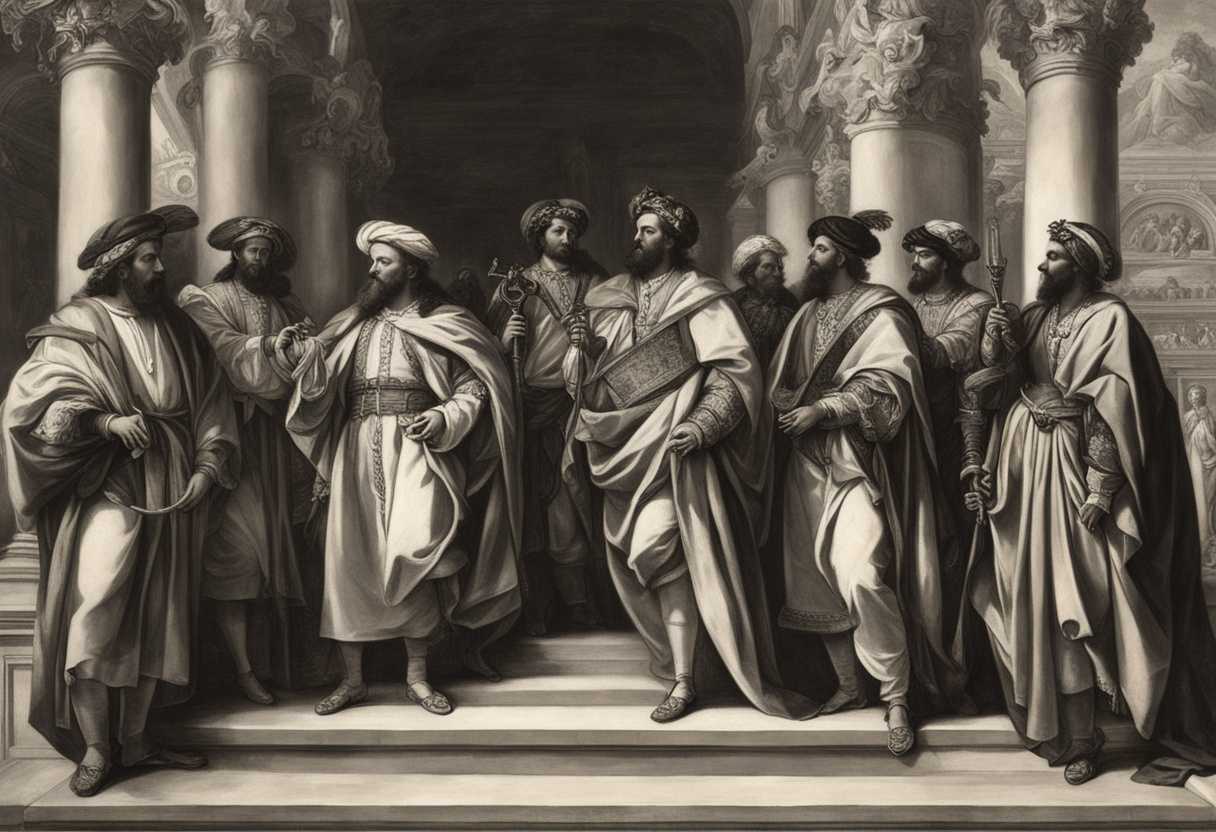
Setting the Scene for Nehemiah 12:12-21
In Nehemiah 12:12-21, we find a vibrant and joyous scene unfolding in Jerusalem as the city walls have been rebuilt and the people are celebrating the dedication of the newly restored gates. The atmosphere is filled with music, singing, and thanksgiving as the Levites, priests, and leaders come together to commemorate this significant moment in the history of Jerusalem.
The scene is set in the grand courtyard of the temple, adorned with colorful banners and decorations. The sound of trumpets and cymbals fills the air as the Levites lead the procession, singing praises to God for His faithfulness in restoring the city. The priests, dressed in their ceremonial garments, offer prayers of gratitude and blessings over the people gathered.
Among the prominent figures in the scene are Nehemiah, the governor who led the efforts to rebuild the walls, and Ezra, the scribe and priest who played a crucial role in the spiritual revival of the people. They stand side by side, leading the assembly in worship and thanksgiving. The people of Jerusalem, from all walks of life, have come together to rejoice in the restoration of their city and to rededicate themselves to God’s purposes. It is a moment of unity, celebration, and deep reverence for the work of God in their midst.
What is Nehemiah 12:12-21 about?
This verse is about the detailed account of the priests and Levites who returned to Jerusalem with Zerubbabel and Jeshua after the exile in Babylon. On the surface, it may seem like a list of names with no significant meaning. However, these names represent a crucial moment in Israel’s history when the exiled people were returning to their homeland to rebuild and restore their community.
The mention of priests and Levites is important because they were key religious leaders who played an essential role in maintaining the spiritual practices and traditions of the Israelites. This verse highlights the importance of continuity and lineage in the religious community, showing that even after a period of exile and hardship, the priests and Levites were chosen to lead the people back to their faith and traditions. The verse emphasizes the idea of continuity, tradition, and faithfulness in the face of adversity by listing these names. It shows that despite the challenges and trials the Israelites faced, they were able to return to Jerusalem with their leaders intact, ready to rebuild and renew their community. So, next time you read a list of names in the Bible, remember that each name represents a story, a legacy, and a significant part of history that helps us understand the resilience and faith of a people determined to keep their traditions alive.
Understanding what Nehemiah 12:12-21 really means
In Nehemiah 12:12-21, we delve into a historical account that may seem like a mere list of names at first glance, but it holds significant value in understanding the spiritual landscape of Israel during Joiakim’s leadership. Joiakim, the son of Jeshua, served as a high priest during a crucial period in Israel’s history, post-exile. The mention of “Heads of the fathers’ houses” emphasizes the lineage and continuity of spiritual leadership, showcasing the importance of familial ties in the priestly roles. The distinction between “Priests and Levites” sheds light on the specific responsibilities each group held within the temple service, with priests overseeing sacrifices and rituals, while Levites assisted in various duties.
Drawing parallels to other biblical passages such as Ezra 2:36-39 and 1 Chronicles 24, we see a thread of continuity in the priestly and Levitical lines, emphasizing the long-standing organization and significance of these roles in Israel’s worship. Hebrews 7:23-24 further contrasts the temporary nature of the Levitical priesthood with the eternal priesthood of Jesus Christ, highlighting the fulfillment of the Old Testament priesthood in Christ. These connections deepen our understanding of the historical and spiritual context surrounding the roles of priests and Levites.
The relevance of this passage extends to contemporary times, emphasizing the importance of spiritual leadership, community involvement, and faithfulness. Just as the priests and Levites played vital roles in Israel’s spiritual life, modern-day spiritual leaders guide and nurture faith communities. The detailed listing of names serves as a reminder that every individual within a faith community has a unique contribution to make, underscoring the value of each person’s service. The faithfulness exhibited by the priests and Levites challenges us to reflect on our own commitment to serving and the legacy we are building for future generations.
To illustrate this point, envision a longstanding church with a rich history of service. As the church creates a memorial wall listing the names of past pastors, deacons, and volunteers, members are reminded of the dedication and faithfulness of those who paved the way. This act serves as a source of inspiration for current members to continue the legacy of service with the same fervor, knowing that their contributions are part of a larger narrative of faithfulness and commitment.
In conclusion, Nehemiah 12:12-21 may appear as a simple enumeration of names, but it carries profound implications for understanding spiritual leadership, community involvement, and the legacy of faithfulness. Let us draw from this passage a renewed sense of dedication to serving our communities, honoring the contributions of those who came before us, and building a legacy of faithfulness for generations to come.
How can we celebrate and honor God together?
We can celebrate and honor God together by coming together in unity and giving thanks for all that He has done for us. Just like the leaders mentioned in Nehemiah 12:12-21 gathered together to give thanks and praise to God, we can also gather as a community to worship Him. We can show our gratitude and honor God for His goodness in our lives by acknowledging His faithfulness and provision.
Furthermore, we can celebrate and honor God by participating in joyful and heartfelt worship. Music and singing were used to worship and praise God, as seen in Nehemiah 12:12-21. We can do the same by lifting our voices in songs of praise, playing instruments, and dancing before the Lord with thanksgiving and joy. Engaging in worship together not only honors God but also strengthens our faith and builds unity among believers.
Lastly, we can honor God by remembering and recognizing the importance of spiritual leadership. Leaders appointed to oversee the celebration and ensure that everything was done in accordance with God’s will in Nehemiah 12:12-21. We can show honor to God and demonstrate our commitment to walking in obedience and unity as a body of believers by respecting and following the guidance of spiritual leaders in our communities.
Application
Just as the priests and Levites devoted themselves to serving in the temple, let’s dedicate ourselves to serving the Lord in our own unique ways. Let their unwavering commitment motivate us to fulfill our roles in spreading God’s love and light in the world. Are you prepared to actively play your part in advancing God’s mission on earth?

Reverend Michael Johnson is an experienced Church Minister with a profound expertise in spirituality and guidance. With a serene presence and a compassionate heart, he has faithfully served his congregation for over 20 years, leading them on a spiritual journey towards inner peace and enlightenment. Reverend Johnson’s extensive knowledge of religious philosophies and profound understanding of human nature have made him a trusted confidant and mentor to many, as he seamlessly weaves his profound wisdom into life teachings. Reverend Johnson’s calming demeanor and empathetic nature continue to uplift and heal souls, nurturing a sense of unity and tranquility within his community.