
Nehemiah 12:13 is about the priestly duties being assigned to specific families in the rebuilding and dedication of the walls of Jerusalem, highlighting the importance of unity and shared responsibility in worship and service to God.
13 and certain of the priests’ sons with trumpets: Zechariah the son of Jonathan, son of Shemaiah, son of Mattaniah, son of Micaiah, son of Zaccur, son of Asaph,
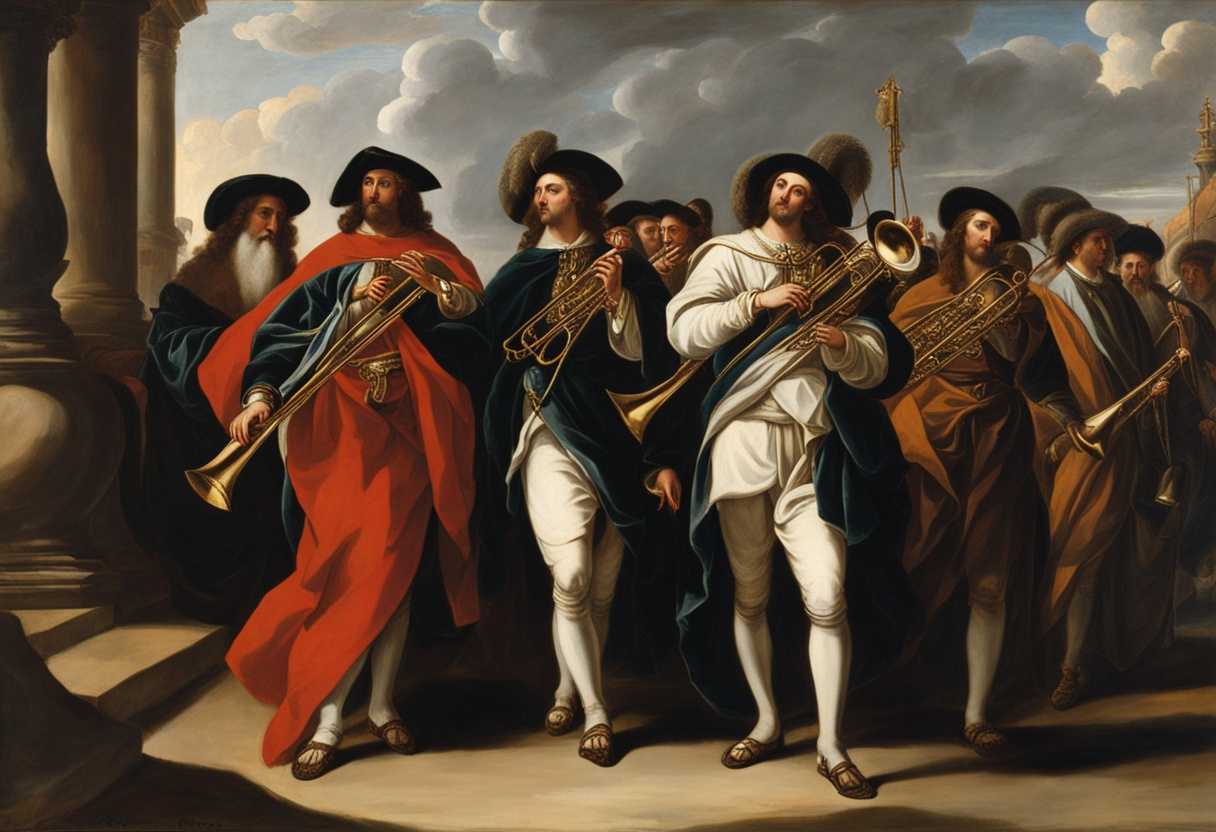
Setting the Scene for Nehemiah 12:13
In Nehemiah chapter 12, we find a vibrant and joyous scene unfolding in Jerusalem. The verse mentions the dedication of the wall of Jerusalem, a significant event that brought together the people of Israel to celebrate and give thanks to God for His faithfulness in helping them rebuild the city walls. The atmosphere is filled with music, singing, and praise as the community gathers to commemorate this momentous occasion.
Among those present are Nehemiah, the governor who led the efforts to rebuild the walls, and Ezra, the priest and scribe who played a crucial role in the spiritual restoration of the people. The scene is bustling with activity as priests, Levites, and leaders from various clans and families come together to participate in the festivities. The sound of trumpets, cymbals, and voices raised in worship fills the air, creating a sense of unity and reverence among the assembly.
The surroundings are adorned with decorations and banners, symbolizing the victory and triumph of the Israelites over adversity. The sun shines brightly over the city, casting a warm glow on the faces of the people who have come to witness and partake in this historic event. As the ceremony progresses, prayers are offered, sacrifices are made, and blessings are pronounced, marking a new chapter in the history of Jerusalem and the faith of its inhabitants.
What is Nehemiah 12:13 about?
Nehemiah is taking a significant step in the protection and sanctification of Jerusalem by organizing priests and Levites for the dedication of the city’s walls in this verse. Priests and Levites were key figures in the religious and social structure of ancient Israel, responsible for upholding rituals, leading worship, and maintaining order. Nehemiah is not only physically fortifying the city but also spiritually reinforcing its significance by involving them in the dedication of the walls.
Have you ever thought about the deeper symbolism behind rituals and ceremonies? We too can draw upon the power of collective action and shared purpose to strengthen our own communities and beliefs, just as Nehemiah brought together priests and Levites to consecrate the walls of Jerusalem. It’s a reminder that building walls isn’t just about protection; it’s also about honoring our values and traditions. So, think about how you can gather your own “priests and Levites” – whether that’s friends, family, or colleagues – to dedicate and fortify the metaphorical walls of your own life.
Let this verse inspire you to reflect on the ways you uphold and honor what is important to you. You can fortify your own sense of identity and purpose by taking intentional actions, just as Nehemiah took deliberate steps to solidify the boundaries of Jerusalem. You can strengthen the walls of your own personal and spiritual convictions by engaging others in your journey and sharing in meaningful rituals and dedications.
Understanding what Nehemiah 12:13 really means
Nehemiah 12:13, nestled within a passage detailing the priests and Levites who returned to Jerusalem, serves as a poignant reminder of the significance of spiritual leadership and the dedication to religious duties. This verse not only showcases the lineage of priests but also underscores the unwavering commitment of God’s people in upholding their spiritual responsibilities through generations. It is a testament to the continuity and faithfulness that characterize the service of these individuals in maintaining the religious order.
In exploring related passages such as Ezra 2:36-39 and 1 Chronicles 24, we gain a broader understanding of the historical context surrounding the roles of priests and Levites in the restoration of Israel. These texts provide a backdrop for appreciating the importance of these positions in the religious framework of the time. Additionally, Hebrews 7:23-24 draws a parallel between the Levitical priesthood and the eternal priesthood of Jesus, highlighting the transition from temporary to everlasting spiritual leadership.
The relevance of Nehemiah 12:13 extends beyond its historical context, offering valuable insights for contemporary audiences. It prompts us to consider the significance of faithfulness in our own roles and responsibilities, whether within religious spheres or in our daily lives. Moreover, the emphasis on community and continuity encourages us to cherish and uphold our spiritual heritage, recognizing the value of collective faith traditions in fostering unity and strength.
Imagine a scenario where a community faces adversity, akin to the challenges encountered by the Israelites. In such times, the collective effort towards restoration and renewal becomes paramount. Just as the priests and Levites played a crucial role in rebuilding Jerusalem, each individual’s contribution in the community’s revival holds immense importance. This narrative underscores the interconnectedness of faith, service, and communal well-being, echoing the themes encapsulated in Nehemiah’s account.
Delving into the meaningful phrases within Nehemiah 12:13, such as “Priests and Levites,” “Returned to Jerusalem,” and “Lineage,” we unravel deeper layers of symbolism and significance. These terms symbolize not only religious leadership and homecoming but also the perpetuation of faith through ancestral lines. They serve as poignant reminders of the enduring nature of God’s promises and the intergenerational transmission of spiritual values.
By contemplating the themes encapsulated in Nehemiah 12:13, we are encouraged to embody faithfulness, foster community bonds, and actively engage in the ongoing work of restoration in our contemporary settings. This verse serves as a beacon of inspiration, urging us to uphold our spiritual duties with dedication, honor our heritage with reverence, and contribute meaningfully to the collective renewal of our communities.
How can we honor and celebrate God’s work?
We can honor and celebrate God’s work by acknowledging and giving thanks for the ways in which He has been present and active in our lives. Reflecting on the progress made and victories achieved through His guidance and provision allows us to express gratitude for His faithfulness and sovereignty. We recognize His power and establish a deeper connection with Him by attributing our successes and blessings to His work.
Furthermore, participating in communal worship and fellowship enables us to celebrate God’s work collectively with other believers. Coming together to praise and glorify Him for His faithfulness strengthens our bond as a community and magnifies the impact of His work in our lives. Through shared exaltation and testimony, we amplify the significance of his presence and provision, inspiring one another to continue serving Him wholeheartedly.
Application
Fellow believer, let us embody the dedication of the priests and Levites. Our duty to serve the Lord requires unwavering commitment and passion. It is time to rise up and fulfill our divine mission with zeal. Will you join in spreading love and faith with all your heart and soul?

Reverend Michael Johnson is an experienced Church Minister with a profound expertise in spirituality and guidance. With a serene presence and a compassionate heart, he has faithfully served his congregation for over 20 years, leading them on a spiritual journey towards inner peace and enlightenment. Reverend Johnson’s extensive knowledge of religious philosophies and profound understanding of human nature have made him a trusted confidant and mentor to many, as he seamlessly weaves his profound wisdom into life teachings. Reverend Johnson’s calming demeanor and empathetic nature continue to uplift and heal souls, nurturing a sense of unity and tranquility within his community.