
1 On that day they read from the Book of Moses in the hearing of the people, and in it was found written that no Ammonite or Moabite should ever enter the assembly of God,
2 because they did not meet the people of Israel with bread and water, but hired Balaam against them to curse them—yet our God turned the curse into a blessing.
3 As soon as the people heard the law, they separated from Israel all those of foreign descent.
4 Now before this, Eliashib the priest, who was appointed over the chambers of the house of our God, and who was related to Tobiah,
5 prepared for Tobiah a large chamber where they had previously put the grain offering, the frankincense, the vessels, and the tithes of grain, wine, and oil, which were given by commandment to the Levites, singers, and gatekeepers, and the contributions for the priests.
6 But during all this I was not in Jerusalem, for in the thirty-second year of Artaxerxes king of Babylon I went to the king. And after some time I asked leave of the king
7 and I came to Jerusalem, and I then discovered the evil that Eliashib had done for Tobiah, preparing for him a chamber in the courts of the house of God.
8 And I was very angry, and I threw all the household furniture of Tobiah out of the chamber.
9 Then I gave orders, and they cleansed the chambers, and I brought back there the vessels of the house of God, with the grain offering and the frankincense.
10 I also found out that the portions of the Levites had not been given to them, so that the Levites and the singers, who did the work, had fled each to his field.
11 So I confronted the officials and said, “Why is the house of God forsaken?” And I gathered them together and set them in their stations.
12 Then all Judah brought the tithe of the grain, wine, and oil into the storehouses.
13 I also provided for the wood offering at appointed times, and for the firstfruits. Remember me, O my God, for good.
14 Remember me, O my God, concerning this, and do not wipe out my good deeds that I have done for the house of my God and for his service.
15 In those days I saw in Judah people treading winepresses on the Sabbath, and bringing in heaps of grain and loading them on donkeys, and also wine, grapes, figs, and all kinds of loads, which they brought into Jerusalem on the Sabbath day. And I warned them on the day when they sold food.
16 There also, at that time, I said to the people of Judah, “Let every man and his servant pass the night within Jerusalem, that they may be a guard for us by night and may labor by day.”
17 Then I confronted the nobles of Judah and said to them, “What is this evil thing that you are doing, profaning the Sabbath day?
18 Did not your fathers act in this way, and did not our God bring all this disaster on us and on this city? Now you are bringing more wrath on Israel by profaning the Sabbath.”
19 As soon as it began to grow dark at the gates of Jerusalem before the Sabbath, I commanded that the doors should be shut and gave orders that they should not be opened until after the Sabbath. And I stationed some of my servants at the gates, that no load might be brought in on the Sabbath day.
20 Then I confronted the nobles of Judah and said to them, “What is this evil thing that you are doing, profaning the Sabbath day?
21 But I warned them and said to them, “Why do you lodge outside the wall? If you do so again, I will lay hands on you.” From that time on they did not come on the Sabbath.
22 Then I commanded the Levites that they should purify themselves and come and guard the gates, to keep the Sabbath day holy.
23 In those days also I saw the Jews who had married women of Ashdod, Ammon, and Moab.
24 And half of their children spoke the language of Ashdod, and they could not speak the language of Judah, but only the language of each people.
25 And I confronted them and cursed them and beat some of them and pulled out their hair. And I made them take an oath in the name of God, saying, “You shall not give your daughters to their sons, or take their daughters for your sons or for yourselves.
26 Did not Solomon king of Israel sin on account of such women?
27 Shall we then listen to you and do all this great evil and act treacherously against our God by marrying foreign women?”
28 And one of the sons of Jehoiada, the son of Eliashib the high priest, was the son-in-law of Sanballat the Horonite. Therefore I chased him from me.
29 Remember them, O my God, because they have desecrated the priesthood and the covenant of the priesthood and the Levites.
30 Thus I cleansed them from everything foreign, and I established the duties of the priests and Levites, each in his work;
31 and I provided for the wood offering at appointed times, and for the firstfruits. Remember me, O my God, for good.
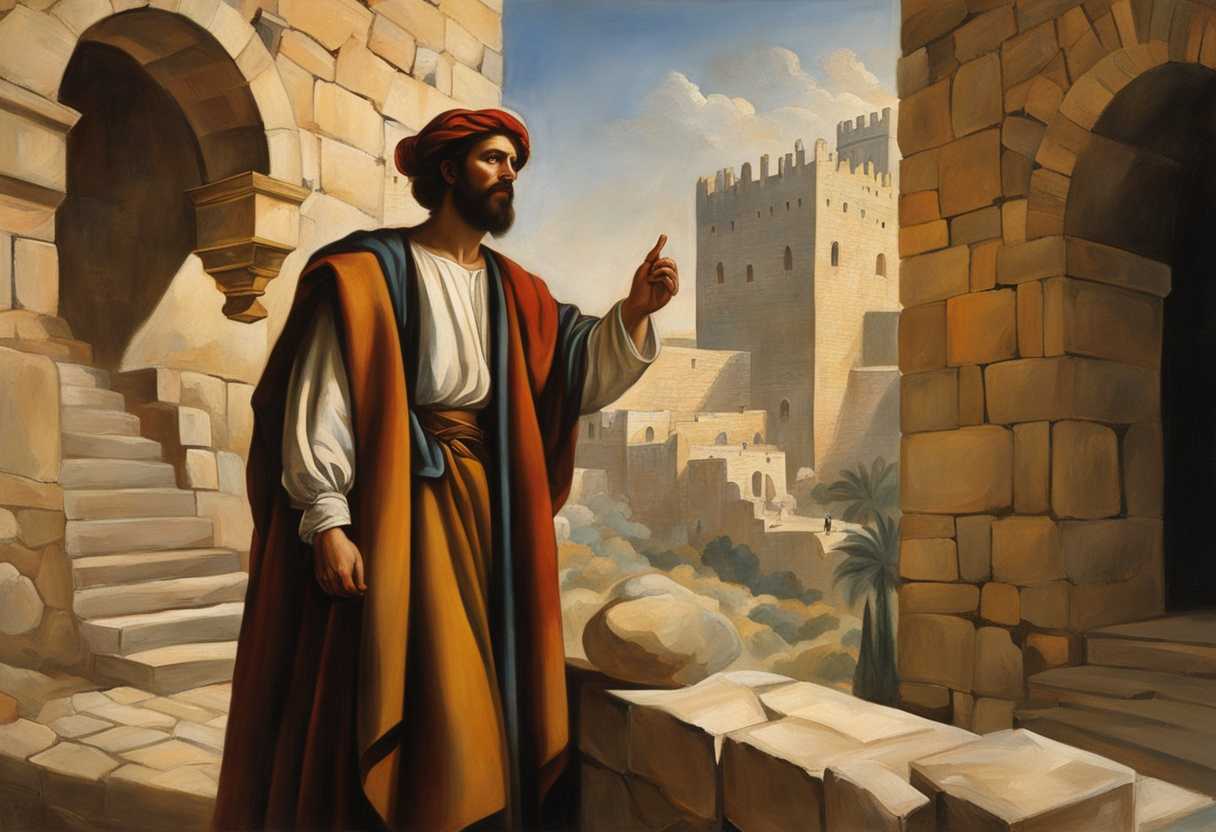
The True Meaning of Nehemiah 13
The book of Nehemiah was written by the prophet Nehemiah, who served as a governor of Judah during the Persian Empire’s rule. Nehemiah played a crucial role in the rebuilding of Jerusalem’s walls and the spiritual restoration of the Jewish people after their return from exile in Babylon. Nehemiah addresses several issues that had arisen in his absence in this final chapter, including the neglect of the temple, the exploitation of the poor, and the intermarriage of Jews with non-Jews. Nehemiah’s actions demonstrate his unwavering commitment to upholding the law of God and preserving the identity of the Jewish community.
The chapter also foreshadows the ongoing struggle the Israelites would face in maintaining their faith and obedience to God, as seen in the book of Malachi, where the prophet condemns the people for their spiritual apathy and disobedience (Malachi 1:6-14).
Nehemiah 13:1-3
The passage in Nehemiah 13:1-3 illustrates the scene where the Israelites are gathered together to hear the Law of Moses being read to them. This was a crucial moment, as it shows the people coming together to renew their commitment to following the teachings and commandments of God. The act of reading and listening to the Word of God was essential for the spiritual well-being and guidance of the Israelites, as it served as a reminder of their covenant with God and the importance of obedience to His laws.
Nehemiah’s role as a leader in this situation is significant. He had previously been instrumental in the rebuilding of the walls of Jerusalem and in reestablishing the religious practices of the Israelites. Now, by arranging for the reading of the Law of Moses, Nehemiah is further emphasizing the importance of scripture in the lives of the people. This act showcased Nehemiah’s commitment to ensuring that the community remained faithful to God and strived to live according to His will.
The reference to the exclusion of certain individuals from the assembly due to their mixed heritage, particularly the Ammonites and Moabites, is noteworthy. It reflects the strict adherence to purity and separation that the Israelites were instructed to maintain. This exclusion was based on events from the past, specifically the actions of the Moabites and Ammonites who had not shown kindness to the Israelites during their journey from Egypt to the Promised Land. This demonstrates the importance of historical context and the continuity of God’s expectations from His chosen people.
Additionally, this passage may prompt reflection on the concept of exclusion and its implications. While the exclusion of certain groups may seem harsh by modern standards, it is crucial to understand the historical and religious context of such actions. It serves as a reminder of the importance of obedience and loyalty to God’s commandments, even when they may seem challenging or difficult to comprehend in contemporary society.
The events described in Nehemiah 13:1-3 highlight the enduring themes of faithfulness, obedience, and the significance of scripture in the life of believers. It emphasizes the role of leaders in guiding and teaching God’s people, the importance of historical context in understanding religious practices, and the continuous call for fidelity to the covenant between God and His people. This passage serves as a reminder for believers to remain steadfast in their commitment to God and His commandments, even when faced with challenges or decisions that may seem perplexing.
Nehemiah 13:4-9
Nehemiah 13:4-9 reads: “Now before this, Eliashib the priest, who was appointed over the chambers of the house of our God, and who was related to Tobiah, prepared for Tobiah a large chamber where they had previously put the grain offering, the frankincense, the vessels, and the tithes of grain, wine, and oil, which were given by commandment to the Levites, singers, and gatekeepers, and the contributions for the priests. While this was taking place, I was not in Jerusalem, for in the thirty-second year of Artaxerxes king of Babylon I went to the king. And after some time I asked leave of the king and came to Jerusalem, and I then discovered the evil that Eliashib had done for Tobiah, preparing for him a chamber in the courts of the house of God. And I was very angry, and I threw all the household furniture of Tobiah out of the chamber. Then I gave orders, and they cleansed the chambers, and I brought back there the vessels of the house of God, with the grain offering and the frankincense. Nehemiah returns to Jerusalem after an absence only to discover a troubling situation in this passage. Eliashib, the priest who was entrusted with overseeing the chambers of the house of God, had allowed Tobiah, an Ammonite official who historically opposed the rebuilding of the walls of Jerusalem (Nehemiah 2:10), to stay within the temple precincts. Tobiah was not only an enemy of the Jews but was also related to Eliashib through marriage, which may have clouded Eliashib’s judgment.
Nehemiah’s reaction upon learning about this desecration of God’s house was one of righteous anger. He did not hesitate to take decisive action by throwing out Tobiah’s belongings and cleansing the chambers that were meant to store the offerings and tithes for the Levites, singers, gatekeepers, and priests. This demonstrates Nehemiah’s zealous commitment to upholding the sanctity of the temple and ensuring that it was used for its intended purpose.
This incident serves as a powerful reminder of the importance of maintaining sacred spaces and guarding them against defilement. It also underscores the dangers of compromising one’s principles and allowing personal relationships or interests to cloud one’s judgment when it comes to matters of faith and obedience to God. Nehemiah’s swift and bold response sets an example for believers to stand firm in their convictions and take action when confronted with actions that dishonor God. God’s house should be treated with reverence and respect, reminding us of the broader biblical principle. Jesus cleansed the temple in John 2:13-17 when he found it being misused for profit, reinforcing the idea that worship spaces should be kept holy and free from worldly influences. Nehemiah’s actions align with this principle and serve as a call to all believers to uphold the sanctity of places dedicated to worship and prayer, ensuring that they are used in a manner that honors God.
Nehemiah 13:10-14
Nehemiah’s reaction upon returning to Jerusalem after being away for some time is the first important section to consider in Nehemiah 13:10-14. It is said that Nehemiah discovered that the portions due to the Levites, singers, and gatekeepers in the temple were not being given to them, and as a result, the Levites had to abandon their duties and go back to their fields to work. This neglect had occurred because Nehemiah was not in Jerusalem during this time, as he had returned to the king of Babylon as he was a cupbearer to the king.
Nehemiah’s response to this situation was one of great anger and rebuke. He rebuked the officials for neglecting the house of God and summoned the Levites back to their duties. Nehemiah went on to appoint trustworthy individuals to oversee the distribution of the portions to the Levites, ensuring that the duties in the temple were carried out as they should be.
This section highlights the importance of maintaining the worship and service of God. Nehemiah’s dedication to restoring the proper functioning of the temple and ensuring that the Levites were provided for emphasizes the significance of honoring God with our resources and commitments. It also underlines the need for strong leadership to uphold the responsibilities of worship and service within the community.
Nehemiah’s actions in this passage reflect his commitment to upholding the laws and commands of God, as we see throughout the book of Nehemiah. His zeal for righteousness and justice serve as a model for us today, showing the importance of not neglecting the things of God and ensuring that they are given the highest priority in our lives. Neglecting our spiritual duties and failing to prioritize the worship of God serve as reminders of the consequences of this incident. Jesus teaches us in Matthew 6:33 to seek first the kingdom of God and His righteousness, and all these things will be added unto us. Nehemiah’s actions in restoring the portions to the Levites exemplify this principle of putting God first in all aspects of our lives.
Nehemiah 13:15-18
The passage in Nehemiah 13:15-18 discusses the observance of the Sabbath and the violation of it by the people of Judah. Nehemiah, who had returned to Jerusalem to help rebuild the walls of the city, was disappointed to find that the people were neglecting the Sabbath and engaging in commerce on that holy day. Let’s identify the subject: “we”
Rewritten sentence: We will break down this passage and delve into its significance. Nehemiah confronted the nobles of Judah about the people profaning the Sabbath in verse 15. He witnessed people treading wine presses, bringing in sheaves, loading donkeys with wine, grapes, figs, and all kinds of goods, and selling them on the Sabbath. The Sabbath was a day set apart by God for rest and worship (Exodus 20:8-11), and the people’s disregard for this commandment was a serious issue.
Nehemiah’s reaction in verse 17 is one of righteous indignation. He rebuked the nobles of Judah, reminding them of the sins of their ancestors which had led to the destruction of Jerusalem and their exile. Nehemiah understood the importance of remembering and honoring God’s laws to prevent a repeat of past mistakes. Nehemiah took concrete steps to stop the desecration of the Sabbath in verse 18. He ordered the gates of Jerusalem to be shut at sunset before the Sabbath began and not to be opened until the day after the Sabbath. Additionally, he appointed Levites to ensure that no goods were brought into the city on the Sabbath day.
This passage serves as a reminder of the importance of obedience to God’s commandments and the consequences of disobedience. Nehemiah’s actions show us the significance of upholding God’s laws even in the face of societal pressures. The Sabbath was a sign of the covenant between God and His people (Exodus 31:16-17), and its observance was crucial in maintaining that relationship.
Furthermore, Nehemiah’s leadership in restoring the observance of the Sabbath demonstrates the role of godly leaders in upholding spiritual values and guiding the community towards righteousness. Through his actions, Nehemiah set an example of faithfulness and obedience to God’s Word, inspiring others to follow suit. This passage highlights the timeless message of the importance of honoring God’s commandments, the role of leaders in promoting spiritual values, and the need for repentance and obedience in maintaining a close relationship with God.
Nehemiah 13:19-22
Important sections in Nehemiah 13:19-22 can be broken down as follows: “When evening shadows fell on the gates of Jerusalem before the Sabbath, I ordered the doors to be shut and not opened until the Sabbath was over. I stationed some of my own men at the gates so that no load could be brought in on the Sabbath day.”
Nehemiah, who was the cupbearer to the king of Persia before being appointed as the governor of Judah, was instrumental in the rebuilding of the walls of Jerusalem. Nehemiah enforces the Sabbath observance among the people of Jerusalem in these verses. This act was in line with the commandments given to the Israelites in the Old Testament, where the Sabbath day was set apart as a holy day of rest and worship to the Lord. Nehemiah upheld the importance of honoring God and His commandments by closing the gates of Jerusalem and prohibiting work or trade on the Sabbath.
This particular incident highlights Nehemiah’s commitment to leading the people in obedience to God’s laws. It serves as a reminder to us today about the significance of setting aside time for worship and rest in our busy lives. It also reflects the theme of obedience and following God’s decrees as seen throughout the Bible. Exodus 20:8-11 emphasizes the importance of honoring the Sabbath day and keeping it holy, reinforcing the timeless message of dedicating time to God and observing His commands.
- “Once or twice the merchants and sellers of all kinds of goods spent the night outside Jerusalem. But I warned them and said, ‘Why do you spend the night by the wall? If you do this again, I will arrest you.’ From that time on they no longer came on the Sabbath. Nehemiah addresses the issue of merchants and traders attempting to bypass the Sabbath restrictions by spending the night near the walls of Jerusalem to enter the city as soon as the Sabbath ended in these verses. Nehemiah, in his role as the governor, takes a stand against this violation of the Sabbath law and warns the merchants of the consequences if they continue to do so. His firm leadership and commitment to upholding God’s commandments and the sanctity of the Sabbath are evident in this interaction.
This situation also sheds light on the recurring theme of obedience and righteousness found throughout the Bible. Nehemiah’s actions mirror the teachings of the Prophets and the importance placed on living a life that is pleasing to God. God speaks through the prophet about honoring the Sabbath and the blessings that come with obedience in Isaiah 58:13-14. Nehemiah’s enforcement of Sabbath observance serves as a model for us to follow in our own lives, showing how obedience to God’s laws brings about His favor and protection.
- “I commanded the Levites to purify themselves and go and guard the gates in order to keep the Sabbath day holy.”
Here, Nehemiah instructs the Levites, who were designated as the keepers of the temple and were responsible for various religious duties, to purify themselves and guard the gates of Jerusalem to ensure the sanctity of the Sabbath day. Nehemiah entrusted the Levites, who were consecrated to the service of the Lord, to oversee the proper observance of the Sabbath by assigning them this task.
This action by Nehemiah underscores the importance of appointing individuals who are dedicated and faithful to carry out God’s work. The Levites, as descendants of Levi and chosen by God for ministering in the tabernacle, symbolize the need for spiritual purity and consecration in serving God. Their role in safeguarding the Sabbath demonstrates the significance of upholding God’s standards and principles in all aspects of life. The Levites in Numbers 18:23 are instructed to perform the work of the tabernacle and serve as a reminder of the call to set apart time and resources for God’s service. Nehemiah’s unwavering commitment to honoring God’s laws, specifically in the observance of the Sabbath, is illustrated in Nehemiah 13:19-22. Through his actions, Nehemiah provides a powerful example of obedience, righteousness, and leadership in following God’s commandments. The significance of setting aside time for worship and rest, the blessings of obedience, and the importance of spiritual consecration are timeless messages reflected in these verses, reminding us of the enduring values found in God’s Word.
Nehemiah 13:23-27
Nehemiah, who had previously worked to rebuild the walls of Jerusalem, addresses another issue that had crept up among the Israelites in Nehemiah 13:23-27. Let’s break down this passage:
Firstly, in verse 23, we read that Nehemiah confronts the people for intermarrying with foreigners, specifically mentioning that some of their children couldn’t even speak the language of Judah but spoke the language of Ashdod or other nations. This issue of intermarriage was a recurring problem for the Israelites throughout the Old Testament. From the time of the exodus from Egypt, God had instructed His people not to intermarry with the surrounding nations because He knew that this would lead them to worship other gods and move away from Him (Deuteronomy 7:3-4).
Nehemiah’s concern about intermarriage was not about racial or ethnic differences, but rather about the spiritual implications and the risk of compromising their faith in God. The Israelites were meant to be set apart as a holy nation, dedicated to following the commands of God. Interfaith marriages often led to the inclusion of foreign gods and practices that were contrary to the law of God. Nehemiah takes action against this issue in verse 24. He rebukes those who had married foreign women, and even goes as far as to curse and hit some of them, showing the seriousness of the situation. Nehemiah’s response may seem harsh to us today, but we must understand the gravity of the situation and the significance of maintaining the purity of their faith in God.
This passage reminds us of the importance of being mindful of the influence of those we choose to be in close relationships with, particularly in matters of faith. It serves as a cautionary tale about the potential dangers of compromising our beliefs and practices for the sake of worldly relationships. Christians are called to be set apart and not conform to the patterns of this world (Romans 12:2), but to remain faithful to God alone. Nehemiah’s actions in addressing the issue of intermarriage ultimately serve as a reminder of the need for spiritual vigilance and commitment to following God’s commands, even when it may be unpopular or difficult. We can protect ourselves from straying away from God’s will and purpose for our lives by upholding the standards set by Him.
Nehemiah 13:28-31
The son-in-law of Sanballat the Horonite was one of the sons of Joiada, son of Eliashib the high priest, as stated in Nehemiah 13:28-31. Therefore, I chased him from me. O my God, remember them because they have defiled the priesthood and the covenant of the priesthood and the Levites. Thus I cleansed them from all foreigners, and I appointed duties for the priests and the Levites, each in his work, and I provided for the wood offering at appointed times and for the firstfruits.”
Here, Nehemiah is recounting an incident where corruption had entered the priesthood, a direct violation of the covenant between God and His chosen people. Joiada, the son of Eliashib the high priest, had allowed his son to marry into a family that was hostile to the purposes of God. Sanballat the Horonite was a prominent figure among the enemies of the Israelites during the time of Nehemiah, known for his efforts to thwart the rebuilding of Jerusalem’s walls. It is significant that one of the high priest’s own sons had aligned himself with such an adversary, leading to his expulsion by Nehemiah.
This section illustrates the importance of purity and faithfulness, especially within the leadership of God’s people. The actions taken by Nehemiah to cleanse the priesthood and reinstate proper order reflect a key theme throughout the Bible: the need for consecration and obedience to God’s commands. The corruption within the priesthood not only defiled the sacred office but also jeopardized the spiritual well-being of the entire community. Nehemiah restored the sanctity of the priesthood and the Levites by purging the foreign influences and reestablishing the proper functions and offerings.
The prayerful plea to God to remember these deeds underscores Nehemiah’s reliance on God’s justice and faithfulness. It reveals a deep understanding of the significance of upholding the covenant and the consequences of straying from it. The provision for the priests and Levites, ensuring they could carry out their responsibilities effectively, highlights the necessity of supporting those who are devoted to serving God and His people. This passage emphasizes the ongoing struggle between righteousness and corruption, loyalty to God versus allegiance to worldly powers in a broader sense. It serves as a reminder for all believers to remain vigilant against compromise and to prioritize the purity of our worship and service to God. The Lord says, “Therefore, come out from them and be separate,” as 2 Corinthians 6:17-18 urges. Touch no unclean thing, and I will receive you. And I will be a Father to you, and you will be my sons and daughters, says the Lord Almighty.”
After Nehemiah 13
The people gathered once more as the sun set on Jerusalem, their hearts heavy with the weight of their transgressions. Nehemiah, the faithful servant of God, stood before them, his voice firm yet compassionate. He reminded them of the covenant they had made, the promises they had sworn to uphold. With a heavy heart, he called them to repentance, urging them to turn away from their sinful ways and return to the path of righteousness.
The people listened, their heads bowed in shame. They knew that their actions had not only displeased God but had also brought harm to their community. Nehemiah’s words cut deep, stirring their souls and awakening a desire to make amends. The people made a solemn vow to honor the Lord and to walk in His ways as the chapter drew to a close, setting the stage for the next chapter of their journey.

Reverend Michael Johnson is an experienced Church Minister with a profound expertise in spirituality and guidance. With a serene presence and a compassionate heart, he has faithfully served his congregation for over 20 years, leading them on a spiritual journey towards inner peace and enlightenment. Reverend Johnson’s extensive knowledge of religious philosophies and profound understanding of human nature have made him a trusted confidant and mentor to many, as he seamlessly weaves his profound wisdom into life teachings. Reverend Johnson’s calming demeanor and empathetic nature continue to uplift and heal souls, nurturing a sense of unity and tranquility within his community.