
Nehemiah 8:13-15 is about the people of Israel being instructed to celebrate the Feast of Tabernacles by gathering branches and building temporary shelters to commemorate their ancestors’ time in the wilderness and to acknowledge God’s provision and protection.
13 On the second day the heads of fathers’ houses of all the people, with the priests and the Levites, came together to Ezra the scribe in order to study the words of the Law.
14 And they found it written in the Law that the Lord had commanded by Moses that the people of Israel should dwell in booths during the feast of the seventh month,
15 and that they should proclaim it and publish it in all their towns and in Jerusalem, “Go out to the hills and bring branches of olive, wild olive, myrtle, palm, and other leafy trees to make booths, as it is written.”
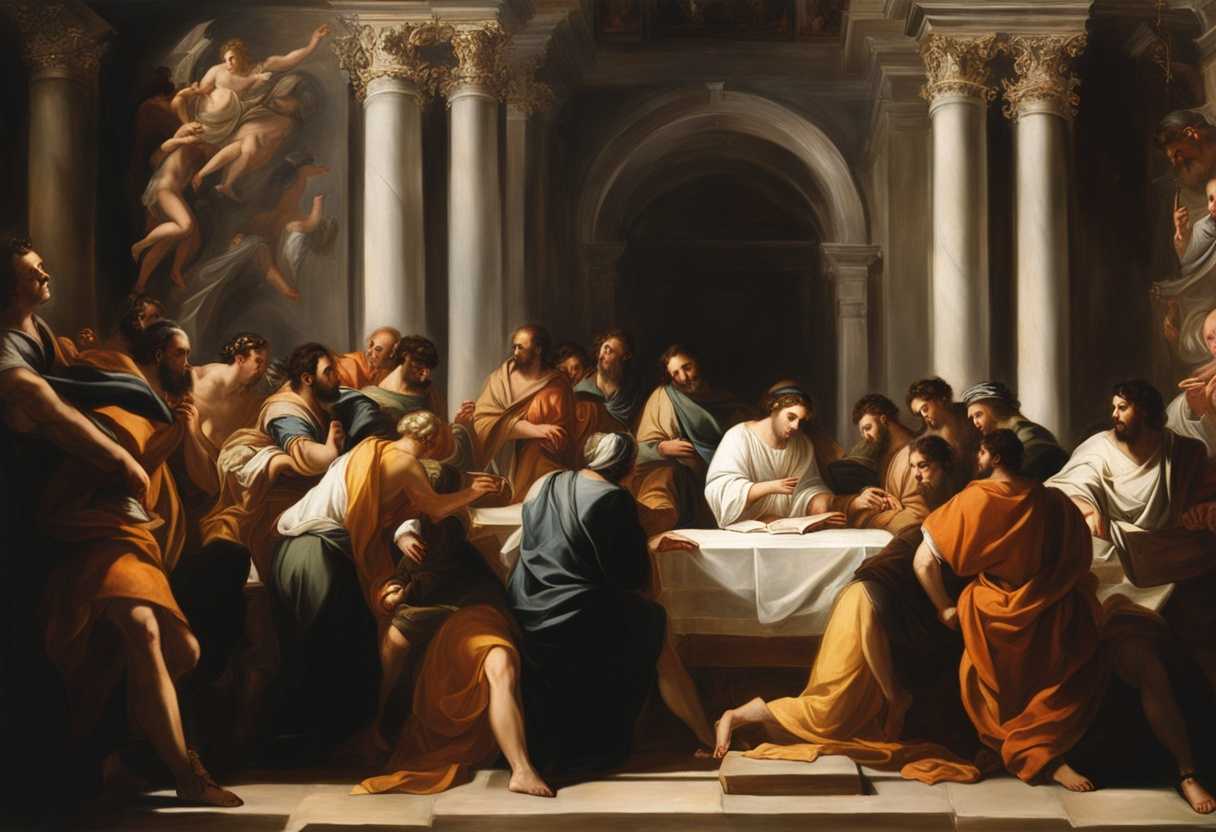
Setting the Scene for Nehemiah 8:13-15
In Nehemiah 8:13-15, we find the scene set in the ancient city of Jerusalem, shortly after the Israelites had returned from exile in Babylon. The people had gathered in the square before the Water Gate, a prominent entrance to the city, which was likely bustling with activity. The square was surrounded by the city walls, with the Temple of Jerusalem visible in the distance.
Among those present were Ezra the scribe, who had been instrumental in leading the people back to the ways of the Lord, and Nehemiah, the governor who had overseen the rebuilding of the city walls. The people had come together, both men and women, to hear the reading of the Law of Moses. They stood attentively as Ezra read from the scroll, explaining the words so that everyone could understand.
As the people listened intently, they were moved to tears by the realization of how far they had strayed from God’s commandments. But Ezra and Nehemiah encouraged them not to grieve, but to rejoice instead, for this day was holy to the Lord. They were instructed to go and celebrate with food and drink, sharing what they had with those who had none. And so, the scene was filled with a sense of unity and joy as the people came together to honor God and each other in this momentous occasion.
What is Nehemiah 8:13-15 about?
Imagine the excitement and joy that filled the Israelite community as they came together to celebrate the Feast of Tabernacles. This annual festival was a time for the people to remember and honor their history, particularly the time when they lived in temporary shelters during their journey in the wilderness. The Israelites reaffirmed their commitment to God and their identity as a chosen people by following the Law of Moses and observing this feast. The act of dwelling in temporary shelters symbolizes the transient nature of human life and the reliance on God’s provision and protection, which invites us to consider the deeper significance of this celebration. Through this observance, the Israelites were reminded of their dependence on God and the importance of faith and obedience in their relationship with Him. The Feast of Tabernacles served as a powerful reminder of the past, a celebration of the present, and a hope for the future for the Israelite community.
Understanding what Nehemiah 8:13-15 really means
During a time of spiritual revival for the Israelites post-Babylonian exile, Nehemiah 8:13-15 captures a pivotal moment where the community gathers to immerse themselves in the teachings of the Law of Moses. The leaders, notably Ezra the scribe, play a crucial role in instructing the people, emphasizing the significance of communal and leadership involvement in understanding God’s Word. This passage specifically focuses on the observance of the Feast of Tabernacles, a period dedicated to commemorating God’s provision during the Israelites’ wilderness sojourn.
The directive to proclaim and disseminate God’s commands throughout the towns and Jerusalem underscores the importance of public declaration and widespread sharing of spiritual truths. It highlights the communal aspect of religious practices, emphasizing the collective participation in honoring God’s statutes. The instruction to gather branches and construct booths mirrors the Israelites’ journey through the wilderness, symbolizing their dependence on God and the remembrance of His unwavering faithfulness.
Drawing parallels from related biblical passages such as Leviticus 23:33-43 and Deuteronomy 16:13-15, we see a consistent theme of joy, thanksgiving, and communal celebration in the observance of the Feast of Tabernacles. Even in the New Testament, in John 7:2-10, Jesus’ participation in this feast underscores its enduring relevance and significance. This continuity highlights the timeless nature of honoring God through communal worship and remembrance.
In contemporary times, Nehemiah 8:13-15 serves as a poignant reminder for individuals and communities to revisit foundational truths and practices, especially during seasons of renewal or rebuilding. It underscores the vital role of community and spiritual leadership in fostering growth and observance. The act of building booths can be metaphorically interpreted as creating spaces in our lives to reflect on and celebrate God’s provision and faithfulness, fostering a deeper connection with our spiritual heritage.
Consider a community facing a crisis, akin to a natural disaster, coming together not only to rebuild physical structures but also to rejuvenate their spiritual foundations. Through shared gatherings to study and reflect on guiding principles, akin to the Israelites’ assembly, they strengthen their unity and faith, recognizing the importance of relying on a higher power. Nehemiah 8:13-15, therefore, urges us to actively engage with God’s Word, participate in communal worship, and uphold the legacy of faithfulness, ensuring that our practices are firmly rooted in divine instruction.
How can we celebrate God’s goodness in our lives?
We can celebrate God’s goodness in our lives by coming together as a community to rejoice and give thanks for all the blessings He has bestowed upon us. We too can gather with our friends and family to share in the joy of God’s goodness and provision, just as the Israelites gathered together to celebrate the Feast of Booths. This communal celebration allows us to reflect on God’s faithfulness and goodness towards us as a group, strengthening our bonds with one another and with Him.
Additionally, we can celebrate God’s goodness by actively participating in the rituals and traditions that honor Him and acknowledge His sovereignty in our lives. We acknowledge God’s presence and guidance in our lives and express our gratitude for His continuous provision and protection by observing and honoring the feasts and festivals that hold significance in our faith. Through these celebrations, we are reminded of God’s faithfulness and grace, and we are given the opportunity to give thanks and praise for all that He has done for us.
Furthermore, we can celebrate God’s goodness by sharing our abundance with others in need. We can demonstrate God’s goodness by giving generously to others and by showing compassion and kindness to those who are in need, just as the Israelites were instructed to share their resources and blessings during the Feast of Booths. We not only obey God’s command to love our neighbors as ourselves, but we also reflect His generous and loving character to the world around us by doing so.
Application
Let’s unite like a well-oiled machine, working together to delve into the depths of God’s Word. Just as a tight-knit family leans on each other for support, let’s gather around the Scriptures with eagerness and openness. Let’s dive into the spiritual truths waiting to be unraveled, ready to empower and guide us in our daily journeys. Will you step up to the challenge of seeking divine wisdom and insight, shaping your faith path with purpose and clarity?

Reverend Michael Johnson is an experienced Church Minister with a profound expertise in spirituality and guidance. With a serene presence and a compassionate heart, he has faithfully served his congregation for over 20 years, leading them on a spiritual journey towards inner peace and enlightenment. Reverend Johnson’s extensive knowledge of religious philosophies and profound understanding of human nature have made him a trusted confidant and mentor to many, as he seamlessly weaves his profound wisdom into life teachings. Reverend Johnson’s calming demeanor and empathetic nature continue to uplift and heal souls, nurturing a sense of unity and tranquility within his community.