
Numbers 1:44-46 is about the importance of counting and organizing the Israelites according to their families and clans for the purpose of maintaining order and ensuring efficient leadership within the community.
44 These are those who were listed, whom Moses and Aaron listed with the help of the chiefs of Israel, twelve men, each representing his fathers’ house.
45 So all those listed of the people of Israel, by their fathers’ houses, from twenty years old and upward, every man able to go to war in Israel—
46 All those listed were 603,550.
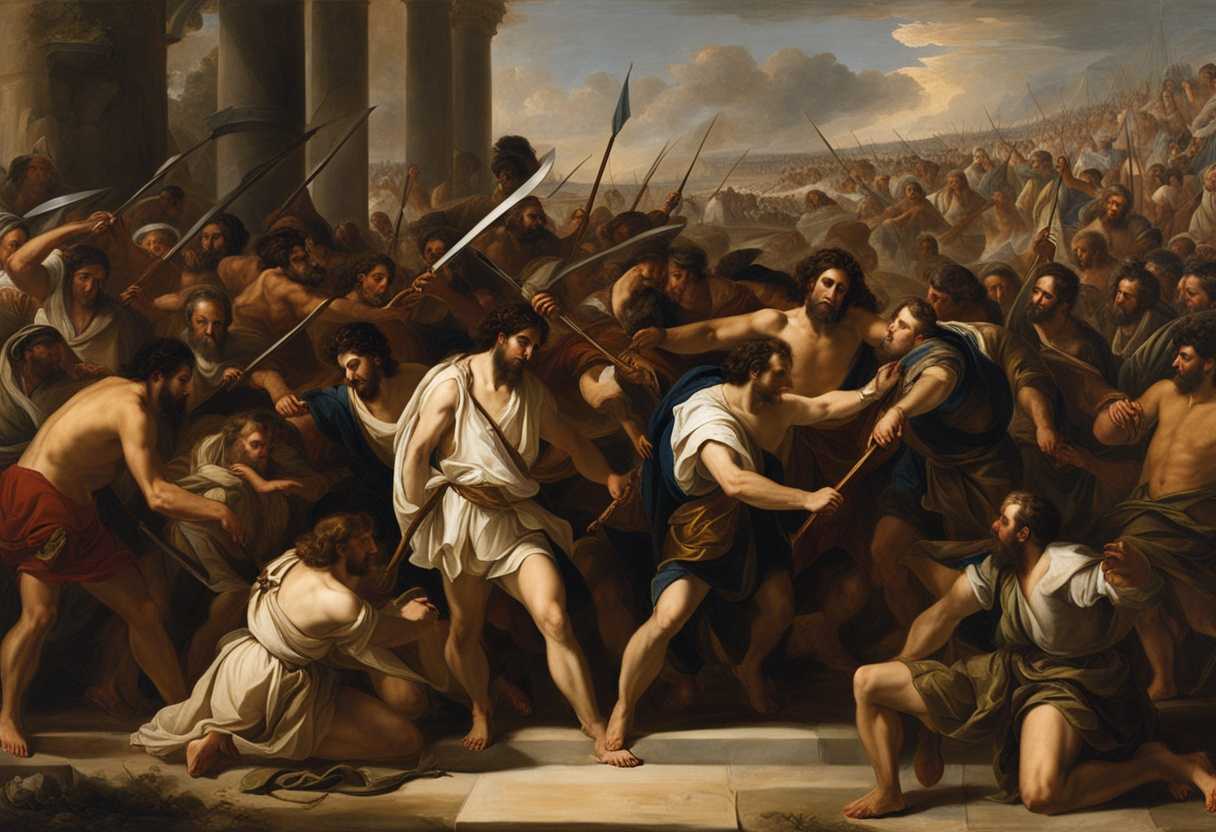
Setting the Scene for Numbers 1:44-46
In the wilderness of Sinai, the Israelites have set up camp as instructed by the Lord. The scene is bustling with activity as Moses, the leader chosen by God, oversees the organization of the tribes. The Israelites have been counted and registered according to their clans and families, as commanded by the Lord. Each tribe is positioned strategically around the tabernacle, with their own designated area and responsibilities.
The leaders of the tribes, such as Nahshon of the tribe of Judah, Eliab of the tribe of Zebulun, and Ahiezer of the tribe of Dan, are gathered around Moses, discussing the logistics of their encampment. The atmosphere is one of anticipation and reverence, as the Israelites await further instructions from the Lord. The tabernacle, a sacred tent where God’s presence dwells among His people, stands at the center of the camp, a constant reminder of their covenant with the Almighty.
As the sun sets over the desert horizon, the Israelites settle into their assigned places, ready to embark on the journey ahead. The camp is a reflection of order and obedience, a testament to the faith and unity of God’s chosen people. In this moment, the stage is set for the unfolding of God’s divine plan for the Israelites as they prepare to journey towards the Promised Land.
What is Numbers 1:44-46 about?
Counting the Israelites according to their families in this verse is significant as it serves as a way to demonstrate unity and order within the community. The process of numbering the people according to their family structures allowed for organization and a sense of belonging among the tribes of Israel. The Israelites reaffirmed their commitment to God’s instruction and acknowledged the importance of community within their society by following the commandment of the Lord through Moses.
Think about the sense of belonging and identity that comes from being part of a family. How does knowing one’s place within their family structure contribute to a sense of connection and shared purpose? Imagine the logistical intricacies involved in counting an entire nation of people according to their families. What kind of discipline and attention to detail would be required to carry out such a task? This verse serves as a reminder of the importance of unity, organization, and faithfulness in following the divine guidance provided to us.
Understanding what Numbers 1:44-46 really means
The Book of Numbers, nestled within the Torah, chronicles the Israelites’ journey from Mount Sinai to the Promised Land. In Numbers 1:44-46, we delve into a pivotal moment as Moses and Aaron conduct a census of the Israelite men fit for war, following God’s command. The phrase “These are the ones who were numbered” underscores the significance of every individual in the community, highlighting that each person plays a crucial role and is accounted for. This notion of individual importance resonates through the ages, reminding us that every person has inherent value and contributes uniquely to the collective tapestry of society.
“By their fathers’ houses” draws attention to the profound emphasis on family and lineage within the Israelite community. It underscores the idea of belonging and identity within a broader familial structure, emphasizing the interconnectedness and support found within kinship ties. Furthermore, the stipulation that those “from twenty years old and upward” were to be counted for war service signifies a coming of age, a readiness for responsibility and duty within the community. This age demarcation symbolizes a transition into adulthood and the preparedness required to serve the greater good.
In Exodus 30:12, we encounter another instance of a census, reinforcing the theme of individual significance and communal accountability. Similarly, 1 Chronicles 21:1-8 sheds light on the consequences, both positive and negative, that can arise from counting the people. These passages serve as poignant reminders of the weight and implications of being counted within a community. Transitioning to the New Testament, Romans 12:4-5 echoes the sentiment of many members forming one body, each with a distinct role to play. This parallels the census in Numbers, where each person is acknowledged and assigned a purpose within the collective whole.
The timeless relevance of Numbers 1:44-46 is striking, particularly in a contemporary context where individuals often grapple with feelings of insignificance or being overlooked. This passage serves as a beacon, illuminating the truth that every person holds inherent worth and contributes meaningfully to the fabric of society. Moreover, in a world that champions individualism, the emphasis on community and family within this biblical account serves as a poignant reminder of the interconnectedness and mutual responsibilities we share with one another.
To illustrate this concept, envision a small town gearing up for a community event. From the youngest to the oldest, each person has a vital role to fulfill. Just as the organizers meticulously count and assign tasks to ensure the event’s success, the census in Numbers underscores the necessity of every individual playing their part within the community of Israel. The synergy and collaboration among community members are essential for achieving common goals and fostering a sense of unity and purpose.
In conclusion, Numbers 1:44-46 stands as a profound testament to the intrinsic value of each individual within a community. It beckons us to acknowledge our own worth, appreciate the worth of others, discern our roles, and cherish the interconnectedness that binds us together. This passage serves as a timeless reminder of the significance of every person’s contribution and the beauty that emerges when individuals unite in common purpose and shared responsibility.
How can we count and organize God’s people?
God instructed Moses to count and organize His people by taking a census of all the men who were twenty years old and older and able to serve in the army. Each tribe was to be counted and assigned a specific location around the tabernacle based on their ancestral family and clan. This census was not just for counting the numbers, but also for strategic organization and preparation for their journey and battles ahead. God was demonstrating His care and attention to detail by numbering and organizing the people to ensure they were structured for unity, protection, and effective communication. It was a way to establish order, allocate responsibilities, and coordinate movements as they traveled through the wilderness. Each tribe had a specific role and position in relation to the tabernacle, symbolizing the importance of every individual and tribe in God’s plan and purposes.
Understanding the significance of counting and organizing God’s people reveals the importance of unity, community, and purpose within His covenant people. It emphasizes the idea of belonging, accountability, and collaboration in fulfilling God’s will and mission. This census was not just about numbers, but about highlighting the value and identity of each person within the broader community of faith.
Application
Embrace the call of obedience and faith, just as in Numbers 1:44-46. Your task is crystal clear — trust in God’s path and follow His word. Stand firm in your resolve to walk in His divine purpose. It’s time to take that leap of faith and synchronize your life with His calling. Are you prepared to embark on this journey of trust and obedience?

Reverend Michael Johnson is an experienced Church Minister with a profound expertise in spirituality and guidance. With a serene presence and a compassionate heart, he has faithfully served his congregation for over 20 years, leading them on a spiritual journey towards inner peace and enlightenment. Reverend Johnson’s extensive knowledge of religious philosophies and profound understanding of human nature have made him a trusted confidant and mentor to many, as he seamlessly weaves his profound wisdom into life teachings. Reverend Johnson’s calming demeanor and empathetic nature continue to uplift and heal souls, nurturing a sense of unity and tranquility within his community.