
1 The Lord spoke to Moses in the wilderness of Sinai, in the tent of meeting, on the first day of the second month, in the second year after they had come out of the land of Egypt, saying:
2 “Take a census of all the congregation of the people of Israel, by clans, by fathers’ houses, according to the number of names, every male, head by head.”
3 from twenty years old and upward, all in Israel who are able to go to war, you and Aaron shall list them, company by company.
4 And there shall be with you a man from each tribe, each man being the head of the house of his fathers.
5 These are the names of the men who shall assist you: from Reuben, Elizur the son of Shedeur;
6 from Simeon, Shelumiel the son of Zurishaddai;
7 from Issachar, Nethanel the son of Zuar;
8 from Issachar, Nethanel the son of Zuar;
9 from Zebulun, Eliab the son of Helon;
10 of the sons of Joseph, of Ephraim, Elishama the son of Ammihud, and of Manasseh, Gamaliel the son of Pedahzur.
11 those listed of the tribe of Benjamin were 35,400.
12 from Dan, Ammiel the son of Gemalli;
13 those are the ones chosen from the congregation, the chiefs of their ancestral tribes, the heads of the clans of Israel.”
14 those listed of the tribe of Gad were 45,650.
15 from Naphtali, Ahira the son of Enan.”
16 These were the ones chosen from the congregation, the chiefs of their ancestral tribes, the heads of the clans of Israel.
17 Then Moses and Aaron took these men who had been named,
18 and they assembled all the congregation together on the first day of the second month, and they declared their ancestry by their clans and their fathers’ houses, according to the number of names, from twenty years old and upward, head by head,
19 as the Lord had commanded Moses. So he listed them in the wilderness of Sinai.
20 The people of Reuben, Israel’s firstborn, their generations, by their clans, by their fathers’ houses, according to the number of names, head by head, every male from twenty years old and upward, all who were able to go to war:
21 those listed of the tribe of Reuben were 46,500.
22 Of the people of Simeon, their generations, by their clans, by their fathers’ houses, those of them who were listed, according to the number of names, head by head, every male from twenty years old and upward, all who were able to go to war:
23 those listed of the tribe of Simeon were 59,300.
24 Of the sons of Gad, their generations, by their clans, by their fathers’ houses, according to the number of the names, from twenty years old and upward, all who were able to go to war:
25 those listed of the tribe of Gad were 45,650.
26 Of the people of Judah, their generations, by their clans, by their fathers’ houses, according to the number of names, from twenty years old and upward, every man able to go to war:
27 those listed of the tribe of Judah were 74,600.
28 Those listed of the sons of Issachar, by their clans, by their fathers’ houses, according to the number of names, from twenty years old and upward, every man able to go to war:
29 the people of Judah, their generations, by their clans, by their fathers’ houses, according to the number of names, from twenty years old and upward, every man able to go to war.
30 from the sons of Asher, Sethur the son of Michael,
31 Those listed of the tribe of Asher were forty-one thousand five hundred.
32 Of the people of Joseph, namely, of the people of Ephraim, their generations, by their clans, by their fathers’ houses, according to the number of names, from twenty years old and upward, every man able to go to war:
33 those listed of the tribe of Ephraim were 40,500.
34 So the people of Gad according to their fathers’ houses, and the number of their registration of the males from twenty years old and upward, all who were able to go to war:
35 those listed of the tribe of Manasseh were 32,200.
36 Of the people of Benjamin, their generations, by their clans, by their fathers’ houses, according to the number of names, from twenty years old and upward, every man able to go to war:
37 those who were listed of the tribe of Benjamin were 35,400.
38 those registered of the sons of Dan were 62,700.
39 those listed of the tribe of Dan were 62,700.
40 Of the sons of Asher, their generations, by their clans, by their fathers’ houses, according to the number of names, from twenty years old and upward, every man able to go to war:
41 Those mustered of the tribe of Asher were 41,500.
42 Of the people of Naphtali, their generations, by their clans, by their fathers’ houses, according to the number of names, from twenty years old and upward, every man able to go to war:
43 those listed of the tribe of Naphtali were 53,400.
44 These are those who were listed, whom Moses and Aaron listed with the help of the chiefs of Israel, twelve men, each representing his fathers’ house.
45 So all those listed of the people of Israel, by their fathers’ houses, from twenty years old and upward, every man able to go to war in Israel—
46 All those listed were 603,550.
47 But the Levites were not listed along with them by their ancestral tribe.
48 For the Lord spoke to Moses, saying,
49 “Only the tribe of Levi you shall not list, and you shall not take a census of them among the people of Israel.”
50 but appoint the Levites over the tabernacle of the testimony, and over all its furnishings, and over all that belongs to it. They are to carry the tabernacle and all its furnishings, and they shall take care of it and shall camp around the tabernacle.
51 When the tabernacle is to set out, the Levites shall take it down, and when the tabernacle is to be pitched, the Levites shall set it up. And if any outsider comes near, he shall be put to death.
52 The people of Israel shall pitch their tents by their companies, each man in his own camp and each man by his own standard.
53 But the Levites shall camp around the tabernacle of the testimony, so that there may be no wrath on the congregation of the people of Israel. And the Levites shall keep guard over the tabernacle of the testimony.”
54 Thus the people of Israel did according to all that the Lord commanded Moses; so they camped by their standards, and so they set out, each one in his clan, according to his father’s house.
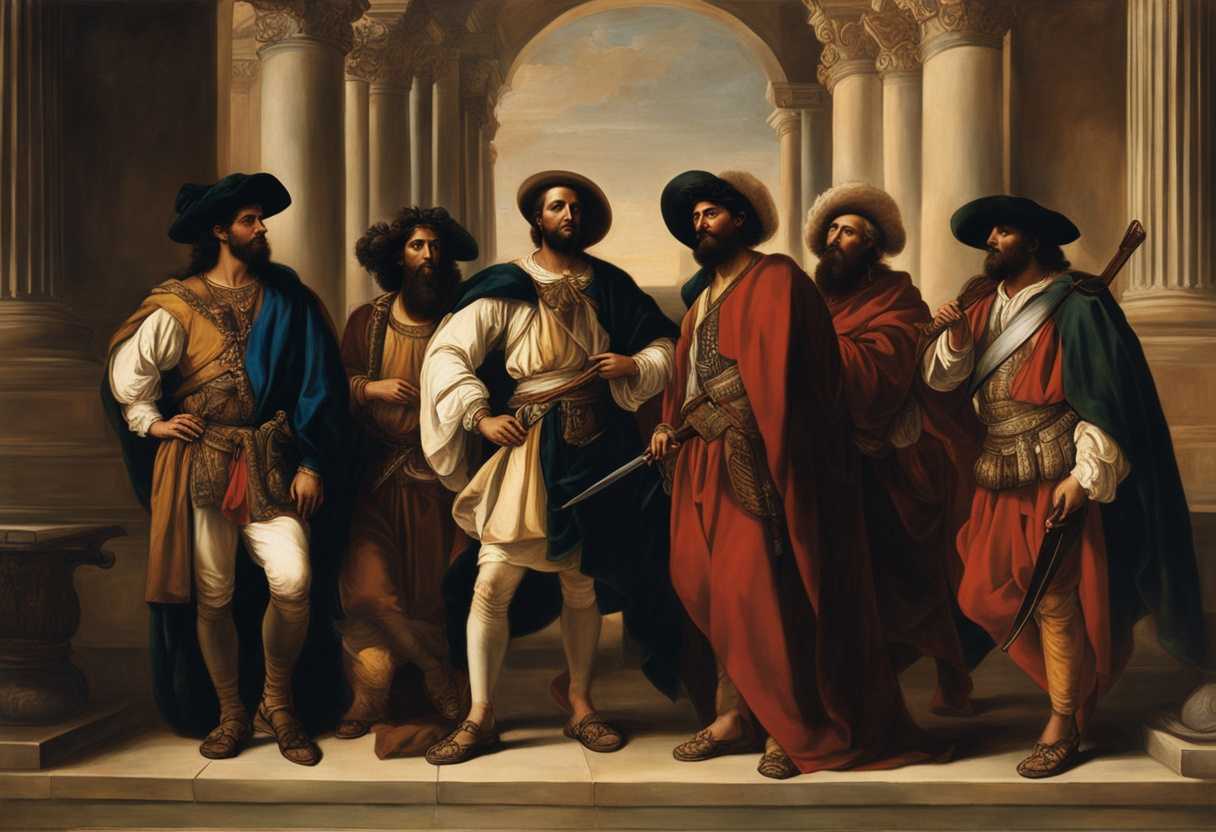
The True Meaning of Numbers 1
The Book of Numbers, the fourth book of the Pentateuch, is attributed to Moses, the great prophet and leader of the Israelites. This chapter marks a significant moment in the Israelites’ journey, as they prepare to enter the Promised Land. The census of the Israelite tribes is a crucial step in organizing the people and their resources for the challenges that lie ahead, and we witness it in this chapter. The Lord commands Moses and Aaron to count the men of Israel, from twenty years old and upward, who are able to go to war. This census will provide a clear picture of the strength and unity of the Israelite nation, as they stand on the cusp of their destiny.
The chapter also introduces the leaders of each tribe, who will play a vital role in the upcoming battles and the division of the land. These men, chosen by God, will be responsible for guiding their people and ensuring their obedience to the divine commands. Their names and lineages are carefully recorded, underscoring the importance of their roles in the unfolding of God’s plan. The Israelites, now face the daunting task of conquering the land that the Lord has promised them as we delve into this chapter, having been freed from the bondage of Egypt. The census and the appointment of tribal leaders are the first steps in this monumental journey, setting the stage for the dramatic events that will unfold in the chapters to come.
Numbers 1:1-4
The passage in Numbers 1:1-4 begins by setting the timeframe for the events to follow. It says, “The Lord spoke to Moses in the tent of meeting in the Desert of Sinai on the first day of the second month of the second year after the Israelites came out of Egypt.” This specific dating of the events is significant because it shows the meticulous record-keeping of the Israelites and how their journey was guided by God’s precise timing. The Desert of Sinai was a place where God frequently communicated with Moses, emphasizing the importance of seeking God’s guidance in the wilderness of our lives.
Furthermore, the command for a census is given by the Lord to Moses, instructing him to count all the men in Israel who are twenty years old or older and able to serve in the army. This act of taking a census was not just about counting numbers but had symbolic and practical significance. It demonstrated that each individual in the community mattered to God and had a role to play in His plan. Every person was seen as valuable and had a part to contribute to the collective purpose of the Israelites.
This act of numbering the men for military service also highlights the importance of being prepared for battle. The Israelites found it crucial in a physical sense as they journeyed through the wilderness and faced various challenges. However, it also carries a spiritual lesson for believers today. Ephesians 6:12 reminds Christians that their struggle is not against flesh and blood, but against the spiritual forces of evil. Therefore, we need to be spiritually equipped and ready to stand firm in our faith, just as the Israelites needed to be ready for physical battles.
The naming of the leaders from each tribe who were assigned to help Moses and Aaron in this task of counting the men further emphasizes the importance of leadership within the community. Each tribe had its own leader, someone respected and trusted to represent them accurately. This organizational structure provided order and efficiency in carrying out the census. It also underscores the principle of delegation and shared responsibility within the community of believers. Just as Moses appointed leaders to assist him, leaders in the church today are called to equip and guide the congregation in fulfilling God’s purposes collectively.
Numbers 1:5-16
Numbers 1:5-16 reads: “These are the names of the men who shall assist you: from Reuben, Elizur the son of Shedeur; from Simeon, Shelumiel the son of Zurishaddai; from Judah, Nahshon the son of Amminadab; from Issachar, Nethanel the son of Zuar; from Zebulun, Eliab the son of Helon; from the sons of Joseph: from Ephraim, Elishama the son of Ammihud; from Manasseh, Gamaliel the son of Pedahzur; from Benjamin, Abidan the son of Gideoni; from Dan, Ahiezer the son of Ammishaddai; from Asher, Pagiel the son of Ochran; from Gad, Eliasaph the son of Deuel; from Naphtali, Ahira the son of Enan. The Lord commands Moses to take a census of the Israelites in this section, counting each man of fighting age who is able to serve in the army. The names of the leaders chosen to assist in this task are listed according to their respective tribes. These leaders would be responsible for assisting Moses in counting the men eligible for military service from their tribes.
The mention of these leaders underscores the importance of organization and structure within the community of the Israelites. Each tribe had its own assigned leader who would take charge of the census for that particular tribe, showcasing a sense of order and arrangement among the people of God. This highlights the significance of leadership and delegation within a community, emphasizing the need for individuals to fulfill specific roles for the greater good of the community.
The emphasis on the tribal structure in this passage also serves as a reminder of the unity and diversity found among God’s people. Each tribe had its unique characteristics and strengths, yet they were all united under the banner of the Lord. This unity amidst diversity is a powerful testament to the beauty of God’s design for His people, where different individuals with distinct abilities and backgrounds come together to fulfill a common purpose.
The careful recording of each leader representing their tribe reinforces the idea of accountability and responsibility. These leaders were entrusted with the important task of accurately counting the men for the census, indicating the need for trustworthiness and integrity in carrying out their duties. This serves as a timeless reminder for believers to handle their responsibilities diligently and with utmost honesty, knowing that they are ultimately accountable to God for their actions. This passage from Numbers 1 not only provides a historical account of the organization of the Israelites for military purposes but also conveys timeless lessons about leadership, unity, accountability, and the importance of each individual playing their part in the broader community of believers. It serves as a foundational example of how God’s people are called to work together in harmony, each fulfilling their unique role for the advancement of His kingdom.
Numbers 1:17-19
Numbers 1:17-19 states: “So Moses and Aaron took these men who had been designated by name, and they assembled all the congregation together on the first day of the second month. They recorded their ancestry by their clans and families, and the men twenty years old or more were listed by name, one by one, as the Lord commanded Moses. And so he counted them in the Desert of Sinai. Moses and Aaron diligently follow the Lord’s command to take a census of the people of Israel in these verses. The importance of taking an official count of the people signifies order, organization, and unity. Each individual was valued and recognized by name, regardless of their status or background. This act of counting the people exemplifies God’s commitment to His people, showing that He cares for each one individually and collectively.
The act of recording their ancestry by clans and families is significant as it highlights the importance of lineage and heritage within the context of Israel. Family ties were crucial in the Old Testament, as they determined one’s inheritance, position, and responsibilities within the community. This meticulous recording of lineages also served to fulfill prophecies, especially those concerning the line of David from which the Messiah was foretold to come (Isaiah 11:1). The specific age requirement of being twenty years old or more for the census is noteworthy. Jewish tradition considered the age of twenty as the age of adulthood and responsibility. This age requirement indicates that those who were counted in the census were deemed mature enough to bear military service and other communal obligations. This reflects the transition from youth to adulthood and the readiness to take on the tasks and responsibilities of the community, echoing the themes of maturity and preparedness found throughout the Bible (1 Corinthians 13:11).
The act of counting the people in the Desert of Sinai is also significant as it occurred at a specific location tied to the Israelites’ journey from Egypt to the Promised Land. The desert symbolizes a period of testing, purification, and dependence on God’s provision, mirroring the spiritual journey of believers. The counting of the people in this desolate place emphasizes God’s presence and provision even in the most challenging and barren circumstances, reminding us that God is faithful and present in every season of our lives (Psalm 23:4). Numbers 1:17-19 highlights the significance of counting and recognizing each individual within the community, the importance of lineage and heritage, the transition to adulthood and responsibility, and God’s faithful provision in all circumstances. This act of taking a census serves as a reminder of the value of every individual in God’s eyes and the importance of unity, organization, and faithfulness in following God’s commands.
Numbers 1:20-21
Numbers 1:20-21 states, “And the children of Reuben, Israel’s eldest son, their generations, by their families, by their fathers’ houses, according to the number of names, every male individually from twenty years old and above, all who were able to go to war: those who were numbered of the tribe of Reuben were forty-six thousand five hundred.” This passage highlights the tribe of Reuben being counted among the Israelites for military service. The specific number mentioned, 46,500, represents the males from the tribe who were at least twenty years old and capable of going to war.
The inclusion of the tribe of Reuben in the census for military service underscores the importance of organization and preparedness among the Israelites as they journeyed through the wilderness. Each tribe had a specific role and responsibility within the community, and being able-bodied for war was crucial for the overall defense and protection of the people. This emphasis on readiness and unity within the tribes conveys a message of solidarity and cooperation, showing that each individual had a part to play in the collective well-being of the nation of Israel.
The historical context of the tribe of Reuben is also significant in understanding the broader narrative of the Bible. Reuben was the firstborn son of Jacob and Leah, making him technically the heir of the family. However, due to his actions, such as sleeping with his father’s concubine (Genesis 35:22), he lost his birthright as the firstborn (Genesis 49:3-4). This shift in leadership within the family serves as a reminder of the consequences of moral failings and the importance of integrity and righteousness in God’s eyes.
Furthermore, the tribe of Reuben’s participation in military service foreshadows future events in the Bible where they would be involved in battles and conflicts. For instance, during the conquest of Canaan, Reuben, along with the other tribes, played a significant role in fighting for the Promised Land (Joshua 4:12-13). This demonstrates how the actions and choices of individuals and tribes have lasting effects on the course of history and the fulfillment of God’s plans. Numbers 1:20-21 provides valuable insights into the organization, responsibilities, and historical context of the tribe of Reuben within the larger framework of the Bible. Readers can glean timeless lessons about unity, preparedness, moral accountability, and the interconnectedness of individual actions with divine purposes by examining this passage closely and considering its implications.
Numbers 1:22-23
Numbers 1:22-23 states, “From the sons of Simeon, their genealogical registration by their families, by their fathers’ households, their number, according to the number of names, every male twenty years old or older, everyone who could go out to war: those who were numbered of them, of the tribe of Simeon, were 59,300. The focus in these verses is on the tribe of Simeon and the registration of all eligible men, twenty years old and above, for military service. Simeon was the second son of Jacob and Leah, born after Reuben and before Levi. The tribe of Simeon had a significant population, with 59,300 men fit for war. This implies that the tribe was strong and capable of defending themselves if the need arose.
The registration of men for war reflects the organization and preparedness of the Israelites as they journeyed through the wilderness. It also highlights the importance of being ready to defend one’s people and land when necessary. This act of counting and organizing the men for battle was also a way to obey God’s command to be prepared for any challenges they might face on their journey to the Promised Land.
This emphasis on military preparedness can be seen in other parts of the Bible as well. Ephesians 6:10-18 in the New Testament talks about putting on the armor of God to stand against the schemes of the devil. This spiritual armor is a reminder for believers to be prepared for spiritual warfare. Just as the Israelites were organized for physical battle, Christians are called to be prepared for the spiritual battles they may face in their lives. The registration of the tribe of Simeon for war in Numbers 1:22-23 serves as a reminder of the importance of being ready to defend one’s faith, values, and people. It underscores the need for preparation, unity, and strength when facing challenges, whether physical or spiritual.
Numbers 1:24-25
The verses in Numbers 1:24-25 detail the appointment of a leader from the tribe of Issachar during the time when Moses took a census of the Israelites. The specifics seem straightforward at first glance, merely listing the names of the tribal leader, Nethanel son of Zuar. However, the significance lies in the wider context of the role these leaders played in guiding the Israelites through their journey in the wilderness.
Nethanel’s appointment as a tribal leader from Issachar is part of a systematic organization that God instructed Moses to establish to lead the Israelites. Each tribe had a representative leader who worked in tandem to ensure order, communication, and direction among the masses. This distribution of leadership helped the Israelites function as a cohesive unit, especially during times of movement and in battle, as they later faced various challenges on their journey to the Promised Land.
Through the selection of leaders from each tribe, God emphasized the importance of order, accountability, and unity within His chosen people. This concept of structured leadership is not isolated to the Israelites in the Old Testament but provides a timeless lesson for organizations and communities today. It highlights the significance of delegation, cooperation, and shared responsibility in achieving common goals, as exemplified in the unity that the tribal leaders fostered among the Israelites.
Furthermore, the mention of specific leaders such as Nethanel also serves to highlight individual stories within the broader narrative of the Bible. While Nethanel may not have a prominent role outside of this passage, his inclusion underscores the diversity and significance of each member within the community of believers. This idea resonates with the broader theme in the Bible that highlights how every individual has a role to play in God’s plan, regardless of how big or small their part may seem. We are reminded of the importance of order, cooperation, and the valuable contributions of each individual within a community when reflecting on Numbers 1:24-25 and the greater context of Moses’ census and the appointment of tribal leaders. Just as the Israelites relied on these appointed leaders to navigate through the wilderness, Christians can appreciate the significance of working together, following God’s guidance through appointed leaders, and acknowledging the unique role that each person plays in furthering God’s kingdom.
Numbers 1:26-27
The passage in Numbers 1:26-27 discusses the count of the sons of Judah in the context of the census that Moses took in the wilderness of Sinai. The men of war aged twenty years and older were being counted, as they would later be crucial for the upcoming conquest of the Promised Land. This section highlights the importance of each tribe in the assembly of the Israelites and their readiness for battle and obedience to God’s command.
The tribe of Judah, being one of the twelve tribes of Israel, held a significant role in the history of the nation. Judah was the fourth son of Jacob and Leah, and in Genesis 49:8-12, Judah received a blessing from his father, Jacob, that foretold the future leadership and royal lineage that would emerge from his descendants. Notably, King David and the future Messiah, Jesus Christ, descended from the tribe of Judah, fulfilling the prophecies about a powerful and everlasting ruler. The tribe of Judah was often at the forefront in battles and held a position of honor among the tribes.
The act of counting the men of war in the tribe of Judah serves as a reminder of the military strength and unity needed for the Israelites as they prepared for conquest. This demonstrates the principle of being prepared for God’s purposes and being organized for His plans to unfold. Additionally, the counting of the tribes signifies each individual’s value and role within the larger community. Paul uses the analogy of the body of Christ in 1 Corinthians 12:12-27 to emphasize the importance of every member in the church, just as every tribe had significance in the assembly of the Israelites. The counting of the sons of Judah in Numbers 1:26-27 reveals the themes of identity, unity, preparedness, and the significance of each individual in fulfilling God’s purposes. This act of numbering the tribes was not just a mundane task but a symbolic representation of God’s sovereignty, His faithfulness to His people, and the importance of community and collaboration in serving Him.
Numbers 1:28-29
Numbers 1:28-29 says, “Of the sons of Issachar, their generations by their families, by their fathers’ houses, according to the number of names, from twenty years old and above, all who were able to go to war: those who were numbered of them, of the tribe of Issachar, were fifty-four thousand four hundred. The focus in these verses is on the tribe of Issachar in Israel. The tribe of Issachar was one of the twelve tribes of Israel, descended from Issachar, who was one of the sons of Jacob. The database of the population was a crucial task for the Israelites at that time, especially for military purposes, as they were preparing to enter the Promised Land. This numbering was to ensure that they were prepared for battle and had an accurate count of their fighting men from each tribe.
The tribe of Issachar had a significant number of fighting men, totaling fifty-four thousand four hundred individuals above the age of twenty. This shows that they were a formidable force when it came to military strength. The mention of the age of twenty and above was significant because in Jewish culture, this age marked the beginning of adulthood and obligation to military service. It also symbolizes readiness and maturity, as those below twenty were often considered too young or inexperienced for warfare.
This emphasis on preparing for battle and counting their warriors reflects the importance of being organized and strategic in carrying out the Lord’s commands. This act of numbering the tribes also underscores the idea of unity and community within the Israelite camp. Each tribe had a specific role and contribution to make, and by knowing the number of men in each tribe, they could work together effectively in battle. This passage highlights the theme of preparation and readiness for the battles of life in the broader context of the Bible. Just as the Israelites were diligent in numbering their fighting men, believers are called to be vigilant and prepared for spiritual warfare. Ephesians 6:12 reminds us that “our struggle is not against flesh and blood, but against the rulers, against the authorities, against the powers of this dark world and against the spiritual forces of evil in the heavenly realms.” Therefore, we too must be equipped and counted among the soldiers of Christ, ready to stand firm in the face of adversity.
Numbers 1:30-31
Numbers 1:30-31 reads: “From the sons of Asher, their generations by their families, by their fathers’ houses, according to the number of names, from twenty years old and above, all who were able to go to war: those who were numbered of them of the tribe of Asher were forty-one thousand five hundred. The focus in this section is on the tribe of Asher and specifically on the men who were eligible for military service. The requirement was for men from twenty years old and above who were able to go to war to be numbered. The tribe of Asher, one of the twelve tribes of Israel, had a significant number of men able to fight, totaling forty-one thousand five hundred.
The emphasis on military readiness and organization in this verse reflects the practical aspects of life for the Israelites. The census was taken in this particular context to account for the fighting strength of each tribe as they prepared to enter the Promised Land. This gives insight into the strategic planning and preparedness of the Israelites as they journeyed through the wilderness, highlighting the importance of being organized and ready for potential conflicts.
The mentioning of the tribe of Asher specifically here is significant. Asher was one of the sons of Jacob, born to Leah’s servant Zilpah. The tribe of Asher settled in the northwest of Canaan, an area known for its fertile lands. Despite being relatively small in numbers compared to some of the other tribes like Judah or Ephraim, Asher played its part in the history of Israel.
This passage also underscores the idea of unity and cohesion within the community of Israel. Each tribe had its own identity and specific role to fulfill within the broader framework of the nation of Israel. The careful numbering and organization of the tribes served not only practical purposes but also symbolized the unity of the Israelites as they journeyed together under God’s guidance.
This focus on unity and organization can be seen in other parts of the Bible as well. Paul uses the analogy of the body to describe the unity and diversity within the church in 1 Corinthians 12:12-27. Just as each part of the body has its own function but is essential for the body to work as a whole, the tribes of Israel had their unique roles but were united under the common purpose of serving God and fulfilling His plans.
Numbers 1:32-33
Numbers 1:32-33 reads, “From the sons of Joseph: From the sons of Ephraim: according to their generations, by their families, by their fathers’ houses, according to the number of names, from twenty years old and above, all who were able to go to war: those who were numbered of them, of the tribe of Ephraim, were forty thousand five hundred. The focus in these verses is on the tribe of Ephraim, one of the twelve tribes of Israel. Ephraim was one of the two sons of Joseph, who himself was one of the twelve sons of Jacob (Israel). Joseph had been sold into slavery by his jealous brothers but eventually rose to be a powerful leader in Egypt. His two sons, Ephraim and Manasseh, were adopted by Jacob, becoming two of the twelve tribes of Israel.
The mention of Ephraim being able to go to war highlights the importance of the tribe’s readiness for battle. The ability to go to war was a crucial aspect of maintaining security, sovereignty, and protection for the community in ancient times. Ephraim’s large number of able-bodied men indicates their strength and preparedness to defend themselves and their land if necessary.
This emphasis on military readiness in Numbers 1 is part of the larger context of the census being taken to count the men of Israel who were able to serve in the army. This census was carried out as the Israelites prepared to journey through the wilderness towards the Promised Land under the leadership of Moses. Each tribe had its own role and responsibilities, including defense and warfare as highlighted here for the tribe of Ephraim. These verses showcase the organized structure of the Israelite community, with each tribe having its place and purpose in serving God’s larger plan. It also serves as a reminder of the need for preparedness and unity within the community, particularly when facing challenges or enemies. The story of Ephraim and the other tribes of Israel serves to demonstrate the importance of faith, unity, and obedience to God’s commands as they journey towards the fulfillment of His promises.
Numbers 1:34-35
Numbers 1:34-35 reads: “From the sons of Manasseh, from the age of twenty years and upward, everyone who is able to go to war in Israel: those who were numbered of them were 32,200.” These verses detail the number of able-bodied men from the tribe of Manasseh, who were counted as eligible for military service in Israel. This specific count is significant as it demonstrates the preparation and readiness of the Israelites for battle, which was essential for their survival and defense as they journeyed to the Promised Land. The focus in these verses is on the tribe of Manasseh, one of the twelve tribes of Israel descended from Joseph, who was one of the twelve sons of Jacob. Manasseh played a crucial role in the exodus of the Israelites from Egypt, journeying with them through the wilderness towards the land God had promised them. The fact that 32,200 men were counted from the tribe of Manasseh highlights their strength and capability in defending the nation of Israel.
This census of men fit for war echoes the importance of being prepared for spiritual battles in the Christian life. Ephesians 6:12 reminds believers that “our struggle is not against flesh and blood, but against the rulers, against the authorities, against the powers of this dark world and against the spiritual forces of evil in the heavenly realms.” Therefore, just as the Israelites were ready for physical warfare, Christians are called to be equipped with the armor of God to stand firm in the spiritual battles they face.
Furthermore, this enumeration of fighting men in Numbers serves as a reminder of the importance of unity and cooperation within the body of believers. Each tribe had a specific role to play in the defense and advancement of Israel, emphasizing the idea that every individual has a part to contribute to the greater mission. This concept of unity in diversity is also reflected in the New Testament, where Paul describes the Church as a body with many parts, each having its unique function but working together for the common good (1 Corinthians 12:12-27). The counting of the men of war from the tribe of Manasseh in Numbers 1:34-35 illustrates the significance of readiness, unity, and cooperation in facing challenges. It serves as a reminder for believers to be prepared for spiritual battles, recognizing their individual roles within the body of Christ, and standing together in the strength of the Lord.
Numbers 1:36-37
Numbers 1:36-37 specifically mentions the tribe of Dan from the nation of Israel. The verse states, “Of the people of Dan, their generations, by their clans, by their fathers’ houses, according to the number of names, from twenty years old and upward, every man able to go to war: those listed of the tribe of Dan were 62,700.” This passage is part of the larger context of the census that was conducted by Moses and Aaron to count all the men who were able to serve in the military from the different tribes of Israel. Each tribe had its own leader and specific number of men counted.
The tribe of Dan is known for its origin as the fifth son of Jacob and the first son of his concubine Bilhah. Throughout the Bible, the tribe of Dan faced challenges. Jacob’s blessing over Dan in Genesis 49:17 is quite intriguing as it mentions Dan being a judge among his brothers but also a serpent by the roadside, an adder in the path that bites the horse’s heels. This imagery foreshadows the tribe’s involvement in idolatry and its eventual decline.
Despite the tribe’s large number in the census, the tribe of Dan faced spiritual struggles. The Danites in Judges 18 seek out a new territory to settle in because the land allotted to them was not enough. They end up taking idols and a priest for themselves, departing from the worship of the one true God. This departure from God’s ways led to their downfall and eventual disappearance as an independent tribe in Israel (1 Kings 12:28-30). The tribe of Dan serves as a cautionary tale about the dangers of straying from God’s commandments and seeking out one’s own desires. This verse highlights the importance of obedience and faithfulness to God’s commands in a broader context. The tribe of Dan’s story shows the consequences of turning away from God and seeking worldly desires. It serves as a reminder for us today to stay true to God, follow His ways, and not be swayed by our own selfish ambitions. It emphasizes the timeless message throughout the Bible that obedience to God brings blessings, while disobedience leads to destruction.
Numbers 1:38-39
Numbers 1:38-39 states, “From the sons of Dan, their genealogies by their families, by their fathers’ households, according to the number of names, from twenty years old and upward, whoever is able to go out to war, their numbered men of the tribe of Dan were sixty-two thousand seven hundred. Of the sons of Asher, their genealogies by their families, by their fathers’ households, according to the number of names, from twenty years old and upward, whoever is able to go out to war, their numbered men of the tribe of Asher were forty-one thousand five hundred.” These verses provide a detailed account of the men who were eligible for military service from the tribes of Dan and Asher. Understanding the significance of numbering the men eligible for war is crucial in this context. The act of taking a census was not merely for numerical purposes but was symbolic of God’s faithfulness in fulfilling his promises to the Israelites. The Israelites were preparing for the conquest of the Promised Land by counting the men who could fight—a central theme in the book of Numbers.
The tribe of Dan had a substantial number of men fit for war, amounting to sixty-two thousand seven hundred. This number signified the strength and potential military prowess of the tribe. The tribe of Asher, though fewer in number compared to Dan, still had a significant fighting force of forty-one thousand five hundred men. These figures highlight the importance of military readiness and the need for each tribe to contribute to the defense and advancement of the community.
The tribes of Dan and Asher were among the twelve tribes of Israel, descendants of the sons of Jacob. Throughout the Bible, the stories of these tribes reveal their unique characteristics and roles within the broader narrative of God’s people. Dan’s name means “judge,” and they were known for their skilled warriors. Asher, whose name means “happy,” was blessed with fertile land and prosperity. The concept of numbering the people is not new in relation to other verses in the Bible. Each person of Israel must give a ransom for their life to the Lord when they are counted in the census to prevent a plague.” This act of numbering was a way to ensure obedience to God’s commands and to acknowledge His sovereignty over the nation. Numbers 1:38-39 sheds light on the organization and preparedness of the tribes of Dan and Asher for battle. It underscores the importance of unity, readiness, and trust in God’s promises as the Israelites journey towards their destiny. The detailed account of the numbered men serves as a reminder of the need for discipline, order, and faith in the face of challenges—a timeless lesson that resonates in both ancient times and contemporary life.
Numbers 1:40-41
Moses was told by the Lord to list the names of all the Israelite males twenty years old or more who are able to serve in the army in Numbers 1:40-41. Take a census of the whole Israelite community by their clans and families, counting the names of every male twenty years old or more.’”
This section from the Book of Numbers marks the beginning of Moses’ obedience to God’s command to take a census of the Israelites who were twenty years old and older and fit for military service. This act was significant as it was not merely a headcount, but also a means of organizing the community, understanding its strength, and preparing for their journey through the wilderness.
The act of counting the men for military service was to prepare them for the battles they might face as they journeyed towards the Promised Land. Here we see the practicality and wisdom in being prepared and organized for challenges ahead. This theme of preparation and strategic thinking is prominent throughout the Bible, reminding us of the importance of readiness and discipline in facing the trials of life.
Additionally, the emphasis on the specific age of those counted (twenty years old and older) is noteworthy. People in biblical times considered this age a point of maturity and responsibility. It was at this age that a man was typically seen as ready for military service, marriage, and other adult responsibilities. This serves as a reminder of the transition into adulthood and the responsibilities that come with it.
Furthermore, the idea of counting the Israelites by their clans and families underscores the importance of community and lineage. Each individual was not just a number, but a member of a larger family and tribe with a unique role and identity. This highlights the interconnectedness and unity that God values among His people. This idea is echoed in other parts of the Bible, such as in 1 Corinthians 12:12-27, where believers are likened to parts of a body, each with a specific function but all working together for the greater good. Numbers 1:40-41 teaches us about the significance of preparation, organization, responsibility, community, and unity within the context of the Israelites’ journey through the wilderness. These principles are timeless and applicable to our lives today as we navigate our own journeys, face challenges, and seek to fulfill our roles within the broader community of believers.
Numbers 1:42-43
Numbers 1:42-43 states, “From the descendants of Naphtali: All the men twenty years old or more who were able to serve in the army were counted, according to their clans and families. The number of all the men of Naphtali was 53,400. The verses in these verses specifically enumerate the tribe of Naphtali, one of the twelve tribes of Israel. The counting of each tribe was significant as it highlighted the importance of organization and readiness for war among the Israelites. This count was not just a simple headcount but a way to establish order, allocate responsibilities, and demonstrate unity among the tribes.
The tribe of Naphtali was named after Jacob’s son Naphtali, born to him by his wife Bilhah, who was Rachel’s maidservant (Genesis 30:7-8). Naphtali was the sixth son of Jacob and was blessed by Jacob before his death (Genesis 49:21). The tribe of Naphtali settled in the northern part of Canaan, near the Sea of Galilee, and bordered the tribes of Zebulun and Asher.
The specific number mentioned in these verses, 53,400 men, indicates the strength and size of the tribe of Naphtali. This large number of men capable of serving in the army was a testament to their potential military power and ability to contribute to the defense of the Israelites as a whole.
This enumeration of tribes and their military strength serves as a reminder of the importance of unity and preparedness among God’s people. It also reflects the theme of order and organization, which is essential for any community to function effectively. Just as each tribe had a specific role and contribution, every individual believer has a unique role to play in the body of Christ, working together for the common good (1 Corinthians 12:12-27). Counting the tribes of Israel in Numbers 1 demonstrates the practicality and significance of emphasizing the need for unity, organization, and teamwork, principles that are timeless and applicable to the Church today.
Numbers 1:44-46
Moses, Aaron, and the twelve leaders of Israel counted these men, each one representing his family, as stated in Numbers 1:44-46. All the Israelite men twenty years old or more who were able to serve in Israel’s army were counted according to their families. The total number was 603,550.”
This section of the passage highlights the meticulous counting of the Israelite men who were eligible for military service. The responsibility for this census was on Moses, Aaron, and the twelve leaders of Israel, each representing their family. This enumeration was not merely about taking a headcount but also signified the organization and preparation of the Israelite community for the journey ahead. The fact that the count was so specific, down to each family and representing unity within the tribes of Israel, illustrates the importance of order and structure in God’s plans.
Furthermore, the number 603,550 itself is significant. It shows the sheer size and strength of the Israelite community at that time. This vast number underscores the fulfillment of God’s promise to Abraham in Genesis 22:17, where God said His descendants would be as numerous as the stars in the sky and the sand on the seashore. The fulfillment of this promise through the countless Israelites demonstrates God’s faithfulness and His power to multiply His chosen people.
The emphasis on military readiness in the counting of the men also points to the importance of being prepared for the challenges and battles that lie ahead. Throughout the Bible, there are numerous instances where God’s people were called to be strong and courageous in the face of adversity. For instance, in Joshua 1:9, God commands Joshua to be strong and courageous as he leads the Israelites into the Promised Land. This theme of readiness for spiritual warfare is echoed in the New Testament as well, where believers are urged to put on the full armor of God to stand against the schemes of the devil (Ephesians 6:10-18). Numbers 1:44-46 teaches us about the importance of order, unity, and readiness in fulfilling God’s purposes. It shows us that God is a God of meticulous planning and organization, and He equips His people for the challenges they will face. Just as the Israelites were counted and prepared for battle, we too must be disciplined and prepared for the spiritual battles we encounter in our lives, trusting in God’s faithfulness and strength to see us through.
Numbers 1:47-54
Numbers 1:47-54 reads: “The Levites, however, were not counted along with them by their ancestral tribe. For the Lord had said to Moses: ‘Do not count the tribe of Levi or include them in the census of the other Israelites. Appoint the Levites to be in charge of the tabernacle of the covenant law—over all its furnishings and everything belonging to it. They are to carry the tabernacle and all its furnishings; they are to take care of it and encamp around it. Whenever the tabernacle is to move, the Levites are to take it down, and whenever the tabernacle is to be set up, the Levites shall do it. Anyone else who approaches it is to be put to death. The Israelites are to set up their tents by divisions, each of them in their own camp under their standard. The Levites, however, are to set up their tents around the tabernacle of the covenant law so that my wrath will not fall on the Israelite community. The Levites are to be responsible for the care of the tabernacle of the covenant law.’”
This passage highlights the unique role of the Levites within the Israelite community. While the other tribes were counted in the census, the Levites were set apart for a special purpose. They were designated to be in charge of the tabernacle, the sacred place where God’s presence dwelt among the Israelites. This task was of utmost importance, as the tabernacle held the Ark of the Covenant and was the central place of worship for the Israelites.
The exclusion of the Levites from the census underscores their spiritual role within the community. They were not to be considered just as another tribe among the Israelites, but rather as ministers of God’s sanctuary. This separation symbolizes the concept of consecration and holiness, emphasizing that the Levites were to be wholly dedicated to serving the Lord.
The strict instructions regarding the movement and care of the tabernacle demonstrate the reverence and respect that the Israelites were to have for God’s dwelling place. The consequences for unauthorized approach to the tabernacle, even in its dismantled state, were severe, highlighting the sanctity of the space and the need for obedience to God’s commands.
This passage also points to the importance of order and organization within the Israelite camp. Each tribe had a designated place around the tabernacle, reflecting a sense of unity and cohesion among the people. The arrangement of the camp under their standards was a visual representation of the Israelites’ identity as God’s chosen people, each with a role to play in fulfilling His purposes. This passage serves as a reminder of the significance of honoring God’s holiness, following His commands diligently, and fulfilling the roles to which we are called within the body of believers. It stresses the importance of reverence in worship and the need for obedience to God’s instructions in all aspects of our lives.
After Numbers 1
The reverend closed the book and let out a deep sigh. He had read this chapter many times before, but the weight of its message never lessened. The people of his congregation faced trials and tribulations, just as the Israelites had in the wilderness. Yet, through it all, God remained faithful. The reverend knew their journey was far from over as he prepared to share this truth with his flock. The next chapter would reveal the challenges that lay ahead, but also the promise of God’s unwavering presence and guidance.

Reverend Michael Johnson is an experienced Church Minister with a profound expertise in spirituality and guidance. With a serene presence and a compassionate heart, he has faithfully served his congregation for over 20 years, leading them on a spiritual journey towards inner peace and enlightenment. Reverend Johnson’s extensive knowledge of religious philosophies and profound understanding of human nature have made him a trusted confidant and mentor to many, as he seamlessly weaves his profound wisdom into life teachings. Reverend Johnson’s calming demeanor and empathetic nature continue to uplift and heal souls, nurturing a sense of unity and tranquility within his community.