
Numbers 33:37-38 is about the Israelites’ journey through the wilderness, specifically mentioning the death of Aaron and the assumption of the priestly duties by his son Eleazar, highlighting the transition in leadership within the community.
37 They set out from Kadesh and camped at Mount Hor, on the edge of the land of Edom.
38 And Aaron the priest went up Mount Hor at the command of the Lord and died there, in the fortieth year after the people of Israel had come out of the land of Egypt, on the first day of the fifth month.
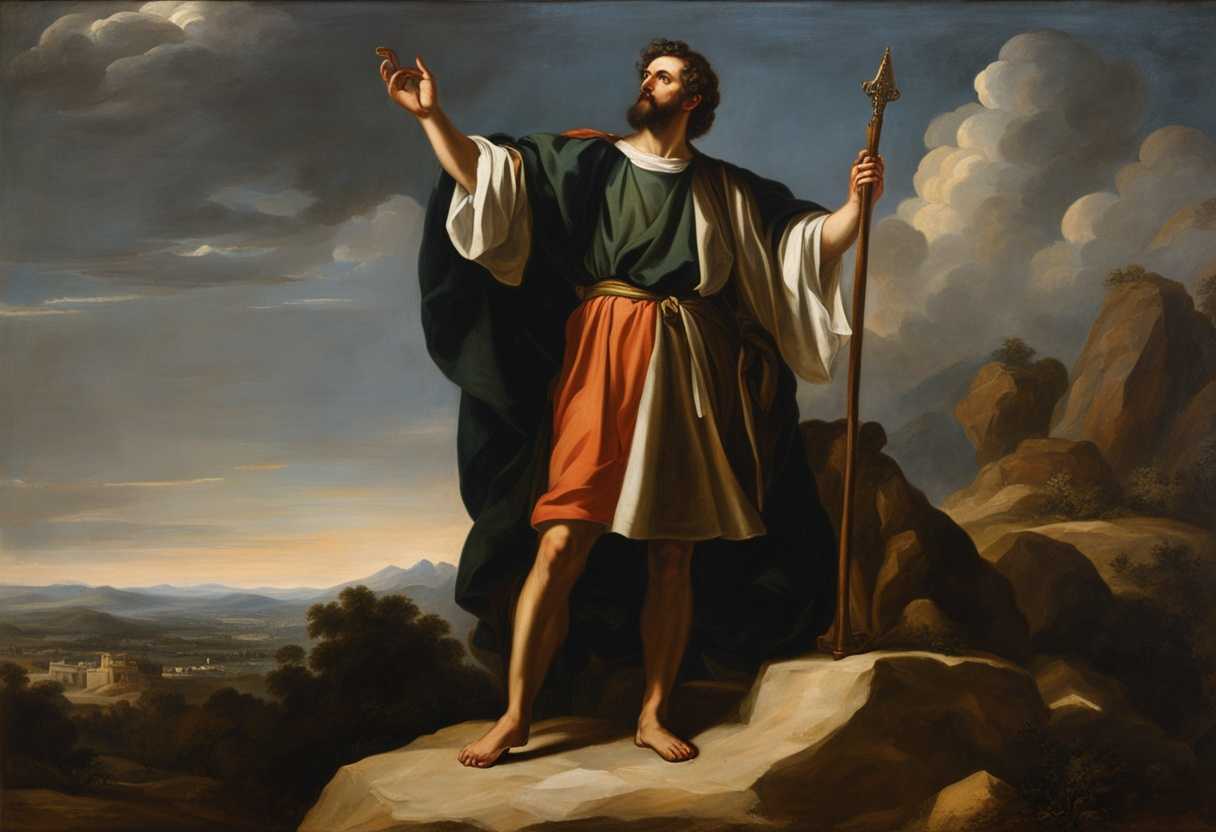
Setting the Scene for Numbers 33:37-38
The scene in Numbers 33:37-38 takes place as the Israelites continue their journey through the wilderness towards the Promised Land. They have just departed from the area of Kadesh and are now encamped in the plains of Moab by the Jordan River, across from Jericho. The Israelites have been wandering for years, following the guidance of Moses and Aaron, as they draw closer to the land that God has promised them.
In this particular moment, the Israelites are led by Moses and Aaron, who have been instrumental in guiding and instructing the people throughout their journey. The camp is bustling with activity as families set up their tents, children play, and livestock graze in the surrounding fields. The sound of the Jordan River can be heard in the distance, a reminder of the physical barrier that stands between the Israelites and the land they have been longing for.
As the sun sets over the plains of Moab, the Israelites gather around their leaders, eager to hear the next steps in their journey towards the Promised Land. Moses and Aaron stand before the people, their faces illuminated by the fading light, as they prepare to impart God’s instructions and blessings upon the weary but hopeful nation. The scene is one of anticipation, faith, and unity as the Israelites continue to trust in God’s plan for their future.
What is Numbers 33:37-38 about?
Moses led the Israelites on their journey from Kadesh to Mount Hor in the Bible. This verse marks a crucial transition in the Israelites’ journey towards the Promised Land, as it highlights the passing of the torch from Aaron to Eleazar. The verse underscores the theme of continuity and succession within the community of believers by detailing this journey and the change in leadership. The inevitable cycles of life and leadership remind us as we reflect on this verse. Aaron passed away, making way for Eleazar to assume his responsibilities, and we are called to consider our own roles in the grander narrative of life. Are we prepared to step into positions of leadership when called upon? How do we handle moments of transition and change within our own communities and circles of influence? Through this verse, we are encouraged to contemplate the enduring legacy we leave behind and the ways in which we inspire those who come after us. Let us ponder the journey from Kadesh to Mount Hor, taking inspiration from Moses, Aaron, and Eleazar. We should strive to navigate transitions with grace and faith, trusting in the divine plan that guides our paths. We too can find strength in our faith as we journey through the peaks and valleys of life, just as Moses led the Israelites through the wilderness. We should embrace the lessons of succession and leadership, knowing that each step we take is part of a larger journey towards fulfillment and purpose.
Understanding what Numbers 33:37-38 really means
The Book of Numbers, nestled within the Torah, chronicles the Israelites’ expedition from Mount Sinai to the Promised Land. In Numbers 33, a chapter delineating the stages of their wilderness trek, verses 37-38 spotlight the poignant moment of Aaron, the high priest’s demise on Mount Hor. This juncture signifies a pivotal shift in the Israelites’ odyssey, transitioning from Kadesh, a site of trials and rebellion, to Mount Hor, symbolizing transformation and bereavement. Aaron’s ascent to Mount Hor, as decreed by the Lord, epitomizes unwavering obedience, culminating in his passing, denoting the conclusion of an epoch under his influential leadership.
The phrase “They left Kadesh and camped at Mount Hor, on the border of Edom” encapsulates a profound shift in the Israelites’ narrative, symbolizing movement from adversity to transformation. Kadesh, a site fraught with challenges, contrasts sharply with Mount Hor, a locale marked by significant change and loss. Aaron’s obedient journey to Mount Hor and subsequent passing underscore the theme of submission to divine will, even unto death. His demise not only signifies the end of an era but also underscores the pivotal role he played in guiding the Israelites spiritually.
In Exodus 28:1, Aaron’s appointment as the high priest underscores his pivotal role in Israel’s spiritual leadership. Deuteronomy 10:6 provides another account of Aaron’s passing, emphasizing the continuity of leadership through his son Eleazar. Hebrews 9:11-12 draws a parallel between Aaron’s high priesthood and Jesus as the ultimate high priest, highlighting the eternal nature of Christ’s priestly ministry. These passages intertwine to underscore the significance of faithful leadership and the continuity of God’s plan across generations.
The relevance of Aaron’s death resonates with contemporary audiences, serving as a poignant reminder of the inevitability of change and the significance of steadfast leadership. It prompts reflection on our spiritual journeys, replete with transitions, challenges, and moments of obedience. Just as the Israelites navigated through loss and change, we are encouraged to trust in God’s providence amidst life’s uncertainties.
Consider a scenario where a revered community leader passes away, leaving a void in the town’s fabric. Despite the profound loss, the leader’s teachings and structures endure, guiding the community forward. Similarly, Aaron’s demise marked a significant juncture for the Israelites, yet his legacy and priestly lineage persisted, ensuring spiritual guidance for the people. This anecdote underscores the enduring impact of faithful leadership and the continuity of God’s plan through successive generations.
In conclusion, Numbers 33:37-38 serves as a poignant testament to the importance of faithful leadership and the perpetuity of God’s divine design. It beckons us to introspect on our spiritual sojourns, the transitions we encounter, and the legacy we forge. By drawing inspiration from Aaron’s example and the Israelites’ journey, we glean strength and resolve to traverse our spiritual paths with unwavering faith and obedience.
How do we handle defeat and loss in life?
When faced with defeat and loss in life, it is important to remember that setbacks and hardships are a part of the journey. Just like the Israelites faced challenges on their way to the promised land, we too will encounter obstacles and defeats along our own paths. It is crucial to remain steadfast in our faith, seeking strength and guidance from a higher power to help us navigate through difficult times. Reflecting on the lessons we can learn from the experience is essential in moments of defeat. Rather than letting loss define us, we can use it as an opportunity for growth and self-improvement. We can move forward with resilience and determination by maintaining a positive mindset and trusting in a higher purpose, knowing that each setback is a stepping stone towards our ultimate destination.
Application
Let’s navigate our life journey with the faith and determination of the Israelites in the desert. Embrace the guidance of a higher power as we navigate through the twists and turns of our personal and professional lives. Let’s trust in the divine plan and have the courage to follow where it leads. Will you heed the call to follow the path laid out by the universe and embrace the faith to guide you through the unknown?

Reverend Michael Johnson is an experienced Church Minister with a profound expertise in spirituality and guidance. With a serene presence and a compassionate heart, he has faithfully served his congregation for over 20 years, leading them on a spiritual journey towards inner peace and enlightenment. Reverend Johnson’s extensive knowledge of religious philosophies and profound understanding of human nature have made him a trusted confidant and mentor to many, as he seamlessly weaves his profound wisdom into life teachings. Reverend Johnson’s calming demeanor and empathetic nature continue to uplift and heal souls, nurturing a sense of unity and tranquility within his community.