
Numbers 4:4-15 is about the specific instructions given by God to the Levites regarding the procedures and duties they are to carry out in the dismantling, transportation, and reassembly of the tabernacle, emphasizing the importance of reverence and proper handling of sacred items.
4 This is the service of the sons of Kohath in the tent of meeting: the most holy things.
5 When the camp is to set out, Aaron and his sons shall go in and take down the veil of the screen and cover the ark of the testimony with it.
6 Then they shall put on it a covering of goatskin and spread on top of that a cloth all of blue, and shall put in its poles.
7 And over the table of the bread of the Presence they shall spread a cloth of blue and put on it the plates, the dishes for incense, the bowls, and the flagons for the drink offering; the regular showbread also shall be on it.
8 And they shall spread a cloth of blue and cover the lampstand of the light, with its lamps, its tongs, its trays, and all the vessels for oil with which it is supplied.
9 Then they shall take a blue cloth and cover the lampstand for the light, with its lamps, its tongs, its trays, and all the vessels for oil with which it is supplied.
10 And they shall put it with all the utensils of the altar, and they shall spread a cloth of blue over it, and shall put on it the poles.
11 Over the golden altar they shall spread a cloth of blue and cover it with a covering of goatskin and shall put in its poles.
12 And they shall take all the vessels of ministry used for the service in the tabernacle, and they shall put them in a cloth of blue and cover them with a covering of goatskin and put them on the carrying frame.
13 and they shall take away the ashes from the altar and spread a purple cloth over it.
14 And they shall put on it all the utensils of the altar, which are used for the service there, the fire pans, the forks, the shovels, and the basins, all the utensils of the altar; and they shall spread on it a covering of goatskin, and shall put in its poles.
15 And when Aaron and his sons have finished covering the sanctuary and all the furnishings of the sanctuary, as the camp sets out, after that the sons of Kohath shall come to carry these, but they must not touch the holy things, lest they die. These are the things of the tent of meeting that the sons of Kohath are to carry.
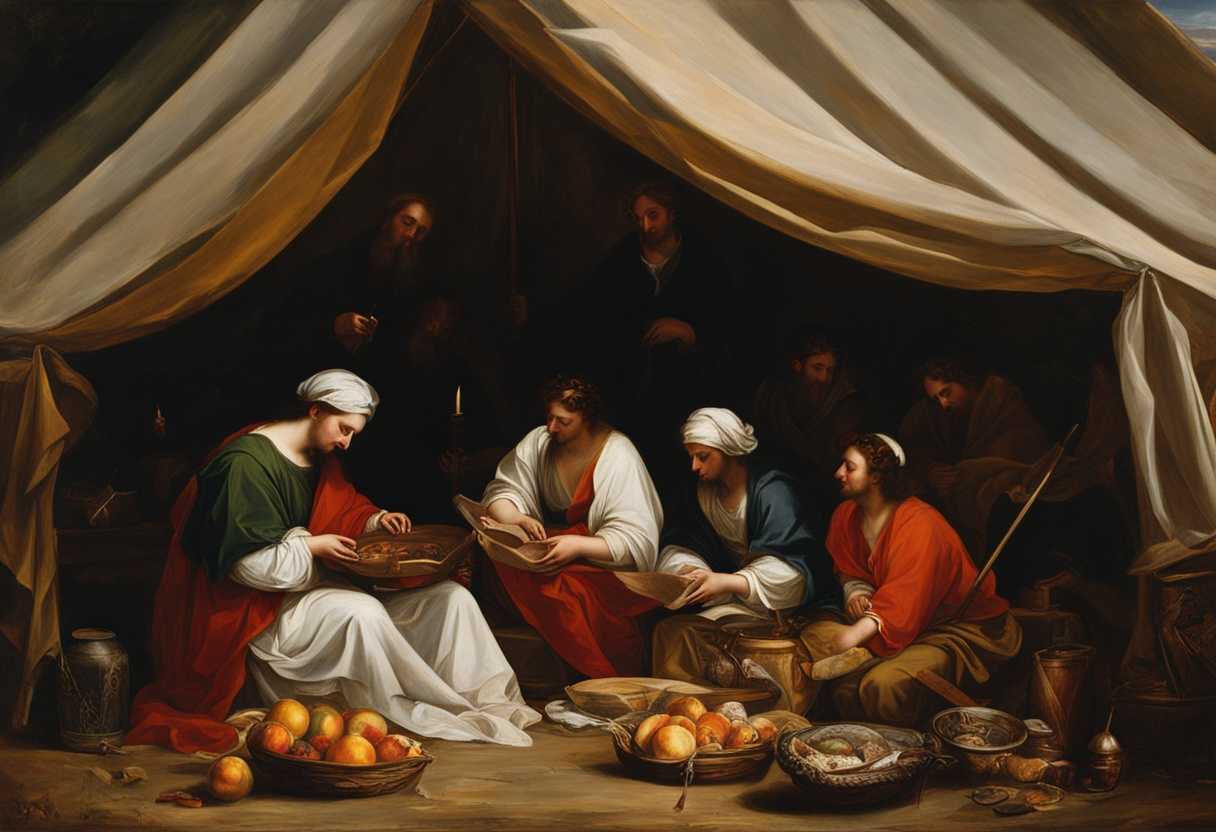
Setting the Scene for Numbers 4:4-15
In the book of Numbers, chapters 4:4-15, the scene is set in the wilderness of Sinai, where the Israelites are encamped during their journey from Egypt to the Promised Land. The focus is on the Levites, who have been tasked with the responsibility of transporting the sacred items of the tabernacle as the community moves from place to place. The specific instructions given in these verses detail how the various components of the tabernacle are to be covered, carried, and transported by the Levites.
Moses, the leader of the Israelites, has gathered the Levites together to assign them their duties and explain the importance of their role in preserving the sanctity of the tabernacle. The Levites, including the clans of Kohath, Gershon, and Merari, have been chosen for this sacred task due to their lineage and dedication to serving God. As they listen attentively to Moses’ instructions, they prepare themselves for the solemn responsibility of caring for the holy objects of the tabernacle during the journey through the wilderness.
The surroundings are stark and desert-like, with the tabernacle standing out as a beacon of God’s presence among the Israelites. The Levites, dressed in their priestly garments, stand ready to fulfill their duties with reverence and obedience. The scene is filled with a sense of solemnity and purpose as the community prepares to continue their journey under the guidance and protection of God.
What is Numbers 4:4-15 about?
The specific instructions given to the Kohathites regarding the transportation of sacred items in the tabernacle are seen in this verse. The Kohathites were a branch of the Levites responsible for carrying and taking care of the most sacred objects of the tabernacle. This verse highlights the importance of treating sacred items with the utmost reverence and care. The instructions emphasize that these items must be covered before they are moved in order to protect them from being seen by unauthorized persons. This act of covering shows a deep respect for the sacred nature of these objects and ensures that they are not profaned. We, as teachers, can draw a parallel between this verse and how we handle valuable or fragile items in our own lives. Just like the Kohathites were entrusted with the sacred objects of the tabernacle, we are often entrusted with important responsibilities and possessions. This verse reminds us of the importance of handling these things with care, respect, and reverence. It prompts us to reflect on how we treat the valuable aspects of our lives, ensuring that we approach them with the same level of mindfulness and reverence that the Kohathites demonstrated in carrying the sacred items of the tabernacle. Let’s consider, how can we apply this principle of reverence and care to the things we value and cherish in our own lives?
Understanding what Numbers 4:4-15 really means
In Numbers 4:4-15, we delve into the meticulous instructions given to the Kohathites, a subgroup of the Levites, regarding their duties in transporting the Tabernacle and its sacred objects. These Kohathites were entrusted with carrying the most holy items, such as the Ark of the Covenant, but with a significant caveat – they were not allowed to touch or even see these items directly. The priests had to cover these sacred objects before the Kohathites could transport them, highlighting the extreme reverence and care required in handling the holy things of God.
“The service of the sons of Kohath in the tent of meeting” emphasizes the specific and sacred role assigned to the Kohathites, underlining the crucial nature of their responsibilities in maintaining the sanctity of the Tabernacle. The phrase “They shall not touch the holy things, lest they die” underscores the profound holiness of these objects and the severe consequences of any mishandling, showcasing the utmost reverence demanded in worship.
Drawing parallels to other biblical passages, Exodus 25:10-22 describes the construction of the Ark of the Covenant, one of the sacred items the Kohathites were tasked with carrying, emphasizing its sanctity. Leviticus 16:2 warns against entering the Most Holy Place without proper authorization, stressing the need for reverence and adherence to correct procedures in dealing with holy objects. Additionally, 2 Samuel 6:6-7 recounts the tragic story of Uzzah, who was struck dead for touching the Ark, serving as a poignant reminder of the repercussions of disregarding God’s instructions concerning sacred items.
The relevance of this passage to contemporary believers is profound. It prompts us to approach our faith and worship with the same reverence and respect demonstrated by the Kohathites. It also underscores the significance of fulfilling our designated roles and responsibilities with diligence and honor, mirroring the commitment shown by the Kohathites in their sacred duties. Furthermore, it underscores the vital importance of obedience to God’s commands in our daily lives, just as the Kohathites were required to adhere strictly to the instructions given to them.
To illustrate this concept further, consider a cherished family heirloom passed down through generations, symbolizing your family’s heritage and values. Just as you would handle such an heirloom with utmost care and respect, the Kohathites handled the sacred objects of the Tabernacle. This analogy underscores the reverence we should have for all things sacred in our lives, including our faith practices and beliefs. In modern times, the care we show towards our places of worship and sacred texts can mirror the instructions given to the Kohathites, guiding us on how to honor and respect our faith traditions.
In conclusion, Numbers 4:4-15 serves as a poignant reminder of the sanctity of our faith and the imperative of approaching it with reverence, respect, and obedience. It challenges us to recognize the sacredness within our own lives and to fulfill our roles and responsibilities with the same level of diligence and care as the Kohathites exhibited in their service to God.
How can we approach God with holiness?
Approaching God with holiness involves being consecrated and purified. This extends beyond physical cleanliness to include a state of spiritual purity and reverence. To serve in a sacred capacity, one must set oneself apart and dedicate oneself solely to the service of God. This can be achieved through following rituals and laws that promote sanctity and devotion. Adhering to the prescribed methods and procedures is essential in approaching God with holiness. This includes being mindful of one’s actions and intentions, ensuring that they align with God’s commandments and expectations. Individuals can cultivate a deeper connection with the divine and experience a heightened sense of spiritual fulfillment by upholding the standards of holiness set forth in sacred texts. Approaching God with holiness ultimately requires a sincere commitment to living a life that reflects reverence and respect for the sacred. It involves striving for purity in both body and spirit, and maintaining a mindset of humility and gratitude in all interactions with the divine. Individuals can draw closer to God and experience the blessings that come from walking in His ways by continually seeking to enhance their holiness through prayer, worship, and righteous living.
Application
Are you ready to serve the Lord with unwavering dedication and reverence, just like the Levites in Numbers 4:4-15? Let’s embark on this journey together, committing ourselves wholeheartedly to our divine responsibilities. Like a skilled worker dedicated to their craft or a loving parent caring for their family, let us approach our service to God with utmost sincerity and devotion. Let’s not just go through the motions, but strive to honor God with every action we take. Will you rise to the challenge and serve the Lord wholeheartedly in all that you do?

Reverend Michael Johnson is an experienced Church Minister with a profound expertise in spirituality and guidance. With a serene presence and a compassionate heart, he has faithfully served his congregation for over 20 years, leading them on a spiritual journey towards inner peace and enlightenment. Reverend Johnson’s extensive knowledge of religious philosophies and profound understanding of human nature have made him a trusted confidant and mentor to many, as he seamlessly weaves his profound wisdom into life teachings. Reverend Johnson’s calming demeanor and empathetic nature continue to uplift and heal souls, nurturing a sense of unity and tranquility within his community.