
Proverbs 31:36 is about the virtuous woman’s descendants praising her for her good works and following in her footsteps.
36 She opens her mouth with wisdom,
and the teaching of kindness is on her tongue.
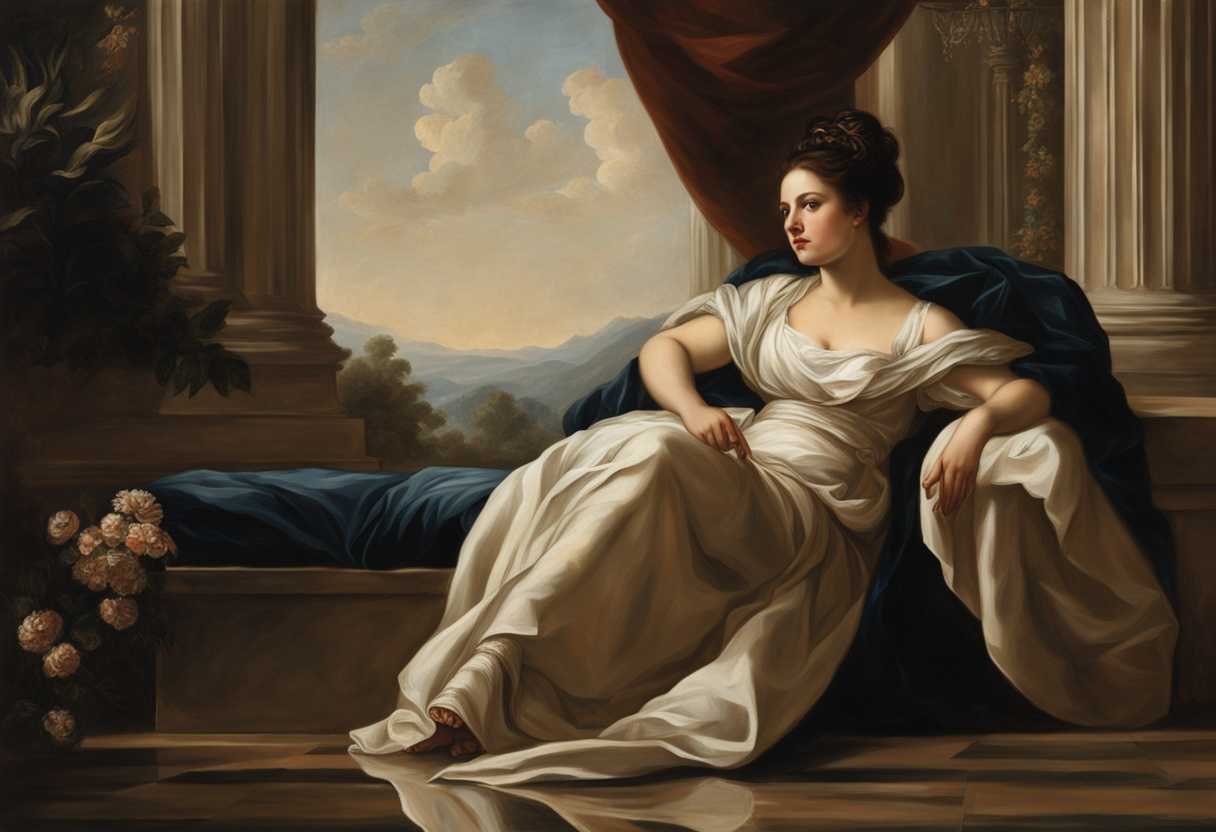
Setting the Scene for Proverbs 31:36
In Proverbs chapter 31, we find King Lemuel recounting the words his mother taught him. The scene is set in a grand hall within the royal palace, where King Lemuel sits on his throne, surrounded by his advisors and courtiers. The room is adorned with rich tapestries, golden candelabras casting a warm glow, and the air is filled with the scent of exotic incense.
Among those gathered in the hall is Lemuel’s mother, Queen Mother Bathsheba, a woman of wisdom and grace. She stands beside her son, her presence commanding respect and attention. As she imparts her final words of wisdom to the king and those present, her voice is firm yet gentle, her words filled with insight and guidance.
The courtiers listen intently, knowing the value of Queen Mother Bathsheba’s teachings. Her words from Proverbs 31 resonate deeply with them, reminding them of the virtues of a noble woman and the importance of wisdom, kindness, and strength. As the scene unfolds, it is evident that the wisdom passed down from generation to generation will continue to shape the kingdom for years to come.
What is Proverbs 31:36 about?
This verse highlights the importance of showing respect and honor to a woman of noble character. It emphasizes the value of recognizing and appreciating the qualities that make a woman admirable, such as integrity, strength, kindness, and wisdom. This verse invites us to contemplate the significance of acknowledging and valuing the virtues and contributions of women who exemplify noble character in their actions and words. Honoring and respecting a woman of noble character uplifts her spirit, affirms her worth, and inspires her to continue embodying virtues that benefit those around her. Reflect on the qualities that define noble character and think about how recognizing and showing respect for these traits can lead to a deeper appreciation of the women who possess them. Honoring women of noble character uplifts and empowers them and contributes to a culture that values and celebrates the positive influence and qualities they bring to the world. We can actively show respect and honor towards the women of noble character in our lives by pondering on the ways. How can we express gratitude for their impact and virtues? How can we amplify their voices and support their endeavors? We should strive to create a community that values and cherishes the virtues of noble women, as this cultivates a culture of respect, admiration, and empowerment for all.
Understanding what Proverbs 31:36 really means
Proverbs 31:30, a verse often overlooked due to its proximity to the end of the chapter, holds profound wisdom that transcends time and societal norms. In a world where appearances often take precedence over substance, this verse serves as a poignant reminder of where true value lies. The opening statement, “Charm is deceptive,” cuts through the facade of superficial allure, urging us to look beyond mere charisma and outward attractiveness. It challenges us to discern the authenticity of one’s character, emphasizing the importance of integrity and genuine virtue over surface-level charm.
The subsequent declaration, “Beauty is fleeting,” strikes a chord with the transient nature of physical attractiveness. In a culture fixated on youth and external beauty, this assertion serves as a sobering reality check. It prompts us to shift our focus from the ephemeral to the enduring, redirecting our gaze towards qualities that withstand the test of time. The juxtaposition of charm and beauty with the concluding statement, “but a woman who fears the Lord is to be praised,” elevates the discourse to a spiritual plane.
The reverence and awe of the Lord stand as the pinnacle of praise-worthy attributes, surpassing all temporal accolades. This fear of the Lord encompasses not just a sense of awe and respect but also a deep-seated faith and obedience. It underscores the intrinsic value of a soul attuned to God’s will, radiating a beauty that transcends the physical realm. The verse beckons us to reevaluate our standards of admiration and reorient our hearts towards qualities that align with God’s eternal perspective.
Drawing parallels to other biblical passages such as 1 Samuel 16:7 and 1 Peter 3:3-4, we find a consistent theme emphasizing the primacy of inner beauty over external adornment. These scriptures converge to form a tapestry of wisdom that extols the virtues of a gentle and quiet spirit, rooted in a profound reverence for God. In a contemporary context saturated with airbrushed images and superficial standards, the timeless truth of Proverbs 31:30 resonates with renewed relevance.
Consider the narrative of individuals like Sarah, whose journey mirrors the transformation from fleeting charm to enduring grace. As Sarah embraced a deeper relationship with God, her inner radiance outshone her external beauty, drawing admiration for her faith and character. Her story serves as a living testament to the enduring power of a heart attuned to God’s will, embodying the essence of Proverbs 31:30. Let us heed the wisdom encapsulated in this verse, embracing the imperishable beauty that stems from a reverent fear of the Lord.
What kind of legacy am I leaving behind?
The legacy you are leaving behind is one of wisdom, kindness, and strength. You are remembered for the way you spoke with wisdom and kindness, always seeking to help and uplift those around you. Your actions were a testament to your character, showing strength in times of difficulty and perseverance in all you did.
People remember you as someone who was always prepared, never idle, and had a heart filled with generosity and love. Your legacy is one of honor and respect, as you were a beacon of light in a world that sometimes seems dark. Your influence continues to be felt even after you are gone, as your words and deeds continue to inspire and bring hope to those who knew you.
Your legacy speaks of a life well-lived, one that was guided by principles of faith, integrity, and compassion. You are remembered as a woman of noble character, whose value far surpasses material possessions. Your example has left an indelible mark on the lives of those who knew you, encouraging them to strive for excellence and to live with purpose and grace.
Application
Embrace the timeless wisdom of Proverbs 31:30. Prioritize inner beauty and your connection with the Lord. Let these be the cornerstone of your life’s building blocks. Today, let your actions reflect your reverence for God. How will you honor the truth and beauty within you while walking with the Lord?

Reverend Michael Johnson is an experienced Church Minister with a profound expertise in spirituality and guidance. With a serene presence and a compassionate heart, he has faithfully served his congregation for over 20 years, leading them on a spiritual journey towards inner peace and enlightenment. Reverend Johnson’s extensive knowledge of religious philosophies and profound understanding of human nature have made him a trusted confidant and mentor to many, as he seamlessly weaves his profound wisdom into life teachings. Reverend Johnson’s calming demeanor and empathetic nature continue to uplift and heal souls, nurturing a sense of unity and tranquility within his community.