
1 Blessed is everyone who fears the Lord, who walks in his ways!
2 You shall eat the fruit of the labor of your hands; you shall be blessed, and it shall be well with you.
3 Your wife will be like a fruitful vine within your house;
your children will be like olive shoots around your table.
4 Behold, thus shall the man be blessed who fears the Lord.
5 The Lord bless you from Zion!
May you see the prosperity of Jerusalem
all the days of your life!
6 May you see your children’s children!
Peace be upon Israel!
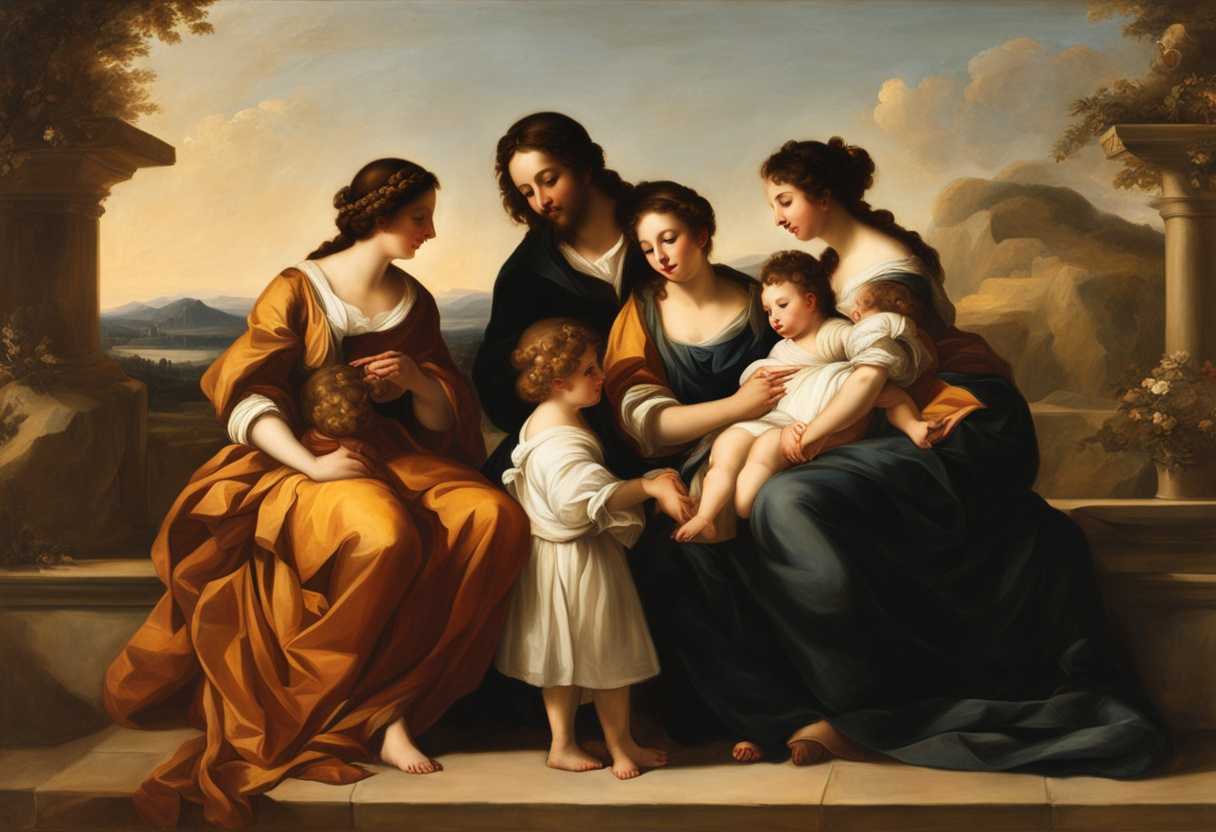
The True Meaning of Psalms 128
The Book of Psalms is a collection of sacred songs and prayers attributed to King David, the second king of ancient Israel. The author of this particular psalm reflects on the blessings of a righteous life and the rewards that come with it.
This chapter speaks to the importance of fearing the Lord and walking in His ways. It promises that those who do so will be blessed with a prosperous life, a faithful spouse, and children who will carry on the family legacy. The author also touches on the concept of Zion, the holy city of Jerusalem, and the hope that the faithful will witness its prosperity.
Throughout the passage, the writer draws connections to other biblical narratives, such as the creation story in Genesis, where God commands mankind to “be fruitful and multiply.” This psalm serves as a reminder that obedience to God’s commands leads to a fulfilling and abundant life, both in the present and for future generations.
Psalms 128:1-2
The text in Psalms 128:1-2 reads: “All who fear the Lord, who walk in obedience to him, are blessed.” You will eat the fruit of your labor; blessings and prosperity will be yours.” Let’s break this down:
-
“Blessed are all who fear the Lord, who walk in obedience to him”:
This verse emphasizes the importance of fearing the Lord and obeying His commandments. The notion of “fearing the Lord” in the Bible does not imply being scared of God but rather having a deep respect and reverence for Him. This reverence leads to obedience to His laws and teachings. The concept of obeying God’s will is a recurring theme in the Bible, with obedience often being linked to blessings and favor from God. A prime example of obedience leading to blessings can be seen in the story of Abraham. Abraham demonstrated his obedience to God in Genesis 22 by being willing to sacrifice his son Isaac, and because of his unwavering obedience, God blessed him abundantly. -
“You will eat the fruit of your labor; blessings and prosperity will be yours”:
This verse speaks to the rewards of living a life grounded in faith and obedience. It implies that those who fear the Lord and walk in obedience will reap the fruits of their labor. This echoes the idea of sowing and reaping found throughout the Bible, where a life lived in alignment with God’s will results in blessings and prosperity. Proverbs 3:9-10 further affirms this principle, stating, “Honor the Lord with your wealth, with the firstfruits of all your crops; then your barns will be filled to overflowing, and your vats will brim over with new wine. Psalms 128:1-2 highlights the importance of fearing the Lord, walking in obedience, and the consequent blessings and prosperity that follow. It underscores the principle that a life lived in reverence and obedience to God’s commandments will lead to a fruitful and blessed existence. This aligns with the broader biblical narrative that showcases the correlation between faith, obedience, and the outpouring of God’s blessings upon His people.
Psalms 128:3-4
Verse 3 and 4 of Psalms 128 beautifully illustrate the imagery of a blessed and fruitful family. Let’s break down these verses to better understand their significance. Verse 3 states, “Your wife will be like a fruitful vine within your house; your children will be like olive shoots around your table.”” This verse paints a picture of abundance and flourishing within the family unit. The comparison of the wife to a fruitful vine signifies her essential role in nurturing and sustaining the family. A fruitful vine was a symbol of prosperity and blessings from God in biblical times. The wife’s significance in this analogy is similar to the depiction of the virtuous woman in Proverbs 31 – a source of strength and sustenance for her household. Her presence is not merely decorative but essential for the family’s growth and well-being. The mention of children being like olive shoots around the table is both a symbol of vitality and a sign of future generations. People highly valued olive trees in the Bible for their oil, which they used for anointing, healing, and providing light. Just like olive shoots, children are seen as blessings from God, bringing joy, continuity, and hope for the future. The image of children surrounding the family table also symbolizes unity, love, and security within the home. This unity is essential in building a strong foundation for the family to thrive spiritually and emotionally.
These verses convey the importance of family unity, love, and faithfulness. They highlight the value of each family member playing a unique and vital role in creating a harmonious and prosperous household. The passage encourages families to cultivate an environment where all members support and uplift one another, just as a vine nourishes its branches and as olive shoots thrive in the care of their parent tree. Family holds significant importance in the broader context of the Bible. From the creation of Adam and Eve to the genealogies that trace the lineage of Jesus, family connections are deeply intertwined with God’s plan for humanity. The stories of prominent biblical families, such as Abraham and Sarah, Isaac and Rebekah, and Joseph with his brothers, illustrate the complexities of family dynamics, including love, challenges, forgiveness, and redemption. Jesus Himself emphasized the value of family relationships, teaching about honoring parents (Matthew 15:4-6) and welcoming children (Mark 10:13-16). Psalms 128:3-4 serves as a reminder of the blessings that flow from a God-fearing and united family. It encourages individuals to cherish and nurture their family relationships, recognizing each member’s unique contribution to the household’s well-being and growth. We, as believers, are called to create a loving and supportive family environment, where faith, love, and unity abound, reflecting God’s goodness and grace within our homes.
Psalms 128:5-6
The verses in Psalms 128:5-6 state, “The Lord blesses you from Zion; you will see the prosperity of Jerusalem all the days of your life.”
6 May you live to see your children’s children—peace be on Israel. The mention of blessing coming from Zion in verse 5 is significant. Zion is a term often used in the Bible to represent the presence of God and His holiness. It was initially the name of the Jebusite fortress in Jerusalem, conquered by King David, who then named it the City of David. Zion became synonymous with the Temple Mount and the city of Jerusalem, and it was viewed as the dwelling place of God. Therefore, when the Psalmist speaks of blessings coming from Zion, it signifies that these blessings are directly from God Himself. The mention of seeing the prosperity of Jerusalem all the days of one’s life is a powerful image. Jerusalem holds immense significance throughout the Bible as the city chosen by God for His dwelling place. Here, prosperity represents not just material wealth but also the peace and security that come from being in alignment with God’s will.
Moving on to verse 6, the expression “May you live to see your children’s children” is a common biblical blessing. The concept of seeing future generations in the Bible is often associated with the idea of continuity, legacy, and the fulfillment of God’s promises. For instance, in Genesis 48:11, Jacob is blessed to see his grandchildren, Ephraim and Manasseh. This blessing is not just about the joy of witnessing the growth of one’s family but also about the assurance that God’s covenant will endure through generations. Lastly, the line “peace be on Israel” is a wish for the well-being and harmony of the nation as a whole. Peace in the Bible is not merely the absence of conflict but the presence of wholeness, righteousness, and prosperity. This expression reflects the deep longing for God’s shalom, His complete peace and well-being, to encompass the land of Israel and its people. Psalms 128:5-6 encapsulate themes of divine blessings, prosperity, generational blessings, and peace. These verses remind believers of the importance of seeking God’s blessings, trusting in His provision, cherishing family, and praying for the peace of God’s chosen people. Through these timeless messages, the Psalmist encourages readers to align their lives with God’s will, trust in His faithfulness, and participate in the continuity of faith through future generations.
After Psalms 128
The reverend stood before the congregation, his voice carrying the weight of the words he was about to share. The Psalmist paints a picture of the blessed life – one marked by the fear of the Lord, the enjoyment of the fruit of one’s labor, and the blessings of family. Yet, this is not the end of the story. We will explore in the next chapter how this vision of the good life is not just for the individual, but for the entire community. For the Psalmist reminds us that the true measure of a society’s well-being is not found in the prosperity of the few, but in the flourishing of all. We will now turn our attention to the next chapter, where we will discover the profound truth that our personal blessings are inextricably linked to the welfare of our neighbors.”

Reverend Michael Johnson is an experienced Church Minister with a profound expertise in spirituality and guidance. With a serene presence and a compassionate heart, he has faithfully served his congregation for over 20 years, leading them on a spiritual journey towards inner peace and enlightenment. Reverend Johnson’s extensive knowledge of religious philosophies and profound understanding of human nature have made him a trusted confidant and mentor to many, as he seamlessly weaves his profound wisdom into life teachings. Reverend Johnson’s calming demeanor and empathetic nature continue to uplift and heal souls, nurturing a sense of unity and tranquility within his community.