
Revelation 8:8-11 is about a symbolic description of a burning mountain falling into the sea, turning the water bitter and causing widespread destruction, signifying a catastrophic event with spiritual significance and emphasizing the consequences of sin and judgment.
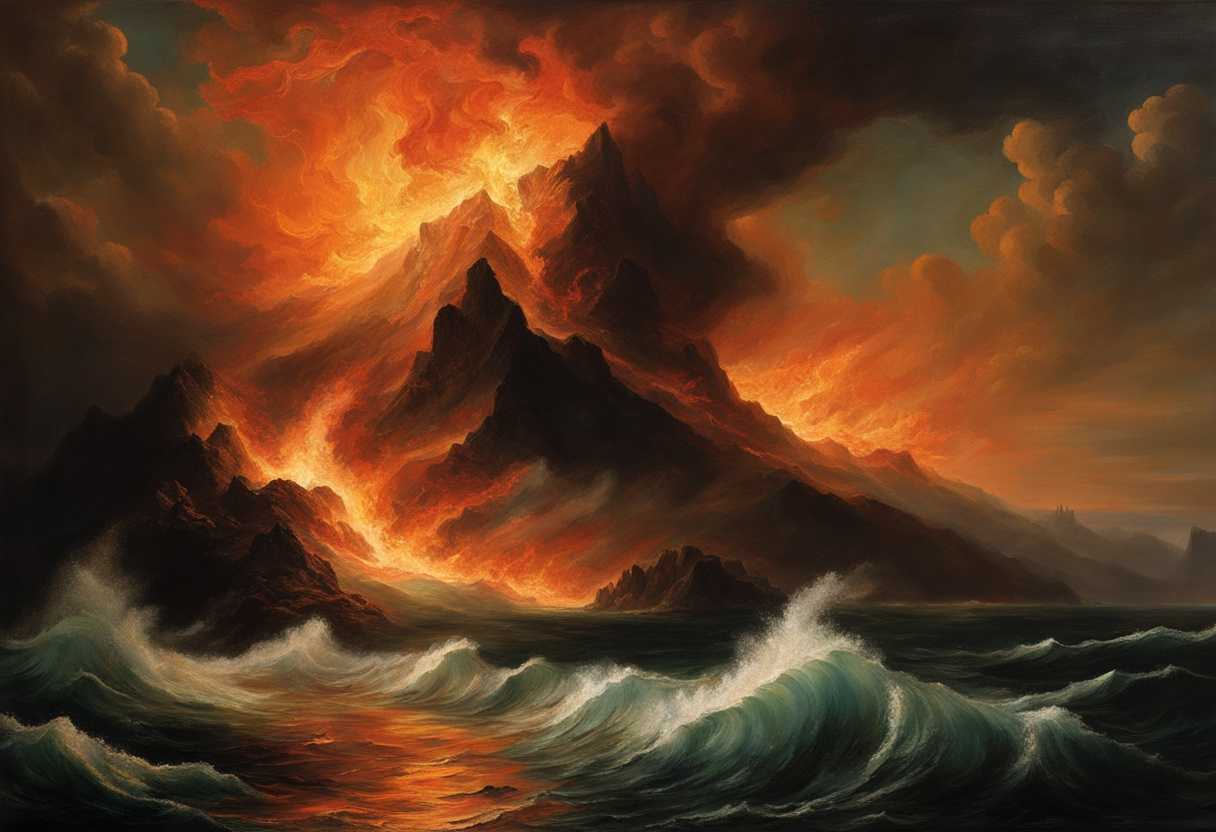
8 The second angel blew his trumpet, and something like a great mountain, burning with fire, was thrown into the sea, and a third of the sea became blood.
9 a third of the living creatures in the sea died, and a third of the ships were destroyed.
10 The third angel blew his trumpet, and a great star fell from heaven, blazing like a torch, and it fell on a third of the rivers and on the springs of water.
11 The name of the star is Wormwood. A third of the waters became wormwood, and many people died from the water, because it had been made bitter.
Setting the Scene for Revelation 8:8-11
The scene in Revelation 8:8-11 depicts a dramatic moment in the heavenly realm as the seventh seal is opened. The setting is a celestial space filled with awe-inspiring sights and sounds. The air is thick with anticipation as the seven angels prepare to sound their trumpets, each heralding a new phase of divine judgment upon the earth. The atmosphere crackles with energy as the heavenly beings await their cue to unleash the next wave of cataclysmic events.
Among those present are the seven angels who stand before God, each entrusted with a trumpet. These powerful beings are poised to carry out their assigned tasks with precision and authority. Also in attendance are the multitude of heavenly beings, including elders and living creatures, who bear witness to the unfolding events with reverence and solemnity. The scene is set against a backdrop of dazzling light and thunderous echoes, underscoring the gravity of the moment and the divine power at work.
As the seventh seal is broken, a sense of foreboding fills the air, signaling the impending judgments that will be unleashed upon the earth. The angels stand ready, their trumpets poised to sound, as the tension mounts and the world holds its breath in anticipation of what is to come. The scene is a vivid reminder of the sovereignty of God and the ultimate fulfillment of His divine plan, as the events of Revelation continue to unfold with breathtaking intensity.
What is Revelation 8:8-11 about?
The image of a burning mountain falling into the sea in Revelation 8:8-11 vividly and powerfully symbolizes destruction and chaos. This verse is part of a series of apocalyptic events described in the book of Revelation, which is filled with symbolic language and imagery. The burning mountain represents a catastrophic event that brings devastation and death, shaking the foundations of the world as we know it. The sea, often symbolizing tumultuous and unpredictable forces, becomes a stage for this dramatic event. We may ask ourselves as we reflect on this verse: What kind of vast calamity could a burning mountain falling into the sea represent? What does this imagery reveal about the overwhelming power of destruction and the fragility of human existence? It serves as a reminder of the importance of being prepared for unexpected crises and the need to find inner strength and faith during times of turmoil. This verse can inspire us to contemplate the consequences of our actions on a grand scale and the necessity of seeking resilience and hope amidst chaos.
So, as we ponder the meaning behind this verse, let us be reminded of the unpredictability of life and the importance of being grounded in our beliefs and values. It urges us to reflect on our own preparedness for challenges and crises that may come our way. We seek deeper understanding and wisdom to navigate through turbulent times and hold on to faith and courage in the face of adversity.
Understanding what Revelation 8:8-11 really means
The Book of Revelation, a prophetic vision given to the Apostle John on the island of Patmos, contains vivid imagery and symbolism about the end times. In Revelation 8:8-11, the sounding of the second and third trumpets herald catastrophic events on earth. The phrase “Something like a great mountain, burning with fire, was thrown into the sea” paints a picture of a cataclysmic event, symbolizing divine judgment and the upheaval of the natural order. This imagery could represent a volcanic eruption or a large meteorite impacting the earth, emphasizing the severity of the impending judgment.
“A third of the sea became blood,” echoing the plagues of Egypt, signifies widespread death and destruction, affecting marine life and human livelihoods. The loss of a third of the living creatures in the sea and ships being destroyed underscores the significant impact of the judgment. The mention of “A great star, blazing like a torch, fell from the sky” symbolizes a sudden and dramatic intervention by God, possibly representing a comet or celestial body. The name “Wormwood,” a bitter plant, signifies bitterness and sorrow, with the waters becoming undrinkable representing the corruption and devastation of essential resources.
Related biblical passages like Exodus 7:20-21, Jeremiah 9:15, and Luke 21:25-26 provide context and connections to other instances of divine judgment and cosmic disturbances. Revelation 8:8-11 serves as a sobering reminder of the consequences of turning away from God, urging self-examination and repentance. In a world grappling with environmental crises and moral decay, the passage resonates with contemporary concerns about the fragility of our planet and the need for spiritual renewal. Just as neglect and pollution can turn a life-sustaining river toxic, our actions have consequences that impact both the physical and spiritual realms.
This passage calls readers to reflect on their lives, seek God’s forgiveness, and align their actions with His will. By understanding the deeper meanings and related scriptures, we can grasp the urgency of the message and its relevance to our lives today. Let Revelation 8:8-11 be a catalyst for introspection, repentance, and a renewed commitment to living in a way that honors God and cares for His creation.
How do we respond to the judgment and destruction?
The judgment and destruction described in these verses serve as a warning and a wake-up call to humanity. The imagery presented conveys the severity and magnitude of the repercussions of turning away from God and living in sin. It reminds us that there are consequences for our actions and that ultimately, there will come a time of reckoning. We are urged to reflect on our own lives and consider the direction in which we are heading in the face of such judgment and destruction. It is a reminder to reevaluate our priorities, repent from our sins, and turn back to God. It calls for a change in our hearts and a renewed commitment to living in accordance with His will. The message behind this depiction of judgment and destruction ultimately offers hope and redemption. It is a reminder that while there may be consequences for our actions, there is always an opportunity for repentance and reconciliation with God. It is a call to seek forgiveness, make amends, and strive to live a life that is pleasing to Him.
Application
Consider your actions carefully. Just as a work project demands dedication, living a life free from sin requires commitment. Your family relies on you to be a role model for righteousness. Reflect on your choices and make amends where needed. Will you embrace this opportunity for redemption and start anew today?

Reverend Michael Johnson is an experienced Church Minister with a profound expertise in spirituality and guidance. With a serene presence and a compassionate heart, he has faithfully served his congregation for over 20 years, leading them on a spiritual journey towards inner peace and enlightenment. Reverend Johnson’s extensive knowledge of religious philosophies and profound understanding of human nature have made him a trusted confidant and mentor to many, as he seamlessly weaves his profound wisdom into life teachings. Reverend Johnson’s calming demeanor and empathetic nature continue to uplift and heal souls, nurturing a sense of unity and tranquility within his community.